What Is an Industrial UPS? What’s Really Going On
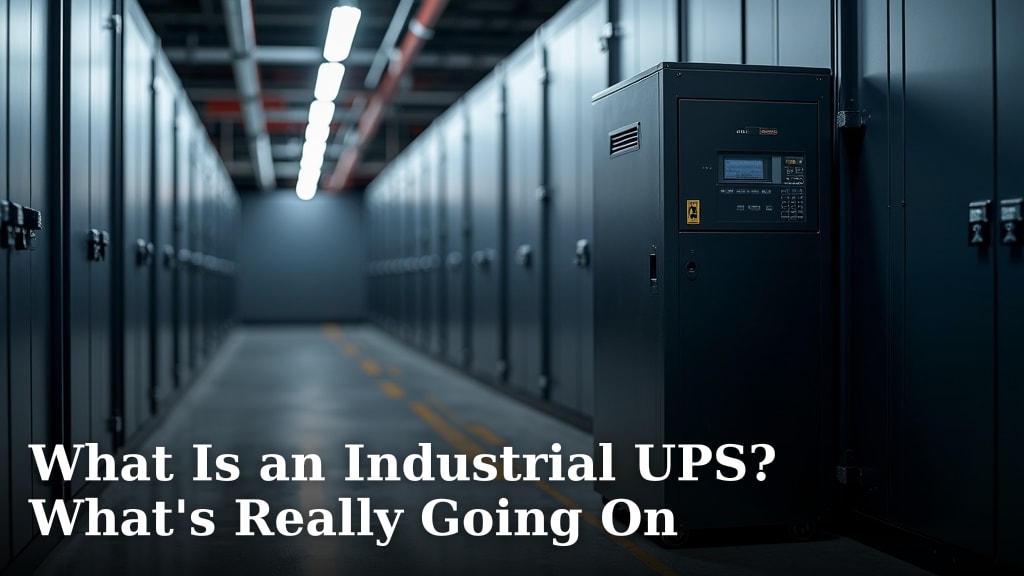
An industrial UPS is a specialized battery backup system designed for heavy-duty use in commercial and manufacturing settings. It provides clean, consistent power to sensitive equipment, protecting it from electrical disturbances like outages, surges, and brownouts. Think of it as a super-powered bodyguard for your most critical machines.
Unlike smaller units for homes or offices, industrial UPS systems handle much larger power demands and are built for harsh environments. They ensure that production lines, data centers, and other vital operations keep running smoothly without interruption. This prevents costly downtime and data loss.
- An industrial UPS is a robust power backup.
- It protects sensitive equipment in demanding environments.
- Key benefits include preventing downtime and data loss.
- These systems handle high power loads reliably.
Let’s dive in and see exactly what makes these industrial workhorses tick and why you might need one.
Understanding the Industrial UPS: What It Is and Why It Matters
An industrial Uninterruptible Power Supply (UPS) is like a high-tech guardian for your critical machinery. It’s not just a backup battery; it’s a sophisticated system designed to maintain a steady flow of clean electricity. This protects your expensive equipment from the unpredictable nature of power grids. Think of a factory floor where every second of downtime costs thousands. An industrial UPS ensures that doesn’t happen.
These units are built for tougher jobs than what you’d find in a home office. They can handle much larger power demands and are often designed to operate in challenging environments. This includes places with dust, extreme temperatures, or vibrations. They ensure that production lines, data centers, and other essential operations keep running without missing a beat.
How an Industrial UPS Works Under the Hood
At its core, an industrial UPS acts as a buffer between your equipment and the power source. When the incoming power is stable, the UPS uses it to run your devices and simultaneously charges its internal batteries. If the power flickers, drops, or goes out completely, the UPS instantly switches to battery power. This happens so fast, your equipment never knows there was an interruption. Learn what happens when the power goes out and how the UPS instantly switches to battery power.
The Three Main Types of Industrial UPS Technology
Different industrial needs call for different UPS designs. We found that there are three main types, each offering specific advantages. Understanding these can help you choose the best fit for your situation.
1. Standby (Offline) UPS
This is the most basic type. It works by monitoring the incoming power. When everything is normal, it passes the utility power directly to your equipment. The battery is only used when a problem occurs. They are generally less expensive but offer the shortest transfer time. This might not be fast enough for highly sensitive industrial gear.
2. Line-Interactive UPS
These are a step up from standby units. They have a built-in voltage regulator. This allows them to correct minor voltage fluctuations without switching to battery power. They can adjust for sags and surges. This means fewer battery activations, extending battery life. They offer a good balance of protection and cost for many industrial applications.
3. Online (Double-Conversion) UPS
This is the most robust and protective option. An online UPS continuously converts incoming AC power to DC, then back to clean AC power for your equipment. This process, called double-conversion, eliminates virtually all power disturbances. The equipment is always running on battery power, even when utility power is perfect. This ensures the highest level of protection and zero transfer time.
Key Components of an Industrial UPS System
Beyond the core technology, several parts work together to make an industrial UPS function effectively. You’ll typically find these in most units:
- Rectifier/Charger: Converts incoming AC power to DC power. This DC power runs the inverter and charges the batteries.
- Batteries: The heart of the backup system. They store the energy needed when utility power fails.
- Inverter: Converts the DC power from the batteries (or rectifier) back into clean AC power for your equipment.
- Static Transfer Switch: This is the component that rapidly switches between utility power and battery power if needed (though less critical in online UPS systems).
- Bypass Line: A path that allows utility power to go directly to the equipment if the UPS itself malfunctions or needs maintenance.
Why Your Business Might Need an Industrial-Grade UPS
So, when do you really need something more powerful than a standard office UPS? We found that industrial settings present unique challenges. If your operations rely heavily on machinery that cannot tolerate even brief power interruptions, an industrial UPS is a must. Consider the financial impact of a single power event.
Protecting Against Costly Downtime
Downtime is a major expense for manufacturers and data centers. A production line stopping means lost output. A server going offline means lost sales or access to critical data. Research indicates that the cost of industrial downtime can range from hundreds to thousands of dollars per minute. An industrial UPS prevents these losses by ensuring continuous operation.
Safeguarding Sensitive and Expensive Equipment
Modern industrial machinery often contains delicate electronics. Power surges, brownouts, or sudden power cuts can damage sensitive components, leading to costly repairs or premature replacement. An industrial UPS provides a stable, clean power source, acting like a shock absorber for your equipment. This prolongs its lifespan and ensures reliable performance.
Ensuring Data Integrity and Security
For businesses that handle data, like IT infrastructure or financial services, data loss is catastrophic. A sudden power interruption during a data transfer or critical process can corrupt files. An industrial UPS keeps systems running long enough for data to be saved properly or for a controlled shutdown. This preserves the integrity of your information.
Meeting Regulatory and Compliance Requirements
In certain industries, like healthcare or telecommunications, there are strict regulations regarding power reliability. Hospitals, for instance, must have backup power for life-support systems. Telecommunication networks need to remain operational during emergencies. An industrial UPS is often a required component to meet these stringent standards.
Industrial UPS vs. Consumer UPS: What’s the Difference?
You might be wondering how these industrial units differ from the smaller UPS systems you see for home computers. The differences are substantial and cater to different needs.
We found that the primary distinctions lie in power capacity, build quality, and environmental tolerance. Consumer UPS units are designed for lower power loads, typically a few computers and monitors. Industrial UPS systems, on the other hand, are built to handle the substantial power requirements of heavy machinery, multiple servers, or entire manufacturing floors.
Their construction is also very different. Industrial units are often housed in rugged enclosures to withstand vibration, dust, and wider temperature ranges. Consumer models are typically designed for clean, climate-controlled office environments. The reliability and redundancy features are also far more advanced in industrial UPS systems.
| Feature | Consumer UPS | Industrial UPS |
|---|---|---|
| Power Capacity | Low to medium (e.g., 500 VA to 2000 VA) | High (e.g., 5 kVA to 1 MVA and above) |
| Build Quality | Standard plastic casing | Rugged metal enclosure, vibration resistant |
| Environment Tolerance | Climate-controlled spaces | Wide temperature ranges, dust, humidity tolerant |
| Protection Level | Basic to intermediate surge and outage protection | Advanced, often online double-conversion for maximum protection |
| Applications | Home computers, small office equipment | Manufacturing lines, data centers, critical infrastructure |
Choosing the Right Industrial UPS for Your Needs
Selecting the right industrial UPS involves more than just picking the biggest unit. You need to consider several factors to ensure you get the most effective and efficient solution.
Assessing Your Power Requirements
This is the most critical step. You need to know the total power draw (in Watts or VA) of the equipment you need to protect. You should also consider future expansion plans. Overloading a UPS can lead to failure. Underestimating can mean insufficient backup time. Many experts suggest adding a buffer of 20-25% to your calculated load.
Considering the Environment Where It Will Operate
As we mentioned, industrial environments can be harsh. Is the area dusty? Are there extreme temperature fluctuations? Is there a risk of vibration? Your choice of UPS should match these conditions. For example, an online UPS with robust cooling might be best for a hot, dusty factory floor.
Determining Required Backup Time
How long do you need the UPS to power your equipment? Is it just long enough to perform a graceful shutdown? Or do you need it to run critical systems for several hours until utility power is restored? This will dictate the size and type of battery bank you need, significantly impacting cost and physical space.
Understanding Serviceability and Maintenance
Industrial UPS systems require periodic maintenance, especially battery checks and replacements. Consider how easy it is to access and service the unit. Are replacement parts readily available? Does the manufacturer offer strong technical support? These factors can save you headaches down the line.
Here’s a quick checklist to help you think through your industrial UPS needs:
- Calculate the total power load of your critical equipment.
- Identify the specific environmental conditions of the installation site.
- Determine the minimum backup runtime required.
- Research the different UPS topologies (Standby, Line-Interactive, Online).
- Consider future scalability and expansion needs.
- Factor in maintenance requirements and available support.
Conclusion
You’ve learned that an industrial UPS is far more than a simple battery backup. It’s a vital piece of equipment designed for demanding environments. These systems provide clean, consistent power to protect your critical machinery from electrical disturbances. We saw how they differ from consumer models in power capacity, build quality, and environmental tolerance.
By understanding the different types and key components, you can make an informed decision. To move forward, assess your specific power requirements and environmental conditions. This will help you choose the right industrial UPS to prevent costly downtime and safeguard your operations.
Frequently Asked Questions
How long does an industrial UPS typically keep equipment running?
The backup time for an industrial UPS varies greatly. It depends on the size of the battery bank and the power draw of your connected equipment. Some units provide just a few minutes for a safe shutdown. Others can run critical systems for several hours.
Are industrial UPS systems difficult to maintain?
Maintenance is essential, but the difficulty can vary. Most industrial UPS units require periodic battery checks and replacements. Access for service and the availability of parts are important considerations when choosing a model. Manufacturers often provide service plans.
Can an industrial UPS protect against power surges and voltage spikes?
Yes, industrial UPS systems are designed to offer robust protection. Online (double-conversion) models, in particular, isolate your equipment from virtually all power disturbances. They provide a clean and stable power source, acting as a buffer against surges and spikes.
What is the main difference between line-interactive and online UPS for industrial use?
A line-interactive UPS uses a voltage regulator to handle minor fluctuations without using batteries. An online (double-conversion) UPS constantly converts AC to DC and back to AC, providing the highest level of protection and zero transfer time. Online units are generally more robust for critical industrial applications.
Do I need an industrial UPS if my business isn’t a large factory?
You might, if your business relies on machinery or servers that cannot tolerate even brief power interruptions. Data centers, telecommunications hubs, and even advanced workshops often benefit from the reliability an industrial UPS provides. Consider the cost of downtime for your specific operation.