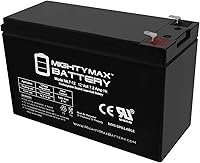
6 Best Long Lasting UPS Battery Backup (November 2026)
The best long-lasting UPS battery backups include the CyberPower CP1500PFCLCD PFC Sinewave UPS Battery Backup for active PFC equipment, the APC BR1500MS2 Pure Sine Wave UPS Battery for longest stated 100W runtime, and the APC BE600M1 UPS Battery Backup & Surge for a low-power network setup.
On this page (8 sections)
- How we compared long lasting UPS battery backup options
- Which UPS gives the longest stated runtime?
- What should you know about each long-runtime UPS?
- What affects UPS runtime during an outage?
- Should you choose a UPS for runtime or battery lifespan?
- How do you choose the right UPS load?
- Is a UPS battery backup the same as a battery?
- Which long lasting UPS battery backup should you choose?
The best long lasting UPS battery backup for a 100W load in this group is the APC BR1500MS2, with up to 73 minutes of stated runtime. The APC BX1500M is close at 68 minutes, while the APC BE600M1 offers a smaller, lower-capacity option with 23 minutes stated at the same load.
Runtime depends on what you plug in. A UPS may keep a router running far longer than it keeps a desktop computer and monitor, so match the runtime figure to your own equipment before choosing.
Our picks at a glance
-
1
 Best for active PFC equipment
CyberPower CP1500PFCLCD PFC Sinewave UPS Battery Backup
9.7/10 our score
See it on Amazon -
2
 Best for longest stated 100W runtime
APC BR1500MS2 Pure Sine Wave UPS Battery
9.6/10 our score
See it on Amazon -
3
 Best for a low-power network setup
APC BE600M1 UPS Battery Backup & Surge
9.6/10 our score
See it on Amazon
- 4
 Check it
APC BX1500M UPS Battery Backup & Surge
Best for a high-capacity home setup - 5
 Check it
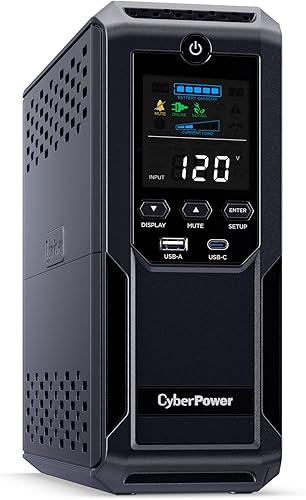
CyberPower CP1500AVRLCD3 Intelligent LCD UPS Battery Backup
Best for LCD status checks - 6
 Check it
GOLDENMATE 1500VA/1000W Lithium UPS Battery Backup
Best for long battery service life
How we compared long lasting UPS battery backup options
The most useful runtime comparison uses the same load for every model. We compared the stated runtime figures at 100W where available, then considered capacity, outlet count, output type, AVR, and battery replacement or service-life details.
Only 3 products here include a runtime figure at 100W. The other models may suit your equipment, but their runtime cannot be ranked fairly against those figures from the information available here.
Our score weighs specs, features and buyer feedback against what you're shopping for. We checked the features and runtime claims provided for each model, but did not test these UPS systems ourselves.
Which UPS gives the longest stated runtime?
The APC BR1500MS2 has the longest stated 100W runtime here at up to 73 minutes. The APC BX1500M follows at 68 minutes, while the APC BE600M1 is stated at 23 minutes.
| Product | Best for | Capacity | Battery-backed outlets | Output | Our score |
|---|---|---|---|---|---|
| CyberPower CP1500PFCLCD PFC Sinewave UPS Battery Backup | active PFC equipment | 1500VA/1000W | 6 | Sine wave | 9.7 |
| APC BR1500MS2 Pure Sine Wave UPS Battery | longest stated 100W runtime | 1500VA/900W | 6 | 9.6 | |
| APC BE600M1 UPS Battery Backup & Surge | a low-power network setup | 600VA/330W | 5 | 9.6 | |
| APC BX1500M UPS Battery Backup & Surge | a high-capacity home setup | 1500VA/900W | 5 | 9.4 | |
| CyberPower CP1500AVRLCD3 Intelligent LCD UPS Battery Backup | LCD status checks | 1500VA/900W | 6 | Simulated sine wave | 9.3 |
| GOLDENMATE 1500VA/1000W Lithium UPS Battery Backup | long battery service life | 1500VA/1000W | 8 | 8.7 |
The runtime figures are not a guarantee for every setup. A higher load draws power faster, and runtime can also change as the battery ages.
What should you know about each long-runtime UPS?
The right UPS depends on the equipment and the way you plan to use battery power. These picks range from a compact network backup to higher-capacity units with sine wave output or longer battery service-life claims.
1. CyberPower CP1500PFCLCD PFC Sinewave UPS Battery Backup: Best for active PFC equipment
CyberPower CP1500PFCLCD PFC Sinewave UPS Battery Backup: Best for active PFC equipment
- 1500VA/1000W
- Sine wave output
- AVR
- 12 outlets
A 1500VA/1000W sine wave UPS with AVR and 6 battery-backed outlets. It fits active PFC and conventional power supplies, though no runtime at a matched load is stated here.
Pros
- Sine wave output
- AVR corrects minor fluctuations without switching to battery
- 3-year warranty includes the battery
Cons
- Runtime at a specific load is not stated here
- Only 6 of its 12 outlets provide battery backup
The CyberPower CP1500PFCLCD pairs 1500VA/1000W capacity with sine wave output. CyberPower says it supports active PFC and conventional power supplies, so it is a fit for a desktop workstation or network setup that needs compatible output.
Six of its 12 outlets provide battery backup and surge protection; the other 6 are surge-only. AVR corrects minor power fluctuations without switching to battery, which helps reserve battery power for an outage.
The color LCD shows battery and power conditions, and the screen tilts up to 22 degrees. Two USB ports, one Type-A and one Type-C, can charge mobile devices.
No runtime at a matched load is stated here, so choose this model for its capacity, sine wave output, and status display rather than assuming it will outlast models with published figures. Its 3-year warranty includes the battery.
2. APC BR1500MS2 Pure Sine Wave UPS Battery: Best for longest stated 100W runtime
APC BR1500MS2 Pure Sine Wave UPS Battery: Best for longest stated 100W runtime
- 1500VA/900W
- Pure sine wave output
- Up to 73 minutes at 100W
- AVR
APC states up to 73 minutes at 100W, the longest stated runtime at a matched load among these picks. Pure sine wave output and AVR suit sensitive electronics that need clean power.
Pros
- Longest stated runtime here at 100W
- Pure sine wave output
- User-replaceable battery
Cons
- Runtime falls as connected load rises
- Only 6 of its 10 outlets provide battery backup
The APC BR1500MS2 has the longest stated runtime in this comparison: up to 73 minutes at 100W. That makes it the clearest choice when your expected load is near 100W and you want a longer window to stay connected or shut down equipment.
It has 1500VA/900W capacity and pure sine wave output. Compare more pure sine wave UPS backups if that output type is a priority.
Six of its 10 outlets provide battery backup, while 4 are surge-only; AVR corrects high or low voltage without switching to battery.
APC also includes front USB-C and USB-A charging ports and a user-replaceable battery. The key limit is that the 73-minute figure applies to a 100W load, not a full workstation running near the UPS's maximum capacity.
3. APC BE600M1 UPS Battery Backup & Surge: Best for a low-power network setup
APC BE600M1 UPS Battery Backup & Surge: Best for a low-power network setup
- 600VA/330W
- 23 minutes at 100W
- 5 battery-backed outlets
- Replaceable battery
APC states 23 minutes at 100W, making this a clear reference point for a modest load such as a router and modem. Its smaller 330W limit calls for careful load planning.
Pros
- Runtime stated at 100W
- Compact 600VA/330W design
- User-replaceable battery
Cons
- Less power capacity than the 1500VA models
- Runtime at higher loads is not stated here
The APC BE600M1 is a compact 600VA/330W UPS with 23 minutes of stated runtime at 100W. That figure can help you plan backup for a modest load, such as a router and modem, but its 330W maximum means it is not the right fit for every computer setup.
Five of its 7 outlets provide battery backup and surge protection. The other 2 are surge-only, and a built-in USB-A port can charge a phone during an outage.
Its replaceable battery lets you renew the unit's backup capability without replacing the whole UPS. At loads above 100W, expect less runtime than the stated 23 minutes.
4. APC BX1500M UPS Battery Backup & Surge: Best for a high-capacity home setup
APC BX1500M UPS Battery Backup & Surge: Best for a high-capacity home setup
- 1500VA/900W
- 68 minutes at 100W
- AVR
- Replaceable battery
APC gives a 68-minute runtime figure at 100W, alongside 1500VA/900W capacity and AVR. It suits a high-capacity setup where fewer battery-backed outlets are enough.
Pros
- Runtime stated at 100W
- AVR corrects voltage changes without using battery
- User-replaceable battery
Cons
- 5 of its 10 outlets provide battery backup
- Runtime at heavier loads is not stated here
APC states 68 minutes at 100W for the BX1500M, giving this 1500VA/900W UPS the second-longest matched-load figure in this group. It is a sensible option when you want substantial capacity and a published runtime point for comparison.
Five of its 10 outlets provide battery backup and surge protection, with the remaining 5 offering surge-only protection. AVR corrects low and high voltage without draining the battery, and the LCD reports battery charge, estimated runtime, load capacity, and input voltage.
The replaceable battery is sold separately. At a load much higher than 100W, the 68-minute figure will not apply, so use it as a comparison point rather than a promise for a larger setup.
5. CyberPower CP1500AVRLCD3 Intelligent LCD UPS Battery Backup: Best for LCD status checks
CyberPower CP1500AVRLCD3 Intelligent LCD UPS Battery Backup: Best for LCD status checks
- 1500VA/900W
- AVR
- Color LCD
- 12 outlets
Its color LCD shows battery and power conditions, while AVR corrects minor power fluctuations without switching to battery. No matched-load runtime is stated here, so it is harder to compare for long outages.
Pros
- Color LCD shows power and battery conditions
- AVR helps save battery for outages
- 3-year warranty includes the battery
Cons
- Runtime at a specific load is not stated here
- Uses simulated sine wave output
The CyberPower CP1500AVRLCD3 is a 1500VA/900W UPS with 12 outlets and a color LCD. The display shows battery and power conditions, which can help you check status without estimating from indicator lights.
Six outlets provide battery backup and surge protection, while the other 6 are surge-only. AVR corrects minor power fluctuations without switching to battery, and two USB ports charge mobile devices.
This model uses simulated sine wave output, unlike the pure sine wave models in this roundup. No runtime figure at 100W is stated here, so compare its display, outlet layout, and output type with your needs before choosing it for extended outage coverage.
6. GOLDENMATE 1500VA/1000W Lithium UPS Battery Backup: Best for long battery service life
GOLDENMATE 1500VA/1000W Lithium UPS Battery Backup: Best for long battery service life
- 1500VA/1000W
- LiFePO4 battery
- 296Wh
- Pure sine wave output
Its LiFePO4 battery is described as lasting over 10 years and more than 3,000 charge cycles. That speaks to battery service life, but does not give runtime at a matched equipment load.
Pros
- LiFePO4 battery with stated service life over 10 years
- 1500VA/1000W capacity
- 8 battery-backed outlets
Cons
- No runtime at a specific load is stated here
- Larger and heavier enclosure than similar lead-acid UPS models
The GOLDENMATE uses a 51.2V, 5.8Ah LiFePO4 battery and is described as lasting over 10 years and more than 3,000 charge cycles. That is a battery service-life claim, not an outage runtime estimate.
Its 1500VA/1000W capacity, pure sine wave output, AVR, and 8 battery-backed outlets make it a feature-rich option for computers, workstations, and network devices. The LCD shows battery and power status, while USB ports charge phones and other small devices.
The UPS is larger and heavier than similar lead-acid models, according to GOLDENMATE's description. No runtime at a matched load is stated here, so compare it on battery type and capacity rather than assuming it gives more minutes during an outage.
What affects UPS runtime during an outage?
The connected load has the biggest practical effect on runtime. Adding a monitor, desktop, router, and storage device can draw more power than a router alone, shortening the time the UPS can supply them.
Capacity in VA and watts helps show what a UPS can support, but neither number alone tells you the runtime. When available, look for runtime at a stated wattage and compare models at a load close to your planned setup.
A UPS also switches to battery when utility power drops outside its operating range. Our guide explains how a UPS battery backup switches to battery power and why voltage regulation can affect how often the battery is used.
Should you choose a UPS for runtime or battery lifespan?
Choose based on the kind of longevity you mean. Runtime is the minutes available during a single outage, while battery lifespan is how long the battery may serve before it needs replacement.
For outage minutes, the APC BR1500MS2 and BX1500M provide directly comparable 100W figures. For a longer battery service-life claim, the GOLDENMATE's LiFePO4 battery is described as lasting over 10 years and more than 3,000 cycles, but that does not guarantee its runtime at your load.
If your outages routinely last longer than the runtime a UPS can provide, consider best UPS systems with external batteries for setups designed to add battery capacity. Match the battery system with the UPS and follow its compatibility guidance.
How do you choose the right UPS load?
Add up the wattage of equipment that must stay powered, then leave room below the UPS's maximum watt rating. Keep nonessential devices off the battery-backed outlets to preserve backup time for your computer, network, or storage equipment.
A small router and modem may fit a 600VA/330W model such as the APC BE600M1. A larger workstation may call for one of the 900W or 1000W models, but the runtime still depends on its actual draw.
Also check which outlets have battery backup. Many UPS models include surge-only outlets for printers or other peripherals that don't need to keep running through an outage.
Is a UPS battery backup the same as a battery?
A UPS combines a battery with switching and power-protection features so connected equipment can keep running briefly when utility power fails. A standalone battery does not necessarily include those functions or transfer power automatically.
Read our explainer on the difference between a UPS and a battery backup if you're comparing a UPS with a separate battery power system. For computer gear, confirm the UPS output type and total watt draw before you connect it.
Which long lasting UPS battery backup should you choose?
Choose the APC BR1500MS2 if your load is near 100W and you want the longest stated runtime here. Choose the BX1500M for a similar 100W comparison with 1500VA/900W capacity, the BE600M1 for a smaller load, or the GOLDENMATE if its LiFePO4 battery service-life claim is your priority.
Our top 3 picks at a glance
-
1
Best for active PFC equipment
CyberPower CP1500PFCLCD PFC Sinewave UPS Battery Backup
9.7/10 our score
See it on Amazon -
2
Best for longest stated 100W runtime
APC BR1500MS2 Pure Sine Wave UPS Battery
9.6/10 our score
See it on Amazon -
3
Best for a low-power network setup
APC BE600M1 UPS Battery Backup & Surge
9.6/10 our score
See it on Amazon
Frequently asked questions
Which UPS lasts longest during an outage?
At a matched 100W load, the APC BR1500MS2 has the longest stated runtime here, up to 73 minutes. The APC BX1500M is stated at 68 minutes, and the APC BE600M1 at 23 minutes.
Actual runtime depends on the connected load, so compare models at the same wattage.
Does a larger VA rating mean longer runtime?
No. A higher VA rating alone does not tell you how long a UPS will run your equipment.
Runtime also depends on battery capacity and the load in watts.
Use runtime figures at a load close to yours when comparing backup time.
Is lithium UPS battery life the same as outage runtime?
No. Battery service life describes how long the battery may remain usable across years and charge cycles.
Outage runtime describes how long it powers connected equipment during a specific interruption.
The GOLDENMATE specifies long battery service life, but no matched-load runtime figure here.
How can I get more runtime from a UPS?
Connect only the equipment that needs backup, such as a modem, router, and one computer. Avoid adding printers, speakers, or other gear that can run from wall power.
Then compare runtime estimates at the combined wattage of the devices you plan to keep on.