Inverter Generator vs Regular Generator: Which Fits? (November 2026)
Choose an inverter generator for quiet, clean power and a regular generator for high output at a lower price. In this inverter generator vs regular generator comparison, electronics, noise and runtime matter more than peak watts alone.
On this page (10 sections)
- Inverter generator vs regular generator: quick verdict
- The two designs side by side
- Noise: which one can you use near other people?
- Clean power: which one is safe for electronics?
- Output: how much power do you really need?
- Fuel and runtime: which runs longer?
- Portability: which one can you move and store?
- Cost and value: which design costs less?
- Who should buy which type?
- Inverter generator vs regular generator: final verdict
Choose an inverter generator for quiet, clean power and a regular generator for high output at a lower price. In this inverter generator vs regular generator comparison, electronics, noise and runtime matter more than peak watts alone.
An inverter generator turns engine power into clean alternating current for sensitive devices. A regular generator sends engine power through a more direct system that costs less but creates more noise and power fluctuation.
Our score weighs specs, features and buyer feedback against what you're shopping for. We compared the models below by output, noise, weight, runtime and outlet types.
A guide to portable generators helps you match size to your loads before you compare designs. Start with the loads you need, then choose the design that runs them safely.
 Best for whole-home backup
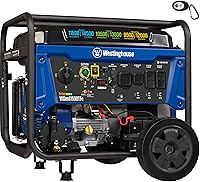
Westinghouse 12500 Watt Dual Fuel Home Backup
 Best for quiet camping
WEN Super Quiet 2350-Watt Portable Inverter Generator
Inverter generator vs regular generator: quick verdict
Pick inverter for campsite, RV and electronics use; pick regular for whole-home backup and job site power. The Westinghouse regular model offers 9500 running watts.
The inverter models here range from 1900 to 3400 running watts.
That output gap decides many purchases. A small inverter can run lights, fans, phones and a television.
It cannot start central air conditioning or run several large appliances at once.
A regular generator can run those larger loads. It also costs less per watt in many cases, though prices change and this guide does not list prices.
Clean power is the other split. Inverter models in this guide list low total harmonic distortion.
The PowerSmart lists THD under 3 percent. The WEN lists under 0.3 percent at no load and under 1.2 percent at full load.
Noise follows the same split. Inverter models use enclosed bodies and Eco Mode.
Regular open-frame models usually run louder, especially under load.
If you want a deeper look at quiet models, our best portable inverter generator guide lists options by size and use. Use it after you decide the design fits your needs.
The two designs side by side
Inverter generators clean and control power; regular generators focus on raw output. The table below compares the four models in this guide by the specs that matter most for daily use.
| Model | Type | Running watts | Weight | Noise |
|---|---|---|---|---|
| Westinghouse 12500 Watt Dual Fuel Home Backup | Regular | 9500 | Large home backup unit | Open frame, louder |
| WEN Super Quiet 2350-Watt Portable Inverter Generator | Inverter | 1900 | 39 lb | 51 dB at quarter load |
| PowerSmart 4000 Watt Portable Inverter Generator | Inverter | 3200 | 50.7 lb | 59 dBA from 23 feet |
| Oxseryn Power Equipment 4400 Watts Inverter Generator | Inverter | 3400 | 56 lb | Under 72 dBA from 23 feet |
The Westinghouse stands apart on wattage. It offers a transfer switch ready outlet and a 50A RV ready outlet.
Those outlets suit home backup and travel trailer use.
The inverter models trade wattage for portability and clean power. The Honda EU2200i and Companion comparison covers one compact inverter pairing.
The WEN is lightest at 39 lb.
The Oxseryn offers the most running watts among the inverters here at 3400.
Engine size also differs. The Westinghouse uses a 457cc engine.
The WEN uses a 79cc engine. The PowerSmart uses a 149cc engine.
The Oxseryn uses a 208cc engine.
Larger engines usually support higher output. Smaller engines usually weigh less and use less fuel at light load.
Your load list should come first, not the engine size.
Noise: which one can you use near other people?
Inverter generators are quieter in most real use, especially at light load. Eco Mode lowers engine speed when demand drops.
That helps at campsites, RV parks and neighborhoods during outages.
The WEN lists 51 dB at quarter load. That level compares to a normal conversation.
It suits camping, tailgating and light home backup.
The PowerSmart lists 59 dBA from 23 feet away. That rating applies at 25 percent load.
It suits camping and outdoor use where quiet matters.
The Oxseryn lists under 72 dBA from 23 feet away. That is louder than the other two inverters.
It still uses inverter design and Eco Mode, but it trades some quiet for higher output.
The Westinghouse is an open-frame regular generator. Its design favors cooling and service access over sound control.
You should plan for more distance from sleeping areas and neighbors.
Noise also rises with load on any generator. A quiet inverter at full load will run louder than at quarter load.
Run it only as hard as your loads require.
Hotel rules, campground rules and local noise rules vary. Check the rules where you plan to use it.
Even quiet models may face limits at night.
Clean power: which one is safe for electronics?
Inverter generators produce cleaner power for phones, laptops and televisions. Their output stays more stable as load changes.
That stability helps sensitive electronics charge safely.
The WEN states it produces clean power free of voltage spikes and drops. It lists total harmonic distortion under 0.3 percent at no load.
It lists under 1.2 percent at full load.
The PowerSmart lists THD under 3 percent. It states that level can safely power laptops, mobile phones and tablets.
It also includes USB ports for direct charging.
The Oxseryn lists inverter technology for steady power. It does not list a THD figure in the data used here.
Treat its clean power claim as a maker claim, not a measured guarantee.
The Westinghouse regular generator does not list a clean power rating. It focuses on high output and home backup outlets.
Use it for appliances and tools, and be careful with sensitive electronics.
A portable inverter generator guide explains how inverter output differs from standard generator output. Read it if you plan to charge electronics often.
If you plan to run a computer or medical device, check the maker guidance for that device. Clean power helps, but it does not replace the device maker's own rules.
Output: how much power do you really need?
Regular generators win on output; inverter generators win on portability. The Westinghouse offers 9500 running watts on gasoline.
It offers 8500 running watts on propane.
That output can run central air conditioning, a refrigerator and a sump pump together, depending on starting watts. It also offers a transfer switch ready outlet for home connection.
The Oxseryn offers 3400 running watts and 4400 peak watts. That suits RV camping and emergency home backup for essential circuits.
It will not match whole-home loads.
The PowerSmart offers 3200 running watts and 4000 starting watts. It supports parallel connection of two units to double output.
The parallel kit is sold separately.
The WEN offers 1900 rated watts and 2350 surge watts. That suits lights, fans, phones, tablets and a television.
It is not a whole-home backup choice.
Make a load list before you choose. Add running watts for each item.
Then add extra watts for motors that need starting power, like a refrigerator or air conditioner.
Round up to the next size if your list is close to a model's limit. Running a generator near its limit leaves no room for motor starts.
It also leaves no margin for added loads.
On fuel choice, do inverter generators use gas is a useful check for storage and runtime planning. Most inverter models in this guide use gasoline.
Compare propane and gasoline generators to review the fuel tradeoffs.
Fuel and runtime: which runs longer?
Runtime depends on tank size, load and Eco Mode, not design alone. The Westinghouse runs up to 12 hours on a 6.6 gallon tank.
That runtime applies under the conditions stated by Westinghouse.
The Oxseryn lists up to 14 hours at 25 percent load with Eco Mode. It uses a 2 gallon tank with a fuel gauge.
Light load and Eco Mode extend runtime.
The WEN uses a one gallon tank. It provides over 5.7 hours at half load.
Eco Mode helps stretch that time at lighter loads.
The PowerSmart lists 8 hours of runtime in its highlights. It uses gasoline and includes Eco Mode.
Actual runtime will drop as load rises.
The Westinghouse also runs on propane. Propane can simplify storage for some users.
It produces fewer running watts than gasoline on this model.
If you need dual fuel options, a small tri fuel generator guide can help you compare fuel choices. Fuel type affects runtime, storage and outlet power.
Store fuel safely and follow local rules. Keep generators outdoors and away from windows.
Carbon monoxide can build up fast in enclosed spaces.
Portability: which one can you move and store?
Inverter generators are easier to carry; regular generators need wheels and help. The WEN weighs 39 lb and measures 17.3 by 11.5 by 17.5 inches.
That size fits in many car trunks.
The PowerSmart weighs 50.7 lb and measures 20.1 by 12.2 by 17.7 inches. It has a built-in handle.
One person can move it short distances.
The Oxseryn weighs 56 lb and measures 19 by 15.6 by 19.1 inches. It suits RV camping and home backup where you move it less often.
The Westinghouse measures 27.2 by 26.1 by 26.5 inches. It uses heavy duty wheels, a handle and a lift bracket.
It is built for home, trailer and job site use, not for carrying by hand.
Think about stairs, truck beds and storage space. A generator that weighs 39 lb is easier to lift into a trunk.
A 56 lb unit may need two people for a high truck bed.
Storage matters too. Smaller inverters fit in closets and small garages.
Large regular generators need floor space and a clear path to move them.
Outlets also affect portability choices. The WEN offers two 120V receptacles, one 12V DC receptacle and two USB ports.
That layout suits camping and small backup loads.
Cost and value: which design costs less?
Regular generators usually cost less per watt; inverter generators cost more for quiet and clean power. This guide does not list prices, and prices change often.
Compare total cost for the wattage you need.
A regular model like the Westinghouse gives high output for home backup. If you need 9500 running watts, a regular design is often the practical value choice.
Inverter models cost more per watt in many cases. You pay for enclosed design, electronics and lower noise.
The WEN gives 1900 rated watts in a 39 lb package.
The PowerSmart and Oxseryn give mid-range output with inverter benefits. They suit buyers who need more than a small inverter but less than whole-home backup.
Warranty also affects value. The WEN includes a two-year warranty.
The PowerSmart includes a two-year limited warranty plus lifetime technical support. The Westinghouse includes 3-year limited service, labor and parts coverage.
The Oxseryn data used here does not list a warranty term. Check the warranty before you buy if coverage matters to you.
Keep your receipt and manual in a safe place.
Fuel cost matters over time. Smaller inverter engines use less fuel at light load.
Eco Mode helps when you run lights and chargers for hours.
Who should buy which type?
Buy inverter if you camp, use an RV or charge electronics; buy regular if you back up a home. The WEN suits campers who want quiet power for phones, tablets and televisions.
Its 39 lb weight helps with transport.
The PowerSmart suits home use and camping where you need 3200 running watts. Its parallel option helps if you later need more output.
Its USB ports and clean power suit phones and tablets.
The Oxseryn suits RV camping and emergency home backup. Its 3400 running watts and 14 hour runtime at light load help during outages.
Its RV port supports travel trailer use.
The Westinghouse suits home backup and job site power. Its dual fuel design, remote start and transfer switch ready outlet help during longer outages.
It runs large appliances that inverters cannot start.
If you need a UPS for short outages, What Is a Portable UPS? The Complete Guide explains a different backup option.
A UPS gives instant power for minutes, not hours.
If you want to understand inverter basics, What Is a Power Inverter in a UPS? What Matters Most covers how inverters convert power.
That helps you compare UPS units with generators.
For Westinghouse details, the best Westinghouse inverter generator guide covers that brand's lineup. Use it if you want to compare Westinghouse models only.
Inverter generator vs regular generator: final verdict
Choose inverter for quiet, clean and portable power; choose regular for high output home backup. That rule fits most buyers in this inverter generator vs regular generator guide.
Pick the WEN if weight and quiet matter most. Pick the PowerSmart if you want parallel power and clean output for home use.
Pick the Oxseryn if you want more running watts and longer light-load runtime.
Pick the Westinghouse if you need to run large home loads. Its 9500 running watts, dual fuel design and transfer switch ready outlet set it apart.
It is not the quiet or portable choice.
Start with your load list and your noise limits. Those two answers will point you to the right design faster than peak watts alone.
Then choose the model that covers your list with margin.
Our portable generators pillar guide ties these choices together for home, RV and camping use. Read it next if you want a broader buying guide.
Frequently asked questions
Is an inverter generator better than a regular generator?
An inverter generator is better for quiet use and sensitive electronics because it produces clean power with low harmonic distortion. A regular generator is better when you need high wattage for home backup at a lower cost per watt.
Can a regular generator run electronics?
A regular generator can run basic appliances, but its power quality varies with load. Inverter models limit total harmonic distortion, which helps protect laptops, phones, tablets and televisions during use.
Which generator is quieter?
Inverter generators are usually quieter because enclosed designs and Eco Mode reduce engine speed under light load. The WEN model in this guide operates at 51 dB at quarter load, while the PowerSmart operates at 59 dBA from 23 feet.
Do inverter generators use more fuel?
Fuel use depends on load and engine size, not inverter design alone. Eco Mode and smaller engines help inverter models use less fuel at light load, while large regular generators use more fuel when running heavy loads.
What size generator do I need for home backup?
Size a home backup generator by listing every appliance you want to run at once, then add starting watts for motors. A high output regular model like the Westinghouse suits whole-home loads, while smaller inverters suit lights, fans and phones.