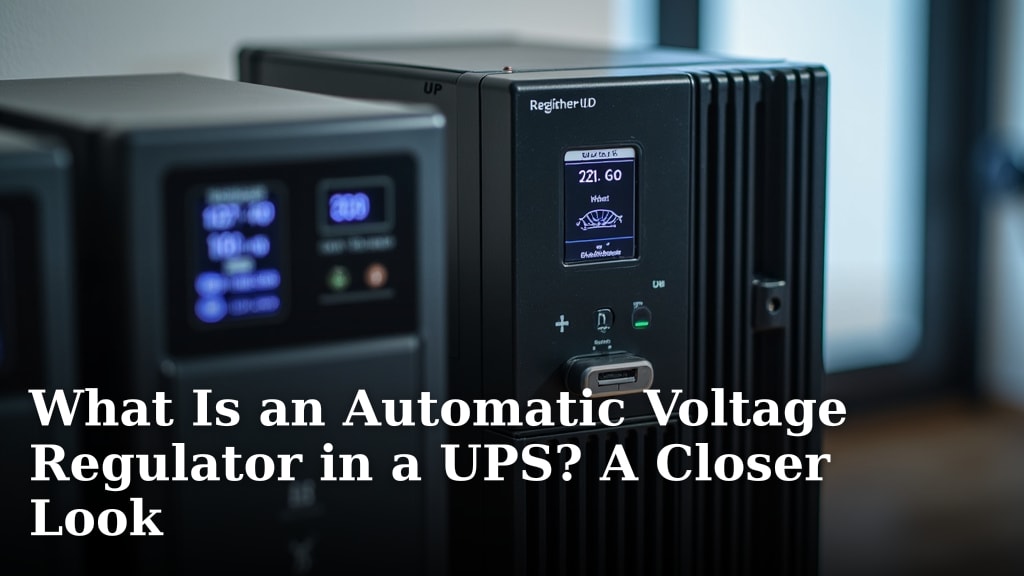
What Is an Automatic Voltage Regulator in a UPS? A Closer Look
Conclusion
An automatic voltage regulator (AVR) in a UPS is a crucial part that keeps your power steady. It adjusts voltage to protect devices from spikes or drops, preventing damage. We’ve seen how this feature works inside a UPS to keep electronics running safely. Now, if you’re shopping for a UPS or checking yours, look for the AVR feature. It’s a simple way to add an extra layer of protection for your home or office equipment.
Frequently Asked Questions
What does an automatic voltage regulator do in a UPS?
An AVR in a UPS automatically adjusts voltage levels to keep them stable. It protects your devices from power surges and sags that can cause damage or data loss.
How does an AVR differ from a surge protector?
A surge protector only blocks sudden voltage spikes. An AVR both reduces high voltage and boosts low voltage to maintain a steady level for your equipment.
Do all UPS systems have an automatic voltage regulator?
Not all UPS systems include an AVR. It’s common in line-interactive and online UPS models, but basic standby UPS units may not have it.
How can I tell if my UPS has an AVR?
Check the product specifications or manual for your UPS. Look for terms like “automatic voltage regulation” or “AVR” in the features list.
Is an AVR necessary for home computers?
Yes, an AVR is helpful for home computers to prevent damage from unstable power. It ensures your computer runs smoothly and avoids unexpected shutdowns.