Best 200 Watt Solar Panels 12V: Top 9 Picks (November 2026)
The best 200 watt 12V solar panels include the ECO-WORTHY 200 Watts 12 Volt/24 Volt Solar for complete 12V kits, the Renogy Solar Panels 200 Watt N-Type for compact van rooftops, and the DOKIO 200W Portable Foldable Solar Panel Kit for portable 12V charging.
On this page (6 sections)
The best 200 watt solar panels 12V pick for most complete systems is the ECO-WORTHY kit, which includes two 100W monocrystalline panels, a 30A PWM charge controller, mounting brackets and cables. Choose Renogy ShadowFlux for partial shade, DOKIO for portable charging, or Renogy N-Type for a compact rigid panel.
A 200W panel is a common size for RVs, vans, boats, cabins and small off-grid battery systems. The right choice depends on whether you need a complete kit, a foldable panel, one rigid panel or two smaller panels that can be wired for your setup.
If you need a plain explanation of the category, start with our guide to what is a portable solar panel. For a broader portable comparison, see the best 200 watt portable solar panel guide.
Our picks at a glance
-
1
 Best for complete 12V kits
ECO-WORTHY 200 Watts 12 Volt/24 Volt Solar
9.7/10 our score
See it on Amazon -
2

-
3
 Best for portable 12V charging
DOKIO 200W Portable Foldable Solar Panel Kit
9.4/10 our score
See it on Amazon
- 4
 Check it
Rvpozwer 200 Watt Solar Panel 18BB
Best for rigid 12V rooftop installs - 5
 Check it
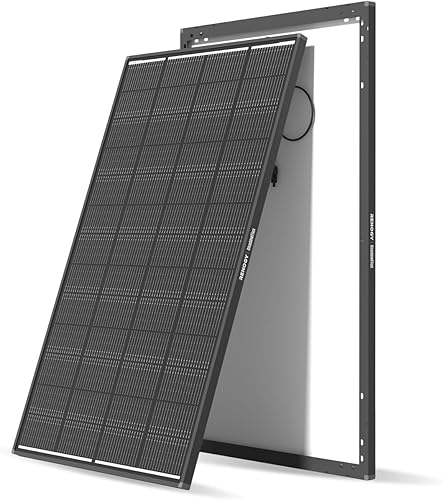
Renogy ShadowFlux Solar Panel 200 Watt
Best for partly shaded 12V systems - 6
 Check it
JJN 400W Bifacial Solar Panels
Best for two-panel bifacial setups - 7
 Best for compact rigid panelsCheck it
- 8
 Best for two-panel 12V expansionCheck it
- 9
 Check it
ECOBOSS 200 Watt TÜV Certification N-Type Solar
Best for one-panel 12V installs
The best 200 watt solar panels 12V for different setups
The best 200 watt solar panels 12V are not identical in layout or use. ECO-WORTHY is the strongest complete kit, while DOKIO favors portability and the rigid Renogy panels fit permanent installations.
We compared stated power, cell design, panel size, weight, system voltage, included parts and practical setup needs. Our score weighs specs, features and buyer feedback against what you're shopping for.
| Product | Best for | Power | Panel size | System use | Our score |
|---|---|---|---|---|---|
| ECO-WORTHY 200 Watts 12 Volt/24 Volt Solar | complete 12V kits | 200 watts | 35.2 x 23.1 x 1.3 in | 12V or 24V battery systems | 9.7 |
| Renogy Solar Panels 200 Watt N-Type | compact van rooftops | 200 watts | 49.7 x 30.1 x 1.2 in | 12V and 24V battery systems | 9.7 |
| DOKIO 200W Portable Foldable Solar Panel Kit | portable 12V charging | 200 watts | 9.4 | ||
| Rvpozwer 200 Watt Solar Panel 18BB | rigid 12V rooftop installs | 200 watts | 52.76 x 26.38 x 1.18 in | 9.2 | |
| Renogy ShadowFlux Solar Panel 200 Watt | partly shaded 12V systems | 200 watts | 49.69 x 30.08 x 1.18 in | 9.1 | |
| JJN 400W Bifacial Solar Panels | two-panel bifacial setups | 53.7 x 30.3 x 1.2 in each | 8.8 | ||
| HQST 200W Solar Panel | compact rigid panels | 200 watts | 46.3 x 30.1 x 1.2 in | 8.6 | |
| ECOBOSS 200W Solar Panel | two-panel 12V expansion | 35.8 x 23 x 1.18 in each | 8.3 | ||
| ECOBOSS 200 Watt TÜV Certification N-Type Solar | one-panel 12V installs | 200 watts | 52.7 x 30.3 x 1.18 in | 8.1 |
ECO-WORTHY 200 Watts 12 Volt/24 Volt Solar: best for complete 12V kits
ECO-WORTHY 200 Watts 12 Volt/24 Volt Solar: Best for complete 12V kits
- 2 pcs 100W monocrystalline panels
- 30A PWM charge controller
- Series or parallel wiring
- 16.4 ft 10 AWG solar cables
This kit combines two 100W monocrystalline panels with a 30A PWM controller, mounting brackets and cables. It suits buyers who want the main charging parts together for an RV, camper, vehicle or other off-grid setup.
Pros
- Includes controller and cables
- 12V or 24V wiring options
- Aluminum frame
Cons
- PWM controller is less efficient than MPPT
- Heavier than the foldable pick
The ECO-WORTHY kit is the most complete choice in this roundup. It includes 2 pcs 100W monocrystalline solar panels, a 30A PWM charge controller, 2 sets of Z mounting brackets, a pair of 16.4 ft 10 AWG solar cables, 2-in-1 connectors and a tray cable.
The two panels can be connected in parallel for a 12V system or in series for a 24V setup. Each panel measures 35.2 x 23.1 x 1.3 in, so the split layout may be easier to place on some RV or cabin roofs than one large panel.
ECO-WORTHY gives the kit an 11A amperage capacity and 27.4V maximum voltage. Its aluminum frame is rated for 2,400 Pa wind load and 5,400 Pa snow load, while the junction box has an IP65 rating.
Choose this kit if you want the controller and main cables included. Choose another pick if you specifically want MPPT charging, a foldable design or one large N-Type panel.
Renogy Solar Panels 200 Watt N-Type: best for compact van rooftops
Renogy Solar Panels 200 Watt N-Type: Best for compact van rooftops
- 25% efficiency
- 16BB N-Type cells
- 7.5% smaller design
- 23.4 lb panel weight
Renogy's 200W N-Type panel is designed for tight Class B van spaces while supporting 12V and 24V battery systems. Its 25% efficiency helps when roof area is limited.
Pros
- Compact N-Type design
- 25% efficiency
- Works with 12V and 24V systems
Cons
- Panel only
- Requires a suitable charge controller
Renogy's 200W N-Type panel suits a Class B van or another roof where every inch matters. Renogy says the design is 7.5% smaller and 11.7% lighter than previous models, while the panel weighs 23.4 lb and measures 49.7 x 30.1 x 1.2 in.
That compact footprint helps when vents, hatches or a second panel leave only a tight space. It is also simpler to lift and secure, though it still needs a firm mount and sealed roof entries.
The 16BB N-Type cells have a stated 25% efficiency. Renogy describes the panel as suitable for 12V and 24V battery systems, including lithium, AGM and deep-cycle batteries.
Higher efficiency helps turn limited roof space into more usable power, especially in warm conditions. It does not remove the need for a correctly matched charge controller.
The 24V label refers to the intended system class, not a constant operating voltage. Check the controller PV input limits before connecting it, especially with more than one panel.
Renogy advises at least 40V maximum PV input for a single or parallel connection. Series wiring raises the required limit, so confirm the totals before building a larger array.
Pick this panel when roof space and efficiency matter more than having a controller in the box. For partial shade, compare it with the ShadowFlux model below.
DOKIO 200W Portable Foldable Solar Panel Kit: best for portable 12V charging
DOKIO 200W Portable Foldable Solar Panel Kit: Best for portable 12V charging
- Folds to about 20 x 27 in
- 9.7 lb weight
- Standalone PWM controller
- Dual USB ports
DOKIO is the easiest pick to carry between campsites because it folds to about 20 x 27 in and weighs 9.7 lb. The separate PWM controller and USB ports support basic 12V battery and device charging.
Pros
- Lightest portable option
- Foldable design
- Controller and USB ports included
Cons
- Power stations may cap input below 200W
- Not a rigid roof panel
DOKIO is the easiest 200W panel here to move between locations. It weighs 9.7 lb and folds to about 20 x 27 x 1.1 in, making it a practical choice for camping, emergency backup and temporary charging.
The foldable shape also makes storage easier in a van, boat locker, or cupboard between trips. You can set it out in direct sun, then fold it away without leaving brackets on a roof.
The kit includes a separate PWM controller, a 9.84 ft cable and dual USB ports. The controller protects a 12V system from reverse polarity, overcharge, overload and short circuit.
You can keep the controller shaded while the panel faces the sun. The USB ports suit phones and small devices when connected to a 12V battery.
DOKIO warns that some power stations limit solar input to 100W or 150W. If your station has a lower limit, the panel cannot deliver its full 200W into it even in strong sun.
That limit is a power station design feature, not a fault in the panel. Check the input rating first if you plan a direct connection.
Choose DOKIO when you need to carry and reposition the panel. For a fixed roof, a rigid aluminum-framed panel will usually be easier to secure.
Rvpozwer 200 Watt Solar Panel 18BB: best for rigid 12V rooftop installs
Rvpozwer 200 Watt Solar Panel 18BB: Best for rigid 12V rooftop installs
- 25% N-Type efficiency
- 18BB cell design
- Pre-drilled mounting holes
- IP68 waterproof rating
Rvpozwer combines a rigid 200W panel with 18BB N-Type cells, pre-drilled holes and an electroplated aluminum frame. It fits buyers planning a fixed RV, boat, rooftop or off-grid installation.
Pros
- 25% efficiency
- IP68 rating
- Designed for rigid mounting
Cons
- Panel only
- Longer panel needs careful roof planning
Rvpozwer is a rigid 200W panel with 18BB N-Type cells and 25% stated efficiency. The 52.76 x 26.38 x 1.18 in panel has pre-drilled mounting holes for RVs, rooftops, boats and other fixed installations.
The long, narrow shape can suit a roof with a clear run beside other equipment. Measure the full length first, since it may crowd vents or leave little room for safe mounting.
Its electroplated aluminum frame is rated for 2,400 Pa wind load and 5,400 Pa snow load. Rvpozwer also gives it an IP68 waterproof rating and a service life over 30 years.
Those ratings describe the frame and sealing for outdoor use. They do not replace sound mounting, correct roof sealing and regular checks of fixings after travel.
The 20.52V output and 9.75A capacity must match the controller and wiring. Keep current within cable and connector limits to prevent overheating.
Rvpozwer limits series or parallel groups to three panels. This panel fits buyers who want one rigid panel with a durable frame and have measured the roof first.
Renogy ShadowFlux Solar Panel 200 Watt: best for partly shaded 12V systems
Renogy ShadowFlux Solar Panel 200 Watt: Best for partly shaded 12V systems
- ShadowFlux anti-shading technology
- 25% N-Type efficiency
- 16BB cell technology
- IP67 or higher rating
Renogy's ShadowFlux panel is aimed at installations where leaves, branches, buildings or other objects create partial shade. Its 25% N-Type design works with 12V and 24V systems, with an MPPT controller recommended.
Pros
- Designed for partial shade
- 25% efficiency
- Compact panel dimensions
Cons
- Requires a separate controller
- MPPT is recommended
Renogy ShadowFlux targets roofs and campsites where leaves, branches, buildings, stains or other objects create partial shade. Its ShadowFlux anti-shading technology is paired with 16BB N-Type cells and a stated 25% efficiency.
The aim is to limit the loss when only part of the surface is covered. Renogy says keeping over half the panel in direct sunlight gives the best result.
The panel measures 49.69 x 30.08 x 1.18 in and weighs 23.8 lb. It has a 36.5V maximum voltage and is described as compatible with both 12V and 24V battery systems.
The higher voltage means the panel is not simply a fixed 12V source. Its behaviour under shade is also described as more stable on a 12V system than on a 24V system.
Renogy recommends an MPPT controller with at least 50V maximum input voltage and more than 10A charging current. That controller requirement matters because this panel is not a complete kit.
An MPPT controller can use the full panel voltage in low light more effectively than some PWM units. Check the exact controller limits for your battery type and wiring before connecting anything.
Choose ShadowFlux when shade is a regular part of your installation. It may be more panel than you need for a clear, open roof where a basic 200W panel already has consistent sunlight.
JJN 400W Bifacial Solar Panels: best for two-panel bifacial setups
JJN 400W Bifacial Solar Panels: Best for two-panel bifacial setups
- 2 pcs 200W panels
- Transparent backsheets
- 16BB N-Type cells
- 25% or higher efficiency
JJN supplies two 200W 12V panels for a combined 400W setup. Transparent backsheets allow front and rear light collection, while pre-drilled holes and rigid frames suit RV, marine, rooftop and ground-mounted systems.
Pros
- Two 200W panels
- Bifacial construction
- 25% high-efficiency cells
Cons
- 46.3 lb total weight
- More roof and wiring space required
JJN supplies 2 pcs 200W 12V panels for a combined 400W system. Transparent backsheets let the panels collect light from the front and back, which can help when useful reflected light reaches the rear.
Bifacial collection works best when the rear faces a bright surface such as a light roof or open ground. On a flat RV roof with backs close to the surface, the rear contribution may be much smaller.
Each panel measures 53.7 x 30.3 x 1.2 in, and the two-panel package weighs 46.3 lb. The rigid aluminum frames have stated 2,400 Pa wind and 5,400 Pa snow ratings, with IP67 connectors and an IP65 junction box.
Total weight and length affect carrying and fixing. Plan for roof strength, safe lifting and enough clear space for both panels.
The 16BB N-Type cells have a stated 25% or higher efficiency. The package includes the panels and drain clips, so you still need to plan the controller, cables and mounting for a 400W system.
Those parts must match the combined voltage and current of the pair. A 400W array also places higher demands on the battery and controller than a single 200W panel.
Pick JJN if you want to build beyond a single 200W panel. Its two long panels need more roof space than a single-panel setup.
HQST 200W Solar Panel: best for compact rigid panels
HQST 200W Solar Panel: Best for compact rigid panels
- Up to 25.4% efficiency
- 16BB N-Type cells
- 30-year service-life claim
- 20.2 lb weight
HQST offers a compact rigid panel for Class B vans, trailers, boats, farms and rooftops. Its 46.3 x 30.1 in footprint and 20.2 lb weight make it easier to plan around than many full-size panels.
Pros
- Compact dimensions
- 25.4% stated efficiency
- Aluminum frame
Cons
- Panel only
- No controller or cables included
HQST is one of the smaller rigid panels in this group. It measures 46.3 x 30.1 x 1.2 in and weighs 20.2 lb, which suits Class B vans, trailers, boats and other installations with limited roof area.
The shorter footprint is easier to fit between roof equipment than longer 200W panels. It is still a fixed panel, so mounting points, wiring routes, and roof sealing need planning before installation.
The panel uses 16BB N-Type cells and has stated efficiency up to 25.4%. HQST also describes low-light performance for cloudy days, early mornings and late afternoons.
That low-light response can help produce power outside the strongest midday sun. Output will still fall with cloud, shade, heat, and panel angle, so treat 200W as a rating under test conditions.
Its aluminum frame and IP65 protection are designed for outdoor use. The panel is rated at 200W, but the controller, cables and mounting parts are separate, so include those in your system plan.
HQST states a 30-year service life claim with 87.4% output, compared with typical P-Type figures given by the maker. Matching the controller to the panel voltage and current remains essential.
Choose HQST when you want a compact rigid panel with a relatively low weight. DOKIO is easier to carry, while ECO-WORTHY is the better choice if you want a controller and cables included.
ECOBOSS 200W Solar Panel: best for two-panel 12V expansion
ECOBOSS 200W Solar Panel: Best for two-panel 12V expansion
- 2 x 100W panels
- 25.8% N-Type efficiency
- TÜV certification claims
- Series or parallel wiring
This ECOBOSS set uses two 100W panels, giving you more placement flexibility than one large panel. It supports series or parallel wiring for 12V systems and includes N-Type 16BB cells with stated 25.8% efficiency.
Pros
- Two-panel layout
- IP68 rating
- TÜV certification claims
Cons
- Controller and cables are separate
- More connections to plan
This ECOBOSS option includes 2 x 100W N-Type panels rather than one 200W panel. The two-panel layout can help you place the panels around roof features, vents or other obstacles.
Splitting the power across two smaller panels gives more choice over position and angle. Each panel can also be handled separately, though the pair still needs shared wiring and a suitable controller.
Each panel measures 35.8 x 23 x 1.18 in, and the total package weighs 24 lb. ECOBOSS gives the set a stated 25.8% efficiency, IP68 protection and TÜV certification claims to IEC 61215, IEC 61730 and UL 61730.
The stated certifications relate to design durability, electrical safety, and mechanical safety under those standards. They sit alongside the N-Type 16BB design, which is intended to reduce resistance and hot spots.
The panels can be wired in series or parallel. ECOBOSS describes them as compatible with most 12V batteries, MPPT or PWM controllers and portable power stations when the voltage requirements match.
Series wiring raises voltage, while parallel wiring raises current, so the choice affects controller and cable sizing. ECOBOSS limits groups to three panels in series or three in parallel for current safety.
Pick this set if two smaller panels fit your installation better than one long panel. Remember that two panels also mean more connections to route and protect.
ECOBOSS 200 Watt TÜV Certification N-Type Solar: best for one-panel 12V installs
ECOBOSS 200 Watt TÜV Certification N-Type Solar: Best for one-panel 12V installs
- 25.8% N-Type efficiency
- 16BB cell design
- IP68 rating
- Pre-drilled mounting holes
This single ECOBOSS 200W panel suits a buyer who wants one rigid panel for an RV, van, boat, cabin or rooftop. Its N-Type 16BB cells, IP68 rating and stated 25.8% efficiency target space-conscious 12V systems.
Pros
- Single 200W panel
- IP68 rating
- 25.8% stated efficiency
Cons
- Heavier than HQST
- Controller and cables are separate
This ECOBOSS model is a single rigid 200W panel for buyers who prefer one large panel. It measures 52.7 x 30.3 x 1.18 in and weighs 26.6 lb.
The long shape suits a roof with a clear stretch of space, but it needs careful placement around vents and hatches. Its weight is also higher than some compact alternatives, so use a safe lifting method.
The panel uses N-Type 16BB monocrystalline cells with stated 25.8% efficiency. It also has an IP68 rating, tempered glass, an aluminum frame and pre-drilled mounting holes.
Those construction features are aimed at outdoor rooftop, marine, and off-grid use. Pre-drilled holes simplify fixing, though brackets and roof sealing materials are still part of the installation.
ECOBOSS describes a series-parallel cell-string layout for better performance when part of the panel is shaded. The panel is intended for 12V systems, but the actual working voltage is higher so a charge controller is still required.
The layout may reduce the effect of a shaded section compared with a simpler series design. It does not prevent output loss, so keep leaves, dirt, and shadows away from the surface where possible.
Choose this model when one-panel installation matters and you want the stated TÜV certifications. HQST is lighter and shorter, while ECO-WORTHY includes more of the charging hardware.
How should you choose a 200 watt solar panel 12V?
Choose the panel layout before comparing cell efficiency. Two 100W panels can fit around roof obstacles, while one 200W panel uses fewer panel-to-panel connections.
For a complete kit, ECO-WORTHY includes a controller, brackets and cables. DOKIO also includes a controller, but its foldable design is aimed at temporary charging rather than permanent roof mounting.
For a single rigid panel, compare the available roof length and width. HQST measures 46.3 x 30.1 in, Renogy N-Type measures 49.7 x 30.1 in, and the ECOBOSS single panel measures 52.7 x 30.3 in.
If shade is common, Renogy ShadowFlux and the N-Type models from ECOBOSS are the more targeted choices. Shade can still reduce output, so place the panel where the largest possible area receives direct sunlight.
For a suitcase-style portable setup, see our guide to the best 200 watt suitcase solar panel. If you want a controller and related parts together, compare the best 200 watt solar panel kit.
What controller does a 200W 12V panel need?
A 200W panel for a 12V system needs a controller whose PV voltage and charging current limits match the panel. The "12V" label does not mean solar input stays at exactly 12V.
Panel voltage rises above battery voltage so charging can take place. If controller limits are too low, it may not accept the panel safely or may waste power.
PWM controllers can suit basic kits such as ECO-WORTHY or DOKIO. MPPT controllers are a stronger match for higher voltage panels and changing sunlight.
Renogy recommends at least 50V input and over 10A charging current for ShadowFlux. It also advises at least 40V maximum PV input for its 200W N-Type panel in single or parallel use.
Series connections increase total voltage, so the controller limit must rise with the array. Always check limits for the exact panel and wiring before connecting.
With a portable power station, check its maximum solar input. DOKIO notes a station capped at 100W or 150W will limit the delivered input, even in strong sun.
How do you wire 200 watt solar panels for a 12V battery?
For a 12V system, parallel wiring generally keeps voltage in the 12V range while increasing current. Series wiring raises voltage and may suit a 24V system or a higher PV voltage controller.
The choice changes what the controller, cables, fuses and connectors must handle. It is not just a layout decision.
Parallel wiring suits panels facing similar light for 12V charging. Each panel still needs correct polarity and cable ratings for the combined current.
Series wiring adds panel voltages together. It can suit 24V systems, but is not automatically suitable for a 12V setup.
ECO-WORTHY says its two panels connect in series for 24V or parallel for 12V. ECOBOSS also supports both options, with ratings matched to the arrangement.
The ECO-WORTHY kit includes cables and connectors, simplifying basic connections. ECOBOSS sets are panels only, so other wiring hardware must be planned separately.
Use correct connectors, cable size and fuse protection. Exceeding current capacity can overheat connecting materials.
Some makers limit groups to three panels in parallel or series. Check maximum current for every cable, connector and controller before adding panels.
Keep runs direct and protect cables from sharp edges and rubbing. Follow maker diagrams for polarity, since reversed leads can damage equipment.
Disconnect sunlight or use approved isolation before changing connections. Do not rewire while panels produce power unless the maker allows it, and recheck controller battery settings afterward.
Panels in different light may not share current evenly. Consistent sun and matching orientation usually work best.
How do you care for a 200 watt solar panel?
Inspect panels regularly for leaves, dirt, bird droppings and other obstructions. Clean them with a method that will not scratch the glass or damage connectors.
Rvpozwer and ECOBOSS advise checks every two weeks. Prompt cleaning helps prevent small shaded spots from cutting output across a section.
Use a soft cloth and water suited to maker guidance. Rinse away loose grit before wiping so dirt is not dragged across the glass.
Keep mounting points secure and check cables for cuts, loose connectors or rubbing. Avoid impacts, since tempered glass can be damaged by sharp knocks.
Tighten mounts only to maker instructions. Check roof sealant and cable entries after travel, as vibration can loosen fixings over time.
A 200W rating is measured under ideal test conditions. Lower real-world output from clouds, heat, shade, dirt, angle and controller loss is normal.
Keep the panel clean and facing the sun as directly as possible. Store portable panels folded and protected, with cables clear of tight bends.
For a lighter portable setup, compare the best portable 200 watt solar panel kit. For a flexible mounting surface, see the best 200 watt flexible solar panel guide.
Which 200 watt solar panel 12V should you buy?
Choose ECO-WORTHY if you want the most complete 12V kit with two panels, a controller, brackets and cables. Choose Renogy N-Type for a compact rigid panel, DOKIO for portable charging, or ShadowFlux when partial shade is a regular problem.
ECO-WORTHY suits buyers who want the main charging parts together for an RV, camper, vehicle, or cabin. Renogy N-Type suits a tight Class B van roof, while DOKIO suits camping and temporary use because it folds and weighs only 9.7 lb.
ShadowFlux is the targeted choice where leaves, branches, buildings, or stains create shade. Its higher voltage and recommended MPPT controller mean the rest of the system must be planned around those requirements.
Pick Rvpozwer, HQST or ECOBOSS when you want a rigid panel and plan to select the controller and wiring yourself. Choose JJN when a two-panel 400W bifacial setup fits your roof and energy needs.
Rvpozwer suits a long rigid rooftop mount, HQST suits a shorter compact footprint, and ECOBOSS offers either two 100W panels or one 200W panel. In each case, measure the roof first and match controller voltage and current limits to the chosen wiring.
Our top 3 picks at a glance
-
1
Best for complete 12V kits
ECO-WORTHY 200 Watts 12 Volt/24 Volt Solar
9.7/10 our score
See it on Amazon -
2
-
3
Best for portable 12V charging
DOKIO 200W Portable Foldable Solar Panel Kit
9.4/10 our score
See it on Amazon
Frequently asked questions
What does 12V mean on a 200W solar panel?
A 12V label usually means the panel is intended for a 12V battery system, not that its working voltage stays at exactly 12V. A charge controller manages the panel's higher operating voltage so the battery can charge safely.
Can a 200W solar panel charge a 12V battery?
Yes, if the panel, charge controller, battery and wiring are correctly matched. A 200W panel can work with a 12V battery system, but actual charging output changes with sunlight, shade, temperature, panel angle and controller losses.
Do I need an MPPT controller for a 200W 12V panel?
An MPPT controller is a strong choice when you want better use of the panel's voltage, especially with higher-voltage N-Type panels or changing sunlight. Some kits include PWM controllers, which can still suit basic 12V setups.
Is a foldable 200W panel better than a rigid panel?
A foldable panel is easier to carry and position at a campsite, while a rigid panel is better for a fixed RV, boat or rooftop installation. DOKIO is the portable option here; the other picks focus on rigid mounting or larger systems.
Why does a 200W panel produce less than 200W?
The 200W rating is measured under ideal test conditions. Real output falls with weaker sunlight, heat, cloud cover, shade, dirt, poor panel angle and system losses, so readings below 200W are normal.


