8 Best Solar Panels for Anker SOLIX C1000 (November 2026)
The best Anker SOLIX C1000 solar panels include the Anker SOLIX PS30 Portable Solar Panel for lightweight USB charging, the Renogy 200W Portable Solar Panel for Power Stations for a separate 200W panel, and the Jackery Solar Generator 1000 v2 and 200W for a complete 200W kit.
On this page (4 sections)
The best solar panel for Anker SOLIX C1000 is the Anker SOLIX C1000 Gen 2 bundle with its included 200W PS200 panel.
It removes much of the connector guesswork because the power station, panel and solar charging cables are part of one Anker package.
That matters in daily use when you want power at a campsite or during an outage without sorting through separate leads.
You can unpack the kit, lay the panel in direct sun and connect the supplied cables to the station.
If you already own the C1000, the Renogy 200W panel is the strongest separate panel choice when its MC4 output and 21.6V maximum voltage match your setup.
Its foldable body and kickstands also suit RV stops and campsites where you can set the angle and leave it in place.
Choose E-POWO when a 7-in-1 adapter cable and lower 110W output fit your travel needs better.
That cable gives you more connector options for different stations, while the lighter panel is easier to carry on shorter trips.
The C1000 can accept up to 600W of solar input at up to 60V, so a 200W panel leaves room below the station's maximum.
More wattage does not guarantee faster charging when clouds, shade, panel angle or connection limits reduce the actual input.
A panel placed in weak sun will deliver less than its rating, even if the numbers on paper look strong.
For a plain explanation of what is a portable solar panel, start with the basic terms before comparing cables and electrical ranges.
Learning how wattage, voltage and connectors work will make the rest of the comparison easier to follow.
You should also think about weight and folded size if the panel will ride in a car or backpack.
A small panel may be best for phones and tablets, while a 200W panel suits a larger station and longer charging sessions.
Trade offs are normal here, since portability, output and cable needs rarely peak at the same time.
Our picks at a glance
-
1
 Best for lightweight USB charging
Anker SOLIX PS30 Portable Solar Panel
9.7/10 our score
See it on Amazon -
2
 Best for a separate 200W panel
Renogy 200W Portable Solar Panel for Power Stations
9.7/10 our score
See it on Amazon -
3
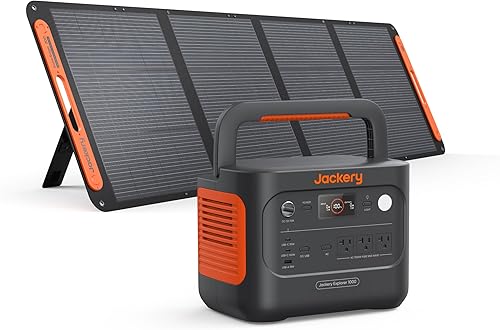 Best for a complete 200W kit
Jackery Solar Generator 1000 v2 and 200W
9.6/10 our score
See it on Amazon
- 4
 Check it
Anker SOLIX C1000 Gen 2 Portable Power
Best for the matched Anker package - 5
 Check it
Anker SOLIX C300 DC Portable Power Station
Best for a smaller DC setup - 6
 Check it
GRECELL 200W Portable Solar Panel for Power
Best for adjustable outdoor positioning - 7
 Check it
HODRANT Solar Panel Carry Case Compatible
Best for panel storage - 8
 Check it
E-POWO 110W Portable Solar Panel for Power
Best for a lighter adapter-rich setup
The best Anker SOLIX C1000 solar panels by use
The best match depends on whether you want a bundled Anker system, a separate 200W panel, a smaller travel panel or a storage solution.
We compared the stated output, voltage, connectors, included cables and portability features against the C1000's solar input.
That approach keeps the choice grounded in how a panel will connect and perform with the station.
Our score weighs specs, features and buyer feedback against what you're shopping for.
A high score does not erase a mismatch on voltage or connector type.
It helps to read the score alongside the setup notes for each product.
Some picks are complete kits, while others are panels only and may need a separate adapter.
Others are aimed at direct USB charging or at storage and transport.
Keeping those jobs separate makes it easier to pick the right tool for your trip.
Campers who charge a station will want different specs from hikers topping up a phone.
Home backup users may care more about cable length and stable placement than about backpack weight.
We note those daily differences so the specs mean something in real use.
Anker SOLIX PS30 Portable Solar Panel: Best for lightweight USB charging
- 30W rated power
- USB-C and USB-A ports
- IP65 weather-resistant protection
- Foldable design
The PS30 is a small, foldable Anker panel for charging phones, tablets and cameras directly. Its USB outputs and 2.2 lb weight make it easy to carry, but its 30W output is far below the C1000's full solar input potential.
Pros
- Lightweight
- USB-C and USB-A outputs
- IP65 weather-resistant protection
Cons
- Only 30W
- Not a full-output match for the C1000
The Anker SOLIX PS30 is best for small USB charging, not for quickly filling a C1000. Its 30W rated power, USB-C port and USB-A port are aimed at phones, tablets, cameras and other low-power devices.
At 2.2 lb and 10.7 x 8.8 x 1.7 in, it is the easiest panel here to carry for hiking or short trips. The foldable design also makes storage simple when your solar kit needs to stay compact.
Anker gives the PS30 IP65 weather-resistant protection for spraying and rain. That does not mean you should immerse it in water.
For stronger output, place it outdoors in strong sunlight with the panel facing the sun as directly as possible.
The PS30 includes 2 carabiners and a user manual. Its USB connection is convenient for direct device charging, but you should not choose it as the main C1000 panel if you need power closer to the station's solar input capacity.
Renogy 200W Portable Solar Panel for Power Stations: Best for a separate 200W panel
- 200W maximum power
- 25% efficiency
- MC4 output
- USB-C PD 45W and dual USB-A ports
Renogy gives buyers a separate 200W foldable panel with MC4 output and direct USB charging. It needs a compatible adapter for the C1000 connection, and the panel's 21.6V maximum voltage should be checked against the power station input.
Pros
- 200W output
- 25% efficiency
- Four kickstands
Cons
- MC4 output only
- 4-in-1 adapter sold separately
Renogy is the best separate 200W option when you want a larger panel with direct USB charging. Its 25% efficiency, 200W maximum power and foldable 13.9 lb body suit camping, RV use and blackout backup.
The panel folds to 23.72 x 22.99 x 1.97 in and uses a magnetic closure. Four kickstands support 40°, 50° and 60° positioning, so you can adjust the panel instead of leaving it flat on the ground.
Renogy uses MC4 output only for power-station connection. The 4-in-1 adapter is sold separately, so confirm that your cable path reaches the C1000 correctly before ordering.
The panel also includes USB-C PD 45W and dual USB-A ports for direct device charging.
Its maximum voltage is 21.6V. That makes voltage checking essential, even though the 200W rating looks attractive.
Use the C1000 input requirements and the panel's connector details together when deciding if this is the right standalone panel.
Jackery Solar Generator 1000 v2 and 200W: Best for a complete 200W kit
- 200W solar panel included
- 1,070Wh capacity
- 1,500W AC output
- Foldable-handle power station
This is a complete Jackery package rather than a standalone C1000 panel. The included 200W panel suits buyers who also need a 1,070Wh power station, but it is not the simplest choice if you already own an Anker SOLIX C1000.
Pros
- 200W panel included
- Complete power station package
- 1,500W AC output
Cons
- Includes a different power station
- Panel and generator ship separately
The Jackery Solar Generator 1000 v2 bundle is best for someone who needs a complete 200W solar package, not for someone seeking only a C1000-compatible panel. It includes a 200W solar panel with a 1,070Wh Explorer 1000 v2 power station.
The power station provides 1,500W AC output, 1,070Wh capacity and a foldable handle. It also has two USB-C ports, one USB-A port, one DC car port and three pure sine wave AC ports.
Jackery states that the 200W panel can charge the Explorer 1000 v2 to 80% in 6 hours. That charging figure applies to the Jackery system, so do not treat it as a guaranteed C1000 charging time.
The panel and generator ship separately. Choose this package if you want Jackery's power station and panel together.
If you already have an Anker SOLIX C1000, a separate panel with confirmed voltage and connector compatibility is a more direct purchase.
Anker SOLIX C1000 Gen 2 Portable Power: Best for the matched Anker package
- 200W solar panel included
- 1,024Wh capacity
- 2,000W output
- 9 total power outlets
The C1000 Gen 2 package includes the power station, a PS200 bifacial portable solar panel and solar charging cables. It is the clearest compatibility choice for buyers who want the C1000 family in one package, though the two packages ship separately.
Pros
- Matched Anker package
- 200W panel included
- Solar charging up to 600W
Cons
- Two packages ship separately
- Gen 2 expansion feature is removed
The Anker SOLIX C1000 Gen 2 bundle is the simplest compatibility choice because the package includes the C1000 Gen 2, a PS200 bifacial portable solar panel and solar charging cables.
The power station has 1,024Wh capacity, 2,000W output, 3,000W peak output and 9 total power outlets.
Anker states that the system can recharge with up to 600W of solar at up to 60V, with a full solar recharge time of 1.8 hours under the stated conditions.
The package includes two 8.2 ft solar charging cables and one 1.6 ft XT60i solar charging cable.
That gives the bundle a clearer setup path than a bare panel that requires a separate adapter.
For camping, the longer cables let you place the panel in sun while keeping the station in shade or inside a tent.
There are two important trade offs.
The two packages ship separately, and the Gen 2 model removes the expansion feature to reduce size and weight.
That means delivery timing can split, and you cannot add capacity later in the way some other models allow.
Pick this bundle when matched Anker parts matter more than adding capacity later.
It suits buyers who want one tested path from panel to station.
Anker SOLIX C300 DC Portable Power Station: Best for a smaller DC setup
- 60W solar panel included
- 288Wh capacity
- 300W output
- Seven charging ports
The C300 DC bundle is a smaller Anker solar setup with a 60W panel, 288Wh capacity and 300W output. It is not a C1000 replacement, and Anker says it is not compatible with PS30, PS200 or PS400 panels.
Pros
- 60W panel included
- Small 288Wh setup
- 11–28V solar input range
Cons
- Not a C1000
- Not compatible with PS30, PS200 or PS400
The Anker SOLIX C300 DC bundle is best for a smaller DC charging setup, not as a replacement for the C1000. It includes a 60W solar panel, a 288Wh power station and 300W output.
The C300 DC has 7 charging ports, including two 140W USB-C ports, one 100W USB-C port, one 15W USB-C port, two USB-A ports and one 120W car socket. Its compact 4.88 x 4.72 x 7.87 in body weighs 2.8 kg.
Anker gives the C300 DC a solar input range between 11V and 28V. That range is useful when choosing a panel for the C300 DC, but it should not be confused with the C1000's solar requirements.
Anker specifically says this setup is not compatible with the SOLIX PS30, PS200 or PS400. Choose it if your goal is a smaller Anker system with a 60W panel.
Choose a C1000-focused panel when you need the larger station.
For a broader comparison, see our guide to the best portable power station solar charger.
GRECELL 200W Portable Solar Panel for Power: Best for adjustable outdoor positioning
- 200W maximum power
- Four adjustable kickstands
- 23.5% conversion efficiency
- 4-in-1 charge cable included
GRECELL offers a 200W foldable panel with four kickstands and a 4-in-1 charge cable. Its 19V maximum voltage and connector choice need to be checked carefully against the C1000 input before buying.
Pros
- 200W output
- Four kickstands
- 4-in-1 cable included
Cons
- Heavier than the smallest panels
- Voltage and connector match need checking
GRECELL is best for outdoor positioning because its 200W foldable panel has 4 adjustable kickstands. The panel folds to 25.82 x 21.1 x 2.95 in and weighs 16.5 lb.
Its stated conversion efficiency is 23.5%, and the panel uses monocrystalline and polycrystalline silicon. The 4-in-1 charge cable includes XT60, 30A Anderson, DC 79*09mm and M16 aviation connectors.
That cable range can help when you have more than one power station in your setup. It still does not remove the need to check the C1000's voltage and input connection before use.
GRECELL lists a maximum voltage of 19V. The panel also has a built-in cable bag, four grommets and an IP65 water-resistant design for splashing.
Keep it out of standing water and do not assume a weather-resistant panel can be submerged.
Choose GRECELL when adjustable placement and a 200W panel matter more than keeping weight low. Renogy is lighter, while E-POWO includes more adapter types in its cable.
HODRANT Solar Panel Carry Case Compatible: Best for panel storage
- Fits Anker SOLIX PS30, PS100 and PS200
- Double-layer compartment
- Two outside pockets
- Padded handles and shoulder strap
HODRANT is a carry case, not a solar panel. Its padded double-layer compartment can store two panels, while the outside pockets hold cables and chargers.
Pros
- Stores two panels
- Padded interior
- Shoulder strap and handles
Cons
- Does not generate power
- Not compatible with Anker PS200 200W bifacial solar panel
The HODRANT case is best for protecting and carrying panels, not for charging the Anker SOLIX C1000.
Its 22 x 4.5 x 25.5 in nylon body has a padded double layer compartment that can store two panels.
That padding helps guard against scratches and bumps in a car boot or storage cupboard.
Two outside pockets give you room for charging cables, chargers and other small tools.
Keeping leads apart from the panel face also makes setup faster when you arrive at a site.
Padded handles and a shoulder strap let you carry the case as a handbag or shoulder bag.
That carry style is handy for short walks from a parked car to a tent pitch.
HODRANT describes the case as compatible with Anker SOLIX PS30, PS100 and PS200 panels, along with similar sized foldable 100W and 200W panels.
It specifically excludes the Anker SOLIX PS200 200W bifacial solar panel, so check the model before buying.
The case is water resistant and folds when not in use.
It adds storage and transport protection to a solar kit, but it does not change the panel's electrical compatibility with the C1000.
E-POWO 110W Portable Solar Panel for Power: Best for a lighter adapter-rich setup
- 110W maximum power
- 7-in-1 adapter cable
- Two kickstands
- IP67 waterproof protection
E-POWO gives you a 110W foldable panel with USB-A, USB-C, USB QC3.0 and a 7-in-1 adapter cable. It is easier to match across connector types than a bare MC4 panel, but it supplies less solar power than the 200W choices.
Pros
- 7-in-1 adapter cable
- 110W output
- IP67 waterproof protection
Cons
- Less output than 200W panels
- 10.6 lb weight
E-POWO is best for a lighter 110W setup with many connector options.
Its foldable panel weighs 10.6 lb, provides 110W maximum power and includes a 7-in-1 adapter cable with XT60 and Anderson connections.
The panel also has USB-A, USB-C and USB QC3.0 charging ports.
Those ports let you charge small devices directly while the panel feeds a station through the adapter cable.
Two kickstands support 40°, 50° and 60° angles, while reinforced grommets support mounting on an RV or tent.
Adjustable placement helps on uneven ground where a flat panel would miss the strongest sun.
E-POWO gives the panel IP67 waterproof protection and uses an ETFE coated surface with monocrystalline solar cells.
Cloud cover or obstacles can still reduce charging efficiency, so keep the panel in clear sunlight when possible.
The main trade off is output.
At 110W, this panel supplies less solar power than the 200W picks, but its 7-in-1 cable may make setup easier across different power stations.
Confirm the cable and voltage path for the C1000 before connecting it.
How to match a panel to the C1000
Match voltage first, connector second and wattage third.
A panel can have a high watt rating and still be a poor choice if its electrical range or connection does not suit the power station.
Checking voltage first protects against a panel that looks powerful but cannot feed your station correctly.
Connector type comes next because even a matched voltage will not help without the right cable path.
Wattage matters after those basics are clear, since it shapes how much input you can expect in good sun.
A 200W panel is a practical size for many C1000 users.
It gives more input potential than the 30W PS30 or 110W E-POWO while remaining easier to carry than a larger multi panel setup.
That middle ground suits weekend camping, RV trips and home backup top ups.
Connector types vary across these picks.
Renogy uses MC4 output, GRECELL includes a 4-in-1 cable, and E-POWO includes a 7-in-1 cable.
The cable you need depends on the station input and on what is included in the box.
The C1000 Gen 2 bundle includes Anker solar charging cables, which reduces adapter decisions.
Bundled cables also cut the risk of ordering the wrong lead for the job.
Panel weight also changes the daily experience.
The PS30 weighs 2.2 lb, E-POWO weighs 10.6 lb, Renogy weighs 13.9 lb, and GRECELL weighs 16.5 lb.
A lighter panel is easier to move, while a 200W panel can collect more power under suitable sunlight.
Think about how far you will carry the panel and how often you will set it up.
A heavy panel may be fine if it stays by an RV, but it can become a chore on foot.
Folded size matters too, since a panel must fit in your vehicle or storage space.
Choose the balance that matches your travel style, not just the highest wattage on paper.
How to set up and care for a C1000 solar panel
Place the panel outdoors in clear, strong sunlight with its surface aimed as directly at the sun as practical.
Shade, clouds, obstacles and a poor angle can reduce charging even when the panel's rated wattage is high.
Move the panel through the day if the sun shifts across your campsite.
That small adjustment can keep input steadier than leaving the panel in one fixed spot.
Use the correct cable between the panel and power station.
Keep connectors dry, avoid pulling the cable by the plug, and check that the panel is stable before leaving it in place.
A loose kickstand or a cable under tension can bend a connector or tip a panel in wind.
Weather resistance has limits.
The PS30 and GRECELL panels are described as IP65 weather resistant, while E-POWO is described as IP67 waterproof.
Those ratings do not make a panel safe to immerse in water.
Do not soak a panel or leave connectors sitting in a puddle.
Wipe dust from the surface with a soft cloth so dirt does not cut into output.
Fold the panel only as designed and keep it in a suitable case when transporting it.
The HODRANT case can store two similar sized foldable panels, but it does not fit the Anker PS200 200W bifacial panel according to its compatibility notes.
Store cables in a pocket or bag so they do not press against the panel face.
Check grommets, kickstands and cable bags before each trip, since small wear can turn into a failed setup.
Keep the panel upright and stable, and avoid stacking heavy items on top of it.
Which Anker SOLIX C1000 solar panel should you choose?
Choose the Anker SOLIX C1000 Gen 2 bundle if you want the most direct match, included solar cables and a 200W PS200 panel.
It is the cleanest route for buyers who want the station and panel to work as one package.
Choose Renogy if you want a separate 200W panel and can confirm the MC4 adapter and 21.6V maximum voltage fit your setup.
Its kickstands and USB ports also suit campsites where you charge devices directly.
Choose E-POWO if 110W is enough and the 7-in-1 adapter cable helps your travel kit.
That choice favors connector range and easier carrying over higher solar input.
Choose Anker PS30 for lightweight USB charging, not as the main way to recharge a C1000.
It fits phones, tablets and cameras on hiking trips where every ounce matters.
If you need a complete system from another brand, the Jackery bundle pairs a 200W panel with its own 1,070Wh station.
That may suit a new buyer better than adding a panel to a station you already own.
The C300 DC bundle suits a smaller DC setup, while GRECELL suits users who want four kickstands and a 4-in-1 cable.
The HODRANT case is an add on for storage and transport, not a power source.
If you also compare panels for other Anker systems, see the best Anker portable solar panels and our best solar panels for Anker SOLIX F3800 Plus guide.
For a wider brand comparison, review the best ALLPOWERS solar panels.
Match voltage and connectors first, then pick the wattage and weight that fit your trips.
Our top 3 picks at a glance
-
1
Best for lightweight USB charging
Anker SOLIX PS30 Portable Solar Panel
9.7/10 our score
See it on Amazon -
2
Best for a separate 200W panel
Renogy 200W Portable Solar Panel for Power Stations
9.7/10 our score
See it on Amazon -
3
Best for a complete 200W kit
Jackery Solar Generator 1000 v2 and 200W
9.6/10 our score
See it on Amazon
Frequently asked questions
What is the best solar panel for Anker SOLIX C1000?
The Anker SOLIX C1000 Gen 2 package is the simplest match because it includes a 200W PS200 bifacial portable solar panel and Anker solar charging cables. For a separate panel, compare Renogy, GRECELL and E-POWO by voltage, connector type, output and portability before buying.
How many watts of solar can the Anker SOLIX C1000 use?
The Anker SOLIX C1000 Gen 2 supports up to 600W of solar input and a maximum solar voltage of 60V. A 200W panel can work as a practical single-panel choice, but it will not use the full 600W input on its own.
Can you use any portable solar panel with the Anker SOLIX C1000?
No. Match the panel's voltage, connector and charging cable to the C1000 solar input.
A panel with the wrong connection or electrical range may not work correctly, so check the exact C1000 requirements before ordering an adapter.
Is a 200W solar panel enough for the Anker SOLIX C1000?
A 200W panel is a sensible starting size for the Anker SOLIX C1000 because several picks here offer that output. Actual charging speed depends on sunlight, panel angle, shading and the panel's connection to the power station.
Can the Anker SOLIX PS30 charge the C1000?
The PS30 is a 30W USB solar panel designed for low-power devices such as phones, tablets and cameras. It is not a full-output C1000 charging solution, so choose a panel with the correct power-station connection when your goal is to recharge the C1000.


