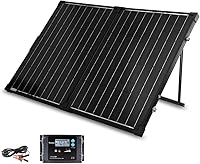
Which Solar Panels Can Supply 400W to a Jackery?
A Jackery can take 400W from solar only if its model allows that much input. Check the station's maximum solar input, voltage range, and approved panel connections before choosing one 400W panel or combining smaller ones.
On this page (7 sections)
- Can a Jackery use a 400 watt solar panel?
- How do you check whether a panel combination can deliver 400W?
- Which 100W panels fit into a larger solar setup?
- What should you check before buying a 400W solar panel for Jackery?
- Will a larger panel charge a Jackery faster?
- Which 400W setup should you choose?
- Is a Jackery 400 watt solar panel setup right for you?
A Jackery can take 400W of solar input only if the specific power station supports it. Check its maximum solar input, voltage range, and approved panel connections before buying one 400W panel or combining smaller ones.
“400 watt solar panel for Jackery” can mean a panel rated for 400W, or an array whose panels add up to 400W. Either way, the station’s input limits decide how much it can use.
If you’re still comparing panel types, start with our guide to what is a portable solar panel. For broader Jackery options, see best solar panels for Jackery.
Can a Jackery use a 400 watt solar panel?
Some Jackery stations may accept a 400W solar setup, but the model name matters. A panel’s rated output is only one part of compatibility.
Find these details in the manual or specifications for your exact power station:
- Maximum solar input in watts
- Solar input voltage range
- Maximum input current, if given
- Approved connectors and adapter cables
- Whether the station allows multiple panels, and how they must be connected
The station may cap the power it draws below the panel’s rating. A 400W panel connected to a station with a lower input limit won’t make the station take 400W.
Panel output also changes with sunlight, shading, temperature and angle. Rated wattage is a comparison point, not a promise of the power you’ll see at the station.
How do you check whether a panel combination can deliver 400W?
First confirm that the station accepts 400W or more; then check the array’s voltage, current and connection method. A matching total wattage alone does not prove that panels can be combined.
For example, four 100W panels add up to 400W of rated power. But their electrical output changes depending on whether they’re wired in series or parallel, and the station must accept the resulting voltage and current.
Use this checklist before connecting panels:
| Check | What to confirm |
|---|---|
| Station input ceiling | The station can use up to 400W or more |
| Voltage | The panel or array stays within the station’s allowed range |
| Current | The array stays within the station’s input limit |
| Connector | The cable or adapter is approved for that station |
| Panel setup | The manual allows the number of panels and wiring method |
Don’t assume that a cable that fits will make an array compatible. If the manual doesn’t explain a proposed combination, ask Jackery or the panel maker to confirm the setup for your exact model.
What does 400W mean for a Jackery solar panel?
A “400W panel” generally refers to its rated power under specified conditions. It doesn’t mean a power station will receive 400W through every hour of sunlight.
A 100W panel, for example, can produce less than its rating when clouds, shade or a poor angle reduce sunlight. The station may also limit how much of the available output it accepts.
Compare the station’s input specs with the panel’s voltage and current specs, not just the wattage printed in the product name.
Can you combine four 100W panels?
Only if the station supports the array’s total input and the connection method. Four panels rated at 100W each have a combined rating of 400W, but that figure doesn’t establish that the array fits the station.
Confirm how the panels can be connected and whether the station supports that arrangement. Keep every panel’s electrical specifications and any required cable or adapter in view while checking.
For smaller Jackery models, compare the station-specific advice in our best solar panel for Jackery Explorer 300 guide and best solar panel for Jackery 500 guide.
Which 100W panels fit into a larger solar setup?
A 100W panel can contribute to a larger setup only when the station and wiring support it. These options are 100W panels or a 200W solar generator bundle, so none is itself a 400W panel.
ZOUPW’s 100W portable panel includes connectors for DC8020, XT60, Anderson, DC7909 and DC5521. The company specifies compatibility with several station families, including Jackery Explorer 240, 300 and 500 through DC7909, and the original Jackery 1000 through Anderson.
Those connector notes don’t confirm compatibility with every Jackery model. Check the station manual, especially if you plan to combine panels or use a different Explorer generation.
The bundle includes a 1,070Wh Explorer 1000 v2 and a 200W solar panel. Jackery says the panel can charge the station to 80% in 6 hours; sunlight and actual charging conditions affect results.
It’s a 200W option, not a 400W one. If you want to add another panel, confirm the Explorer 1000 v2’s solar input limits and approved setup first.
Jackery’s SolarSaga 100W Air weighs 7.1 lb and folds into a compact W shape. It includes a DC8020 to DC7909 adapter and a multifunctional solar charging cable.
Jackery warns that the Air model isn’t compatible with the Explorer 300 or 300 v2 because of a voltage mismatch. Check your station model before choosing it, especially if you’re planning a multi-panel setup.
For a closer look at a Jackery 100W option, read our Jackery SolarSaga 100W solar panel review.
What should you check before buying a 400W solar panel for Jackery?
Match the panel’s electrical specs to the station’s solar input, then confirm the physical and cable setup. These checks can prevent buying a panel that the station can’t use as intended.
- Identify the exact station model. Similar Explorer names can have different input limits or connectors.
- Read the station’s solar input specifications. Note the maximum watts, voltage range and current limit.
- Compare the panel’s voltage and current. For an array, check the combined values for the wiring method you plan to use.
- Confirm the cable and adapter. Use a connection approved for the station and panel.
- Check the allowed number of panels. Follow the station manual’s instructions for combining panels.
- Consider how you’ll set up the array. Larger panels may need more space, while multiple smaller panels need safe placement and compatible wiring.
A panel’s connector can fit without its electrical output being suitable. Don’t connect panels until you’ve confirmed the voltage and current fall within the station’s limits.
If you’re considering a large panel kit for a separate solar setup, see our best Renogy 400 watt solar panel kits. A 400W Renogy kit is not automatically compatible with a Jackery station; check the station’s input limits and approved connection method.
Will a larger panel charge a Jackery faster?
A larger panel can provide more available solar power, but only up to the station’s input limit. Charging speed also depends on sunlight and the station’s charging behavior.
If a station accepts less power than the panel can supply, extra rated panel wattage won’t raise the station’s draw beyond its limit. If conditions are cloudy or the panels are shaded, actual input can fall below their rated output.
Jackery says the Explorer 1000 v2 defaults to a 1.7-hour AC charge mode to support battery health. Its optional one-hour emergency charging mode is activated through the Jackery app.
Those are AC charging figures, not a promise of solar charging time.
Which 400W setup should you choose?
Choose a 400W panel or array only when your station’s manual confirms that it can use the voltage, current and input power. If the station’s limit is lower, choose a panel setup that fits that ceiling instead.
A single large panel may reduce the number of panels and connections you need to arrange. Several smaller panels may be easier to position, but they bring more wiring and still need to meet the station’s limits as a combined array.
For a matched panel and station package, the Explorer 1000 v2 bundle here includes a 200W panel. Pick it if that output suits your needs; pick a 400W setup only after confirming your station supports it.
Is a Jackery 400 watt solar panel setup right for you?
Use the station’s input rating as your decision rule: choose a 400W panel or array if the station accepts that much and the electrical specs match; otherwise, choose a compatible setup at or below its limit.
Before ordering, verify the exact Explorer model, voltage range, current, connectors and approved panel arrangement in the manual. If any part of a combined setup is unclear, get confirmation from Jackery before connecting it.
Frequently asked questions
Can I connect a 400W solar panel to a Jackery?
Only if the specific Jackery station accepts the panel's voltage and current and has a solar input limit that can use the power. A panel rated at 400W won't make a station draw 400W if its input limit is lower.
Check the station manual and panel electrical specs before connecting.
Can I combine four 100W panels for a Jackery?
Four 100W panels add up to 400W of rated panel power, but the combination must also meet the station's voltage, current, connector and input limits. Confirm the wiring method and approved panel setup for your exact station; do not assume that four compatible-looking connectors can be joined safely.
Will a 400W panel charge my Jackery faster?
It can provide more available power than a smaller panel when sunlight is strong, but the station draws no more than its own solar input limit. Shade, clouds, panel angle and changing sunlight can also reduce real output, so rated wattage does not guarantee a 400W charge.
Can a Jackery Explorer 300 use a 400W solar panel?
Check the Explorer 300 manual for its maximum solar input and accepted voltage range before selecting a panel. A larger panel may be limited by the station's input ceiling, and a panel with an incompatible voltage or connector can prevent charging or cause an input error.
Is one 400W panel better than four 100W panels?
Neither setup is automatically better. One large panel may be simpler to position if its electrical specs match the station, while smaller panels can be easier to move and arrange.
Compare the station's limits, wiring requirements, portability and available sun before deciding.