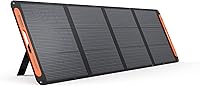
Which Way Should Solar Panels Face?
Face solar panels toward the equator for the best all-day exposure: south in the Northern Hemisphere and north in the Southern Hemisphere. For portable panels, adjust the direction and tilt during the day when practical, and keep the panel clear of shade.
On this page (7 sections)
- Which way should solar panels face?
- Does the angle matter for portable solar panels?
- How often should you reposition a portable solar panel?
- How does shade affect solar charging?
- How can you position panels safely during daily charging?
- What else should you check before charging?
- Which direction should you face solar panels for daily charging?
Face solar panels toward the equator for useful exposure through the day: south in the Northern Hemisphere and north in the Southern Hemisphere. With portable panels, adjust their direction and tilt as the sun moves when practical, and avoid shade.
The best position changes with your location, season, nearby obstructions, and how often you can reposition the panel. Start with an open spot, aim toward the sun, and check your charging system's input limits.
Which way should solar panels face?
Fixed solar panels generally face south north of the equator and north south of the equator. That direction gives a fixed panel a useful path of sunlight over the day.
For a portable panel, point its active surface toward the sun rather than relying on a compass direction alone. The sun's position changes, so a panel aimed well in the morning may need adjustment later.
Treat this as a starting point, not a promise of a specific charging rate. Roofs, trees, hills, and buildings can block sunlight, while your panel's instructions may call for a particular setup.
If you are new to portable solar, start with what a portable solar panel is, including how portable panels fit into a charging setup.
Does the angle matter for portable solar panels?
Yes, the angle affects how directly sunlight reaches the panel. A panel pointed more directly at the sun can make better use of the available light than one lying flat when the sun is low.
There isn't one tilt that works best everywhere and all day. The sun's height shifts with location, time, and season, so adjust the panel when you can and follow its setup guidance.
A stand can make repositioning easier, especially if you need to keep the panel off the ground. Compare features such as stability and wheel design in our guide to a portable solar panel stand with wheels.
The DOKIO 100W kit weighs 6 lb and folds to about 19 x 26 x 0.5 in, according to its product details. Its cable gives you some room to place the panel and controller separately.
How often should you reposition a portable solar panel?
Reposition the panel when the sun moves enough to leave it facing away from direct light. How often you do that depends on your charging needs and whether you can safely reach the panel.
For a short charging session, placing the panel in an open sunny spot and checking its direction once may be enough. If you are charging for several hours, a few adjustments can help it keep facing the sun.
A tracker can change the panel's orientation as sunlight shifts, but it adds another part to your setup. Read whether to use a portable solar panel tracker to compare that approach with manual adjustments.
The DOKIO 200W kit weighs 9.7 lb and folds to about 20 x 27 x 1.1 in. Its maker notes that some power stations limit input, so check your station's maximum solar input before choosing a panel.
How does shade affect solar charging?
Keep the panel in open sunlight whenever possible. Shade from a tree, vehicle, building, or even a small obstruction can reduce the sunlight reaching the panel.
Check the panel again if clouds move or a shadow crosses it during a charging session. If you can't avoid shade at the current spot, moving the panel a short distance may improve its exposure.
Before moving a panel, check that the cable can reach without pulling tight or crossing a path where someone could trip. The BougeRV 20 Feet 10AWG Solar Extension Cable can help when a compatible setup needs more reach.
BougeRV describes the cable as having male and female solar connectors, with a bare-wire end for controller connections. Confirm that its connectors and wiring suit your panel and controller before connecting it.
How can you position panels safely during daily charging?
Use a stable, secure position that keeps the panel exposed to sunlight without creating a trip or fall hazard. Route cables neatly and keep the controller or power station out of direct sun if its instructions call for that.
Don't balance a panel on an unstable surface or leave it where wind or foot traffic can knock it over. Our guide to keeping portable solar panels secure covers ways to reduce movement and protect the setup.
If you use a charge controller, connect the system in the order and manner its instructions specify. For one example of a panel installation walkthrough, see how to install Renogy solar panels.
What else should you check before charging?
Confirm that the panel, controller, battery, and power station are compatible. A panel's rated output does not guarantee that a power station will accept that much solar input.
For instance, the DOKIO kits' product details warn that some power stations cap solar input below the panel's maximum output. Check your equipment's input limits and connector requirements before setting up.
If you need the controller included with a panel, compare options in our guide to the best portable solar panel with charge controller. For a portable panel and storage setup in one package, see the best suitcase solar panel kit.
A solar panel can also charge a battery system that supports backup power. Learn how those systems differ in what a solar UPS is.
Which direction should you face solar panels for daily charging?
For daily charging, start with the panel facing the equator, place it in open sun, and adjust it as the sun moves when you can. In the Northern Hemisphere, start south; in the Southern Hemisphere, start north.
Choose a tracker if you want automated repositioning and its added setup suits your needs. For a simple portable setup, use a stable stand, keep cables within reach, and check your power station's solar input limit before charging.
Frequently asked questions
Which direction should solar panels face?
In the Northern Hemisphere, face a fixed panel south for strong exposure across the day; in the Southern Hemisphere, face it north. Portable panels can be repositioned as the sun moves.
Local obstructions, season, and the panel maker's setup instructions also affect the best direction.
Should portable solar panels face the sun directly?
Aim portable panels toward the sun when you can, then adjust their angle as the sun moves. A panel that stays in one place can still charge, but its exposure changes through the day.
Keep it unshaded and follow the panel and charge controller instructions.
Does a solar panel need to be tilted?
A tilt can help a panel receive more direct sunlight, but the useful angle depends on the sun's height, season, and location. For a portable panel, use a stable support and adjust it when practical.
Keep it secure and within the maker's permitted setup.
Can a solar panel charge in the shade?
A shaded panel may still produce some power, but shade reduces the sunlight available for charging. Even partial shade from a branch, vehicle, or building can affect exposure.
Move the panel into open sun when possible, and keep cables and equipment safely positioned.