Best 100W Solar Panels: Top 9 Picks (November 2026)
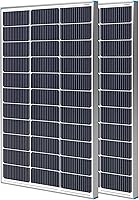
The best 100 watt solar panels include the Renogy Solar Panels 100W 2PCS for expanding a fixed setup, the ZOUPW 100W Portable Solar Panel for Power for broad power station compatibility, and the Renogy 100 Watt Solar Panel N-Type for a single rigid panel.
On this page (6 sections)
Best 100W Solar Panels
The Renogy Solar Panels 100W 2PCS are a strong fit for a fixed battery setup that can use two rigid panels. For a single portable panel, compare the ZOUPW and DOKIO options by connectors, controller needs, and carrying weight.
A 100 watt solar panel is a useful building block for basic off-grid charging, but the panel alone is only one part of the system. Match its output and connections to your battery or power station, then plan for lower production when sun, angle, or weather are less favorable.
If you’re deciding between a foldable unit and a mounted panel, start with what a portable solar panel is. Shoppers who need a panel for moving between campsites can also compare our best portable 100 watt solar panel picks.
Our picks at a glance
-
1

-
2
 Best for broad power station compatibility
ZOUPW 100W Portable Solar Panel for Power
9.7/10 our score
See it on Amazon -
3

- 4
 Check it
DOKIO 100W Portable Foldable Solar Panel Kit
Best for a lightweight battery kit - 5
 Check it
ECO-WORTHY 400W Solar Panels N-Type 4pcs
Best for a four-panel fixed array - 6
 Best for a basic rigid panelCheck it
- 7
 Check it
Ecosonique Technology 100W Portable Solar Panel with USB-C/A
Best for compact device charging - 8
 Best for tight roof layoutsCheck it
- 9
 Best for adding a matched pairCheck it
Which 100 watt solar panels fit different charging setups?
The best 100W solar panel depends on whether you need portability, one fixed panel, or a larger array. These nine options range from foldable chargers with device ports to multi-panel packs for fixed systems.
We compared the stated wattage, panel type, connectors, included controller or cables, size, and weather protection against basic off-grid battery charging needs. Our score weighs specs, features and buyer feedback against what you’re shopping for.
How do these 100W solar panels compare?
These panels differ most in portability, pack size, and what comes with them. Check the table for a quick match, then verify your charge controller or power station can accept the panel's output.
| Product | Best for | Panel output | Pack size | Dimensions | Our score |
|---|---|---|---|---|---|
| Renogy Solar Panels 100W 2PCS | expanding a fixed setup | 100W each | 2 panels | 34.1 x 22.8 x 1.2 in each | 9.7 |
| ZOUPW 100W Portable Solar Panel for Power | broad power station compatibility | 9.7 | |||
| Renogy 100 Watt Solar Panel N-Type | a single rigid panel | 34.1 x 22.8 x 1.2 in | 9.5 | ||
| DOKIO 100W Portable Foldable Solar Panel Kit | a lightweight battery kit | 9.5 | |||
| ECO-WORTHY 400W Solar Panels N-Type 4pcs | a four-panel fixed array | 100W each | 4 panels | 35.63 x 23.03 x 1.18 in each | 9.3 |
| JJN 100 Watt Solar Panels | a basic rigid panel | 38.2 x 22.7 x 1.2 in | 9.1 | ||
| Ecosonique Technology 100W Portable Solar Panel with USB-C/A | compact device charging | 8.9 | |||
| HQST 100W 12V Solar Panel | tight roof layouts | 31.8 x 27.5 x 1.18 in | 8.6 | ||
| Rvpozwer 100W Solar Panel | adding a matched pair | 100W each | 8.3 |
Which 100 watt solar panel should you choose?
The Renogy two-panel pack suits fixed systems that may expand, while the ZOUPW is easier to pair with several portable power stations. The remaining choices serve buyers who want one rigid panel, lightweight folding gear, or multiple panels at once.
Renogy Solar Panels 100W 2PCS: Best for expanding a fixed setup
- Two 100W panels
- 25% conversion efficiency
- 16BB N-type cells
- IP67 rating
Two rigid 100W panels make this a fit for a fixed setup that may grow. Their 16BB N-type cells and IP67 rating suit buyers comparing output and weather protection.
Pros
- Two panels in one pack
- 25% stated conversion efficiency
- IP67 rating
Cons
- Rigid panels need a mounting plan
- Pack output totals 200W
Renogy's two-panel pack is the top pick for a fixed setup with room for expansion. Each panel is rated at 100W, measures 34.1 x 22.8 x 1.2 in, and uses 16BB N-type cells with a stated 25% conversion efficiency.
The IP67 rating and aluminum frame suit outdoor mounting, while the included 2-panel configuration gives you 200W of rated panel capacity in total. Renogy states that this N-type design is smaller and lighter than its predecessor, but take measurements against your available mounting space before planning the layout.
The panels have solar connectors, and the product description says they are compatible with various MPPT and PWM charge controllers. You still need a controller suited to your battery and wiring plan.
Choose these when you want two fixed panels from the start. For brand-specific alternatives, see our Renogy 100 watt solar panel comparison.
ZOUPW 100W Portable Solar Panel for Power: Best for broad power station compatibility
- Foldable panel
- Five connector types
- USB-C and USB-A ports
- IP67 panel body
The included five-in-one cable covers several common power station connectors, and built-in USB ports allow direct device charging. Check that your station accepts the panel's input.
Pros
- Five connector types included
- USB-C and two USB-A ports
- Two adjustable kickstands
Cons
- Power station input limits can cap charging
- Keep the USB hub and cables dry
The ZOUPW foldable panel is a portable pick with five connector types in its cable: DC8020, XT60, Anderson, DC7909, and DC5521. That range can simplify connection to compatible power stations, but confirm your exact model and its solar input limit.
It weighs 9.5 lb and folds to 24.13 x 21.06 x 1.77 in. Two kickstands adjust the panel angle, and built-in USB-C and two USB-A ports let it charge compatible devices directly.
The panel body has an IP67 rating, but ZOUPW says to keep the USB hub and connection cables dry. Its 100W rating is also subject to the receiving station's input cap, so a station limited to 60W will draw no more than that.
Choose it for portable charging when connector flexibility matters. If you want a panel and controller planned as one purchase, compare a 100 watt solar panel kit.
Renogy 100 Watt Solar Panel N-Type: Best for a single rigid panel
- 25% conversion efficiency
- 16BB N-type cells
- IP67 protection
- 10-year material and workmanship commitment
This single rigid panel has the same stated dimensions and cell efficiency as Renogy's two-panel pack. Its 10-year material and workmanship commitment may suit buyers who want one panel first.
Pros
- One 100W panel
- 16BB N-type cells
- IP67 protection
Cons
- Rigid panel needs mounting space
- Charge controller is not identified as included
This single Renogy panel suits a buyer who wants one rigid module rather than a two-panel pack. It has 16BB N-type cells, a stated 25% conversion efficiency, and a size of 34.1 x 22.8 x 1.2 in.
Its IP67 protection and corrosion-resistant aluminum frame are features to consider for a fixed outdoor installation. Renogy also states a 10-year material and workmanship commitment and a 25-year performance guarantee at 80% output.
The panel uses solar connectors and is rated at 100W. As with other rigid modules, plan for mounting hardware, charge control, and wiring that fit your battery system.
Choose this model when you want one Renogy panel and may add more later. Review the best batteries for 100 watt solar panels to match storage capacity to your charging plan.
DOKIO 100W Portable Foldable Solar Panel Kit: Best for a lightweight battery kit
- Foldable panel
- Separate PWM controller
- 9.84 ft cable
- USB ports
DOKIO includes a separate PWM controller for 12V battery charging and a cable that lets you position the panel away from the battery. Its 6 lb weight helps if you need to carry the panel.
Pros
- 6 lb stated weight
- Separate PWM controller included
- Cable is 9.84 ft long
Cons
- Confirm your power station's input limit
- Controller is PWM
DOKIO is a foldable panel kit for buyers who want a separate PWM controller included for 12V battery charging. It weighs 6 lb and folds to about 18.9 x 26 x 0.47 in, making it one of the lighter options here.
A 9.84 ft cable lets you place the panel in sun while keeping the controller or power station shaded. The kit also has USB ports for small devices when connected to a 12V battery.
Check your power station's input limit before buying, since some stations cap charging below the panel's rating. DOKIO's listed panel maximum power is 110W despite the 100W name, so confirm which exact version you are choosing.
Choose it if a lightweight folding panel and a basic controller are more useful than a rigid installation. Its compact form is convenient for travel, but secure it and route the cable safely during use.
ECO-WORTHY 400W Solar Panels N-Type 4pcs: Best for a four-panel fixed array
- Four 100W panels
- 25% conversion efficiency
- 16BB N-type cells
- IP68 junction box
Four 100W rigid panels make this a larger starting point for a fixed off-grid system. Pre-drilled holes and plug-and-play connectors support installation, but plan the wiring and charge control for your system.
Pros
- Four panels included
- 25% stated conversion efficiency
- Pre-drilled mounting holes
Cons
- Four-panel pack may exceed a small battery's charging needs
- Rigid panels need mounting space
ECO-WORTHY's four-panel pack is for a fixed array where the plan calls for four 100W panels. Each panel measures 35.63 x 23.03 x 1.18 in and has a stated 25% conversion efficiency.
The panels use N-type cells and 16BB busbar technology, with pre-drilled mounting holes and plug-and-play connectors. Their junction box has an IP68 rating, and the included panel cables are 35 in long.
This pack can provide 400W of rated panel capacity, so check that your charge controller, wiring, and battery bank support the array. It is a much larger setup than a single 100 watt solar panel and needs a suitable mounting plan.
Choose it when you already know you need four rigid modules. If your system only needs one panel, a single-module option will be easier to size and install.
JJN 100 Watt Solar Panels: Best for a basic rigid panel
- 23% conversion efficiency
- 10BB monocrystalline cells
- Pre-drilled mounting holes
- IP65 junction box
JJN's rigid 100W panel has pre-drilled holes for mounting and a stated 23% conversion rate. Compare its longer footprint with the space available on your roof, rack, or ground mount.
Pros
- Pre-drilled mounting holes
- 23% stated conversion efficiency
- IP67 connectors
Cons
- Panel only, without a controller
- Longer than several panels here
JJN offers a straightforward rigid panel with pre-drilled mounting holes and a stated 23% conversion rate. Its 38.2 x 22.7 x 1.2 in dimensions make it longer than several other panels in this group, so check the available mounting area first.
The 100W monocrystalline module has 10BB cells, an IP65 junction box, and IP67 connectors. JJN states wind-load and snow-load figures for the panel, but your mounting surface and hardware also need to suit local conditions.
This is a panel-only choice, so plan for a compatible controller and cables for your battery setup. Its 13.7 lb weight may matter if you expect to move it rather than mount it permanently.
Choose JJN when you want a fixed panel with a simple mounting layout and have the rest of the charging system covered. For an RV roof, compare the dimensions with your roof fittings and mounting rails.
Ecosonique Technology 100W Portable Solar Panel with USB-C/A: Best for compact device charging
- Foldable design
- USB-C and USB-A ports
- 20V DC port
- Six adjustable kickstands
This portable panel combines a foldable design with USB-C, USB-A, and a 20V DC port. Its six kickstands help set the panel's angle, while included cables provide several power station connections.
Pros
- 6 lb stated weight
- USB-C and USB-A ports
- Multiple connector cables included
Cons
- IP65 rating
- Confirm that your station accepts the input
The Ecosonique foldable panel combines USB-C, USB-A, and a 20V DC port for direct charging of compatible devices. It weighs 6 lb and folds to 16.34 x 11.42 x 3.54 in, making it easy to pack compared with larger rigid modules.
Six adjustable kickstands let you angle the panel, and the included cables offer XT60, Anderson, and several DC connectors for compatible power stations. Ecosonique describes the panel as IP65 waterproof, with an auto-reboot feature for changing light conditions.
Check the connection and input requirements for your power station before relying on the adapters. The 100W rating is a maximum, and shade or cloud cover can reduce output.
Choose it if you want a portable panel that can charge small devices directly and packs down for trips. Keep the cable and connected electronics protected from moisture during outdoor use.
HQST 100W 12V Solar Panel: Best for tight roof layouts
- Square panel design
- 23% stated conversion efficiency
- Pre-drilled mounting holes
- IP65 connectors and junction box
HQST uses a more square footprint than many rigid 100W panels, which can help when planning a tight roof layout. Check the dimensions against mounting rails and nearby roof fittings.
Pros
- Compact square footprint
- Pre-drilled mounting holes
- 5-year product assurance
Cons
- Rigid panel
- Charge controller is not identified as included
HQST's 100W panel has a square footprint of 31.8 x 27.5 in, which can be useful where a long, narrow panel does not fit. Its frame is 1.18 in thick, and the panel has pre-drilled holes for mounting.
HQST states a conversion rate up to 23% and specifies IP65-rated connectors and junction box. The company also backs the panel with a 5-year product assurance and says it retains 80% output after 25 years.
This is a rigid module rather than a portable kit. Check the dimensions against your roof or bracket layout, and select a separate charge controller for your battery system.
Choose HQST when the more square shape fits your mounting area better than a typical rectangular panel. The controller and mounting accessories are not identified as included.
Rvpozwer 100W Solar Panel: Best for adding a matched pair
- Two 100W panels
- 18BB N-type cells
- 25% stated conversion efficiency
- Pre-drilled mounting holes
The pack contains two rigid 100W panels, so it fits buyers planning for 200W total rather than one panel. Confirm the pack contents, wiring, and compatible controller for your setup before installation.
Pros
- Two 100W panels
- 18BB N-type cells
- Pre-drilled mounting holes
Cons
- Pack output totals 200W
- Included components need confirmation for a full system
Rvpozwer's pack contains two 100W panels, so its total rated panel capacity is 200W. The panels use 18BB N-type cells and have pre-drilled holes for mounting.
The available dimensions are given as 18.11 x 2.36 x 39.76 in, which is an unusual orientation for a rigid panel. Confirm the actual panel dimensions and pack contents before making a layout or wiring plan.
This choice is for buyers who want a pair of panels rather than one standalone 100W module. Its product details also refer to a kit with a controller and cables, so check the exact version and included parts before you build around it.
Choose this pack only if two panels fit your system. Compare the stated output, wiring limits, and controller requirements with your battery bank before installation.
What should you check before buying a 100 watt solar panel?
Before choosing a 100W panel, confirm the battery or power station input, controller limits, connectors, and mounting space. Those checks matter more than the panel's headline wattage alone.
A panel's rated power describes maximum output under set conditions, not what you'll get at every hour. Shade, clouds, heat, dirt, and angle can reduce production, while the receiving device may cap how much it can accept.
Will a 100 watt solar panel work with your battery?
A 100 watt solar panel can charge a battery through a compatible charge controller and suitable wiring. Match the controller to the battery chemistry, system voltage, and panel's voltage and current limits.
A panel labeled for a 12V system does not necessarily operate at exactly 12V. Check the panel's electrical details and the controller's input range before connecting it.
Is a kit better than a standalone solar panel?
A kit can save you from sourcing a controller and cables separately, but included parts still need to match your battery or power station. The DOKIO includes a PWM controller, while many rigid choices here are panel-only.
See our 100 watt solar panel kit guide for bundled options. If you already own a controller, a standalone panel may be the simpler addition.
How much battery capacity pairs with a 100W panel?
Battery capacity depends on your daily energy use and how much sunlight your setup gets. List the devices you want to power, estimate their watt-hours, and allow for charging losses and cloudy periods.
A 100W panel is a modest charging source, so it may not refill a large battery quickly. Use our battery guide to compare batteries for a 100 watt solar panel.
Does panel type matter for an RV or flexible surface?
Yes. Rigid panels are designed for fixed mounting, while foldable models are easier to move and store.
Flexible panels can suit curved surfaces, but check mounting and heat considerations for the specific panel.
For vehicle use, compare our guide to the best 100 watt solar panel for an RV. If low weight and a bendable form are priorities, see the best 100 watt flexible solar panel options.
Should you buy a flexible, rigid, or portable panel?
Choose a rigid panel for a permanent mount, a portable foldable panel for movable charging, and a flexible panel only when the mounting surface calls for it. An EcoFlow 100 watt solar panel comparison can help if you're choosing between rigid and flexible versions from that brand.
Which 100 watt solar panel is right for your setup?
Choose the Renogy 2-pack if you want two rigid panels for a fixed system, the ZOUPW if broad power station connector options matter, or the DOKIO if a light foldable kit with a PWM controller fits your needs. For a single standalone module, compare panel dimensions and controller compatibility before deciding.
The best 100 watt solar panel is the one that matches your charging input, mounting plan, and daily energy needs. Start with the system limits, then choose the panel type that fits how and where you'll use it.
Our top 3 picks at a glance
-
1
-
2
Best for broad power station compatibility
ZOUPW 100W Portable Solar Panel for Power
9.7/10 our score
See it on Amazon -
3
Frequently asked questions
What can a 100 watt solar panel charge?
A 100W panel can supply energy to a compatible battery or power station through the right charge controller or input. It can also charge some small devices directly if it has USB outputs, as the ZOUPW and Ecosonique portable panels do.
Actual output changes with sunlight, panel angle, shade, temperature, and the receiving device's input limit.
Is a 100W solar panel enough to charge a 12V battery?
It can charge a 12V battery when paired with a compatible charge controller and suitable wiring. A panel's 100W rating does not mean it will deliver that output throughout the day.
Check the battery chemistry, controller limits, panel voltage, and expected daily energy use before connecting a system.
Should I choose a portable or rigid 100W solar panel?
Choose a portable panel if you need to move it into sun, pack it for trips, or charge devices through built-in ports. Choose a rigid panel for a fixed mounting location, such as a roof or rack.
Portable panels fold but still need safe placement and weather care for their cables and connectors.
Can I connect more than one 100W panel?
Yes, if the charge controller, battery system, wiring, and panel connections support the combined voltage and current. Series connections add panel voltage, while parallel connections add current.
Check each component's limits and follow its wiring instructions before joining panels.
Does a 100W panel produce 100W all day?
No. A 100W rating describes the panel's maximum power under specified conditions, not constant output across the day.
Clouds, shade, heat, dirt, and panel angle can reduce production.
The battery or power station may also limit how much it accepts.