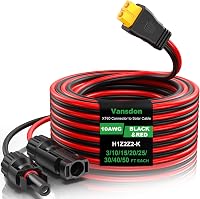
9 Best Solar Charging Cables for Jackery (November 2026)
The best Jackery solar charging cables include the Jackery 12V Automobile Charging Cable for 12V battery charging, the Tonton 30FT 9M 8mm Extension Cable 14AWG for long general-purpose reach, and the Jackery DC Extension Cable for Solar Panel for standard Jackery panel setups.
On this page (4 sections)
The best Jackery solar charging cable for most buyers is the Tonton 30FT 9M 8mm Extension Cable. It gives you 30 ft of reach, a DC7909 to DC8020 connection, and cover for many Jackery Explorer models, but you must check the exact input port first.
Not all Jackery stations share the same solar input. Some use a DC7909 or DC8020 plug, while a panel may end in MC4 or another connector, so the cable must bridge both sides.
A 30 ft extension suits campers and home users who need the panel in open sun while the station stays in shade, in a tent, or near a doorway. That separation can protect the station from heat and ease daily placement.
Choose a Jackery branded extension when both ends already use the matching DC connector. Choose an MC4 adapter when the panel output and Jackery input use different connector types.
Length is a trade off. More reach helps you chase sun, but a long run can add voltage drop and extend charging time, so use only the distance you need.
For basics, read our guide to what is a portable solar panel. For longer standard connectors, see best solar extension cable.
Check the Explorer model, panel model, connector size and current limits before ordering. That check avoids the most common fit problems.
Our picks at a glance
-
1
 Best for 12V battery charging
Jackery 12V Automobile Charging Cable
9.7/10 our score
See it on Amazon -
2
 Best for long general-purpose reach
Tonton 30FT 9M 8mm Extension Cable 14AWG
9.6/10 our score
See it on Amazon -
3
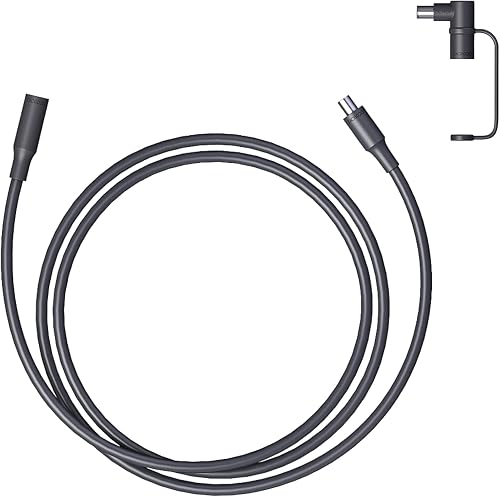 Best for standard Jackery panel setups
Jackery DC Extension Cable for Solar Panel
9.3/10 our score
See it on Amazon
- 4
 Check it
Jackery DC Extension Cable Plus for Solar
Best for extra-long Jackery runs - 5
 Check it
UCANUUP 30FT Solar Extension Cable for Jackery
Best for SolarSaga 100W and 200W panels - 6
 Check it
Renogy 5FT 12AWG Solar Extension Cables
Best for short MC4 connections - 7
 Check it
Tonton Solar Connector to DC 8mm Adapter
Best for MC4 to 8mm conversion - 8
 Check it
Hoeine 10FT MC4 to DC 8mm Adapter
Best for a weather-resistant adapter - 9
 Check it
Kimbluth 50FT 14AWG DC7909 Solar Panel Extension
Best for maximum panel separation
The best Jackery solar charging cable picks
The best cable depends on your connector, distance and charging source. The highest scoring choices cover 12V battery charging, direct Jackery extensions, long outdoor runs and MC4 to 8mm adapter needs.
Our score weighs specs, features and buyer feedback against what you are shopping for. We checked each cable stated connector type, length, current information and compatibility notes.
No single cable suits every Jackery setup. A cable that extends a DC connection will not convert MC4, and a 12V automobile cable does not connect a solar panel at all.
Use the connector as the first filter. Then match length to the space between the sunny panel position and the shaded station position.
Finally, check electrical limits and exclusions. Explorer 160, Explorer 300, SolarSaga 500X and SolarSaga 40W mini each change what will work, so read those notes before you buy.
| Product | Best for | Connector | Current | Compatibility | Our score |
|---|---|---|---|---|---|
| Jackery 12V Automobile Charging Cable | 12V battery charging | Cigarette lighter plug to alligator battery clamps | 10 A | Jackery solar generators and power stations except Explorer 160 | 9.7 |
| Tonton 30FT 9M 8mm Extension Cable 14AWG | long general-purpose reach | DC7909 to DC8020 | 15 A maximum | 9.6 | |
| Jackery DC Extension Cable for Solar Panel | standard Jackery panel setups | 15 A | 9.3 | ||
| Jackery DC Extension Cable Plus for Solar | extra-long Jackery runs | DC8020 to DC8020 | 9.2 | ||
| UCANUUP 30FT Solar Extension Cable for Jackery | SolarSaga 100W and 200W panels | DC7909 to DC8020 | 8.9 | ||
| Renogy 5FT 12AWG Solar Extension Cables | short MC4 connections | MC4 male-to-female | 8.7 | ||
| Tonton Solar Connector to DC 8mm Adapter | MC4 to 8mm conversion | MC4 to DC7909/DC8020 | 8.4 | ||
| Hoeine 10FT MC4 to DC 8mm Adapter | a weather-resistant adapter | 20 A | 8.2 | ||
| Kimbluth 50FT 14AWG DC7909 Solar Panel Extension | maximum panel separation | 15 A | 7.9 |
Jackery 12V Automobile Charging Cable: Best for 12V battery charging
- 12V/10A charging
- Cigarette lighter plug to alligator clamps
- 16 AWG 100% copper wire
- Works with Jackery stations except Explorer 160
This cable connects a 12V lead-acid battery to a compatible Jackery power station. It is the only pick here designed for automobile battery charging rather than a solar-panel connection.
Pros
- Clear 12V/10A purpose
- 16 AWG copper wire
- UL certified
Cons
- Not for electric cars
- Not compatible with Explorer 160
The Jackery 12V Automobile Charging Cable is the right choice when your backup plan includes a 12V lead acid battery. Its cigarette lighter plug connects to the compatible Jackery station, while the alligator clamps connect to the car battery.
This is not a solar panel extension. It is a 12V/10A charging cable with 16 AWG, 100% copper wire and a single cable assembly.
Jackery states that it works with its solar generators and power stations except Explorer 160. That exclusion matters, so owners of that model should look for another charging method.
The cable suits only 12V/10A lead acid batteries, so confirm your battery type and voltage before connecting it. It is not for electric cars.
In daily use, this suits roadside backup, camping with a vehicle, or keeping a spare battery ready when solar input is not available. The 10 A limit also sets expectations, since a depleted battery will take time to recover.
Set up is simple because the plug end fits the station and the clamps go to the battery terminals. Keep the clamps clean and firmly seated, and avoid touching exposed metal parts while the cable is in use.
Choose this cable for vehicle based backup charging. If your goal is to connect a foldable panel, use one of the solar cables below instead.
Tonton 30FT 9M 8mm Extension Cable 14AWG: Best for long general-purpose reach
- 30 ft length
- DC7909 to DC8020 connection
- 14 AWG pure copper wire
- Works with many Jackery stations except Explorer 300
The long reach helps place a panel in sun while the power station sits in a preferred location. Check your input port and remember that an extension can add voltage drop and charging time.
Pros
- Longest reach among the top general picks
- 14 AWG copper wire
- 1-year warranty and lifetime technical support
Cons
- Does not work with Jackery Explorer 300
- Requires a panel cable for direct extension use
The Tonton 30FT 9M 8mm Extension Cable 14AWG is the strongest general pick for a long solar run to a compatible Jackery power station. Its 30 ft length lets you place a panel in a sunnier area while keeping the station where you need it.
The cable uses DC7909 and DC8020 connections, a 14 AWG pure copper orange wire and a double PVC jacket. Tonton rates it for up to 15 A and states that it supports many Jackery Explorer models, along with selected BLUETTI, Goal Zero, Anker and other stations.
Tonton specifically notes that it does not work with Jackery Explorer 300. It also functions as an extension, so connect it to the cable that came with your solar panel rather than assuming it is a complete panel-to-station lead.
A long cable can add voltage drop and extend charging time. Use the shortest length that gives you the placement you need, and confirm the DC port before ordering.
Jackery DC Extension Cable for Solar Panel: Best for standard Jackery panel setups
- 16.4 ft length
- Male-to-female DC connector
- PVC insulation
- Copper core
This is a straightforward Jackery-branded extension for compatible solar panels and power stations. Its 5 m length works well when you need more placement distance without moving to a 10 m cable.
Pros
- Jackery-branded connection
- 5 m reach
- Flame-retardant PVC cable
Cons
- Not water resistant
- Not compatible with SolarSaga 500X or SolarSaga 40W mini
The Jackery DC Extension Cable for Solar Panel suits a standard Jackery setup that needs 16.4 ft of extra distance. Its male to female DC connector and 5 m length make it a simple choice when the existing panel and station use compatible connections.
The cable has a PVC outer material, a 0.28 in diameter and an embedded copper core. It is rated at 15 A, but it is not water resistant, so keep the connection away from rain and wet conditions.
This cable is not compatible with the SolarSaga 500X or SolarSaga 40W mini solar panel. Jackery directs SolarSaga 500X users to an Anderson Extension Cable instead.
That compatibility note shows why the panel model matters as much as the power station model. Two Jackery products can still use different connection methods.
In daily use, 5 m suits a balcony, yard or campsite where the panel needs a clearer patch of sun than the station position. It is long enough to separate the two, yet short enough to coil and carry without much fuss.
Set up means joining this extension to the panel lead, then connecting the other end to the station. Keep the join dry, route the cable away from doors and wheels, and avoid sharp bends.
Pick it when you want a shorter Jackery branded extension for a compatible panel. Check the panel model before buying because the connector fit is not universal across the Jackery range.
Jackery DC Extension Cable Plus for Solar: Best for extra-long Jackery runs
- 32.8 ft length
- DC8020 to DC8020 connectors
- 14 AWG copper core
- UL2464 PVC insulation
The 10 m length gives you more freedom to separate a solar panel from a Jackery power station. Its DC8020-to-DC8020 layout makes port matching the key check before ordering.
Pros
- Longest Jackery-branded cable here
- 14 AWG copper core
- 3-year manufacturer warranty
Cons
- Only suits setups with matching DC8020 ports
- Long cable runs need careful placement
The Jackery DC Extension Cable Plus for Solar Panel gives you the most reach among the Jackery branded options here. Its 32.8 ft length helps when the panel needs a different position from the power station for shade, balcony or yard placement.
This cable uses DC8020 to DC8020 connectors, a 14 AWG copper core and UL2464 PVC insulation. Jackery describes it as suitable for most of its solar panels, but the two matching DC8020 ends still make port checking essential.
The cable is listed with a 3 year manufacturer warranty. Its long length can improve placement flexibility, but it also gives you more cable to coil and store after each use.
For home backup, the extra reach can let a panel sit outside while the station stays indoors near the loads you want to run. For RV or camp use, it can move the panel to follow sun without moving the station each time.
The 14 AWG copper core helps limit resistance over the full 10 m run, which matters more here than on a short cable. Even so, a longer cable still needs clean, fully seated connectors to charge well.
Route the cable so it does not trap moisture at the ends or lie under heavy objects. Coil it loosely after use and keep the jackets away from crush points in storage.
Choose it when a 5 m extension is too short and your equipment uses DC8020. For a cable that changes from MC4 to an 8mm style Jackery input, choose an adapter instead.
UCANUUP 30FT Solar Extension Cable for Jackery: Best for SolarSaga 100W and 200W panels
- 30 ft length
- 14 AWG copper wire
- Designed for SolarSaga 100W and 200W
- Compatible with listed Explorer models
This cable targets Jackery SolarSaga 100W and 200W panels and several Explorer power stations. It gives a similar long reach to the Tonton, but its stated panel and Explorer compatibility is narrower.
Pros
- 30 ft panel placement range
- 14 AWG copper wire
- Designed around SolarSaga 100W and 200W
Cons
- Not SolarSaga 500X or SolarSaga 40W mini
- One extension cord corresponds to one panel
The UCANUUP 30FT Solar Extension Cable for Jackery is aimed at SolarSaga 100W and 200W panels and selected Explorer power stations. Its 30 ft length lets you keep the panel in full sun while placing the station in shade.
The cable uses 14 AWG copper wire and a male to female DC7909 to DC8020 connection. UCANUUP lists compatibility with Explorer 300, 500, 1000, 1500, 2000 Pro and 2000 Plus, among other models.
It is not compatible with the SolarSaga 500X or SolarSaga 40W mini panel. UCANUUP also states that one extension cord corresponds to one solar panel, so a multi panel setup may need more than one cable.
That one cord per panel rule is easy to miss. If you run two panels at once, plan for two extensions and check how each panel connects to the station.
In daily use, 30 ft gives freedom to place a foldable panel in open sun while the station stays inside a tent or under cover. The thicker 14 AWG wire also suits the longer run better than a thin patch lead.
Set up is straightforward once compatibility is confirmed. Connect the panel side, then the station side, and keep the added length from pooling where people walk.
Choose this cable when its SolarSaga and Explorer compatibility matches your equipment. The Tonton is a better general option if you need broader listed compatibility across several power station brands.
Renogy 5FT 12AWG Solar Extension Cables: Best for short MC4 connections
- 5 ft length
- 1 pair
- 12 AWG cable
- Male and female MC4 connectors
This 1-pair cable is useful when your solar setup uses MC4 connectors and needs only a short extension. It does not directly match every Jackery DC input, so add the correct adapter when required.
Pros
- Includes a male and female cable pair
- UV resistant and waterproof
- TUV tested
Cons
- Only 5 ft long
- MC4 connectors may require a separate Jackery adapter
The Renogy 5FT 12AWG Solar Extension Cables are best for short MC4 connections. This is a 1 pair set with male and female MC4 connectors, so it fits a solar setup built around MC4 rather than a direct DC7909 or DC8020 connection.
The black and red cables are 5 ft long and use 12 AWG wiring. Renogy describes them as sunlight resistant, UV resistant and waterproof, with TUV testing for PV solar applications.
This pair can create more room between a solar panel and charge controller. To connect an MC4 panel to a Jackery power station, you may still need a separate adapter that matches the station input.
The short length is the main trade off. It helps with tidy routing between nearby parts, but it will not move a panel across a yard or into a distant patch of sun.
In daily use, the pair suits small off grid builds, roof or ground mounts, and setups where the panel and controller sit close together. The weather resistance also helps when the run stays outside for long periods.
Keep the MC4 ends clean and fully locked before charging starts. Store the pair coiled loosely so the connectors are not forced into a tight bend.
Read our guide to the best XT60i solar charging cable if your equipment uses XT60i rather than MC4 or DC8mm connections.
Tonton Solar Connector to DC 8mm Adapter: Best for MC4 to 8mm conversion
- 2 m length
- MC4 to DC7909/DC8020
- Supports listed 10W to 300W panels
- 12 AWG and 14 AWG wires
This adapter connects a compatible MC4 solar panel to a Jackery 8mm-style input. It is a better fit than a plain extension when your panel and power station use different connector families.
Pros
- MC4 to DC7909/DC8020 conversion
- Works with listed 10W to 300W panels
- 1-year warranty and lifetime technical support
Cons
- Only 2 m long
- Port size must be confirmed before use
The Tonton Solar Connector to DC 8mm Adapter is the right type of cable when an MC4 solar panel needs to connect to a Jackery 8mm style input. Its 2 m length gives you a short panel to station connection without adding a separate extension.
The cable uses MC4 on one side and DC7909/DC8020 on the other. Tonton lists compatibility with SolarSaga 60W, 100W and 200W panels, plus compatible Jackery Explorer, BLUETTI, GZ Yeti and Anker stations.
Its 12 AWG and 14 AWG wires are rated for up to 12 A and 36 V DC. Confirm the input port size before connecting because an adapter with the wrong plug can prevent charging or create an unsafe setup.
This adapter solves a conversion problem rather than a distance problem. If your panel already has the right DC plug, a plain extension is the simpler tool.
In daily use, 2 m works when the panel can sit close to the station, such as on a campsite table or beside an RV door. It keeps the run short and reduces the chance of voltage drop.
Polarity and plug size still need a check before first use. The centre pin and shell wiring matter, so do not force a plug that does not seat cleanly.
Choose it when connector conversion is the main problem. For a longer MC4 to 8mm lead, the Hoeine option gives you 10 ft instead of 2 m.
Hoeine 10FT MC4 to DC 8mm Adapter: Best for a weather-resistant adapter
- 10 ft length
- MC4 input to DC7909/DC8020 output
- 12 AWG and 14 AWG copper wires
- Water-resistant cable
The 10 ft reach gives an MC4 panel more placement distance than the 2 m Tonton adapter. It suits compatible Jackery, BLUETTI, Goal Zero Yeti and Anker power stations with the stated DC input.
Pros
- 10 ft reach
- 12 AWG and 14 AWG wires
- Water-resistant construction
Cons
- Compatibility still depends on the power station port
- Only one 10 ft cable is included
The Hoeine 10FT MC4 to DC 8mm Adapter combines connector conversion with more reach. It connects an MC4 solar panel to a DC7909/DC8020 input and gives you 10 ft for panel placement.
The cable uses 12 AWG and 14 AWG copper wires, a PVC jacket and sealed MC4 connectors. Hoeine lists a rated current of up to 20 A, a 300 V testing DC voltage and a temperature range from 5 to 176 F.
Its stated compatibility includes Jackery Explorer models, BLUETTI, Goal Zero Yeti and Anker power stations. Those brands still use different models and ports, so match the output connector to your exact station.
The 10 ft length suits a panel that needs to sit a few steps away from the station. That can mean open sun outside a tent while the station stays shaded inside.
Water resistant construction and sealed MC4 ends help for outdoor use, but they do not remove the need to check port size and polarity. A correct plug should connect with a firm, clean fit.
Route the cable away from mud and foot traffic where you can. Coil it loosely after use and let any surface moisture dry before storage.
Pick it when a 2 m adapter is too short and your panel uses MC4. It is also a useful option for outdoor setups where the stated water resistant construction matters.
Kimbluth 50FT 14AWG DC7909 Solar Panel Extension: Best for maximum panel separation
- 50 ft length
- 14 AWG pure copper wire
- DC7909 female to DC7909/DC8020 male
- Waterproof PVC jacket
The 50 ft reach is useful when the panel and power station must sit far apart. It is rated for compatible panels up to 200W, but a long run makes port matching and placement especially important.
Pros
- Longest cable in this roundup
- 14 AWG pure copper wire
- Waterproof jacket
Cons
- Long runs may add voltage drop
- Panel compatibility is stated up to 200W
The Kimbluth 50FT 14AWG DC7909 Solar Panel Extension is for the widest separation between a compatible solar panel and power station. Its 50 ft length can help when the panel must stay in a clear sunny area while the station stays in a cooler or more convenient location.
The cable uses a DC7909 female connector for the panel and a DC7909/DC8020 male output for the power station. Kimbluth states that it suits compatible panels up to 200W and rates the cable at 15 A and 300 V.
A 14 AWG pure copper wire and double PVC jacket support the long run. The cable is listed as waterproof and rated for temperatures from 5 to 176 F.
Long cables need careful routing so they do not become a trip hazard or sharp bend. Choose this one only when 30 or 32.8 ft will not reach, since the extra length adds storage and possible voltage-drop concerns.
How to match a solar charging cable for Jackery
The connector is the first check. A Jackery solar charging cable may use DC7909, DC8020, an MC4 adapter or another connector, and the plug must match the power station's input.
Next, check the panel output. A DC extension cable is not the same as an MC4-to-DC adapter, and an extension may need to connect to the cable supplied with the panel.
DC7909 and DC8020 cables
DC7909 and DC8020 cables are common among the long extension picks in this roundup. The Tonton 30 ft cable uses both connection formats, while the Jackery Plus cable uses DC8020 at both ends.
Check the power station model carefully. The Tonton cable does not work with Explorer 300, while the Jackery 5 m cable does not suit SolarSaga 500X or SolarSaga 40W mini.
MC4 to 8mm adapters
An MC4-to-8mm adapter is useful when your solar panel ends in MC4 but your Jackery station accepts a DC7909 or DC8020-style input. The Tonton 2 m and Hoeine 10 ft cables are made for this type of conversion.
Do not assume that every 8mm plug is interchangeable. Confirm the connector size, polarity and station input requirements before connecting the panel.
Cable length and voltage drop
The connector is the first check. A Jackery cable may use DC7909, DC8020, an MC4 adapter or another connector, and the plug must match the station input.
Next, check the panel output. A DC extension is not the same as an MC4 to DC adapter, and an extension may need the cable supplied with the panel.
DC7909 and DC8020 cables are common among the long picks here. The Tonton 30 ft cable uses both formats, while the Jackery Plus cable uses DC8020 at both ends.
Check exclusions carefully. The Tonton cable does not work with Explorer 300, and the Jackery 5 m cable does not suit SolarSaga 500X or SolarSaga 40W mini.
An MC4 to 8mm adapter helps when the panel ends in MC4 but the Jackery station accepts a DC7909 or DC8020 style input. The Tonton 2 m and Hoeine 10 ft cables serve this conversion.
Do not assume every 8mm plug is interchangeable. Confirm connector size, polarity and station requirements before connecting.
Use enough length for good sun, but avoid extra cable. Tonton warns an extension can cause slight voltage drop and reduced output, which may lengthen charging time.
A 5 ft or 2 m cable suits close setups. Choose 16.4 ft, 30 ft, 32.8 ft or 50 ft when distance matters, and coil without tight bends.
For multiple panels, confirm whether each panel needs its own cable.
How to use and care for a Jackery solar cable
Keep the station and panel turned off while you identify the connectors. Connect both sides firmly, place the panel in direct sun, and keep the cable away from walkways.
Avoid wet conditions when the cable is not water resistant. The Jackery 5 m cable should not be used in rain or wet environments.
For multiple panels, confirm whether each panel needs its own cable. UCANUUP states one extension cord corresponds to one panel, and some extensions also require the original panel lead.
Start with a dry check of every plug. Look for dirt, bent pins or a loose fit, since a poor join can stop charging or heat the connection.
Place the panel first, then run the cable in a gentle line to the station. Avoid doorways, wheels and sharp edges, and keep the cable from pooling in water.
Watch the first minutes of charging to confirm the station responds. If it does not, disconnect and recheck output, connector type and polarity.
After use, disconnect without pulling the wire. Coil loosely, protect connectors from dirt and moisture, and store where the jacket will not be crushed.
Wipe off dust and let connectors dry before coiling outdoor cables. Keep cables sorted by connector type so you grab the right DC extension, MC4 adapter or automobile cable in the field.
Which Jackery solar charging cable should you choose?
Choose the Tonton 30FT 9M 8mm Extension Cable for a long, broadly compatible DC7909/DC8020 extension. Pick the Jackery 5 m cable for a shorter Jackery branded run, or the Jackery Plus for a 10 m DC8020 to DC8020 setup.
Choose the Tonton 2 m or Hoeine 10 ft adapter when your solar panel uses MC4. Pick the Kimbluth 50 ft cable only when you truly need maximum separation, and use the Jackery automobile cable when your backup source is a compatible 12V lead acid battery.
If distance is your main issue, buy the shortest cable that reaches from open sun to shade. That keeps voltage drop lower, cuts trip hazards and makes coiling easier after each charge.
If connector type is your main issue, buy the adapter that changes MC4 to the correct DC input. Adding a plain extension will not fix a plug mismatch.
For SolarSaga 100W or 200W owners, the UCANUUP cable is worth a close look because its compatibility is stated around those panels. For Renogy MC4 setups, the 5 ft pair suits short panel to controller runs.
Always confirm the exact Explorer model and panel model before ordering. Exclusions such as Explorer 160, Explorer 300, SolarSaga 500X and SolarSaga 40W mini can change the right pick.
For another Jackery focused comparison, see the best Jackery solar extension cable guide. If your station is a different brand, compare the best BLUETTI solar charging cable options before choosing a connector.
Our top 3 picks at a glance
-
1
Best for 12V battery charging
Jackery 12V Automobile Charging Cable
9.7/10 our score
See it on Amazon -
2
Best for long general-purpose reach
Tonton 30FT 9M 8mm Extension Cable 14AWG
9.6/10 our score
See it on Amazon -
3
Best for standard Jackery panel setups
Jackery DC Extension Cable for Solar Panel
9.3/10 our score
See it on Amazon
Frequently asked questions
What is the best Jackery solar charging cable?
The Tonton 30FT 9M 8mm Extension Cable is the best Jackery solar charging cable for many setups because it offers 30 ft of reach and DC7909 to DC8020 connectivity. Confirm your Jackery input port first, because Explorer models and panel connectors differ.
Can you use any solar cable with a Jackery power station?
No. Match the cable connector and electrical limits to the Jackery input and solar panel output.
DC7909, DC8020, MC4 and other connector types are not interchangeable without the right adapter.
Check the exact Explorer model before connecting a cable.
How long should a solar charging cable for Jackery be?
Choose the shortest solar charging cable for Jackery that reaches your shaded power station from the panel's sunny position. The picks here range from 2 m to 50 ft.
Longer cables offer placement freedom but may add voltage drop and increase charging time.
Can a Jackery solar charging cable stay outside in rain?
Only use a cable outdoors when its stated protection supports your setup, and follow the product's instructions. The Jackery 5 m cable is not water resistant, while the Renogy, Hoeine and Kimbluth options include stated weather or water protection.
Do Jackery solar panels need an extension cable?
No. You need an extension cable only when the panel and power station need more distance than the original connection allows.
If the connectors differ, use a compatible adapter cable instead of adding a plain extension.