9 Best Solar Extension Cables for Jackery (November 2026)
The best Jackery solar extension cables include the BougeRV 20 Feet 10AWG Solar Extension Cable for lower power loss, the Tonton 30FT 9M 8mm Extension Cable 14AWG for broad DC7909 compatibility, and the Jackery DC Extension Cable for Solar Panel for a short Jackery-branded extension.
On this page (4 sections)
The best Jackery solar extension cable for most setups is the BougeRV 20 Feet 10AWG Solar Extension Cable, with a larger 10AWG conductor, a 20 ft reach and outdoor-focused protection.
That pick suits buyers who want distance without moving the power station into harsh sun. It also suits setups where a thinner cable could add more resistance over the run.
Choose a Jackery-branded cable for a closer brand match, or use a DC7909 option only after checking your panel and power station ports.
A solar extension cable lets you move the panel toward better sun while keeping the portable power station in a shaded or more convenient spot.
That separation can help indoors, under a canopy, or at a campsite where the best sun is not next to your gear. It can also help you keep the power station cooler and easier to reach.
The cable must match the connector size, connector type, polarity and electrical limits on both ends.
A cable that fits one end may still be wrong for the other. Check the panel output and the power station input before you connect anything.
Length matters too, because longer runs can add voltage drop. The shortest cable that reaches a safe panel position is usually the smarter choice.
If you are still deciding what kind of panel setup you need, start with our guide to what is a portable solar panel.
That guide helps you think through foldable panels, fixed panels and portable power stations. It can make the cable choice clearer once you know your starting setup.
For a wider cable comparison, see our guide to the best solar extension cable.
That comparison covers more connector styles and more general solar wiring uses. Use it when your setup is not limited to Jackery equipment.
Our picks at a glance
-
1
 Best for lower power loss
BougeRV 20 Feet 10AWG Solar Extension Cable
9.6/10 our score
See it on Amazon -
2
 Best for broad DC7909 compatibility
Tonton 30FT 9M 8mm Extension Cable 14AWG
9.6/10 our score
See it on Amazon -
3
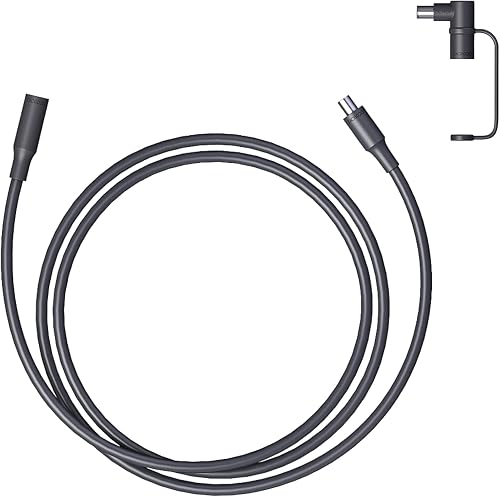 Best for a short Jackery-branded extension
Jackery DC Extension Cable for Solar Panel
9.3/10 our score
See it on Amazon
- 4
 Check it
Jackery DC Extension Cable Plus for Solar
Best for the longest Jackery-branded reach - 5
 Check it
UCANUUP 30FT Solar Extension Cable for Jackery
Best for SolarSaga 100W and 200W panels - 6
 Check it
MOOKEERF 14AWG DC 8mm Extension Cable
Best for a 50 ft orange cable - 7
 Check it
Dreyoo 16.4 ft DC Extension Cable
Best for two-cable setups - 8
 Check it
Renogy 20FT 10AWG Solar Adaptor Extension Cable
Best for solar panels and charge controllers - 9
 Check it
Kimbluth 50FT 14AWG DC7909 Solar Panel Extension
Best for visible long outdoor runs
The best Jackery solar extension cables by use
The best Jackery solar extension cable depends on your connector and the distance between the panel and power station.
That sounds simple, but it is where most buying mistakes start. A cable can be well made and still be wrong for your ports.
BougeRV leads for its 10AWG construction, while the Jackery options make sense when their connector design matches your equipment.
Other cables below trade that thicker wire for longer reach or specific DC7909 and DC8020 connections. Each trade-off changes what the cable does well in daily use.
We compared cable length, wire gauge, connector descriptions, stated compatibility and outdoor-use details.
We also looked at how each cable handles placement, slack, storage and wet-weather limits. Those practical details matter as much as the headline specs.
Our score weighs specs, features and buyer feedback against what you are shopping for.
It is a guide, not a substitute for checking your own panel and power station. Always confirm the exact port names before ordering.
| Product | Best for | Length | Wire gauge | Connector | Our score |
|---|---|---|---|---|---|
| BougeRV 20 Feet 10AWG Solar Extension Cable | lower power loss | 20 ft | 10AWG | Male-to-female solar connector | 9.6 |
| Tonton 30FT 9M 8mm Extension Cable 14AWG | broad DC7909 compatibility | 30 ft | 9.6 | ||
| Jackery DC Extension Cable for Solar Panel | a short Jackery-branded extension | 16.4 ft | DC male-to-female | 9.3 | |
| Jackery DC Extension Cable Plus for Solar | the longest Jackery-branded reach | 32.8 ft | 14AWG | DC8020 to DC8020 | 9.2 |
| UCANUUP 30FT Solar Extension Cable for Jackery | SolarSaga 100W and 200W panels | 30 ft | 8.9 | ||
| MOOKEERF 14AWG DC 8mm Extension Cable | a 50 ft orange cable | 50 ft | 14AWG | Male-to-female and male-to-male | 8.8 |
| Dreyoo 16.4 ft DC Extension Cable | two-cable setups | 16.4 ft each | 8.5 | ||
| Renogy 20FT 10AWG Solar Adaptor Extension Cable | solar panels and charge controllers | 20 ft | 10AWG | 8.2 | |
| Kimbluth 50FT 14AWG DC7909 Solar Panel Extension | visible long outdoor runs | 50 ft | 7.9 |
BougeRV 20 Feet 10AWG Solar Extension Cable: Best for lower power loss
- 20 ft length
- 10AWG tinned pure copper
- Male and female solar connectors
- IP67 waterproof ring
The 10AWG cable suits buyers who want a 20 ft extension with a larger conductor and outdoor-focused protection. One end has a connector installed, while the other end is bare wire.
Pros
- 10AWG construction
- UV-resistant dual sheath
- IP67 waterproof and dustproof ring
Cons
- Bare-wire end needs the right connection
- Longer than needed for short layouts
BougeRV is the best overall choice when you want a 20 ft run with 10AWG wire. The larger conductor can help minimize power loss compared with 14AWG and 12AWG cable, which matters when the panel sits well away from the power station.
The cable uses tinned pure copper and has a UV-resistant dual sheath. BougeRV also lists XLPE insulation, TÜV and UL certification, and a working range from -40°F to 194°F.
This cable has male and female solar connectors, with one end already connected and the other end left as bare wire for a controller connection. An extra connector is included, and the male connector has an IP67 waterproof ring and built-in lock.
Pick it when your setup uses the stated solar connector and you want a sturdy 20 ft run. The bare-wire end gives flexibility for some solar wiring projects, but it also means you must plan the connection before buying.
Tonton 30FT 9M 8mm Extension Cable 14AWG: Best for broad DC7909 compatibility
- 30 ft length
- DC7909 to DC8020 connection
- 14AWG pure copper wire
- Right-angle DC8020 adapter
This is a useful long-run choice when your panel uses a DC7909 8mm output and your power station accepts the stated DC7909 or DC8020 connection. It does not work with Jackery 300 Explorer.
Pros
- 30 ft reach
- DC7909 and DC8020 connection
- Compatibility list includes many Jackery models
Cons
- Requires a DC7909 8mm panel output
- Extension use may reduce output and lengthen charging
Tonton is the strongest choice for a long DC7909 setup that needs 30 ft of reach.
Its input is a DC7909 8mm interface, and the cable includes a DC7909-to-DC8020 connection for compatible power stations.
That right-angle adapter can help when a straight plug would put pressure on the port. It gives the cable a neater path into some power stations.
The 14AWG pure copper orange wire has a double PVC jacket and an 80°C heat rating.
The orange color makes the cable easier to spot across a yard or campsite. The double jacket also gives the cable a sturdier feel for outdoor routing.
Tonton describes compatibility with many Jackery Explorer models, along with selected BLUETTI, Goal Zero, Anker and other power stations.
That wide list is useful, but it does not remove the need to check your exact model. Port size and panel output still need to match.
This cable is an extension, not a replacement for the cable that came with your solar panel.
Connect it to the original panel cable when the connector matches. Expect that the added length may cause some voltage drop.
Tonton warns that an extension can cause voltage drop, reduced power output and longer charging. That trade-off is worth it only when the panel placement improves enough.
Do not choose it for a Jackery 300 Explorer.
It also requires a DC7909 8mm panel output, so measure or confirm the port before ordering.
Jackery DC Extension Cable for Solar Panel: Best for a short Jackery-branded extension
- 16.4 ft length
- PVC insulation
- Copper core
- Male-to-female DC connector
This 16.4 ft Jackery cable is a straightforward choice for compatible Jackery panels and power stations. It is not compatible with the SolarSaga 500X or SolarSaga 40W mini panel.
Pros
- Jackery-branded cable
- Compact 16.4 ft reach
- Pliable PVC construction
Cons
- Not water resistant
- Not compatible with SolarSaga 500X or 40W mini
Jackery's 16.4 ft DC Extension Cable is the simple pick for a shorter Jackery-branded connection.
Its pliable PVC cable has a copper core and a male-to-female DC connector.
That short length suits a panel placed just outside a tent, RV or balcony door. It keeps excess cable to a minimum when the distance is small.
The cable is 0.28 in in diameter and is designed for Jackery solar panel and portable power station connections.
Its stated voltage is 18 V and its amperage is 15 A.
Those limits should be checked against your panel and power station before use. A cable does not change the electrical needs of the equipment it connects.
Jackery says not to use it during rainy days or in wet environments.
That limit matters for campsites and patios where weather can change fast. Keep the cable and connectors dry, and bring the setup inside when rain starts.
It is also not compatible with the SolarSaga 500X or SolarSaga 40W mini panel, so those exclusions should guide your choice.
Choose this model when 16.4 ft is enough and your panel is one of the compatible Jackery models.
If your panel is a SolarSaga 500X, look for the Anderson extension cable instead.
Jackery DC Extension Cable Plus for Solar: Best for the longest Jackery-branded reach
- 32.8 ft length
- 14AWG copper core
- DC8020 to DC8020 connectors
- UL2464 PVC insulation
The 32.8 ft Jackery cable suits balconies, yards, RV trips and home backup layouts that need more distance. Its DC8020-to-DC8020 design is intended for most Jackery solar panels.
Pros
- Longest Jackery-branded option here
- 14AWG copper core
- 3-year manufacturer warranty
Cons
- Longer than needed for close setups
- Connector match still needs checking
Jackery's DC Extension Cable Plus is the best Jackery-branded choice when you need 32.8 ft of reach.
The longer cable suits balconies, yards, RV trips and home backup layouts where a 16.4 ft run falls short.
That extra length can make a real difference when the only strong sun is across a yard. It also gives you more freedom to keep the power station in shade.
Its DC8020-to-DC8020 connectors are designed for most Jackery solar panels.
Both ends using the same stated design can simplify matching within a Jackery system. It still helps to confirm the panel model before you buy.
The cable uses a 14AWG copper core with UL2464 PVC insulation and a tough gray sheath.
The copper core is meant to keep resistance lower across the full length. The sheath gives the cable a durable outer layer for regular handling.
The extra length gives you more freedom to place a panel in sun and the power station farther away.
It also makes connector matching more important, since both ends use the stated DC8020 design.
Pick it when you want a long Jackery option with a stated 3-year manufacturer warranty.
For a short connection, the 16.4 ft Jackery cable uses less excess cable.
UCANUUP 30FT Solar Extension Cable for Jackery: Best for SolarSaga 100W and 200W panels
- 30 ft length
- 14AWG copper wire
- Male-to-female connection
- Designed for SolarSaga 100W and 200W
UCANUUP targets Jackery SolarSaga 100W and 200W panels and several Explorer models. It gives you a 30 ft run, but it is not compatible with the SolarSaga 500X or SolarSaga 40W mini panel.
Pros
- 30 ft reach
- 14AWG wire
- Specific SolarSaga and Explorer compatibility
Cons
- Avoid wet use
- One extension cord corresponds to one panel
UCANUUP is aimed at owners of Jackery SolarSaga 100W and 200W panels.
Its 30 ft length helps place a panel in full sun while keeping the Explorer power station in shade.
That balance suits patios, yards and campsites where shade falls close to the sun. It lets the panel work without forcing the power station to sit in the heat.
The cable uses 14AWG thickened copper wire and has male-to-female connectors.
Its stated cable type is 8.0 x 2.0 mm / 7.9 x 0.9 mm, with a maximum voltage of 36 V DC.
Those details should be compared with your panel and power station limits. Matching the stated type is more reliable than guessing from appearance.
UCANUUP names compatibility with SolarSaga 100W and 200W panels and several Explorer models, including the 300, 500, 1000, 1500 and 2000 Pro or 2000 Plus.
It is not compatible with the SolarSaga 500X or SolarSaga 40W mini panel.
That exclusion is important if you own a larger SolarSaga panel. A different Jackery panel may need a different extension cable.
Use one extension cord for one panel, as UCANUUP specifies.
Keep it away from rain and wet environments.
MOOKEERF 14AWG DC 8mm Extension Cable: Best for a 50 ft orange cable
- 50 ft length
- 14AWG tinned pure copper
- DC7909 to DC8020 adapter
- 80 C heat-resistant PVC
MOOKEERF is suited to buyers who need a visible 50 ft run and a DC7909-to-DC8020 adapter. The orange PVC jacket is flexible and easier to spot around an outdoor setup.
Pros
- 50 ft length
- Tinned pure copper core
- Orange weatherproof jacket
Cons
- Long run needs careful voltage-drop planning
- Port and adapter match must be verified
MOOKEERF is the long-run pick when you want 50 ft and a bright orange jacket.
Its 14AWG tinned pure copper core is designed to reduce resistance, while the PVC jacket is flexible and heat resistant to 80°C.
The orange jacket is easy to see when the cable crosses a yard or campsite. That visibility can help you avoid tripping over it or running a wheel over it.
The cable includes a DC7909-to-DC8020 adapter and describes compatibility with most Jackery portable power stations, including Explorer 1500 and Explorer 2000.
It also names BLUETTI, Anker and GZ Yeti systems.
Its male-to-female and male-to-male connector description gives the cable more setup flexibility than a single fixed connector arrangement.
That flexibility can help when you need to chain or reposition equipment. It still requires you to verify each connection point.
Confirm the exact port on your panel and power station before connecting it.
A 50 ft run can solve a difficult placement problem, but it can also increase voltage drop.
Use the long length only when the added distance is useful.
Dreyoo 16.4 ft DC Extension Cable: Best for two-cable setups
- Two 16.4 ft cables
- 14AWG wire
- DC7909 input connector
- PVC construction
Dreyoo gives you 2 cables when one spare or a second compatible panel connection is useful. Confirm that the solar panel output is DC7909 8mm before choosing it.
Pros
- Two cables in the package
- 14AWG wire
- Compatible with Jackery, BLUETTI, Anker and EF ECOFLOW systems
Cons
- Only equipped with a DC7909 input connector
- 16.4 ft may not cover a distant panel position
Dreyoo is the best choice when you want 2 separate 16.4 ft cables.
The package gives you a spare or a second cable for another compatible panel connection, while each cable uses 14AWG wire.
Two cables can be handy at a campsite where one panel stays near the tent and another moves with the sun. A spare also helps if one cable is stored in a different vehicle or bag.
The DC7909 extension cable has a PVC covering and a right-angle DC8020 male adapter.
That adapter helps with port access on some power stations. The PVC covering gives the cable a flexible outer layer for outdoor use.
Dreyoo names compatibility with Jackery, BLUETTI, Anker and EF ECOFLOW solar generators.
Before buying, check that your solar panel output is DC7909 8mm.
Dreyoo says the cable is equipped with that input connector, so a different panel port may need another cable or adapter.
Choose this set when two cables are more useful than one longer cable.
At 16.4 ft each, it suits close or medium-distance panel placement.
Renogy 20FT 10AWG Solar Adaptor Extension Cable: Best for solar panels and charge controllers
- 20 ft length
- 10AWG wire
- One black male-and-female pair
- Weatherproof insulation
Renogy fits a 20 ft solar-panel or charge-controller run where 10AWG wire and weatherproof insulation are useful. Check the connector system before using it with a Jackery power station.
Pros
- 10AWG wire
- 20 ft length
- Works with solar panels and charge controllers
Cons
- Not a Jackery-specific cable
- Maximum voltage is stated as 24 V DC
Renogy is the practical pick for a 20 ft 10AWG solar wiring run that may connect a panel to a charge controller.
It includes one black pair with male and female connectors and weatherproof insulation.
That format suits general solar wiring more than a Jackery-only portable setup. It can bridge a panel and a controller when the connector system matches.
The cable has a 30 A maximum current and a 24 V DC maximum voltage.
Its hard plastic connectors lock onto compatible solar connectors, and Renogy describes it as suitable for indoor or outdoor use.
The locking design can help the connection stay seated during wind or movement. It also makes the connectors easier to handle when you disconnect the setup.
This is not a Jackery-specific cable.
Check the Jackery panel and power station connector system before using it, especially if your setup uses DC7909 or DC8020 rather than the solar connector style described here.
Pick Renogy when your setup needs a general solar adaptor extension.
For a direct Jackery connection, one of the Jackery-branded or DC7909 options may require less connector planning.
Kimbluth 50FT 14AWG DC7909 Solar Panel Extension: Best for visible long outdoor runs
- 50 ft length
- 14AWG pure copper wire
- DC7909 and DC8020 plugs
- Waterproof PVC jacket
Kimbluth gives you a 50 ft orange extension for compatible panels rated up to 200W with DC7909 or DC8020 output ports. Its long length helps place a power station in shade while the panel stays in sun.
Pros
- 50 ft reach
- DC7909 and DC8020 connection
- Waterproof PVC jacket
Cons
- Longer cable can increase voltage drop
- Compatibility is limited to suitable ports and panel output
Kimbluth suits buyers who need a 50 ft orange DC7909 extension and want the cable easy to spot outdoors.
It uses 14AWG pure copper wire, a double PVC jacket and DC7909 or DC8020 plugs.
The bright color helps on grass, gravel and RV pads. It also helps you find the cable quickly when you pack up a campsite.
The female end is DC7909, while the male output supports DC7909 or DC8020.
Kimbluth describes compatibility with Anker, EF ECOFLOW, BLUETTI, GZ Yeti and most Jackery portable power stations.
The cable is rated at 15 A and is described as suitable for compatible panels up to 200W with DC7909 or DC8020 output ports.
Its waterproof PVC jacket is intended to protect against UV damage and abrasion.
That jacket helps when the cable runs across rough ground or stays in sun for long periods. It does not remove the need to keep connectors handled with care.
Choose it for a long, visible run when your panel port and power station port match.
If 50 ft is more than you need, a shorter cable may reduce excess cable and voltage-drop concerns.
How to choose the right Jackery solar extension cable
The connector is the first thing to check. A Jackery solar extension cable can use a DC connector, DC7909, DC8020 or another solar connector system, and those names should match the equipment at both ends.
Look at the solar panel output and the power station input. Write down the port size, connector style and polarity before choosing a cable, especially when comparing DC7909 8mm cables with DC8020 adapters.
Choose cable length by panel placement
A 16.4 ft cable works for a nearby patio, campsite or balcony.
That length is enough when the panel can sit just outside a door or beside a tent. It keeps coiling and storage simple.
A 20 ft cable adds useful freedom without the extra distance of a 30 or 50 ft run.
That middle length suits many yards and RV sites where sun and shade are close but not side by side.
Choose 30 ft when the panel needs to reach stronger sun across a yard or campsite.
That reach can help when a roof line, tree or building blocks the light near your power station. It also gives you room to angle the panel through the day.
Use 50 ft only when the placement benefit is worth the extra cable length and possible voltage drop.
A very long run should be a deliberate choice, not a default. Measure the route first, including turns and slack at each connector.
Keep the cable path clear of sharp edges, vehicle tires and walking routes.
Avoid tight bends at the connectors, and store the cable dry and loosely coiled after use.
Loose coiling protects the copper core and the jacket from kinks. It also makes the cable easier to unroll the next time you set up.
Compare 10AWG and 14AWG
A lower AWG number means a thicker conductor. The 10AWG BougeRV and Renogy cables are the stronger choices here when minimizing resistance is a priority, while 14AWG options provide more connector-specific and long-length choices.
Wire gauge is only one part of the decision. A 10AWG cable with the wrong connector cannot replace a correctly matched 14AWG cable, and a longer run can still create voltage drop.
Check wet-weather limits
Outdoor use does not always mean the cable can be used in rain. Jackery's 16.4 ft cable is not water resistant, and UCANUUP also says to avoid rainy or wet environments.
Keep the connectors raised from standing water and follow the cable's stated protection. BougeRV lists an IP67 waterproof ring on its male solar connector, while Kimbluth describes a waterproof PVC jacket.
Do not confuse a panel extension with a house connection
A solar extension cable connects a panel to a compatible portable power station or controller. It is not a substitute for wiring a generator into household circuits.
If you're researching a separate generator setup, read our guide on how to run a generator extension cord into your house before connecting any equipment.
Jackery cable alternatives for other power stations
Connector checks matter even more when you use the same cable idea with another brand.
Our guide to the best solar charging cable for Jackery focuses on charging connections, while the guides to best Zamp solar extension cables and best BLUETTI solar extension cables cover other connector systems.
Those guides can help when your panel, power station or charge controller comes from a different brand. They can also show which connector names to look for on your equipment.
For a Jackery setup, start by identifying the panel model and the Explorer input.
Write down the port size and connector name before you compare cables. That short note can prevent a return or a failed setup day.
Then choose the shortest cable that reaches a safe panel position, with enough slack to avoid pulling on the connectors.
Slack matters because panels get moved and angled during the day. A cable pulled tight at the port is more likely to loosen or wear.
Final choice for the best Jackery solar extension cable
The BougeRV 20 Feet 10AWG Solar Extension Cable is the best general pick when you need 20 ft, a larger conductor and outdoor-focused protection.
It suits setups where the panel needs to move toward sun while the power station stays in a safer spot. The thicker conductor is a useful advantage when distance grows.
Pick Tonton when a DC7909 8mm panel output and 30 ft reach fit your setup.
That cable suits Jackery and other power stations when the port names line up. It is less suited when your panel uses a different output.
Choose the 16.4 ft Jackery cable for a shorter branded connection, or the Jackery DC Extension Cable Plus for 32.8 ft with DC8020 connectors.
For a 50 ft run, compare MOOKEERF and Kimbluth by their connector arrangement and your expected voltage-drop needs.
Measure your route, confirm both ports, and pick the shortest cable that gives your panel good sun.
Our top 3 picks at a glance
-
1
Best for lower power loss
BougeRV 20 Feet 10AWG Solar Extension Cable
9.6/10 our score
See it on Amazon -
2
Best for broad DC7909 compatibility
Tonton 30FT 9M 8mm Extension Cable 14AWG
9.6/10 our score
See it on Amazon -
3
Best for a short Jackery-branded extension
Jackery DC Extension Cable for Solar Panel
9.3/10 our score
See it on Amazon
Frequently asked questions
What is the best Jackery solar extension cable?
The BougeRV 20 Feet 10AWG Solar Extension Cable is the strongest general pick here because it combines a 20 ft length with 10AWG wire and outdoor-focused protection. Choose a Jackery-branded cable when you want a direct brand match, but confirm the connector and panel model first.
Can I use any solar extension cable with a Jackery?
No. Match the cable's connector, polarity and electrical limits to both the solar panel and the Jackery power station.
DC7909, DC8020 and solar connectors are not interchangeable just because they look similar, so check the port size before connecting an extension.
Does a Jackery solar extension cable reduce charging speed?
It can. Longer cable runs add resistance, and Tonton warns that an extension may cause voltage drop, reduced power output and a longer charging time.
Use the shortest cable that reaches your safe panel position, and avoid coiling extra cable tightly during use.
How long should a solar extension cable be?
Choose the shortest length that lets the panel receive strong sunlight while the Jackery stays in a safer shaded position. A 16.4 ft cable suits close layouts, 20 to 30 ft handles many patios and campsites, and 50 ft models are for distant placement with more voltage-drop planning.
Can I use a Jackery extension cable in rain?
Only use a cable when its instructions and the connected equipment allow those conditions. The Jackery DC Extension Cable for Solar Panel is not water resistant, while several other cables have outdoor or weatherproof features.
Keep connectors dry unless the cable is specifically rated for wet exposure.


