Can You Use a Portable Solar Panel for EV Charging?
A portable solar panel usually can't charge an EV directly. You need compatible charging equipment and enough steady power, and small folding panels are better suited to charging a battery or power station than supplying an EV.
On this page (7 sections)
- Can a portable solar panel charge an EV?
- What equipment would an EV solar setup need?
- How much power does an EV need?
- Why are portable solar panels limited for car charging?
- Can a power station make portable solar useful for an EV?
- How should you connect and position a portable panel?
- Is a portable solar panel for EV charging worth it?
A portable solar panel usually can't charge an EV directly. You need compatible charging equipment and enough steady power, and small folding panels are better suited to charging a battery or power station than supplying an EV.
A panel's wattage is only one part of the setup. The panel, charge controller, battery or power station, inverter if needed, and EV charging equipment all have to work together.
Can a portable solar panel charge an EV?
A portable solar panel can contribute energy to EV charging, but it normally needs a compatible battery or power system between the panel and the car. Don't connect a panel straight to an EV charging port or traction battery.
Portable panels produce direct current (DC) that changes with sunlight. An EV charger needs a stable supply with the right voltage, current, and connection, so conversion and charge-control equipment matter.
Small folding panels also produce modest power compared with the energy an EV uses. They may help charge a power station or a separate 12V battery, but that doesn't mean the stored energy will be enough to meaningfully recharge an EV.
If you're comparing panel types and setup basics, start with what a portable solar panel is. That guide can help you see where a portable panel fits before you plan a vehicle charging system.
What equipment would an EV solar setup need?
An EV solar setup needs a panel array, compatible charge control, energy storage or a suitable inverter system, and EV charging equipment approved for the car. The exact parts depend on the vehicle and the charging method.
A typical portable setup may use solar panels to charge a power station, then use that station's supported output to supply charging equipment. Check the station's continuous power rating, capacity, input limits, and output connections before assuming it can serve an EV.
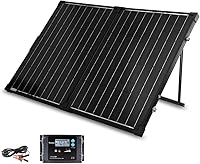
A 12V solar kit is not an EV charger. For example, the DOKIO 100W kit is designed for 12V battery charging and includes a PWM controller, so it's a better fit for a compatible 12V system than an EV traction battery.
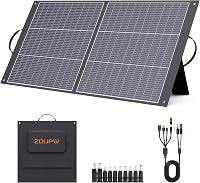
The DOKIO 200W kit also targets 12V battery charging and includes its own PWM controller. It can suit a larger portable 12V setup, but its output and intended voltage don't make it an EV charger.
Always follow the manuals for the car and every charging component. If the equipment doesn't clearly support the connection, ask the manufacturer or a qualified installer before using it.
How much power does an EV need?
EV charging requires substantially more power than a small portable panel can usually provide. Compare the car's charging requirements with the panel's real output and the power system's limits, not just the panel's peak wattage.
A 100W panel produces at most 100 watts under its stated conditions, and real output varies with sun angle, shade, temperature, and setup. Even a 200W panel has limited energy production compared with what an EV battery can store.
For a rough planning check, multiply the system's actual average power by the hours of useful sun, then account for conversion and storage losses. This gives only an estimate, since clouds and changing sunlight can reduce production during the day.
The number of panels needed depends on how much energy you want to add and where you use them. Use how many solar panels you need for your house as a starting point for thinking about energy demand and array size.
Why are portable solar panels limited for car charging?
Portability comes with limited panel area and output. Folding panels are easy to carry and position, but they don't collect as much energy as a larger fixed array spread across a roof or ground mount.
Sunlight also changes throughout the day. Shade from trees, buildings, or the car itself can reduce production, and a panel may need repositioning to keep it facing the sun.
A portable panel may still be useful for a power station, small devices, or a separate battery system. For home backup planning, compare the best portable solar panels for home use and consider whether a larger panel setup fits your space.
If your goal is to add meaningful energy at home, a larger system may be a more practical match than a few folding panels. See best 400W solar panels for homes for options in that size range.
Can a power station make portable solar useful for an EV?
A power station can store solar energy, but it only helps with EV charging if its output and capacity support the car's charging equipment. Many portable stations are built for smaller loads, so check their specifications carefully.
Some stations limit solar input below the panel's rated output. The DOKIO kits note that certain power stations cap their input, which can keep the panel from delivering its full rated power even in strong sun.
A station's stored energy also matters. A unit that can run lights or charge phones may not hold enough energy to add much charge to an EV, and its AC output may not support the current required by a car charger.
For a separate backup use, learn what a portable UPS is. A UPS can keep selected devices running, but that role is different from supplying an EV charging system.
How should you connect and position a portable panel?
Use only the connectors and charge controller approved for the equipment, and place the panel in direct sun while keeping electronics shaded as directed. Never improvise a connection to the EV.
A panel's cable length can help you find a sunny spot while keeping a controller or power station out of direct sun. If you need more reach, use a cable rated for the system's voltage and current, with compatible connectors and correct polarity.
The BougeRV 20 Feet 10AWG Solar Extension Cable has male-to-female solar connectors on one end and bare wire on the other for a controller connection. Confirm connector type and system compatibility before using an extension cable.
The DOKIO 100W and 200W kits include 9.84 ft cables, which may be enough for a compact setup. Their separate controllers are intended for compatible 12V battery systems, so don't treat them as EV charging controls.
If you use an EcoFlow system for a separate battery or power station setup, follow how to use an EcoFlow solar panel for its compatible connections. For smaller panel options, compare portable 100W solar panels and read the Jackery SolarSaga 100W panel review.
Is a portable solar panel for EV charging worth it?
A portable solar panel is worth considering for EV charging only when it is part of a compatible system sized for your energy goal. For occasional emergency top-ups or off-grid charging, calculate expected energy first and check that each component supports the plan.
A small folding panel may be useful for charging a 12V battery or topping up a portable power station. It is unlikely to replace a home charging setup or quickly replenish an EV battery.
Choose the DOKIO 100W kit if you need a light, foldable panel for a compatible 12V battery and modest loads. Choose the 200W kit if you want more panel capacity for that same kind of 12V use, and use a solar extension cable only when its ratings and connectors match the system.
For portable solar panels and EV charging, start with the car's charging requirements, then choose equipment that explicitly supports them. If the output, voltage, or connection is unclear, don't connect the panel to the vehicle.
Frequently asked questions
Can a portable solar panel charge an EV directly?
Usually not. A portable panel needs compatible charge-control and power-conversion equipment, and an EV needs a suitable charging supply.
Check the vehicle and equipment manuals before connecting anything; a small folding panel's output is far below what most EV charging setups need.
Can a portable power station charge an electric car?
Some power stations may support an EV charging connection, but the station must provide a compatible output and enough usable energy. Check its continuous output, capacity, and connector requirements against the vehicle.
A small station may add little driving range and may not support the car at all.
How many solar panels does it take to charge an EV?
The number depends on the EV's energy use, the amount of driving you need to replace, panel output, sunlight, and system losses. A 100W or 200W portable panel is a small source compared with a typical home solar array, so calculate from your daily energy need and realistic solar production.
Can I use a 12V solar panel with an EV?
A 12V panel kit is generally designed for a 12V battery or a compatible power station, not direct connection to an EV traction battery. Use only charging equipment approved for your vehicle, and follow its voltage, current, and connector requirements.