Anker SOLIX F3800 Plus Review: Worth It? (November 2026)
The Anker SOLIX F3800 Plus suits home backup and solar charging if you want 3,840Wh of capacity with 6,000W output and 3,200W solar input. It is a large, heavy unit, so plan placement and expansion before you buy.
On this page (11 sections)
- The Anker SOLIX F3800 Plus at a glance
- Who the F3800 Plus suits best
- Capacity and output in daily use
- Solar charging and the 3,200W input
- Generator, AC and home panel charging
- Expansion batteries and long outages
- Setup, storage and care
- Build quality, battery life and warranty
- Trade-offs to weigh before you buy
- The alternatives here
- Verdict: which F3800 Plus bundle to buy
The Anker SOLIX F3800 Plus is a high-output home backup station with 3,840Wh of capacity, 6,000W of output and 3,200W of solar input. Anker SOLIX F3800 Plus reviews often focus on that mix of capacity and power, because it aims to run bigger home loads than smaller stations can handle.
Our score weighs specs, features and buyer feedback against what you are shopping for. We compared the three bundles on this page by capacity, output, solar input and what is included.
The Anker SOLIX F3800 Plus at a glance
The F3800 Plus offers larger capacity and higher output than compact stations. It is built around 3,840Wh of storage and a 6,000W inverter output, with 120V and 240V dual-voltage support for home appliances.
Anker SOLIX F3800 Plus Portable Power Station: Best for home backup

- 3,840Wh capacity
- 6,000W output
- 3,200W solar input
- 120V/240V dual voltage
- Expandable to 26.9kWh with 6 batteries
The standalone F3800 Plus for buyers who want the core unit first and can add expansion batteries later. Its 3,840Wh base capacity and 6,000W output focus on high-demand home use.
Pros
- High 6,000W output for large appliances
- 3,200W solar input for faster solar charging
- 120V/240V dual-voltage support
- Expandable with up to 6 batteries for 26.9kWh
Cons
- 135.6 lb weight limits portability
- Large footprint needs dedicated storage space
- Expansion batteries add cost and space
It weighs 135.6 lb and measures 27.64 x 15.55 x 15.28 inches. That size makes it a fixed home backup unit more than a portable camping station, even though Anker lists camping and residential use.
Model A1790P, listed as A1790 in part number fields, is the core unit behind all three bundles here. The standalone, solar and battery bundles differ by what ships with that same station.
Read our best portable power station guide if you are still comparing station sizes. That guide helps you match capacity to the loads you actually plan to run.
Who the F3800 Plus suits best
The F3800 Plus suits homeowners who want to run major appliances during an outage. Its 6,000W output and dual-voltage support are the main reasons to choose it over smaller units.
It also suits RV and off-grid users who need 240V power. Anker positions the station for homes, RVs and emergencies, and the 240V gas generator bypass supports that use.
Anker SOLIX describes its market as homeowners, RV enthusiasts and off-grid campers who want freedom from power anxiety. That positioning maps to whole-home backup first, with camping as a secondary use.
Skip it if you need a light unit for frequent camping moves. At 135.6 lb, it is hard to carry up stairs or load into a car on a regular basis.
Our best Anker portable power station guide lists lighter Anker options for smaller loads. Compare weight and capacity first if portability matters to you.
Capacity and output in daily use
Capacity and output do different jobs in your home. Capacity, measured in watt-hours, controls how long you can run loads.
Output, measured in watts, controls which loads you can start at all.
The F3800 Plus starts at 3,840Wh, which Anker says can power a family for one day. That is a starting point, not a promise for every home, because your fridge, lights and appliances use different amounts of power.
Its 6,000W output is 58% more than other stations at the same capacity, according to Anker. That extra output helps with motor loads that need a surge when they start.
The spec sheet also lists 10,200 watts starting wattage on the standalone unit. That surge headroom is the figure to check against motor driven appliances, separate from the 6,000W running wattage.
You can also pair two units for up to 12,000W of AC output. That route suits very large loads, but it doubles the space, weight and cost of the system.
A 15 A current rating is listed in the specs. Treat that as part of the continuous output picture when you plan circuit level loads.
Solar charging and the 3,200W input
Solar charging is a core strength of the F3800 Plus. It has 3,200W of solar input across 2 solar input ports, with each port supporting 11 to 165V and 17A max current.
That input level means the station can accept a larger solar array than smaller stations. A single 400W panel will charge it, but it will not use the full 3,200W input.
The 400W panel in the solar bundle therefore works as a starting panel, not as a full array. You would need additional panels, within each port voltage and current limits, to approach the 3,200W ceiling.
Anker says you can recharge in 63 minutes via solar and generator. That time depends on strong sun, a large array or a generator, so treat it as the fastest case rather than a normal solar-only result.
The station also supports solar and gas generator charging. With a 240V gas generator via a 6,000W bypass, you can recharge while keeping selected outlets available for other devices.
Dual charging matters during a long outage. Solar can top up during the day while a generator covers a cloudy stretch or a high load period.
Generator, AC and home panel charging
You have four charging routes for flexibility. Anker lists solar, generator, home power panel and AC outlet charging for the F3800 Plus.
Each route suits a different outage situation. Solar works best in daylight, a generator helps when solar is weak, a home power panel suits a fixed installation and an AC outlet works when grid power returns.
Check the outlet limits for each method. When recharging through the 120V AC input, you can use the three 120V UPS outlets, but not the 240V outlet, for other devices.
When recharging with a 240V generator through the HPP port, you can use the NEMA L14-30R 240V outlet and the TT-30R 120V outlet. With a 120V generator through the HPP port, you can use only the TT-30R 120V outlet.
That detail matters if you plan to charge phones, lights or a fridge while the station itself is recharging. Plan your load list around the charging method you will use most.
Matching outlets to your charging method
Write the outlet rule for your chosen method on a label near the station. A 240V generator gives you both the L14-30R and TT-30R options, while a 120V generator narrows you to the TT-30R alone.
The AC input rule is the strictest of the three. During 120V AC input charging, the 240V outlet cannot charge other devices, so move any 240V load plan to generator or battery only operation.
Keep the included AC charging cable separate from the solar cables. The 1.6 ft solar cables are short, so panel placement close to the station matters for solar charging.
Expansion batteries and long outages
Expansion is where the F3800 Plus moves from one day to weeks of power. Anker says you can add up to 6 batteries for 26.9kWh, or 12 batteries plus another F3800 for weeks of power.
The BP3800 bundle on this page starts you at 7,680Wh with one expansion battery included. That is a simpler path if you already know one battery will not be enough.
Specs for the battery bundle also list expansion to 53.8kWh with 12 batteries in the bundle wording. That figure pairs with the two station route for the largest systems.
Expansion adds storage space and weight at the same time. Each battery needs a safe, dry place, and cable routing between the station and batteries needs room.
Decide your outage goal before you buy batteries. A short outage list of fridge, lights and phones needs less storage than a whole-home load list with a dryer.
Our Anker SOLIX F3800 vs F3800 Plus comparison helps if you are choosing between the standard and Plus models. The Plus model centers on higher output and solar input.
Setup, storage and care
Setup starts with placement, ventilation and a clear load plan. Place the station on a firm, level surface in a dry and cool environment, and leave room around it for heat and cable access.
Turn off the main power button before storage. Anker says to check the battery level each week, fully charge it if it falls below 30% and recharge it to 100% every 3 months.
Keep the included cables organized. The box includes an AC charging cable and 2 solar charging cables at 1.6 ft each, plus a user manual, warning notice and warranty card.
The battery bundle adds a battery-to-host cable for the BP3800. Route that cable without tight bends and keep it clear of walkways where it could be pulled.
Label your circuits before an outage. Write down which outlet runs your fridge, which runs lights and which runs a dryer, so you are not guessing in the dark.
Build quality, battery life and warranty
Anker backs the F3800 Plus with a 5-year warranty and a 10-year lifespan claim. The station uses EV-grade LFP batteries through Anker InfiniPower, with smart temperature management and an impact-resistant design.
LFP chemistry is a reason many buyers choose this class of station. It generally suits long service life and daily cycling better than older chemistries, and Anker pairs it with a 10+ year claim.
The metal body and inverter design also matter for home use. A metal case can handle knocks in a garage or utility room better than a thin plastic shell.
Smart temperature management supports that long life claim during daily cycling. It also means ventilation space around the unit is part of care, not just a setup preference.
Warranty terms still matter at purchase. Keep your receipt, model number A1790P and serial number, and read the coverage terms for batteries, accessories and shipping before you order.
The black color and portable listing do not change the weight reality. Plan for a fixed spot with a dolly or two person lift if you ever need to move it.
Trade-offs to weigh before you buy
The main trade-off is power and capacity versus weight and space. The F3800 Plus gives you 6,000W output and 3,840Wh to start, but it weighs 135.6 lb and takes up a large floor area.
The second trade-off is fast charging versus real-world inputs. A 63-minute recharge needs strong solar or generator power.
A single small panel will take much longer.
Solar input voltage limits shape that trade-off. Each port accepts 11 to 165V at 17A max, so array design must respect those ceilings.
The third trade-off is expansion versus upfront cost. Starting with the standalone unit keeps the first purchase simpler.
Buying the BP3800 bundle gives you 7,680Wh right away but adds size and cost.
The fourth trade-off is whole-home power versus load management. Dual-voltage support helps with big appliances, but you still need to stay within 6,000W output and 3,840Wh of stored energy.
Starting wattage adds one more check. Compare an appliance surge need to the 10,200W starting figure before you assume a motor load will start.
The alternatives here
The three options below use the same core F3800 Plus station. The difference is what comes in the box and how much capacity you get on day one.
Standalone station for flexible expansion
This is the cleanest choice if you want the core unit first. You get 3,840Wh, 6,000W output and 3,200W solar input without paying for a panel or battery you may not need yet.
Solar bundle for day-one solar charging
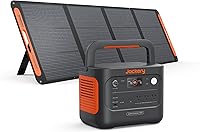
This bundle adds a 400W solar panel to the same station. The panel and station ship separately, so expect two deliveries and plan storage for both items.
The bundle specs list 9,000 watts starting wattage and generator-ready dual charging. Those details reflect the bundled listing, while the core capacity and output remain the same.
Battery bundle for longer outages
This bundle adds the BP3800 expansion battery and a battery-to-host cable. It suits buyers who want more stored energy without a second purchase later.
The battery bundle lists 15 total power outlets in its specs. Use that count as a planning reference for how many connections the combined setup can support.
If you want a smaller Anker option, read our Anker SOLIX C1000 review. That station suits lighter loads and easier portability.
Verdict: which F3800 Plus bundle to buy
Pick the standalone station if you want flexibility. It gives you the full 3,840Wh and 6,000W core unit, and you can add expansion batteries when your needs are clear.
Pick the solar bundle if solar charging is your main goal. The included 400W panel gets you started, and the 3,200W input leaves room to add more panels later.
Pick the battery bundle if longer outages are your main concern. With 7,680Wh from the start, it gives you double the base capacity of the standalone unit.
All three share the same 6,000W output and 3,200W solar input. Choose by what you need first, solar panels or stored capacity, then expand from there.
For a final check on the standard model, read our Anker SOLIX F3800 review. Then match capacity, output and weight to your home before you order.
Frequently asked questions
What is the Anker SOLIX F3800 Plus capacity?
The Anker SOLIX F3800 Plus starts with 3,840Wh of capacity. Anker says that can power a family for one day, and you can add up to 6 expansion batteries for 26.9kWh or 12 batteries plus another F3800 for more.
How fast can the F3800 Plus recharge?
Anker says the F3800 Plus can recharge in 63 minutes via solar and generator. You can also recharge through a home power panel or an AC outlet.
Your actual time depends on your solar array size, generator output and charging method.
Can the F3800 Plus run 240V appliances?
Yes, the F3800 Plus has 120V/240V dual-voltage support. Anker says that lets you run home appliances such as a dryer without voltage limits.
Check each appliance's running and starting watts against the 6,000W output before you plug it in.