8 Best Solar Generators for Refrigerators and Freezers (November 2026)
The best solar generator for refrigerator and freezer include the EF ECOFLOW Solar Generator Delta 3 Classic for most fridge and freezer homes, the Jackery Solar Generator 1000 v2 and 200W for portable backup and camping, and the ZeroKor Portable Solar Generator 300W Portable Power for small fridges and device charging.
On this page (8 sections)
- The best solar generators for a refrigerator and freezer together
- Side by side: capacity, output and panel size
- How we compared these solar generators
- How much power does a refrigerator and freezer need?
- How long will each size run a fridge and freezer?
- Which solar generator for a freezer and refrigerator is easiest to set up?
- Can a solar generator for freezer and refrigerator use run during a long outage?
- Verdict: which solar generator for refrigerator and freezer should you buy?
The best solar generator for refrigerator freezer use is the EF ECOFLOW Delta 3 Classic, because 1024Wh and 1800W give real startup headroom for two compressors. The Jackery 1000 v2 is close behind for portability, and the BLUETTI Elite 400 wins on storage if you need days rather than hours.
A fridge and a freezer do not run at full power all day. Their compressors cycle on and off, so battery size controls runtime and wattage controls whether they can start at all.
You need both numbers to be high enough for your pair.
Start with our best solar generator for refrigerator guide if you only have one fridge. For two units, this guide compares combined loads, solar recharge and portability across 8 kits.
Our picks at a glance
-
1
 Best for most fridge and freezer homes
EF ECOFLOW Solar Generator Delta 3 Classic
9.7/10 our score
See it on Amazon -
2
 Best for portable backup and camping
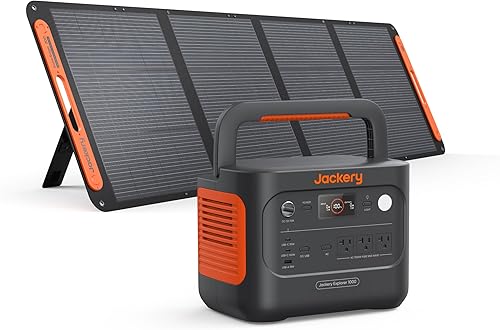
Jackery Solar Generator 1000 v2 and 200W
9.6/10 our score
See it on Amazon -
3
 Best for small fridges and device charging
ZeroKor Portable Solar Generator 300W Portable Power
9.2/10 our score
See it on Amazon
- 4
 Check it
OUPES Mega 1 Solar Generator with 100W
Best for expandable home storage - 5
 Check it
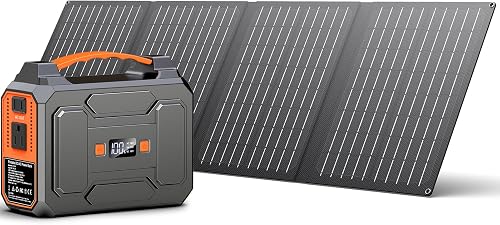
Apowking Solar Powered Generator 100W
Best for lights, phones and small loads - 6
 Check it
LIBRIDS Portable Power Station 640Wh
Best for a single efficient fridge - 7
 Check it
BLUETTI Solar Generator Elite 400 with 2x200W
Best for multi-day fridge and freezer backup - 8
 Check it
PECRON Portable Power Station F3000LFP with Cart
Best for heavy loads and RV backup
The best solar generators for a refrigerator and freezer together
The top picks have at least 1000Wh and 1500W, which suits most side by side fridges and chest freezers. Smaller units below 300W are listed for honesty, but they suit small fridges only.
Our score weighs specs, features and buyer feedback against what you're shopping for. We compared output, surge, capacity, panel size, battery type, weight and UPS speed.
EF ECOFLOW Solar Generator Delta 3 Classic: Best for most fridge and freezer homes
- 1024Wh capacity
- 1800W output, 3600W surge
- 220W solar panel included
- LiFePO4 battery
- Under 10ms UPS
A 1024Wh battery with 1800W output matches a fridge plus a separate freezer, and the 220W panel gives a focused solar recharge.
Pros
- High surge for compressor starts
- Fast AC and solar charging
- UPS for outage switchover
Cons
- Solar panel and unit ship separately
- 1024Wh is not multi-day for two large units
The Delta 3 Classic suits a home with a standard fridge plus a separate freezer. Its 1024Wh battery and 1800W output leave room for compressor surge, which is the moment when most units fail to start.
EcoFlow says X-Boost can expand output to 2600W for heavier loads. That helps with a fridge that peaks higher than its nameplate running watts, especially an older unit with a hungry motor.
The kit includes a 220W bifacial panel with up to 25 percent conversion from N-Type cells. EcoFlow says solar recharge takes about 5.8 hours, which is a usable daytime recharge before the next outage night.
Its under 10ms UPS matters if you want the fridge to keep cooling without a gap. LiFePO4 cells are rated for 10 plus years of daily use, and the 100W USB-C output also suits a laptop beside the fridge.
The trade-off is storage. At 1024Wh, it will not match the BLUETTI or PECRON for multi-day outages.
The panel and unit also ship separately, so check both boxes on arrival.
Jackery Solar Generator 1000 v2 and 200W: Best for portable backup and camping
- 1070Wh capacity
- 1500W output, 3000W surge
- 200W solar panel included
- LFP battery
- 23.8 lb
At 1070Wh and 1500W, it covers a common fridge and freezer pair, and its 23.8 lb weight makes it easier to move between rooms.
Pros
- Light for its capacity
- One hour emergency charging
- Multiple ports for other devices
Cons
- 1500W output leaves less headroom
- Solar recharge is slower than 220W kits
The Jackery 1000 v2 suits buyers who want strong backup they can carry. At 23.8 lb with 1070Wh and 1500W, it is lighter than the EcoFlow and OUPES for a similar capacity class.
Jackery says it can power fridges, AC units and electric pots on 1500W output with a 3000W surge peak. That surge headroom helps a fridge and freezer start in sequence rather than at the same instant.
The kit includes a 200W panel, and Jackery says solar charge to 80 percent takes about 6 hours. AC charging is much faster, with a 1 hour emergency mode in the app and a 1.7 hour default mode to protect battery health.
Its LFP battery keeps over 70 percent capacity after 4000 cycles, according to Jackery. Two USB-C ports, one USB-A port and three AC ports let you run phones and lights alongside cooling loads.
Pick it if portability matters more than maximum power. Skip it if your older fridge needs more than 1500W running, or if you need the fastest solar recharge.
ZeroKor Portable Solar Generator 300W Portable Power: Best for small fridges and device charging
- 280Wh battery
- 300W max output
- 60W solar panel included
- Built-in BMS
- 5.1 lb
A very light 280Wh unit for a small fridge or short outages, but 300W max will not start many standard compressors.
Pros
- Very portable at 5.1 lb
- Includes solar panel and cables
- Useful for phones and small devices
Cons
- 300W max limits fridge choice
- 280Wh gives short fridge runtime
The ZeroKor R200 suits a small fridge, a mini freezer or short outage support. At 280Wh and 300W max, it is the smallest true solar generator in this group for fridge use.
ZeroKor warns that appliances over 300W may damage the unit, especially devices with heating elements or built-in compressors. That warning should guide your fridge choice here, because a standard compressor often exceeds that limit at startup.
The 60W panel and 5.1 lb weight make it easy to carry to a tent, garage or car. It also has a flashlight with reading and SOS modes, which helps at night when you check food temperatures.
Built-in battery management includes short circuit, over current, over voltage, overload and overheating protection. A cooling fan starts and stops based on internal temperature, and the 60W monocrystalline panel reaches 20.5 percent conversion efficiency.
Choose it for a compact fridge under 300W or for phones and lights. Do not choose it for a standard fridge and freezer pair, because both output and storage will run out quickly.
OUPES Mega 1 Solar Generator with 100W: Best for expandable home storage
- 1024Wh capacity
- 2000W output, 4500W surge
- 100W panel included
- Expandable to 5120Wh
- Under 20ms UPS
2000W output and expansion to 5120Wh make it a strong base for a fridge and freezer, with more solar input headroom later.
Pros
- Highest surge in mid group
- Expandable battery system
- Fast 36 minute charge to 80 percent
Cons
- Included 100W panel is small
- 27.8 lb is heavy to carry often
The OUPES Mega 1 suits a home that may grow its backup needs later. Its 1024Wh base capacity expands to 5120Wh with extra batteries, which is rare in this mid size group.
At 2000W output and 4500W surge, it has more startup headroom than the EcoFlow and Jackery. That helps if your fridge and freezer start close together, or if a defrost heater kicks in during startup.
OUPES says AC charging reaches 80 percent in 36 minutes, and dual AC plus solar charging reaches 80 percent in 26 minutes. Fast charging helps before a storm or after a short outage when the battery is low.
The kit includes a 100W panel, but OUPES lists up to 800W solar input. You can add larger panels later, though the included panel alone will recharge slowly and fits weekend use better than long off grid days.
At 27.8 lb, it is not a unit you will carry far daily. Pick it for home backup and expansion, not for frequent camping moves.
Apowking Solar Powered Generator 100W: Best for lights, phones and small loads
- 146Wh capacity
- 100W output, 200W peak
- 40W solar panels included
- 7 outputs
- 3.3 lb
At 146Wh and 100W, this is a camp and emergency light kit, not a true fridge and freezer backup for most homes.
Pros
- Fits in a backpack at 3.3 lb
- Dual LED flashlight
- Good for fans and small devices
Cons
- 100W will not run most fridges
- 146Wh gives very short runtime
The Apowking R100 suits camping, lights and phone charging more than fridge backup. At 146Wh and 100W output, it cannot start most refrigerators, even small ones with older motors.
Apowking describes the 100W rated and 200W peak output for tablets, laptops, fans and lights. A fridge compressor usually needs more than that at startup, so this limit should rule out standard fridge use.
The 40W panel has monocrystalline cells with 20.5 percent conversion efficiency, according to Apowking. It can top up small devices in sun, but it will not recharge a fridge load quickly or keep up with daily cooling cycles.
At 3.3 lb, it fits in a backpack and has a dual LED flashlight with strobe and SOS modes. Seven outputs cover phones, drones, cameras and a 12V car device, including USB-C quick charge options.
Include it in your kit for a tent or glove box, not as your main fridge and freezer backup. For cooling, choose a unit with at least 1000Wh and 1500W from this list.
LIBRIDS Portable Power Station 640Wh: Best for a single efficient fridge
- 640Wh capacity
- 600W output, 1200W surge
- LiFePO4 battery
- 10ms UPS
- 4 AC outlets
640Wh with a 1200W surge can support one efficient fridge for a short outage, especially if you limit door openings.
Pros
- 10ms UPS protects essentials
- Fast 1.5 hour AC charge
- Metal enclosure for indoor use
Cons
- No solar panel included
- 600W may struggle with older compressors
The LIBRIDS C600 suits one efficient fridge during a short outage. Its 640Wh capacity and 1200W surge can handle startup if your fridge stays within 600W running output.
LIBRIDS says PowerRaise technology helps with appliance startup loads up to 1200W. That matters because a fridge may draw far more for a second at start than while running, and surge is often the deciding factor.
The unit has 4 AC outlets and 8 output ports total, so you can run a router or CPAP alongside the fridge. Its 10ms UPS switches to battery during an outage, and pure sine wave output suits sensitive electronics.
LiFePO4 battery is rated for 4000 plus cycles, and the metal enclosure helps with heat dissipation. LIBRIDS lists a 5-year warranty, though the unit is labeled indoor use only and should stay dry.
Solar panels are not included, so plan to recharge from AC or add a compatible panel. Pick it for a single fridge, not for a fridge plus a second freezer for long periods.
BLUETTI Solar Generator Elite 400 with 2x200W: Best for multi-day fridge and freezer backup
- 3840Wh capacity
- 2600W output, 3900W surge
- 2x200W solar panels included
- LiFePO4 battery
- 15ms UPS
3840Wh is the largest capacity here, so it can run a fridge and freezer for much longer, with wheels for moving it.
Pros
- Largest storage in this group
- Two 200W panels included
- Trolley system for moving
Cons
- 86 lb, heavy to lift
- Solar recharge takes 9.5 to 19 hours
The BLUETTI Elite 400 suits multi-day backup for a fridge and freezer. At 3840Wh and 2600W, it stores about four times the energy of the 1024Wh picks in this group.
BLUETTI says the kit includes 2x200W panels and can recharge from 0 to 100 percent in about 9.5 to 19 hours in sun. That is slow, but the large battery reduces how often you need to recharge during a long outage.
Its 2600W output and 3900W lifting power can run a fridge, microwave and tools with less worry about surge. A 15ms UPS helps essentials like Wi-Fi and a pet feeder continue during a power cut.
The trolley system with telescopic handle and wheels helps move 86 lb from a closet to the kitchen. That design matters more than raw weight for a large station, because you will roll it rather than lift it.
Pick it if you want the longest fridge and freezer runtime here. Skip it if you need to lift it up stairs often, or if you want a fast solar recharge.
PECRON Portable Power Station F3000LFP with Cart: Best for heavy loads and RV backup
- 3072Wh capacity
- 3600W output
- LiFePO4 battery
- Cart kit included
- UPS backup
3072Wh and 3600W handle fridge, freezer and other heavy loads, and the cart kit helps move 63.3 lb around a home or RV.
Pros
- Highest output in this group
- Large 3072Wh storage
- Cart included for transport
Cons
- No solar panel in the kit
- 63.3 lb needs the cart
The PECRON F3000LFP suits RV and home backup with heavy loads. At 3072Wh and 3600W, it has the highest output in this group and strong storage for two cooling units.
PECRON says it can support refrigerators, air conditioners and power tools, and power 13 devices at once. That headroom helps if your fridge and freezer start while other loads are on, such as lights or a CPAP.
The cart kit is included, which helps move 63.3 lb through a house or campsite. AC charging reaches full in about 2 hours, according to PECRON, which is fast for a battery this large.
Solar compatibility goes up to 1600W max, but no panel is included in this kit. You will need to buy panels separately for off grid solar charging, and check voltage range before you connect them.
Its UPS switches in 8 to 20ms, which helps protect computers and medical devices. Pick it for power first, storage second, and add panels if sun charging matters.
Side by side: capacity, output and panel size
The BLUETTI leads on storage at 3840Wh, while the PECRON leads on output at 3600W. The EcoFlow, Jackery and OUPES sit in the middle at about 1024Wh.
| Product | Best for | Capacity | Output | Solar panel | Our score |
|---|---|---|---|---|---|
| EF ECOFLOW Solar Generator Delta 3 Classic | most fridge and freezer homes | 1024Wh | 1800W | 220W | 9.7 |
| Jackery Solar Generator 1000 v2 and 200W | portable backup and camping | 1070Wh | 1500W | 200W | 9.6 |
| ZeroKor Portable Solar Generator 300W Portable Power | small fridges and device charging | 280Wh | 300W | 60W | 9.2 |
| OUPES Mega 1 Solar Generator with 100W | expandable home storage | 1024Wh | 2000W | 100W | 9.0 |
| Apowking Solar Powered Generator 100W | lights, phones and small loads | 146Wh | 100W | 40W | 8.8 |
| LIBRIDS Portable Power Station 640Wh | a single efficient fridge | 640Wh | 600W | Not included | 8.7 |
| BLUETTI Solar Generator Elite 400 with 2x200W | multi-day fridge and freezer backup | 3840Wh | 2600W | 2x200W | 8.2 |
| PECRON Portable Power Station F3000LFP with Cart | heavy loads and RV backup | 3072Wh | 3600W | Solar compatible, not included | 8.0 |
Smaller units should not be compared as equals. The ZeroKor at 280Wh and 300W, and the Apowking at 146Wh and 100W, serve different jobs.
Use the table to match your fridge nameplate first, then your expected outage length. Output keeps compressors starting, and capacity keeps them cycling.
How we compared these solar generators
We checked specs for output, surge, capacity, battery chemistry, panel included, charging time, weight and UPS speed. We also looked at ports, app control and warranty terms where stated.
We did not test units hands on. Scores reflect how well each kit fits a fridge and freezer search, not a lab test result.
Maker claims are labeled with the brand name where they matter.
Buyer patterns in reviews often mention startup success, fan noise and recharge speed. We weighted those patterns against the stated specs rather than treating any single claim as proof.
What we weighted most for fridge use
Startup headroom came first, because a station that cannot start a compressor cannot help food stay cold. We looked at rated output and surge together, not output alone.
Capacity came second, because runtime depends on how many cooling cycles the battery can support. Panel size came third, because a larger panel refills storage faster during daylight hours.
How much power does a refrigerator and freezer need?
A typical fridge and freezer pair needs 1500W or more at startup, even if running draw is only 200 to 400W. Surge is the short peak when a compressor motor starts.
Check the nameplate on each unit for running watts. Add the two running figures, then leave headroom for surge and for a defrost cycle.
Capacity is separate from wattage. A 1000Wh station may run a pair for 8 to 16 hours in real use, depending on cycling and temperature.
Larger stations at 3000Wh plus can cover a full day or more.
Running watts versus surge watts
Running watts are what the compressor draws while cooling. Surge watts are the brief spike at start, often two to three times running draw.
A station with 600W output and 1200W surge, like the LIBRIDS, may start a fridge that a 600W flat output unit cannot. Always compare surge, not just running watts.
How to read your fridge nameplate
Look for volts, amps and watts on the label inside the fridge door or on the back. If watts are missing, multiply volts by amps for a rough running figure.
Write down both units before you shop. A 150W fridge plus a 120W freezer needs a different station than two older 250W units.
How long will each size run a fridge and freezer?
A 280Wh station may run a small fridge for a few hours. A 640Wh station may cover one efficient fridge through a short outage if doors stay closed.
A 1024Wh station is the practical minimum for most fridge and freezer pairs. Expect hours, not days, unless your units are very efficient and the room is cool.
Stations at 3072Wh and 3840Wh can run a pair for a day or longer. They suit buyers who expect a multi-day outage or who want margin for lights and phones.
Our guide to running a refrigerator on a solar generator explains cycling, door openings and temperature settings in more detail.
Fridge size and runtime
A full size fridge uses more power than a mini fridge. A chest freezer in a cool garage may cycle less often than an upright freezer in a warm kitchen.
Set the fridge to about 37F and the freezer to about 0F during an outage. Warmer settings save battery, but keep food at safe temperatures.
Solar recharge in real sun
A 200W panel rarely delivers a full 200W all day. Angle, shade, cloud cover and panel temperature all reduce output.
Expect a 220W panel to take most of a sunny day to refill a 1024Wh station. AC charging before a storm is still the fastest way to start with a full battery.
Which solar generator for a freezer and refrigerator is easiest to set up?
The easiest setup is a kit with a panel included, a clear display and a UPS mode. You plug the fridge in, place the panel in sun and keep the station charged.
The EcoFlow, Jackery and BLUETTI kits include panels, so they are ready for sun charging out of the box. The LIBRIDS and PECRON need AC charging or a separate panel.
For a best portable power station overview, our pillar guide compares stations for general home use. This fridge guide narrows that list by surge and capacity.
UPS and outage switchover
UPS speed matters if you want food to stay cold without a gap. Models here range from under 10ms to under 20ms, with the BLUETTI at 15ms.
UPS does not help if output is too low for compressor startup. Match wattage first, then use UPS speed as a tie breaker.
Ports and extra loads
Fridge backup often needs a router, lights and phone charging at the same time. Count AC outlets and USB ports before you buy.
The OUPES has 13 ports, and the PECRON has 13 ports. The LIBRIDS has 8 output ports, which helps a small home setup.
Can a solar generator for freezer and refrigerator use run during a long outage?
Yes, if capacity and solar input match your daily use. A large battery helps at night, and a panel helps during the day.
The BLUETTI at 3840Wh with 400W of panels is the strongest long outage option here. The PECRON at 3072Wh needs separate panels for sun charging.
Smaller 1024Wh stations can bridge a short outage, but they need AC charging or strong sun to stay ready. Keep food frozen by limiting door openings during that time.
If you mainly need freezer backup, see our best solar generator to power freezer guide. If you have one fridge only, start with the refrigerator guide above.
Battery chemistry and cycle life
LiFePO4 and LFP batteries are common here because they tolerate many cycles. Jackery cites 4000 cycles for its LFP pack, and LIBRIDS cites 4000 plus cycles.
Cycle life matters if you use the station weekly. A station kept plugged in for home backup should be stored at a partial charge when not in season, per maker guidance.
Weight, wheels and placement
A fridge station should live near the fridge for short cords. Wheels and a cart help, but lifting a 63 lb or 86 lb unit is still hard.
The Jackery at 23.8 lb and ZeroKor at 5.1 lb are easier to move. The BLUETTI trolley and PECRON cart help with large units in place.
Verdict: which solar generator for refrigerator and freezer should you buy?
Pick the EF ECOFLOW Delta 3 Classic for most homes, because 1024Wh, 1800W and a 220W panel balance power, storage and solar recharge. Pick the Jackery if you need to carry backup between rooms or to camp.
Pick the BLUETTI Elite 400 for multi-day outages, and the PECRON if you need 3600W for heavy loads. For one efficient fridge, the LIBRIDS at 640Wh is a lower cost option with UPS.
Avoid the Apowking and ZeroKor for a standard fridge and freezer pair. They are useful for lights, phones and small fridges, but their wattage and capacity are too low for two compressors.
For broader home backup options, compare our best portable power station for home picks. Then check your fridge nameplate and choose the smallest station that still leaves surge headroom.
Our top 3 picks at a glance
-
1
Best for most fridge and freezer homes
EF ECOFLOW Solar Generator Delta 3 Classic
9.7/10 our score
See it on Amazon -
2
Best for portable backup and camping
Jackery Solar Generator 1000 v2 and 200W
9.6/10 our score
See it on Amazon -
3
Best for small fridges and device charging
ZeroKor Portable Solar Generator 300W Portable Power
9.2/10 our score
See it on Amazon
Frequently asked questions
How big a solar generator do I need for a refrigerator and freezer?
Most homes need at least 1000Wh and 1500W to cover compressor startup for two units. A fridge and freezer together often draw 200 to 400W running, with higher surge at start.
Our score weighs specs, features and buyer feedback against what you're shopping for.
Can a 300W solar generator run a refrigerator?
Only a small or very efficient fridge, and only if its startup surge stays under 300W. Most standard fridges need more headroom.
Check the fridge nameplate for running watts and surge before choosing a 300W unit for cooling use.
How long will 1024Wh run a fridge and freezer?
Runtime depends on compressor cycling, ambient temperature and door openings. A 1024Wh unit often runs a single fridge for many hours, but two units use power faster.
Keep doors closed and set temperatures a little warmer during an outage to stretch storage.
Do I need a solar panel included?
A panel helps during a long outage, but you can also recharge from a wall outlet before a storm. Included panels vary from 40W to 400W total here, and larger panels recharge faster in sun.
Match panel size to how long you expect to stay off grid.