Portable Power Stations: The Complete Buying Guide
The best portable power station matches battery capacity and output to the devices you need to run. Compare watt-hours, continuous watts, surge watts, charging inputs, battery chemistry and safety features before you choose.
On this page (11 sections)
- What is a portable power station?
- How do watt-hours and watts affect your choice?
- Which portable power station fits each use?
- How should you compare charging methods?
- What ports and outputs should you check?
- When should you choose a portable UPS function?
- How do you choose between brands and product types?
- How should you use and care for a portable power station?
- Portable power station or generator: which should you choose?
- Explore portable power stations by topic
- What is the best portable power station for your needs?
The best portable power station gives your devices enough energy and output without carrying more weight or capacity than you need. Start with the devices you want to run, then compare watt-hours, continuous watts, surge watts, charging speed, ports and battery chemistry.
That starting point matters because two stations can look similar on a shelf yet suit very different jobs. A small unit may charge a phone and run a lamp with ease, while a larger unit can support a refrigerator, a CPAP machine and a router for much longer.
A portable power station is a rechargeable battery system with an inverter, charging circuits and several output ports. You can use one for camping, travel, emergency lighting, laptop power, small appliances or short home backup.
Unlike a fuel generator, it does not create electricity from an engine while you use it. It stores energy in advance, so you must plan around the stored capacity and recharge it when that energy is used.
The term can be confusing because some brands use “solar generator” for a battery station paired with panels. Our guide to portable power station vs solar generator explains the naming difference.
In daily use, that difference affects setup as much as price. A battery station can sit indoors, run quietly and connect to wall power, a vehicle or solar panels when it needs a refill.
It also changes the way you think about runtime. You are not adding fuel to keep it going, so your planning must focus on watt-hours, how much you run at once and how quickly you can recharge.
For a first purchase, list the devices you expect to use most often and note their running watts. That simple list will narrow the field faster than brand names or headline capacity alone.
If you travel light, a compact station keeps carrying and storage simple. If you need to cover several essentials through an outage, a larger battery and higher output become more important than portability.
Keep your expectations tied to both capacity and output. Capacity helps determine how long you can run, while output determines what you can run at the same time.
Check charging options before you buy, since wall, vehicle and solar inputs vary by model. A station that fits your home, car and outdoor routine will be easier to keep ready when you need it.
What is a portable power station?
A portable power station stores electricity in a battery and sends it to devices through AC outlets, USB ports or a 12V car-style port. Unlike a fuel generator, it does not create electricity from an engine while you use it.
Most models have 4 main parts:
- A battery measured in watt-hours, or Wh.
- An inverter that changes battery power into household AC power.
- DC and USB circuits for phones, tablets and other electronics.
- Charging inputs for wall power, a vehicle or solar panels.
Battery stations are quiet during normal use because they have no gasoline or propane engine. They also produce no exhaust at the point of use, which makes them useful for indoor emergency power when the unit is operated as directed.
A portable station is still limited by its stored energy. Once the battery is empty, you need wall power, a vehicle or suitable solar panels to recharge it.
If you need an uninterrupted transition when utility power fails, read What Is a Portable UPS? The Complete Guide.
A regular power station may need to switch from utility power to battery power, while a UPS function is designed for connected equipment that cannot tolerate a noticeable break.
How do watt-hours and watts affect your choice?
Watt-hours tell you how much energy a station stores, while watts tell you how much power it can deliver at one time. Capacity controls runtime, and output controls which devices can run.
For a rough runtime estimate:
Runtime in hours = watt-hours × 0.85 ÷ device watts
The 0.85 factor allows for conversion losses. Actual runtime changes with the device, inverter use, battery condition and operating temperature.
For example, a 292Wh station running a 60W device may provide about 4.1 hours using this estimate. A 1152Wh station running the same 60W load may provide about 16.3 hours.
Continuous output matters when several devices run together. A station rated at 300W may handle a laptop, camera charger and small lights, but it is not a good match for a high-draw heater or large kitchen appliance.
Surge output covers short startup demands. Refrigerators, pumps and tools can require more power when their motors start than they use after reaching normal operation.
What does battery capacity mean in daily use?
Capacity gives you a planning baseline, not an exact promise. A 300Wh station may be easy to carry but need frequent recharging, while a 1000Wh station can support longer outages at a higher weight.
Make a load list before shopping:
- Write down each device.
- Find its running wattage.
- Add the loads you may use at the same time.
- Identify devices with motors or heating elements.
- Multiply the combined load by the hours you need.
- Add extra capacity for conversion loss and future use.
For phones and small lights, capacity can be modest. For a CPAP machine, refrigerator, medical device or communication equipment, calculate a full night or outage period instead of choosing by the number printed on the front.
Which portable power station fits each use?
The right portable power station depends on the job. A small unit favors carrying ease, a medium unit balances home and outdoor use, and a fuel generator favors long operation when you can safely store and use fuel.
For a brand-specific example, read our EcoFlow RIVER 2 Pro review.
Jackery Explorer 300: small electronics and short trips
The Jackery Explorer 300 Portable Power Station has a 292Wh capacity, 300W rated output and 600W peak surge output. It weighs 7.5 lb and has 2 AC outlets, a 100W USB-C PD port, 2 USB-A ports and a 120W car port.
Its compact design and integrated handle suit hiking, travel and emergency device charging. Jackery describes more than 4,000 charge cycles before the battery reaches 70% capacity.
The Explorer 300 can charge from AC power, a car port or a compatible solar panel. A 100W solar panel can bring it to 80% capacity in about 2.8 hours, while a 40W panel takes about 7.5 hours for the same level.
The solar panel is not included.
Choose it when your loads stay below 300W total. The unit automatically shuts off if overloaded, and high-draw kitchen appliances need a larger station.
For a closer comparison of compact choices, see Best Small Portable Power Stations.
BLUETTI AC180: larger battery backup and UPS use
The BLUETTI Portable Power Station AC180 has a 1152Wh LiFePO4 battery, 1800W output and 2700W peak output. It weighs 37.4 lb and includes 8 outlets.
The AC180 can charge from AC power at up to 1440W, reaching full charge in about 1 hour. Its solar input supports up to 500W, with a stated solar charging time of about 2.8 to 3.3 hours under suitable conditions.
Its UPS function can provide emergency power to connected essentials in 20 milliseconds. It also supports capacity expansion with compatible B80, B230 or B300 expansion batteries and the required cables.
The AC180 is a better fit than a small station when your load includes several devices or you want more reserve for an outage. Its larger battery also means more weight, so it is less convenient for long walks.
See our guide to the best portable battery power station for more battery-focused options.
WEN 2350i: fuel-powered portable output
The WEN Super Quiet 2350-Watt Portable Inverter Generator produces 2350 surge watts and 1900 rated watts from gasoline. It weighs 39 lb and includes 2 three-prong 120V receptacles, a 12V DC receptacle and 2 USB ports.
Its 79cc 4-stroke engine operates at 51 decibels at quarter load, according to the product information. Fuel shutoff uses remaining fuel in the carburetor before the generator stops, which helps reduce stagnant fuel inside the carburetor.
The WEN has a 1-gallon tank with more than 5.7 hours of half-load runtime. It needs outdoor operation, fuel storage and engine maintenance, so it solves a different problem from a rechargeable battery station.
Choose it when you need fuel-based runtime and 1900W continuous output. Choose a battery station when quiet indoor use, no exhaust and simple recharging matter more.
Our portable power station vs generator comparison covers this decision in more detail.
Westinghouse WGen9500DF: high-output home backup
The Westinghouse 12500 Watt Dual Fuel Home Backup Portable Generator produces 9500 running watts and 12500 peak watts on gasoline, or 8500 running watts and 11200 peak watts on propane.
It has a 457cc 4-stroke OHV engine, remote electric start, recoil start and a 6.6-gallon fuel tank. Gasoline runtime can reach up to 12 hours, with a fuel gauge for checking the tank.
The control panel includes 2 GFCI 120V household receptacles, a transfer-switch-ready 120V L14-30R outlet and an RV-ready 120/240V 14-50R outlet. Rubber covers protect the outlets when they are not in use.
This generator suits home backup where a battery station cannot provide enough continuous output. It is not an indoor power source, and its fuel and engine requirements make it less convenient for small electronics or apartment use.
For broader home planning, read How to Choose a Whole Home Battery Backup System.
How should you compare charging methods?
Choose charging methods based on where you expect to use the station. Wall charging is usually the most predictable, vehicle charging is useful during travel, and solar charging can extend off-grid use when sunlight and panel placement cooperate.
AC wall charging
AC charging is the simplest option for preparing a station before an outage or trip. Check how much input power the station accepts and how long a full charge takes.
The BLUETTI AC180 can charge at up to 1440W and reach full charge in about 1 hour. Faster charging can be useful before a storm, but it may require a suitable electrical circuit and the correct cable.
Keep the station connected only as directed by the manufacturer. Store it in a dry place with the ports clear and enough airflow around the enclosure.
Vehicle charging
A car port can recharge a station while you travel. It is slower than high-wattage AC charging, but it gives you another option when wall power is unavailable.
The Jackery Explorer 300 includes a car charger cable and can recharge from a car port in about 4 hours. Vehicle charging works best when you plan driving time into your power schedule.
Do not assume every station can use every vehicle socket. Match the cable and input requirements before connecting equipment.
Solar charging
Solar charging helps when you need to stay away from the grid. The panel must stay in suitable sunlight, and clouds, shade, angle and temperature can reduce the actual input.
The Explorer 300 works with Jackery panels, including a 100W panel for faster charging. The AC180 accepts up to 500W of solar input and requires an open-circuit voltage from 12V to 60V with a compatible connector.
Our guide to portable power station solar charging explains panel matching and setup. You can also compare Best Portable Solar Generators with Panels if solar input is central to your plan.
Some buyers use “solar generator” and “portable power station” as if they mean different products. Read Is a Solar Generator a Battery? before comparing names.
What ports and outputs should you check?
Choose ports around the devices you already own. AC outlets help with standard plugs, USB ports reduce adapter use, and a 12V port can support compatible vehicle accessories.
Check these details:
- Number of AC outlets.
- Continuous AC output.
- Peak or surge output.
- USB-A and USB-C charging power.
- 12V car-style output.
- DC output limits.
- Pure sine wave or inverter output description.
- Whether the station can charge and power devices at the same time.
The Explorer 300 provides 2 AC outlets, a 100W USB-C PD port, 2 USB-A ports and a 120W car port. The AC180 provides 8 outlets and 1800W output.
Port count does not tell you how much power the station can deliver. A station with many ports can still overload if the connected devices exceed its continuous output.
For a direct equipment comparison, see Portable Power Station vs Inverter: Which Should You Choose?. An inverter by itself may need a separate battery, while a power station combines the battery, inverter and charging controls.
When should you choose a portable UPS function?
Choose a portable UPS when a computer, router, modem, CPAP machine or other essential device needs a rapid changeover during a power failure. The feature matters more than battery size when even a short interruption could restart your equipment.
For many households, the first sign of an outage is not darkness. It is a router dropping, a work computer shutting down or a medical device losing power for a moment.
A UPS function is designed for that moment. It helps connected equipment switch to stored battery power quickly, so the device can keep running or shut down in an orderly way.
The BLUETTI AC180 includes a UPS function with emergency power for essentials in 20 milliseconds. That timing can be useful for equipment that does not tolerate a noticeable break.
That does not mean every power station has the same changeover behavior, so check the model's stated UPS timing and operating limits. Some units are better suited to manual backup use than to automatic protection for sensitive equipment.
Set up the station before an outage so the cables, ports and load list are already in place. Test it with the actual devices you plan to protect, using the same outlets and adapters you would use in an emergency.
Keep the total load well within the rated output. A UPS setup works best when you protect a few essentials instead of trying to run every appliance in the house.
Place the unit where airflow is clear and the surface is dry. Keep the manual and charging cable nearby, since a quick check of the instructions can prevent a connection mistake under pressure.
A UPS function also does not make a station a whole-home backup system. It usually protects selected connected devices, while a transfer switch and larger source are needed for properly connected home circuits.
That limit is worth planning around from the start. Choose the devices that matter most, confirm they fit the output and battery capacity, and leave other loads for a different power source.
For home backup, pair the UPS plan with lights, phone charging and other low-draw essentials that do not need a fast changeover. This keeps the battery focused on equipment where continuity truly matters.
Store the station charged and ready, and check it on a regular schedule. A UPS is only helpful if the battery, cables and settings are ready before the power goes out.
Compare the two ideas in Best Portable Power Stations with UPS Functions.
How do you choose between brands and product types?
Start with the use case, then compare models within that group. Capacity and output matter more than brand familiarity, but the brand's charging ecosystem, expansion options and support can affect long-term use.
These related guides can narrow the search:
- OUPES power station reviews for OUPES models.
- Best Pecron solar generators for Pecron options.
- Best EcoFlow portable power stations for EcoFlow models.
- Best EcoFlow extra battery options when expansion matters.
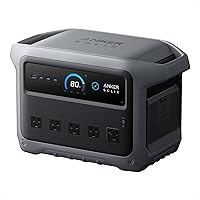
- Best Anker portable power station choices for Anker buyers.
- Best Bluetti solar generator options for BLUETTI buyers.
- Best Jackery power stations for Jackery models.
- Best Goal Zero Yeti power station options for Goal Zero buyers.
If you are comparing generator categories, read Inverter Generator vs Solar Generator: Which Should You Choose?. Buyers who care about manufacturing location can also review Which Solar Generators Are Made in the USA?.
Our solar generator guide covers the wider category, including solar input and battery planning. For capacity planning, see What Size Solar Generator Do You Need?.
How should you use and care for a portable power station?
Use the station within its output limits, keep the vents clear and recharge it on a routine that matches your storage plan. Before an emergency, test the charging cables, confirm the battery level and make sure each important device has a compatible connection.
Follow these habits:
- Add your essential devices to a written load list.
- Check running and startup watts before connecting motors or heating appliances.
- Leave room below the rated output instead of operating at the limit.
- Keep the unit dry and away from heat sources.
- Store cables with the station so they are available during an outage.
- Recharge after use and check the battery periodically during storage.
- Use only compatible solar panels, adapters and cables.
- Keep fuel generators outdoors and away from doors, windows and vents.
- Read the manual before using a transfer-switch-ready outlet.
- Keep children away from energized outlets and moving generator parts.
A battery station cannot replace safe electrical work. If you need to power household circuits, use a qualified electrician and the correct transfer equipment.
Portable power station or generator: which should you choose?
Choose a battery power station for quiet, exhaust-free power for electronics, short outages, camping and indoor essentials. Choose a fuel generator when you need higher continuous output or longer runtime that can be extended with stored gasoline or propane.
The Jackery Explorer 300 is the most portable choice here because its 292Wh capacity and 7.5 lb weight favor small loads. The BLUETTI AC180 offers a larger 1152Wh battery, 1800W output and UPS function for broader backup use.
The WEN 2350i adds 1900W rated gasoline output in a 39 lb package, but it requires outdoor operation and fuel. The Westinghouse WGen9500DF is the high-output option for home backup, with dual-fuel operation and transfer-switch-ready connections.
For another comparison of fuel and battery choices, read Portable Power Station vs Generator: Which Should You Choose?.
Explore portable power stations by topic
- Best Portable Power Stations for Home Backup
- Best Portable Power Stations for Camping
- EcoFlow DELTA vs RIVER: Which Power Station Should You Buy?
Use the home backup guide when you need to cover essential loads during an outage. Use the camping guide when weight, runtime and quiet operation matter more.
Use the EcoFlow comparison when you are deciding between two families from the same brand. Each guide helps you narrow the choice by the job you plan to do.
What is the best portable power station for your needs?
The best portable power station is the one that covers your real load with enough capacity and output for the way you use it. Pick the Jackery Explorer 300 for lightweight electronics, the BLUETTI AC180 for larger battery backup and UPS use, the WEN for quiet gasoline output, or the Westinghouse for high-output dual-fuel home backup.
Start with a load list rather than a headline number. Note which devices you will run together, how long you need them to run and whether any of them have motors or heating elements that draw extra power at startup.
For the Jackery Explorer 300, the 292Wh capacity and 300W output suit phones, laptops, cameras and short camping trips. Its light weight makes it easier to carry, but the smaller battery means you should plan recharging more often.
For the BLUETTI AC180, the 1152Wh battery, 1800W output and UPS function suit a wider set of essentials. It gives you more reserve for an outage, though its 37.4 lb weight makes it less convenient for long walks.
For the WEN 2350i, gasoline power gives you 1900 rated watts in a 39 lb package. It fits buyers who want fuel-based runtime and clean output for sensitive electronics, provided they can run it outdoors and handle fuel storage.
For the Westinghouse WGen9500DF, dual-fuel operation and transfer-switch-ready connections suit high-output home backup. It is better matched to major loads than to small electronics, and it requires the same outdoor care as any fuel generator.
If you want solar charging, confirm panel voltage, connector type and maximum input before you buy. A panel that sounds powerful on paper may still charge slowly if it does not match the station input limits.
If you need whole-home circuits, compare the requirements with a whole home battery backup system instead of relying on a small portable unit. That path involves different equipment, wiring and professional setup.
Check ports as carefully as capacity. The right mix of AC, USB and 12V outputs can reduce adapters and make an emergency setup simpler at night.
Think about storage and care before you order. Keep the station dry, recharge it after use and store it where you can reach it quickly when you need it.
Choose the model that matches your load list, your space and your charging options. That match will matter more in daily use than any single spec printed on the box.
Frequently asked questions
What is the best portable power station for home backup?
The best portable power station for home backup depends on your essential loads and runtime needs. A smaller model can cover phones, lights and a laptop, while a larger unit such as the BLUETTI AC180 offers 1152Wh capacity, 1800W output and UPS function.
A fuel generator may suit longer outages.
How many watts should a portable power station have?
Choose a portable power station with enough continuous output for the devices you will run at the same time, plus enough surge capacity for startup loads. Add the running watts of your planned devices, then compare that total with the station's rated output.
Motors and compressors may need extra startup power.
How long will a portable power station run a device?
A rough runtime estimate is battery capacity in watt-hours multiplied by about 0.85, then divided by the device's operating watts. A 1152Wh station running a 100W load may provide about 9.8 hours before losses and operating conditions reduce the result.
Can you use solar panels with a portable power station?
Yes, if the panel voltage, connector and total solar wattage fit the station's input limits. The Jackery Explorer 300 can use a 100W solar panel, while the BLUETTI AC180 accepts up to 500W of solar input with an open-circuit voltage from 12V to 60V.
Is a portable power station safe indoors?
A battery portable power station produces no exhaust while operating, so it can be useful indoors when used according to its instructions and kept dry with clear airflow. Fuel generators must remain outdoors because gasoline and propane engines produce carbon monoxide and other exhaust gases.