9 Best Anker Portable Power Stations (November 2026)
The best Anker portable power stations include the Anker SOLIX C1000 Gen 2 Portable Power for fast home backup, the Jackery Explorer 300 Portable Power Station for lightweight trips, and the Anker SOLIX C1000 Portable Power Station for high appliance demand.
On this page (6 sections)
- Which Anker portable power station is best for most people?
- Best Anker portable power stations by use
- How should you choose an Anker SOLIX battery?
- What does Anker SOLIX C2000 mean for backup power?
- How do you set up and care for a portable power station?
- Which best Anker portable power station should you buy?
The best Anker portable power station for most backup and outdoor needs is the Anker SOLIX C1000 Gen 2. It pairs 1,024Wh of stored energy with 2,000W of output, so it handles a wider mix of home and travel loads than the smaller DC models.
That balance is hard to beat for outages, when you need reserve for lights, laptops and small appliances without moving to a much larger system.
The original C1000 remains a sensible alternative when port count matters more than the newest charging speed. Its 11 ports and included car charging cable suit people who connect many devices at once or charge from a vehicle.
The C300 DC and C200 DC take a different approach, built around USB-C and other DC connections for laptops, phones, cameras and tablets. They have no AC outlets, so they are not a replacement for plug-in household gear.
Choosing AC or DC first will help you avoid the wrong type.
For a desk, the Anker Prime Charging Station solves a different problem, giving six connections from a wall outlet with no battery power for later use. During a power cut a charging station stops, while a power station continues, so think of Prime as desk infrastructure, not backup.
Capacity is the number to check before ports or features. Watt-hours show stored energy, while output watts show what you can run at the same time.
For help sizing capacity, start with our best portable power station guide. It explains watt-hours, output ratings and surge power.
Use that guide to list your devices and wattage before narrowing the choice. A realistic load list makes the models easier to separate and helps you avoid buying for peak power alone, since runtime depends on stored energy.
Our picks at a glance
-
1

-
2
 Best for lightweight trips
Jackery Explorer 300 Portable Power Station
9.6/10 our score
See it on Amazon -
3
 Best for high appliance demand
Anker SOLIX C1000 Portable Power Station
9.5/10 our score
See it on Amazon
- 4
 Check it
BLUETTI Elite 30 V2 Portable Power Station
Best compact non-Anker alternative - 5
 Check it
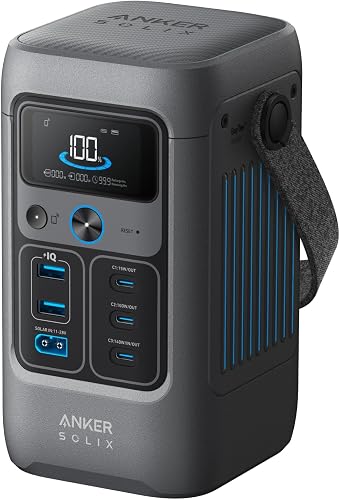
Anker SOLIX C300 DC Portable Power Station
Best for USB-C work kits - 6
 Check it
Anker SOLIX C200 DC Portable Power Station
Best for small personal loads - 7
 Check it
Anker 521 Portable Power Station Upgraded
Best for basic AC camping power - 8
 Check it
Anker SOLIX C200 DC Portable Power Station
Best for solar-ready day trips - 9
 Best for desk chargingCheck it
Which Anker portable power station is best for most people?
The Anker SOLIX C1000 Gen 2 is the best overall choice because it combines high output, useful capacity, quick AC charging and UPS backup in one portable station.
That combination matters because most people do not want to own one device for home backup and another for camping. A model that covers both uses is easier to store and easier to justify.
The score behind this ranking weighs specs, features and buyer feedback against the needs behind the keyword. We compared battery capacity, outlet count, output, recharge options and portability.
We then placed the products from highest score to lowest, so the list follows usefulness rather than brand order. That makes it easier to see why a larger station ranks above a lighter one for most backup needs.
Portability still counts in that comparison, especially for people who carry a station between rooms or vehicles. A model can score well on power and still lose points if it is awkward to move.
The C1000 Gen 2 stays near the top because it does not force a hard trade-off. It offers 1,024Wh and 2,000W output while keeping the body smaller and lighter than similar models.
Its 10 ms UPS switchover also adds real value for sensitive equipment. That feature is more useful for laptops and CPAP machines than a higher peak wattage figure alone.
Read the ranking as a starting point, then match it to your own load list. The best overall choice is only the best pick if its capacity and ports fit the devices you actually own.
| Product | Best for | Capacity | Output | Weight | Our score |
|---|---|---|---|---|---|
| Anker SOLIX C1000 Gen 2 Portable Power | fast home backup | 1,024Wh | 2,000W, 3,000W peak | 11.3 kg | 9.7 |
| Jackery Explorer 300 Portable Power Station | lightweight trips | 292Wh | 300W, 600W peak | 7.1 lb | 9.6 |
| Anker SOLIX C1000 Portable Power Station | high appliance demand | 1,056Wh | 1,800W, 2,400W surge | 27.6 lb | 9.5 |
| BLUETTI Elite 30 V2 Portable Power Station | compact non-Anker alternative | 288Wh | 600W, 1,500W lifting power | 9.5 lb | 9.3 |
| Anker SOLIX C300 DC Portable Power Station | USB-C work kits | 288Wh | 300W | 2.8 kg | 9.2 |
| Anker SOLIX C200 DC Portable Power Station | small personal loads | 192Wh | 200W | 1.9 kg | 9.1 |
| Anker 521 Portable Power Station Upgraded | basic AC camping power | 256Wh | 300W, 600W peak | 8.2 lb | 8.6 |
| Anker SOLIX C200 DC Portable Power Station | solar-ready day trips | 192Wh | 200W | 8.4 | |
| Anker Prime Charging Station | desk charging | 8.3 |
Best Anker portable power stations by use
The right model depends on whether you need AC outlets, USB-C charging, solar input, overnight backup or simple desk charging. To understand how these products differ, read portable power station vs solar generator.
The C1000 models cover larger loads, while the C200 DC and C300 DC keep smaller electronics easy to carry.
Anker SOLIX C1000 Gen 2 Portable Power: Best for fast home backup
- 1,024Wh LiFePO4 battery
- 2,000W output, 3,000W peak
- 10 ports
- 49-minute full recharge at 1,600W
The C1000 Gen 2 is the strongest all-around pick for emergency backup, remote work and camping. Its fast AC charging, solar input and UPS switchover make it useful when power needs are time-sensitive.
Pros
- Fast 49-minute recharge
- 10 ms UPS backup
- 600W solar input
Cons
- Capacity cannot be expanded
- Solar panels are not included
The C1000 Gen 2 is the strongest all-around option for home backup, camping and remote work. Its 1,024Wh LiFePO4 battery gives you more reserve than the compact models, while the 2,000W output supports a broader range of devices.
Anker says HyperFlash charging can fully recharge it in 49 minutes at 1,600W when UltraFast Charging is enabled in the app. It also accepts up to 600W of solar input and can recharge from solar in about 1.8 hours under the stated conditions.
The 10 ms UPS function suits laptops and CPAP machines that need fast transfer during an outage. See portable power station vs UPS for how the two backup options differ.
The app also provides Standard and Time-of-Use modes.
Its trade-off is that the expansion feature was removed to reduce size and weight. For a deeper look, read our Anker SOLIX C1000 Gen 2 review.
Jackery Explorer 300 Portable Power Station: Best for lightweight trips
- 292Wh capacity
- 300W output, 600W peak
- 6 device ports
- 7.1 lb weight
The Explorer 300 is the easiest small station to carry for camping, travel and short outages. It supports laptops, drones and cameras while keeping the total load below its 300W rating.
Pros
- Lightweight integrated-handle design
- 100W USB-C PD port
- LiFePO4 battery
Cons
- Lower capacity than the Anker C1000 models
- Solar panel is optional
The Jackery Explorer 300 is the easiest pick to carry. At 7.1 lb with 292Wh, it suits camping, travel, cameras, drones and short backup needs where a larger station would be excessive.
That weight is the main reason to choose it over a C1000-class model. You can move it from a tent to a car or picnic bench without planning around a heavy lift.
Its 300W rated output and 600W peak output work for devices that stay within those limits. Peak power helps with brief start-up demands, but your normal load should remain below the rated output.
The port layout includes 2 AC outlets, a 100W USB-C PD port, 2 USB-A ports and a 120W car port. That mix covers laptops, phones, camera batteries and small 12V gear in one small body.
Jackery says its LiFePO4 battery supports more than 4,000 cycles before reaching 70% capacity. A 100W solar panel can bring it to 80% in about 2.8 hours, while the solar panel is sold separately.
You can also charge it from a wall outlet or a car port, which gives you options before a trip. Use the Explorer 300 for light loads and portability, not for high-draw appliances or long home backup.
If you need overnight power for larger devices, step up to a 1,000Wh-class station. The Explorer 300 works best when portability matters more than stored energy.
Anker SOLIX C1000 Portable Power Station: Best for high appliance demand
- 1,056Wh LiFePO4 battery
- 1,800W output, 2,400W surge
- 11 ports
- 600W solar input
The original C1000 gives you more output ports and a slightly larger battery than the Gen 2. It suits emergency use, RV trips and camping where appliance flexibility matters.
Pros
- 11 versatile ports
- Car charging cable included
- Fast solar recharging
Cons
- Heavier than the Gen 2
- AC and DC inputs cannot charge simultaneously
The original C1000 is the better Anker choice when you want 11 ports and 1,056Wh. Its 1,800W output and 2,400W surge output give room for many common appliances, camping devices and emergency electronics.
Those extra ports are the practical difference from the Gen 2, making it easier to connect several devices at once without a separate hub.
It reaches 80% in 43 minutes under the stated conditions, with a full charge in under an hour, and UltraFast charging is enabled through the Anker app.
Solar input can reach 600W for recharging away from a wall outlet. For planning, Anker gives a runtime formula of 1,056Wh times 0.9 conversion efficiency, divided by device power, though real runtime varies with load and inverter loss.
The included car charging cable makes vehicle charging simpler than on the Gen 2, which is a useful convenience for car and RV travel.
The trade-off is 27.6 lb weight and lower output than the newer model, so the Gen 2 is easier to move on foot.
Read our Anker SOLIX C1000 review before choosing. Ports and car charging or speed and output should drive the pick.
BLUETTI Elite 30 V2 Portable Power Station: Best compact non-Anker alternative
- 288Wh capacity
- 600W output, 1,500W lifting power
- 10 ms UPS
- 8 charging modes
The Elite 30 V2 is a compact alternative for buyers comparing Anker models with other brands. Its 600W output, UPS function and multiple charging methods fit camping and smaller emergency loads.
Pros
- 600W continuous output
- 10 ms UPS switchover
- 380W wall charging
Cons
- Not an Anker model
- Smaller battery than both C1000 picks
The BLUETTI Elite 30 V2 is the strongest compact alternative in this group. Its 600W continuous output and 1,500W Power Lifting mode give it more output than many small stations with a similar battery size.
That output gap is what sets it apart from other 288Wh-class models. It can run a broader range of small appliances without needing to move up to a 1,000Wh station.
The 288Wh capacity suits laptops, lights, speakers, car fridges and other modest loads. It is better thought of as a compact station for targeted devices than as whole-home backup.
Its 10 ms UPS function can help protect laptops, routers and CPAP machines during a power cut. That fast switchover matters most for equipment that should not lose power mid-task.
It supports AC, car, solar, lead-acid battery and combined AC plus solar charging. Having several input options makes it easier to recharge at home, on the road or from a panel.
BLUETTI lists 380W wall charging, with 0 to 80% charging in 45 minutes. Fast wall charging is useful when you need the station ready again after a short outage or a weekend trip.
Choose it when compact size and 600W output matter more than Anker branding or a 1,000Wh-class battery. It weighs 9.5 lb and includes an AC charging cable, car charging cable and user manual.
The main trade-off is stored energy, not output. A 288Wh battery will run out sooner than a C1000 model, even if both can start the same device.
Anker SOLIX C300 DC Portable Power Station: Best for USB-C work kits
- 288Wh capacity
- 300W output
- 7 charging ports
- Two 140W USB-C ports
The C300 DC focuses on DC charging for laptops and other USB devices. Its compact body and seven ports make it a strong fit for remote work, travel and outdoor electronics.
Pros
- Two 140W USB-C ports
- Compact design
- 100W solar input support
Cons
- No AC outlets
- Shoulder strap is sold separately
The C300 DC is the best Anker match for a USB-C work kit. Its 288Wh capacity and 300W output support laptops and other DC devices without adding AC outlets you may not use.
That focus is the point of the design. Direct DC charging avoids some of the loss and bulk that come with converting power through an AC inverter.
Two USB-C ports support 140W two-way charging. That means one port can fast-charge a laptop while the station itself can be recharged through a compatible USB-C source.
The seven-port layout also includes a 100W USB-C port, a 15W USB-C port, 2 USB-A ports and a 120W car socket. It is a full kit for phones, tablets, cameras and vehicle accessories.
You can recharge it through an 18W or higher USB-C PD charger, solar panels from 11 to 28V, or a car. Anker recommends its 60W or 100W solar panels and says the PS30, PS200 and PS400 are not compatible.
The box includes a 140W USB-C to USB-C cable, but the shoulder strap is sold separately. Choose it for laptops, cameras and mobile electronics rather than AC appliances.
Anker SOLIX C200 DC Portable Power Station: Best for small personal loads
- 192Wh capacity
- 200W output
- Five device charging ports
- 140W USB-C port
The C200 DC is a small choice for phones, tablets, laptops and lights. Its DC-only design keeps the focus on efficient USB charging instead of AC appliance use.
Pros
- Small 1.9 kg body
- Up to 100W solar recharging
- 3,000-cycle LFP battery
Cons
- No AC outlets
- Charger is not included
The C200 DC is the smallest Anker station here for a personal electronics kit. Its 192Wh battery and 200W output fit phones, tablets, laptops, lights and other modest DC loads.
At 1.9 kg, it is built for carrying rather than for stationary backup. That makes it attractive for day trips, short hikes and situations where you only need to top up personal devices.
Its ports include a 140W USB-C port, a 100W USB-C port, a 15W USB-C port and 2 USB-A ports. The layout covers most modern phone, tablet and laptop charging needs without adding AC outlets.
You need an 18W or higher USB-C PD charger, and the 140W port is required for full-speed charging. Solar input supports up to 100W with compatible 11 to 28V panels.
Panels are not included in this version. If you want solar charging, you need to buy a compatible panel separately and check the voltage range before you travel.
The LiFePO4 battery is rated for 3,000 cycles, which supports long-term use for a portable unit. Pick it when low weight and USB charging matter most, while setting realistic expectations for runtime.
A 192Wh battery is sized for personal electronics, not for running household equipment through the night.
Anker 521 Portable Power Station Upgraded: Best for basic AC camping power
- 256Wh capacity
- 300W output, 600W peak
- 2 AC outlets
- 6 total ports
The Anker 521 adds AC outlets to a compact format for camping and simple outage needs. It is a practical middle ground when a DC-only station is too limited and a C1000 is too large.
Pros
- Two AC outlets
- 60W USB-C PD output
- LiFePO4 battery
Cons
- Lower capacity than the C1000 models
- Solar panel is optional
The Anker 521 is the practical middle option for camping and simple outages. Its 256Wh capacity, 300W output and 2 AC outlets support more plug types than the DC-only C200 and C300 models.
That AC support is the main reason to choose it, since standard household plugs need no USB adapters for every device.
It also provides 2 USB-A ports, a 60W USB-C port and a car outlet, with USB-C fastest for a laptop.
SurgePower raises peak output to 600W, but connected devices still need to fit the 300W continuous rating. Peak power helps start-up surges and does not replace that rating.
The box includes a DC adapter, car charging cable and welcome guide for wall and vehicle charging. Anker says its LiFePO4 battery and construction support up to 10 years of performance.
At 8.2 lb, it is heavier than the DC-only models but lighter than the C1000 class. Choose it for weekend trips and small electronics, not overnight backup, where the C1000 models offer much more capacity.
Anker SOLIX C200 DC Portable Power Station: Best for solar-ready day trips
- 192Wh capacity
- 200W output
- 60W solar panel included
- 7 ports
This C200 DC bundle gives you the station and a 60W solar panel together. It suits day trips and small electronics when you want a ready-made solar charging setup.
Pros
- 60W solar panel included
- Seven ports
- 200W output
Cons
- No AC outlets
- Shoulder strap is not included
This C200 DC bundle is the best pick when you want a small station and solar panel together. It includes a 60W solar panel, solar-to-XT-60 cable, extension cable and 140W USB-C cable.
Having the panel in the box removes the guesswork of buying separate parts, giving a matched setup for phones, tablets, cameras and laptops away from a wall outlet.
The station has 192Wh capacity, 200W output and seven ports. Its 60W panel recharges it in about 4 hours under the stated conditions, while wall charging reaches 80% in about 50 minutes.
Wall charging is much faster, while solar is better for staying off-grid for a day. Like the standalone C200 DC, it is for USB-C, USB-A and car-socket devices rather than AC appliances.
Anker says PS30, PS200 and PS400 panels are not compatible, so the included 60W panel avoids that issue. The extension cable also helps position the panel in sunlight while the station stays in shade.
Choose this bundle for a simple ready-made solar setup. The shoulder strap is not included.
Anker Prime Charging Station: Best for desk charging
- 2 AC outlets
- 2 USB-C ports
- 2 USB-A ports
- 140W USB-C charging
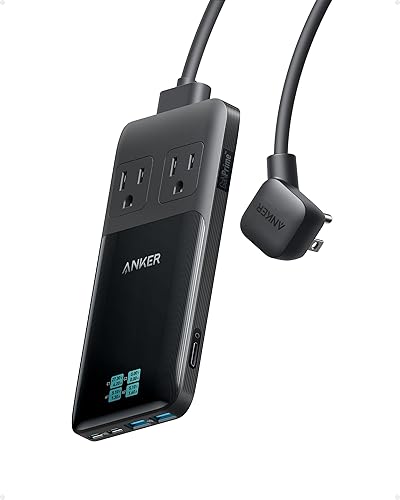
The Anker Prime Charging Station is a desktop power strip, not a battery backup. Choose it when you need six charging connections and fast USB-C power from a wall outlet.
Pros
- Six-in-one charging
- Smart display
- Slim 0.7 in design
Cons
- Not a portable battery
- Does not have surge protection
The Anker Prime Charging Station is for a desk, not an outage kit. It provides 2 AC outlets, 2 USB-C ports and 2 USB-A ports, with one USB-C port delivering up to 140W.
That 140W port is the headline feature for laptop users, fast-charging a compatible laptop while other ports handle phones and tablets.
At 0.7 in thick and 460 g, its slim body suits a compact workstation and sits flat instead of taking space like a bulky brick.
A smart display shows port power, voltage and current when connected to a wall outlet, helping you see real-time draw. The USB ports accept 100 to 240V input, and total connected wattage must stay within 1,000W.
Anker states this strip has no surge protection, an important trade-off before connecting expensive gear. The detachable 5 ft cord also helps with desk layout.
Choose it for laptops, monitors, phones and tablets at a desk. It is not a wireless pad or portable battery and cannot charge devices in a power cut, so choose a C1000, C300 DC or C200 DC for stored power.
How should you choose an Anker SOLIX battery?
Choose by watt-hours first, output second and ports third. Watt-hours describe the battery reserve, while output watts determine whether the station can run a device.
That order matters because a station can have high output and still stop early if its battery is small. Capacity decides how long you can run your load, not just whether it starts.
A simple estimate is battery capacity multiplied by conversion efficiency, divided by device power. For example, a 1,000Wh station at 90% efficiency running a 100W load gives a rough planning figure of about 9 hours.
Actual runtime changes with inverter loss, device behavior and other loads, so treat the result as a planning estimate. Motors, heaters and compressors can also draw more power than their label suggests at start-up.
Ports come third because they decide how many devices you can connect at once. For DC-only devices, USB-C wattage matters as much as the port count.
For a larger backup reserve, compare the C1000 Gen 2 with the original C1000. The Gen 2 offers more output and faster charging, while the original offers more ports and a car cable.
Our Anker SOLIX S2000 review covers a larger Anker option for readers whose needs exceed the C1000 class. Start with a list of devices, add up their wattage and estimate hours of use.
What does Anker SOLIX C2000 mean for backup power?
The C2000 name refers to a higher-capacity Anker SOLIX class than the C200 DC and C300 DC. It is relevant when you need more stored energy for longer backup, while the C1000 models are easier to carry.
The naming can be confusing, because C200 DC and C2000 are very different products. The DC models are compact USB-C stations, while the C2000 class aims at larger backup needs.
For most camping and short outage use, a C1000 is easier to move and store. A C2000-class system makes more sense when runtime matters more than portability.
Think about what you need to run overnight, not just for an hour, since fridges, CPAP machines and lighting add up quickly without mains power.
For larger home backup planning, compare our best Anker solar generator guide. It helps you move from portable stations to systems for longer household loads.
Readers considering bigger systems can also review the Anker SOLIX F3800 review and Anker SOLIX F3000 review. Those models are in a different weight and capacity class from the C1000 picks.
Larger systems also raise setup questions about solar input, wiring and placement. If you only need power for laptops and phones, the C200 DC or C300 DC will be simpler.
Use C2000 as a signal to compare larger options, not as a reason to buy more by default. The best system is the smallest one that covers your needs with room to spare.
How do you set up and care for a portable power station?
Charge the station before an expected trip or outage, check every cable and keep the air openings clear. Use only compatible solar voltage, connectors and charging methods for the model.
A pre-trip charge is simple insurance against a forgotten low battery. It also gives you a chance to spot a damaged cable or a loose connector before you need the station.
Keep the station dry and protected from extreme heat. Moisture and heat can both shorten battery life, and blocked vents can cause the unit to shut down during use.
Store it at a moderate charge level for long periods rather than leaving it completely flat. Checking the charge every few months is a good habit for emergency gear.
Before relying on UPS backup, connect the equipment you need and confirm that the transfer behavior works for that setup. Test it with the actual devices you plan to protect, not just a phone charger.
Clean the vents and ports gently and keep the station free of dust and debris. A quick check during setup takes little time and can prevent overheating on a hot day.
If you're comparing larger systems, our Anker SOLIX F3800 Plus review explains another high-capacity option. The Anker SOLIX F3800 vs F3800 Plus comparison focuses on which larger model better fits your backup plan.
For portable stations, the same care rules apply at every size. Charge before you need it, keep it dry and test your setup before an outage arrives.
Which best Anker portable power station should you buy?
Choose the C1000 Gen 2 for the best mix of capacity, output, fast charging and UPS backup. It is the most versatile pick for home backup, camping and remote work, with 1,024Wh and 2,000W for mixed AC and DC loads.
Choose the original C1000 for extra ports and a car cable, the C300 DC for a larger USB-C kit, and the C200 DC for the lightest personal setup.
The original C1000 suits people who connect many devices at once, with 11 ports and an included car cable for RV and emergency use.
Pick the C200 DC bundle when you want a 60W solar panel included for day trips and small electronics.
If you only need desk charging, choose the Anker Prime Charging Station, a wall-powered hub with six connections but no stored power.
Match the model to your load list by starting with watt-hours, then checking output and counting ports. Buy for devices you own today, with a little room for growth, and the C1000 Gen 2 remains the safest default for most buyers.
Our top 3 picks at a glance
-
1
-
2
Best for lightweight trips
Jackery Explorer 300 Portable Power Station
9.6/10 our score
See it on Amazon -
3
Best for high appliance demand
Anker SOLIX C1000 Portable Power Station
9.5/10 our score
See it on Amazon
Frequently asked questions
What is the best Anker portable power station?
The Anker SOLIX C1000 Gen 2 is the best Anker portable power station for most buyers because it combines a 1,024Wh battery, 2,000W output, 10 ports, 600W solar input and 10 ms UPS backup. Choose a smaller C200 DC or C300 DC for USB-C devices and easier carrying.
Is Anker SOLIX C1000 Gen 2 better than C1000?
The C1000 Gen 2 recharges fully in 49 minutes at 1,600W, weighs 11.3 kg and delivers 2,000W output. The original C1000 has a 1,056Wh battery, 1,800W output, 11 ports and a car charging cable.
Choose Gen 2 for speed and output, or C1000 for port count.
What is the difference between Anker SOLIX C200 DC and C300 DC?
The C200 DC has 192Wh capacity and 200W output, while the C300 DC has 288Wh and 300W. Both focus on DC charging, but the C300 DC adds two 140W USB-C ports and seven total ports, making it better for larger laptop and camera kits.
Can a portable power station run a CPAP machine?
A power station can run a CPAP machine when its output, battery capacity and connection type match the machine's requirements. The C1000 Gen 2 and BLUETTI Elite 30 V2 include UPS functions with under 10 ms switchover.
Check your CPAP's wattage before choosing.
Can you use solar panels with Anker SOLIX stations?
Yes, several picks support solar charging, but the panel voltage and connector must match. The C1000 Gen 2 accepts up to 600W solar input, while the C200 DC supports 11–28V panels and up to 100W.
The C200 DC bundle includes a 60W panel.


