Are Solar Panels Waterproof?
Most solar panels can handle ordinary rain when installed as intended, but that does not make every panel, connector, or power station waterproof. Check the maker’s water exposure instructions and each component’s IP rating before leaving a setup outdoors.
On this page (7 sections)
- Are solar panels waterproof in the rain?
- What does an IP rating tell you?
- Which parts of a solar setup need protection?
- How should you use a portable panel in wet weather?
- What should you do if a panel or cable gets wet?
- How can you choose panels for outdoor use?
- Are solar panels waterproof enough for your setup?
Most solar panels can handle ordinary rain when installed as intended, but that does not make every panel, connector, or power station waterproof. Check the maker’s water exposure instructions and each component’s IP rating before leaving a setup outdoors.
A solar setup is a chain of parts: panel, cable, connector, charge controller, and battery or power station. The least protected part can determine where you need a cover or dry location.
If you're new to portable setups, start with what a portable solar panel is. The panel's portability doesn't tell you how well its connectors or attached electronics handle water.
Are solar panels waterproof in the rain?
Many panels intended for outdoor use can withstand rain, but “waterproof” is not a blanket promise for every panel or setup. The maker’s instructions and any water-resistance rating tell you what exposure is allowed.
Rain on the panel surface is different from water entering a junction box, connector, cable splice, or power station. Keep connections assembled as directed, with seals seated, and avoid placing plugs where water can pool.
Solar equipment may have different ratings across components. A rated connector does not make an unrated controller or power station safe to leave in the rain.
What does an IP rating tell you?
An IP rating describes tested protection against dust and water for a specific enclosure or component. It does not mean that every part connected to it has the same protection.
The first digit concerns solid objects such as dust, while the second digit concerns water exposure. The exact test conditions matter, so do not assume a rating for spraying or temporary immersion covers every kind of weather or installation.
The International Electrotechnical Commission’s IP code overview explains how these ratings classify enclosure protection. Look for the rating on the specific component and read the product instructions for allowed use.
Does IP67 mean a solar setup can be submerged?
No, an IP67 rating on a connector does not mean the whole solar setup can be submerged. It applies only to the rated item, assembled correctly, under defined test conditions.
The BougeRV 20 Feet 10AWG Solar Extension Cable has an IP67 waterproof and dustproof ring on its male connector, according to BougeRV. Its cable has UV-resistant insulation, and the brand describes it for outdoor use.
Keep the bare-wire end, any controller, and the power station protected according to their own instructions. Don't treat one connector’s rating as a rating for the full circuit.
Which parts of a solar setup need protection?
Protect every exposed connection and electronic component according to its own instructions. A weather-ready panel can still be connected to parts that need shelter.
Check these areas before setting up:
- Connector joints: Make sure compatible connectors are fully joined and seals are seated.
- Loose ends: Keep uncapped connectors and bare wire ends dry.
- Controller and power station: Check their manuals for rain exposure limits; these devices may need a dry, ventilated location.
- Cable runs: Avoid sharp bends, standing water, and spots where people or vehicle doors can damage insulation.
- Portable panel seams: Inspect fabric, hinges, and cable exits for wear before use.
The National Renewable Energy Laboratory’s PV system operations and maintenance guide covers maintenance practices for solar systems. For a portable setup, regular checks for damage and secure connections are useful basics.
How should you use a portable panel in wet weather?
Use a portable panel in wet weather only when its instructions allow it, and keep the electronics and connections dry. Set the panel where water can drain rather than collect around seams or plugs.
A folding panel may be convenient to move into shelter when a storm approaches. Don't assume the outer surface protects the controller or battery attached to it.
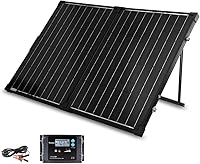
The DOKIO 100W Portable Foldable Solar Panel Kit includes a separate PWM controller and a 9.84 ft cable. The cable length can help place the panel in sun while keeping the controller or power station shaded.
DOKIO also notes that power stations may limit input, so check your station’s input limits alongside its weather guidance. For a larger foldable option, the DOKIO 200W kit has a separate PWM controller and a 9.84 ft cable.
Before buying, compare the panel type and construction with what type of solar panel is best for your needs. For more options selected around water protection, see best waterproof portable solar panels.
What should you do if a panel or cable gets wet?
Stop using the setup if you see damaged insulation, water inside an enclosure, or a loose connection. Follow the manuals for disconnecting and drying equipment; don't handle wet electrical connectors or open sealed components.
If only the panel surface is wet, check whether the panel maker allows continued use and wait for conditions that make handling safe. Never assume a damp connector is safe to plug in.
Inspect cables for cuts, cracks, or crushed sections after outdoor use. Replace damaged parts with compatible components rather than wrapping a wet or broken connection and leaving it exposed.
How can you choose panels for outdoor use?
Choose based on the ratings and instructions for the panel and all connected parts. Look for clear guidance on rain exposure, connector sealing, storage, and care.
A bifacial panel collects light from both sides, but that design alone does not guarantee water protection. If that design suits your setup, compare the best bifacial portable solar panel options.
Cable length can also affect where you can place the panel and electronics. For compatible EcoFlow setups, compare the best EcoFlow solar extension cable, and review best ALLPOWERS solar panels or best BLUETTI 200 watt solar panels when comparing brands.
Are solar panels waterproof enough for your setup?
Treat a solar panel as rain-resistant only to the extent its own instructions support, and check every connected component separately. Keep electronics sheltered, connections properly joined, and damaged parts out of service.
Choose a panel for your use and weather guidance, then confirm the controller, cable, connector, and power station have suitable protection too. If you're building a backup system, learn what a solar UPS is before connecting equipment.
Frequently asked questions
Are solar panels safe in the rain?
Many fixed solar panels are designed to remain outdoors and handle rain when installed according to their instructions. That does not mean every portable panel, connector, cable joint, or power station is protected from water.
Check the ratings and guidance for each component, and disconnect or shelter equipment when its instructions require it.
What does IP67 mean on a solar connector?
IP67 indicates a defined level of protection against dust and temporary immersion under specified test conditions. It applies to the rated connector when properly assembled, not automatically to the panel or a whole solar setup.
Match connectors as directed and keep exposed wire ends and loose connections away from water.
Can a portable solar panel stay outside overnight?
Only leave a portable panel outside overnight if its manufacturer says that use is suitable and you can protect its connectors and connected equipment. A panel that tolerates rain may still be vulnerable at cable ends, controller ports, seams, or fabric sections.
Bring it in when instructions are unclear or severe weather is expected.
Can you use a solar panel while it is wet?
Follow the panel and power station instructions before operating a wet setup. Avoid handling connectors with wet hands, plugging or unplugging them in rain, or using equipment with damaged insulation.
If water has reached a controller or power station, disconnect only as the manual allows and let the maker’s guidance determine when it is safe to use again.