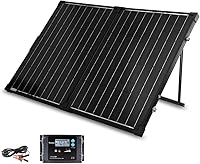
EcoFlow 400W Portable Solar Panel Review: Worth It? (November 2026)
The EcoFlow 400W portable solar panel suits fast charging when you can carry and position a large panel. EcoFlow lists a 16 kg weight and claims one panel can recharge the DELTA Pro in 11 hours under its stated conditions.
On this page (7 sections)
- What does the EcoFlow 400W portable solar panel offer?
- How portable is a 400W EcoFlow panel?
- How fast can this EcoFlow 400 watt solar panel charge a power station?
- What should you check before connecting the panel?
- How does the EcoFlow 400W panel compare with other 400W options?
- What are the main trade-offs?
- Is the EcoFlow 400W panel worth choosing?
The EcoFlow 400W portable solar panel is a large foldable option for charging a compatible power station faster. It weighs 16 kg (35.3 lb), and EcoFlow claims a 22.4% conversion rate and an 11-hour DELTA Pro recharge with one panel.
This size makes the most sense when you have room to carry, unfold and aim the panel. If frequent transport matters more than rated output, a smaller panel may be easier to handle; our EcoFlow 110W portable solar panel review covers a lighter option.
What does the EcoFlow 400W portable solar panel offer?
The EcoFlow 400W panel combines foldable construction, an adjustable carry case and a 400W rated output. The DELTA Pro bundle includes a 400W panel, a 3600Wh power station and a solar charge cable, delivered in separate packages.
EF ECOFLOW Solar Generator 3.6KWh DELTA Pro: Best for a bundled power station

- 400W foldable solar panel
- 22.4% conversion rate
- 16 kg panel weight
- Adjustable carry case
A DELTA Pro and 400W panel bundle for buyers who want the large power station and a matching solar panel together. The panel is foldable and comes with an adjustable carry case.
Pros
- Includes a 400W foldable panel
- Adjustable carry case
- EcoFlow claims IP68 dust and water protection
- DELTA Pro has 15 outputs and app control
Cons
- Panel weighs 16 kg (35.3 lb)
- Station and panel arrive in separate packages
- EcoFlow's charging times depend on conditions
EcoFlow says the panel has a 22.4% conversion rate and IP68 dust and water protection. It also claims one panel can recharge the DELTA Pro in 11 hours and three panels in 3.5 hours, but actual charging time depends on sunlight, angle, shade and station input limits.
Who should consider this EcoFlow 400 watt solar panel?
Choose it if your priority is higher solar input and you can leave enough room to position a broad panel in direct sun. It fits campsite, RV and backup plans where you want to recharge a larger station during daylight.
Consider a smaller panel if you need to carry gear over long distances or set up in a cramped spot. Our guide to what a portable solar panel is explains the trade-off between panel size, output and portability.
How portable is a 400W EcoFlow panel?
The panel weighs 16 kg (35.3 lb), so it is portable in the sense that it folds and has a carry case, but it is still a heavy item to move often. Check your route from storage to the setup area before deciding that the foldable format will suit your routine.
The carry case has an adjustable stand, according to EcoFlow's product details. You still need an open location where the panel can face the sun without nearby trees, vehicles or other gear casting shade.
Plan for space both during transport and use. A large panel can be inconvenient to move around a crowded campsite even when it folds for storage.
For setup and positioning, follow our guide on how to use an EcoFlow solar panel. It covers practical steps for connecting a panel and getting it into sunlight.
How fast can this EcoFlow 400 watt solar panel charge a power station?
A 400W panel can provide more rated solar input than a smaller panel, but rated output does not equal constant output throughout the day. EcoFlow's stated recharge times apply to its DELTA Pro pairing and should be treated as claims, not a promise for every location.
| Charging setup | EcoFlow claim |
|---|---|
| One 400W panel with DELTA Pro | Full recharge in 11 hours |
| Three 400W panels with DELTA Pro | Full recharge in 3.5 hours |
| Panel conversion rate | 22.4% |
The sunlight available, panel direction, temperature, shade and power station's solar input limits all affect the energy collected. A cloudy day or a panel placed flat in partial shade can produce less than a clear, well-aimed setup.
Check your power station's input limits before connecting panels, especially if you plan to add more than one. The total panel rating does not override the station's voltage and current limits.
What should you check before connecting the panel?
Confirm voltage, current and connector compatibility between the panel and your power station before buying. A connector that physically fits does not by itself confirm a safe electrical match.
The EcoFlow bundle includes a solar charge cable. If you are pairing this panel with another station, check that station's solar input range and the cable or adapter it needs.
If you want to use a longer cable to position the panel in a sunny spot, compare options in our guide to the best EcoFlow solar extension cable. Keep cable length and the station's input limits in mind when planning a setup.
How does the EcoFlow 400W panel compare with other 400W options?
The EcoFlow bundle is the direct choice when you want the panel and DELTA Pro together, while the Renogy panels offer different fold styles and carry weights. Compatibility and storage shape may matter as much as the 400W label.
Renogy 400W Portable Solar Panel: Best for a suitcase-style alternative

- 400W rated output
- 30.2 lb weight
- Fiberglass reinforcement and ETFE coating
- Carry case
A foldable 400W suitcase panel with a carry case and kickstands. It has MC4 output cables, so check connector and electrical requirements for your power station.
Pros
- Carry case and foldable kickstands
- IP67 waterproof rating
- 3-year materials and workmanship coverage
- Parallel wiring is designed to reduce the impact of individual shadows
Cons
- Weighs 30.2 lb
- 4-in-1 adapter cable is sold separately
- Real output varies with conditions and input limits
The Renogy 400W Portable Solar Panel weighs 30.2 lb and folds to 33.7 x 27.95 inches. Its kickstands support suitcase-style positioning, and its output uses MC4 cables; the 4-in-1 adapter is sold separately.
Renogy 400W Portable Solar Panel for Power: Best for compact storage

- 400W rated output
- 16.1 lb weight
- 16-fold design
- 25% claimed efficiency
A 400W solar blanket that folds into a compact package for tight vehicle storage. It uses MC4 output, and its 4-in-1 adapter is sold separately.
Pros
- Compact folded size
- 16.1 lb weight
- Can be positioned on the ground, windshield or hung
- 25% efficiency claim
Cons
- Requires a suitable adapter for some power stations
- Needs secure placement in windy conditions
- Actual output varies with sun, shade, cable length and input limits
The Renogy 400W Portable Solar Panel for Power Stations is a blanket-style design weighing 16.1 lb. It folds to 16.54 x 15.83 x 4.13 inches and has MC4 output, with a separate adapter needed for some stations.
Compare other models in our guide to the best 400 watt solar panels. For EcoFlow station-specific picks, see best solar panels for the DELTA 2 and best solar panels for the DELTA 3.
What are the main trade-offs?
The biggest trade-off is higher rated output in a large, heavy foldable panel. The 16 kg weight and the space needed for setup can be a burden if you move camp often or have limited ground area.
The DELTA Pro bundle is useful when you want a matching station and panel in one purchase. Keep in mind that the station and panel ship separately, and the charging estimates are specific to EcoFlow's stated pairing.
The Renogy suitcase panel is also heavy at 30.2 lb, but it has kickstands and a carry case. The Renogy blanket is lighter and folds smaller, though its connector and adapter needs still require a compatibility check.
Is the EcoFlow 400W panel worth choosing?
The EcoFlow 400W portable solar panel is a sensible choice if you want high rated output and can manage its 16 kg carry weight. It is especially straightforward as part of the DELTA Pro bundle, which includes a solar charge cable and has EcoFlow's stated recharge estimates.
Pick the EcoFlow bundle if you want the panel with the DELTA Pro. Pick the smaller Renogy blanket if compact storage and lower carry weight matter more, or compare panel options by station in our portable UPS guide.
Frequently asked questions
How much does the EcoFlow 400W portable solar panel weigh?
The EcoFlow 400W panel weighs 16 kg, or about 35.3 lb, and comes with an adjustable carry case. That is a substantial load for frequent walks from a vehicle, so plan to carry it over a short route or set it up near where you park.
How long does one EcoFlow 400W panel take to charge a DELTA Pro?
EcoFlow claims one 400W panel can recharge the DELTA Pro in 11 hours, while three panels can do it in 3.5 hours. Those are brand claims under particular conditions; sunlight, panel angle, temperature and station input limits affect real charging time.
Can the EcoFlow 400W panel be used in rain?
EcoFlow describes the panel as IP68 rated for dust and water protection. Check the current manual for setup and connector guidance, and avoid assuming that a rating makes every cable connection safe to leave exposed in all conditions.
Is the EcoFlow 400W panel compatible with every power station?
No single panel should be assumed to fit every power station. Confirm the station's solar input voltage, current and connector requirements before buying; a matching plug alone does not prove that the electrical limits are compatible.