8 Best Fast Charging Power Banks (November 2026)
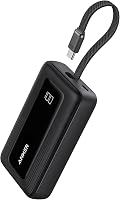
The best fast charging power bank include the Anker Power Bank for compact everyday fast charging, the BLAVOR Solar Power Bank for outdoor backup charging, and the INIU Laptop Power Bank for laptop and phone combos.
On this page (10 sections)
- How we compared these fast charging power banks
- The best fast charging power banks for different needs
- How do fast charging power banks compare on speed and output?
- What wattage do you actually need for fast charging?
- How much capacity should you buy in a fast charging power bank?
- How fast should a power bank recharge itself?
- Which ports and cables matter most?
- Is a solar power bank fast enough for daily use?
- When should you choose a larger backup power option instead?
- Our verdict on the best fast charging power bank
The best fast charging power bank for most people is the Anker Power Bank with 10,000mAh and 30W output, because it is compact and fast enough for daily phone use. Our score weighs specs, features and buyer feedback against what you are shopping for.
A fast charging power bank is not just about capacity. Wattage decides how quickly a device fills, while capacity decides how many times you can do it.
Our power bank battery guide explains capacity and charging basics in plain terms. Use it if you are new to portable chargers.
Our picks at a glance
-
1

-
2

-
3

- 4
 Best for slim 45W phone chargingCheck it
- 5
 Check it
UGREEN Nexode 20000mAh 45W Power Bank
Best for built-in cable travel - 6
 Check it
UGREEN Nexode 25000mAh 145W 3-Port USB-C Power
Best for high-power laptop charging - 7
 Best for fastest recharge and outputCheck it
- 8
 Check it
CUKTECH 45W Power Bank 20000mAh
Best for 45W multi-device charging
How we compared these fast charging power banks
We checked specs for output wattage, input wattage, capacity, port count, cable type, size and weight. We also looked at what each brand says about charging times for specific phones and laptops.
We did not test them by hand. All charging times below are maker claims tied to named devices.
Higher wattage does not always mean faster for your phone. Your phone has a maximum input limit, and a 30W bank may charge it just as fast as a 65W bank.
Capacity also shrinks in daily use. Conversion and heat loss mean you get less energy than the headline mAh number.
Why output, input and capacity need to be read together
Output wattage tells you the peak speed a bank can deliver to one device or across several ports at once. Input wattage tells you how fast the bank itself refills from a wall charger or another source.
Capacity in milliamp hours tells you the size of the stored charge, but charging time for a specific phone also depends on that phone battery size and its own charging limit. A bank with 20,000mAh will normally give more full charges than a 10,000mAh bank, yet both can lose energy during voltage conversion.
Size and weight shape daily habits. A slim 0.7 inch thick bank is easier to keep in a pocket, while a thicker bank with 25,000mAh or more tends to live in a bag.
Port count and cable type matter too, because a built-in cable can save space while extra USB-A ports can support older accessories.
The best fast charging power banks for different needs
The Anker and BLAVOR models lead on score because they suit daily and outdoor use well. The larger INIU, UGREEN and Anker Prime models win for laptops and heavy travel loads.
Anker Power Bank: Best for compact everyday fast charging
- 10,000mAh capacity
- 30W output and 20W input
- Built-in USB-C cable
- 4.32 x 2.58 x 0.98 inches
A compact 10,000mAh charger with a built-in USB-C cable and 30W charging for phones and small devices.
Pros
- Compact size for daily carry
- Built-in USB-C cable
- 30W bi-directional charging
Cons
- 10,000mAh is limited for laptops or long trips
- Older iPhones need a separate Lightning cable
This Anker suits people who want one small charger for commuting, work and short trips. Its 10,000mAh capacity and 30W output give about two full charges for an iPhone 15, according to Anker.
Anker also lists 1.94 charges for a Samsung S24 and 10 charges for AirPods Pro 2. Those figures show why a 10,000mAh bank suits phones and earbuds more than laptops.
Its 5.4-inch built-in USB-C cable is tested to endure over 10,000 bends. That helps if you hate carrying a separate cable or if a loose cable often fails in a bag.
At 4.32 x 2.58 x 0.98 inches, it fits a jacket pocket more easily than 20,000mAh models. It weighs 223 g in the specs, so it adds less bulk to a daily carry.
It offers 30W output and 20W input with bi-directional charging. That means the same USB-C side can charge your phone fast and refill the bank at a steady pace.
The trade-off is capacity. A 10,000mAh bank will not keep a laptop and phone running for a whole weekend.
For iPhone 14 series and earlier, Anker says to use your own Lightning cable via USB-A or USB-C. That extra cable matters if you still use an older iPhone.
BLAVOR Solar Power Bank: Best for outdoor backup charging
- 10,000mAh capacity
- 20W USB-C output
- 10W wireless charging
- IPX5 waterproof design
A solar power bank with wireless charging, built-in cables, flashlights and a compass carabiner for outdoor use.
Pros
- Wireless and wired charging options
- Solar backup for emergencies
- Outdoor features and waterproof design
Cons
- Solar charging is slow as a main method
- 20W is slower than 45W and larger picks
BLAVOR suits campers, hikers and anyone who wants a backup when wall power is not available. Its 10,000mAh capacity, 20W USB-C output and 10W wireless charging cover phones, earbuds and other small devices.
It can charge three devices at the same time through multiple input and output methods. That helps a group share one bank or lets you charge a phone and earbuds together.
The solar panel is a backup, not a fast main charger. BLAVOR says solar charging has a maximum current of 0.23A, so use a cable to recharge the bank first.
Its IPX5 waterproof, dustproof and shockproof design suits rain and rough handling. It also has dual flashlights and a compass carabiner for added safety on a trail.
At 5.9 x 3.1 x 0.8 inches and 9.3 ounces, it is a larger 10,000mAh shape than the slim wired picks. The outdoor tools help explain that extra size.
The trade-off is speed. At 20W, it is slower than the 30W, 45W and 65W models in this guide.
If you need the fastest phone charging, choose a wired 30W or 45W model instead. Choose BLAVOR when outdoor features matter more than peak speed.
INIU Laptop Power Bank: Best for laptop and phone combos
- 20,000mAh capacity
- 65W triple-port output
- USB-C x2 and USB-A x1
- 4.3 x 2.8 x 1.1 inches
A wallet-sized 20,000mAh battery pack with 65W charging for a laptop, phone and accessories at the same time.
Pros
- 65W laptop charging
- 20,000mAh for a full weekend
- Three output ports
Cons
- Heavier than 10,000mAh models
- Not as fast as 145W or 300W models
INIU suits people who carry a laptop and phone every day. Its 20,000mAh capacity and 65W triple-port output can charge a laptop, phone and watch or earbuds together.
INIU says it can revive MacBooks, HP, Lenovo or Dell laptops to 50% or more in 30 minutes. Actual speed depends on your laptop limit and the cable you use.
At 4.3 x 2.8 x 1.1 inches, it is described as wallet-sized for a 20,000mAh bank. It weighs 13.4 ounces, which is heavier than 10,000mAh models but lighter than some laptop banks.
Its detachable 4.7-inch USB-C lanyard cable doubles as a carry handle. A replaceable cable can extend the life of the bank if the cord wears out.
The bank has two USB-C ports and one USB-A port. That mix suits a USB-C laptop plus a phone, while the USB-A side can support older accessories.
INIU lists 20,000mAh as enough for 1 full charge for a MacBook Air or over 3 charges for flagship smartphones. That makes it a weekend option rather than a single evening backup.
The trade-off is weight and top speed. It is heavier than slim phone banks and slower than 145W or 300W laptop banks.
Choose it for a balance of laptop power and portability. It will not match the fastest laptop models, but it covers more devices than a phone-only bank.
INIU Power Bank: Best for slim 45W phone charging
- 10,000mAh capacity
- 45W PD output
- USB-C x2 and USB-A x1
- 4.4 x 2.7 x 0.7 inches
A slim 10,000mAh charger with 45W output, a detachable USB-C lanyard cable, phone stand and flashlight.
Pros
- 45W output in a slim body
- Detachable lanyard cable
- Built-in stand and flashlight
Cons
- 10,000mAh limits travel length
- 45W is not enough for demanding laptops
INIU suits daily carry for people who want more phone speed without added bulk. Its 10,000mAh capacity and 45W PD output can bring an iPhone 17 Pro to 65% in 30 minutes, according to INIU.
At 4.4 x 2.7 x 0.7 inches and 6.5 oz, it is 27% smaller than a standard shape. It slips into a pocket or small bag more easily than thicker 20,000mAh banks.
Its detachable nylon-braided USB-C lanyard cable is 3 times tougher than rubber. You can charge, recharge and carry with one cord, and replace the cable when needed.
A built-in phone stand and flashlight add daily use. INIU also lists 18-layer SmartProtect to manage heat, current and voltage.
The bank has two USB-C ports and one USB-A port. That helps if you carry a phone plus earbuds or a watch at the same time.
INIU lists up to 2.0 iPhone charges, 1.2 iPad Air charges, 20 Apple Watch charges or 12 AirPods Pro charges. Those numbers fit a day out rather than a long trip.
The trade-off is capacity. It gives up to 2.0 iPhone charges, so it suits daily backup rather than travel.
It is also not a laptop powerhouse. For laptops, look at the 65W, 145W and 300W models here.
UGREEN Nexode 20000mAh 45W Power Bank: Best for built-in cable travel
- 20,000mAh capacity
- 45W output
- Built-in 8.6-inch USB-C cable
- 1 USB-C and 1 USB-A port
A 20,000mAh charger with 45W output and a built-in braided USB-C cable that also works as a carrying strap.
Pros
- Built-in cable simplifies travel
- 20,000mAh for multiple phone charges
- Three devices can charge at once
Cons
- 45W limits laptop charging speed
- Larger than 10,000mAh picks
UGREEN suits travelers who want a larger bank without cable clutter. Its 20,000mAh capacity and 45W output give up to 3.7 charges for an iPhone 16 Pro, according to UGREEN.
UGREEN also lists up to 2 charges for iPad Pro. That mix suits a phone plus tablet setup on a work trip or weekend away.
Its built-in 8.6-inch USB-C cable supports input and output. The braided cable loop also works as a carrying strap, so you can grab the bank without hunting for a cable.
You get three outputs in total: the built-in cable, one USB-C port and one USB-A port. That lets you charge a phone, tablet and accessories together.
A smart LED display shows remaining battery percentage. That helps you plan a recharge before the bank runs out during a long day.
At 5.98 x 2.8 x 1.14 inches, it is longer than the compact 10,000mAh picks. The extra length supports the larger 20,000mAh cell and the built-in cable.
The trade-off is laptop speed. At 45W, it is best for phones and tablets, not demanding laptops.
It is also larger than the 10,000mAh picks. Choose it when travel capacity matters more than pocket size.
UGREEN Nexode 25000mAh 145W 3-Port USB-C Power: Best for high-power laptop charging
- 25,000mAh capacity
- 145W total output
- Single USB-C port up to 140W
- 2-hour recharge with 65W adapter
A 25,000mAh power bank with 145W total output and a single USB-C port up to 140W for laptops and phones.
Pros
- 140W single-port laptop charging
- 25,000mAh for laptops and phones
- Fast two-way recharge
Cons
- Needs a 5A cable for full performance
- Heavier for daily phone-only use
UGREEN suits laptop users who need serious output in a travel bag. Its 25,000mAh capacity and 145W total output give a single USB-C port up to 140W.
UGREEN says a 16-inch MacBook Pro can go from 0 to 56% in 30 minutes with that port. Use a certified 5A USB-C cable for full performance and device compatibility.
It can recharge itself in about 2 hours with a 65W PD charger. A 20W adapter can take up to 6 hours, so adapter choice changes turnaround time.
The bank can also fully recharge laptops up to 1.3 times and mobile devices up to 5.2 times, according to UGREEN. That helps on flights or work trips without a wall outlet.
It has two USB-C ports and one USB-A port. The digital display shows remaining battery life at a glance, which helps you judge whether another laptop top-up is possible.
At 6.3 x 3.18 x 1.05 inches, it is a bag charger rather than a pocket charger. Its size reflects the higher capacity and higher output.
The trade-off is size and cable needs. It is heavier than phone-focused models and needs a high-wattage cable and adapter.
Choose it for work trips where laptop charging speed matters most. It is less suited to light daily phone use.
Anker Prime Power Bank: Best for fastest recharge and output
- 26,250mAh capacity
- 300W total output
- 140W max fast charging
- 250W dual-port input
A 26,250mAh charger with 300W total output, 140W maximum fast charging and 250W dual-port input for rapid recharging.
Pros
- 300W total output for multiple laptops
- 250W input recharges to 50% in 13 minutes
- Smart display and app control
Cons
- Largest and heaviest in this group
- Overkill for phone-only charging
Anker Prime suits power users who charge several high-demand devices. Its 26,250mAh capacity and 300W total output can keep two MacBook Pros running at full speed, according to Anker.
It delivers up to 140W for fast laptop charging with a 5A cable. Anker says it can power a MacBook Pro M4 Pro to 50% in 27 minutes or an iPhone 16 Pro to 50% in 26 minutes.
Its 250W dual-port input recharges the bank to 50% in 13 minutes. That helps during airport layovers or busy mornings when you need power back fast.
At 99.75Wh, it is described as TSA-approved for flights. A smart display and app control show charging details and allow output adjustments.
It has two USB-C ports and one USB-A port, plus a 3.3 ft USB-C to USB-C cable rated at 240W. The included cable matters because a lower rated cable can limit high power charging.
Anker notes that energy loss of about 30 to 45 percent is normal during conversion. A fully charged bank provides about 15,200mAh to devices after that loss.
The trade-off is size. At 6.3 x 2.5 x 1.5 inches and 600 g, it is the largest pick here.
It is also more than most phone users need. Choose it for maximum speed and total output.
CUKTECH 45W Power Bank 20000mAh: Best for 45W multi-device charging
- 20,000mAh capacity
- 45W maximum output
- Built-in USB-C cable
- 3 output ports and 2 input ports
A 20,000mAh charger with 45W output, a built-in USB-C cable, 40W self-recharging and a trickle charging mode.
Pros
- 45W output with built-in cable
- 40W self-recharging
- Trickle mode for low-power gadgets
Cons
- 45W is below laptop-focused models
- 40W recharge is slower than 250W input
CUKTECH suits people who want 45W speed with a built-in cable and multi-device support. Its 20,000mAh capacity and 45W maximum output can charge a Galaxy S24 Ultra to 50% in 20 minutes, according to CUKTECH.
Its built-in USB-C cable is tested to withstand 10,000 or more bends. It can also serve as a carrying strap for easy portability in backpacks or pockets.
It has three output ports and two input ports. You can charge up to three devices at the same time, such as a phone, tablet and earbuds.
Its 40W self-recharging is faster than the 20W input on the Anker 10,000mAh model. A trickle charging mode helps with headphones and watches that need low power for longer.
CUKTECH lists up to 3.9 charges for iPhone 15, about 2.9 charges for Samsung Galaxy S24 Ultra and about 1.9 charges for iPad Air. Those figures suit travel and daily commutes.
At 6.38 x 2.83 x 1.17 inches, it is a mid to large shape for a 20,000mAh bank. The size supports the built-in cable and multiple ports.
The trade-off is top-end speed. At 45W, it cannot match 65W, 145W or 300W models for laptops.
Choose it for a strong mid-range travel charger with good recharge speed.
How do fast charging power banks compare on speed and output?
The fastest total output here is 300W from Anker Prime, followed by 145W from UGREEN Nexode 25000mAh.
| Product | Best for | Capacity | Output | Input | Our score |
|---|---|---|---|---|---|
| Anker Power Bank | compact everyday fast charging | 10,000mAh | 30W | 20W | 9.7 |
| BLAVOR Solar Power Bank | outdoor backup charging | 10,000mAh | 20W USB-C | 9.7 | |
| INIU Laptop Power Bank | laptop and phone combos | 20,000mAh | 65W | 9.5 | |
| INIU Power Bank | slim 45W phone charging | 10,000mAh | 45W | 9.5 | |
| UGREEN Nexode 20000mAh 45W Power Bank | built-in cable travel | 20,000mAh | 45W | 9.4 | |
| UGREEN Nexode 25000mAh 145W 3-Port USB-C Power | high-power laptop charging | 25,000mAh | 145W total | 9.3 | |
| Anker Prime Power Bank | fastest recharge and output | 26,250mAh | 300W total | 250W dual-port | 9.2 |
| CUKTECH 45W Power Bank 20000mAh | 45W multi-device charging | 20,000mAh | 45W | 9.1 |
For phones alone, 30W and 45W models are often enough. Your phone will only draw what it can accept.
For a laptop plus a phone, 65W is a practical starting point. Higher output helps when both devices draw power together.
How to read total output versus single port output
Total output is the combined power across all ports. Single port output is the maximum one port can deliver to one device.
A bank with 300W total output can split power across two laptops. A bank with 145W total output can still give 140W to one laptop through its main USB-C port.
That split matters when you charge more than one device. If each device draws less power, total output and port design decide whether charging stays fast or slows down.
What wattage do you actually need for fast charging?
Choose 30W for phones, 45W for phones and tablets, and 65W or more for laptops.
30W for daily phone use
A 30W bank suits an iPhone or Samsung phone that supports fast charging. Anker says its 30W model is twice as fast as 5V/3A chargers.
Our best USB-C PD power bank guide covers USB-C power delivery in more detail. Use it if your phone uses USB-C.
45W for tablets and handheld devices
45W gives more headroom for tablets, handheld consoles and USB-C cameras. INIU says its 45W model gives quick power to those device types.
Our best power bank quick charge guide focuses on quick-charge standards. Check it if your device lists Quick Charge support.
65W and above for laptops
65W can charge many laptops, while 100W and above suits larger laptops. UGREEN 145W and Anker Prime 300W models target that group.
How much capacity should you buy in a fast charging power bank?
Choose 10,000mAh for daily carry and 20,000mAh or more for travel and laptops.
A 10,000mAh bank gives about two phone charges. That fits a commute, a day trip or a backup at work.
A 20,000mAh bank gives about three to four phone charges, depending on the phone. INIU says its 20,000mAh model gives one full laptop charge or over three flagship phone charges.
Our best 20000mAh power bank 45W guide compares that size in depth. Use it if you want more travel capacity without laptop-level wattage.
Capacity claims also depend on conversion loss. A larger bank still wins for travel, but you should expect fewer usable charges than the headline number suggests.
How fast should a power bank recharge itself?
Choose input wattage based on how quickly you need the bank ready again.
Anker Prime has 250W dual-port input and reaches 50% in 13 minutes. That is the fastest recharge in this group.
CUKTECH has 40W self-recharging. UGREEN 145W model recharges in about 2 hours with a 65W adapter.
Anker 10,000mAh model has 20W input. That is fine overnight, but slower for a quick turnaround.
If you recharge a bank every night, input speed may not matter much. If you share one bank across a family or charge several devices during a layover, higher input can save time.
Which ports and cables matter most?
Built-in USB-C cables reduce clutter, while extra ports help you charge more devices together.
Anker 10,000mAh and UGREEN 20,000mAh models have built-in USB-C cables. CUKTECH also has a built-in USB-C cable.
INIU 20,000mAh model has two USB-C ports and one USB-A port. INIU 10,000mAh model has the same port mix.
UGREEN 145W and Anker Prime models have two USB-C ports and one USB-A port. That mix suits laptops, phones and accessories.
For laptop charging above 100W, use a certified 5A USB-C cable. A lower-wattage cable can cap your charging speed.
A built-in cable also affects durability. Braided cables and cables tested for many bends can last longer, while a detachable cable can be replaced when it wears out.
Is a solar power bank fast enough for daily use?
Solar is best as a backup, while wired charging is faster for daily use.
BLAVOR says its solar panel has a maximum charging current of 0.23A. That means solar recharging is slow.
Use solar for emergencies, camping and outages. Use a wall charger or USB-C cable for normal recharging.
If you want a home backup option, our portable UPS guide explains a different type of backup power. It is not a pocket charger, but it helps during outages.
When should you choose a larger backup power option instead?
Choose a UPS or power station if you need to run home devices for longer periods.
A power bank is best for phones, tablets and laptops. It is not built to run a home network, fridge or medical device for hours.
Our guide on how fast a UPS switches to battery power explains switch time for home backup. Read it if outages are your main concern.
For travel, our best power bank for travel guide covers airline rules and size choices. Use it before a flight.
For larger laptops, our best 65W power bank 20000mAh guide compares 65W models in more depth. It helps if you want laptop power without the largest banks.
Our verdict on the best fast charging power bank
Pick the Anker Power Bank 10,000mAh 30W for daily phone use, INIU 20,000mAh 65W for laptop and phone combos, and Anker Prime 26,250mAh 300W for maximum speed.
If you want the fastest charger that still fits in a pocket, start with the Anker 30W model. If you travel with a laptop, step up to 65W or higher.
Match wattage to your device limit, then choose capacity for your trip length. That simple rule will help you avoid paying for speed you cannot use.
Our top 3 picks at a glance
-
1
-
2
-
3
Frequently asked questions
What wattage counts as fast charging for a power bank?
For phones, 20W to 30W already gives fast charging. For tablets, handheld consoles and small laptops, 45W to 65W is more useful.
Models at 100W or more suit larger laptops and multiple devices at once.
How fast does a fast charging power bank charge a phone?
It depends on your phone limit and cable. Anker says its 30W model can bring an iPhone 16 Pro Max to 50% in 27 minutes.
INIU says its 45W model can bring an iPhone 17 Pro to 65% in 30 minutes.
Is 20,000mAh better than 10,000mAh?
20,000mAh gives about twice the stored energy, so it suits travel and laptops. 10,000mAh is lighter and easier to carry daily.
Choose capacity by how many full charges you need before recharging the bank.
Can a power bank charge a laptop and phone together?
Yes, if total output is high enough. A 65W model can charge a laptop, phone and accessories together.
Higher models at 145W or 300W handle two laptops or a laptop plus a phone at full speed.
How do I recharge a fast charging power bank quickly?
Use a wall charger close to the bank input rating. Anker Prime supports 250W dual-port input and can reach 50% in 13 minutes.
UGREEN 145W model recharges in about 2 hours with a 65W adapter.