8 Best Portable Solar Panels for Home Use (November 2026)
The best portable solar panels for home use include the Renogy 200W Portable Solar Panel for Power for balanced home backup, the ZOUPW 100W Portable Solar Panel for Power for smaller backup stations, and the Jackery Solar Generator 1000 v2 and 200W for a matched home backup kit.
On this page (7 sections)
- How we chose portable solar panels for home
- Portable solar panels for home compared
- Best portable solar panels for home use
- How do you choose a portable solar panel for home backup?
- Are portable solar panels enough for a home power outage?
- When should you choose 100W, 200W or 400W portable panels?
- Which portable solar panels for home use should you choose?
The Renogy 200W Portable Solar Panel for Power is the best portable solar panel for most home use because it combines 200W output, a foldable design and direct USB charging. For a complete temporary backup setup, the Jackery 1000 v2 bundle pairs a 200W panel with a 1,070Wh power station.
Portable solar panels for home use are best for temporary charging and backup station replenishment. They aren't a replacement for a roof-mounted system or a whole-home generator, so match the panel to a battery station and the devices you plan to run.
If you're new to foldable panels, start with our guide to what is a portable solar panel. For broader fixed-panel planning, see how many solar panels do i need for my house.
Our picks at a glance
-
1
 Best for balanced home backup
Renogy 200W Portable Solar Panel for Power
9.7/10 our score
See it on Amazon -
2
 Best for smaller backup stations
ZOUPW 100W Portable Solar Panel for Power
9.7/10 our score
See it on Amazon -
3
 Best for a matched home backup kit
Jackery Solar Generator 1000 v2 and 200W
9.6/10 our score
See it on Amazon
- 4
 Check it
SOKIOVOLA N-Type 16BB 200W Portable Solar Panel
Best for multiple station connectors - 5
 Check it
ZOUPW 480W Bifacial Portable Solar Panel N-Type
Best for stations with high solar input - 6
 Check it
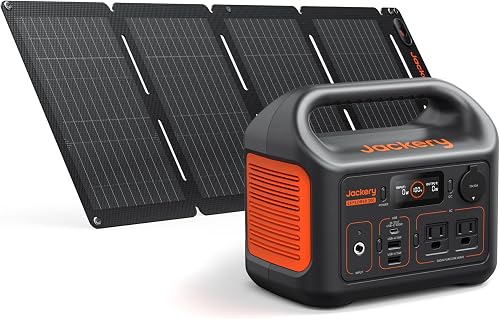
Jackery Solar Generator 300 and 40W Solar
Best for basic device backup - 7
 Check it
Ecosonique Technology 400W Portable Solar Panel for Power
Best for a folding 400W option - 8
 Check it
TWELSEAVAN 200W Portable Solar Panel for Power
Best for direct device charging
How we chose portable solar panels for home
We compared rated output, portability, connection options and fit for temporary home backup. Our score weighs specs, features and buyer feedback against what you're shopping for.
The right wattage depends on your station. A 100W panel can suit smaller batteries and modest charging needs, while a 200W panel offers more replenishment potential without the footprint of the 400W and 480W options.
Compatibility matters as much as wattage. Check your power station's maximum solar input, voltage range and connector before you buy, because a panel's rated output doesn't mean every station can accept that much power.
Portable solar panels for home compared
The best fit depends on the power station you own and how much panel weight and setup space you can manage. Compare rated wattage with station input limits before picking a high-output model.
| Product | Best for | Rated power | Weight | Connection | Our score |
|---|---|---|---|---|---|
| Renogy 200W Portable Solar Panel for Power | balanced home backup | 200W | 13.9 lb | MC4, USB | 9.7 |
| ZOUPW 100W Portable Solar Panel for Power | smaller backup stations | 100W | 9.5 lb | Five-in-one cable | 9.7 |
| Jackery Solar Generator 1000 v2 and 200W | a matched home backup kit | 9.6 | |||
| SOKIOVOLA N-Type 16BB 200W Portable Solar Panel | multiple station connectors | 200W | 16.3 lb | MC4 with five-in-one adapters | 9.4 |
| ZOUPW 480W Bifacial Portable Solar Panel N-Type | stations with high solar input | 480W | 22.5 lb | 8.5 | |
| Jackery Solar Generator 300 and 40W Solar | basic device backup | 8.3 | |||
| Ecosonique Technology 400W Portable Solar Panel for Power | a folding 400W option | 400W | 20.3 lb stated | MC4 with adapters | 8.2 |
| TWELSEAVAN 200W Portable Solar Panel for Power | direct device charging | 200W | 15.7 lb | MC4 and DC adapters | 8.0 |
Best portable solar panels for home use
These portable solar panels cover small device charging through higher-output station replenishment. The best choice is the one that fits your station's input limits and the loads you need during an outage.
Renogy 200W Portable Solar Panel for Power: Best for balanced home backup
- 200W maximum power
- 25% efficiency
- 13.9 lb
- USB-C PD 45W and dual USB-A ports
- MC4 output
A 200W foldable panel balances home power station replenishment with a carryable size. USB-C and USB-A ports can also charge smaller devices directly.
Pros
- 25% efficiency
- USB-C and dual USB-A charging
- Four kickstands with angle choices
Cons
- MC4 output only for power stations
- 4-in-1 adapter sold separately
Renogy is the strongest all-around pick for temporary home charging because its 200W output fits many mid-size power stations while remaining foldable. It weighs 13.9 lb and closes to 23.72 x 22.99 x 1.97 in for storage between outages.
Four kickstands let you set the panel at 40°, 50° or 60° angles, and reinforced grommets add another way to secure it. Renogy lists 25% efficiency and 16BB N-Type cells, but real output still depends on sunlight and panel position.
The panel has USB-C PD 45W and dual USB-A ports for direct device charging. Its station connection is MC4 output, and the 4-in-1 adapter is sold separately, so check which cable your station requires.
Choose it if you want one panel for station charging and smaller electronics. Consider the ZOUPW 100W option if lower weight and included connector choices matter more than rated output.
ZOUPW 100W Portable Solar Panel for Power: Best for smaller backup stations
- 100W maximum power
- 23.5% efficiency
- 9.5 lb
- Five-connector cable included
- IP67 panel body
The 100W output fits smaller stations or modest charging needs, and its included cable has five connector types. Check your station's input limit before pairing.
Pros
- Lightest standalone panel here
- Five connector options included
- USB-C and USB-A ports
Cons
- Lower rated output than 200W and larger panels
- USB hub and cables need to stay dry
The ZOUPW 100W panel is a practical choice for a smaller backup station or light charging routine. At 9.5 lb, it is the lightest standalone panel in this group, and its included five-in-one cable supports several common station connectors.
Its two kickstands angle the panel at 45°, and the maker claims 23.5% efficiency. The built-in controller also provides USB-C and USB-A ports for phones, cameras and other smaller devices.
The panel body is rated IP67, but the USB hub and connection cables need to stay dry. Its 100W rating also doesn't guarantee a station will draw the full amount, since station input limits and sunlight affect charging.
Choose it for easier carrying and simpler connection setup with a compatible station. If you need more panel output, compare it with the Renogy 200W model.
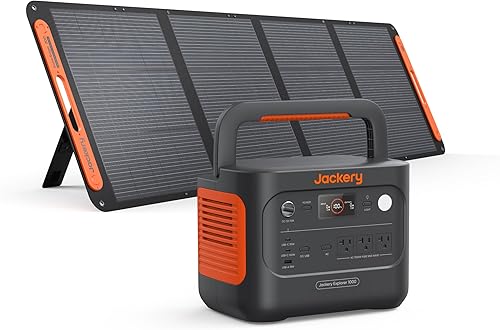
Jackery Solar Generator 1000 v2 and 200W: Best for a matched home backup kit
- 1,070Wh power station
- 1,500W AC output
- 200W solar panel included
- LFP battery
This bundle combines a 200W panel with a 1,070Wh station, giving you a coordinated solar and battery setup for temporary home backup.
Pros
- Station and panel sold as a bundle
- Three pure sine wave AC ports
- Two USB-C ports
Cons
- Station and panel may ship separately
- Solar charging time depends on sun and setup
The Jackery Solar Generator 1000 v2 bundle is the most complete home backup choice here because it includes both a 1,070Wh station and a 200W solar panel. The station provides 1,500W AC output and has three pure sine wave AC ports, two USB-C ports, one USB-A port and a DC car port.
Jackery says the station can reach 80% charge in 6 hours using a 200W solar panel. Actual charging time will vary with sunlight, panel angle and conditions, and the station and panel may ship separately.
This is a better fit for keeping several modest devices available than relying on a panel alone. Before choosing it for an appliance, compare that appliance's running and startup needs with the station's output.
Choose the bundle if you need a coordinated battery and panel setup. If you already own a station, look at a standalone panel and confirm its connector and solar input range.
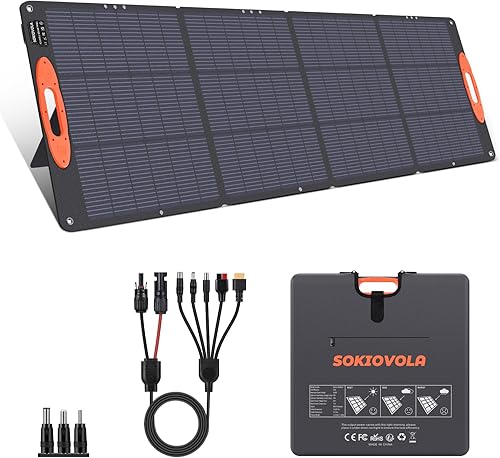
SOKIOVOLA N-Type 16BB 200W Portable Solar Panel: Best for multiple station connectors
- 200W maximum power
- 25% efficiency
- 16.3 lb
- Five-in-one connector cable
- IP68 rating
This 200W panel includes adapters for several common power station inputs. Its 16.3 lb weight makes it more suitable for short moves around the home than frequent long carries.
Pros
- Five adapter types included
- 25% efficiency claim
- Foldable with magnetic handle
Cons
- Heavier than the 100W panel
- Station input limits still apply
SOKIOVOLA's 200W panel suits buyers who want several connector options in one foldable unit. Its cable includes five-in-one adapters for XT60, DC5521, DC7909, DC8020 and Anderson inputs.
The panel weighs 16.3 lb and folds to about 21 x 23 in. SOKIOVOLA specifies up to 25% conversion efficiency and an IP68 rating, but the panel's output still changes with sunlight, temperature and angle.
A compatible power station can make this useful for charging during a short outage or replenishing a station between uses. The included 10.49 ft extension cable gives some flexibility in positioning the panel away from the station.
Choose this model if connector flexibility matters and you can manage its weight. Check your station's maximum input before connecting it, since the station may cap the power it draws.
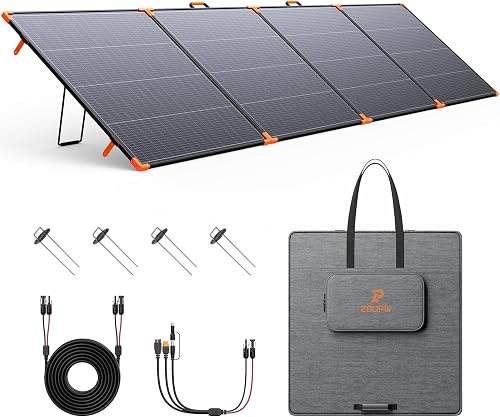
ZOUPW 480W Bifacial Portable Solar Panel N-Type: Best for stations with high solar input
- 480W maximum power
- 25% conversion rate
- 22.5 lb
- Bifacial design
- 42.5V output
The high rated output suits a large station that accepts the panel's voltage and current range. Confirm compatibility first, since this panel is intended for stations supporting high input.
Pros
- Highest rated panel output here
- Bifacial design
- Ground stakes and extension cable included
Cons
- Requires a compatible high-input station
- Not recommended for fixed installation
The ZOUPW 480W bifacial panel is designed for a large power station that accepts its higher input range. Its 42.5V output and 480W rating make compatibility checks essential before you connect it.
The bifacial design can capture light from both sides, with the maker claiming up to 30% extra gain on highly reflective surfaces such as snow or sand. The 22.5 lb panel includes ground stakes and an extension cable, but it needs a larger setup area than the 100W and 200W options.
ZOUPW says the panel is not recommended for long-term fixed installations. Treat it as a temporary charging setup, and keep the surface clear of shade and debris as the manufacturer advises.
Choose it when your station supports the panel's voltage and you want higher rated output. For a more compact option, the Ecosonique 400W panel is another high-output foldable choice.
Jackery Solar Generator 300 and 40W Solar: Best for basic device backup
- 292Wh station
- 300W AC output
- 40W panel included
- Two AC outlets
The 40W panel and compact station are aimed at smaller loads such as phones, laptops and cameras. The panel is better for maintaining a small setup than quickly replenishing a larger battery.
Pros
- Panel and station are bundled
- Two AC outlets
- USB-C PD port
Cons
- 40W panel has limited replenishment capacity
- Station output is 300W
The Jackery Solar Generator 300 bundle is aimed at basic device backup, not large household loads. Its 292Wh station has 300W AC output and comes with a 40W solar panel.
Jackery says the station can reach 80% capacity in about 7.5 hours with the included 40W panel. That makes it a modest replenishment setup, so plan around phones, cameras and similar devices rather than expecting quick recovery for a larger battery.
The station offers two AC outlets, a 100W USB-C PD port, two USB-A ports and a 120W car port. Check device wattage before plugging in, since the station's total AC output is limited to 300W.
Choose this bundle for a compact setup and smaller loads. If your backup plan includes a larger station, step up to a 200W or higher panel that meets its input requirements.
Ecosonique Technology 400W Portable Solar Panel for Power: Best for a folding 400W option
- 400W maximum power
- 23.5% conversion rate
- 20.3 lb stated weight
- Six-angle kickstand
- MC4 cables included
A 400W folding panel can replenish a compatible station faster than smaller panels in good sun. Check the station's solar input limits and allow space for its unfolded footprint.
Pros
- 400W rated output
- Six-angle kickstand
- MC4 adapter cable included
Cons
- Weight differs between the stated bullet and specifications
- Station compatibility needs checking
Ecosonique's 400W panel gives a compatible station more rated solar input than the 200W options. Its six-angle kickstand lets you adjust the panel toward the sun, and the included cable set has MC4 connections and adapters for several station types.
The panel folds to about 26 x 22 x 3 in. Its product details give two different weights, 20.3 lb in the feature description and 22.9 lb in the specifications, so confirm the packed weight before relying on a tight lifting or storage limit.
The maker claims a 23.5% conversion rate and describes the panel as waterproof. Still, keep the station and cable connections protected and follow the care instructions for outdoor use.
Choose it if your station can accept its 400W output and you have room to set it up. Compare best 400 watt solar panels for homes for other options in this output range.
TWELSEAVAN 200W Portable Solar Panel for Power: Best for direct device charging
- 200W maximum power
- 24% efficiency
- 15.7 lb
- USB-C PD 60W and QC3.0
- Eight-in-one adapter set
The panel offers direct USB charging alongside MC4 output for a power station. Its included adapter set can help when you need to connect different station input types.
Pros
- USB-C PD up to 60W
- Four adjustable kickstands
- Multiple DC adapters included
Cons
- Heavier than the 100W pick
- Station input limits still apply
The TWELSEAVAN 200W panel is a good match for buyers who want to charge smaller devices directly as well as replenish a station. It has USB-C PD up to 60W, QC3.0 up to 18W and another USB port.
Its included adapter set supports a range of common power station connectors, and four kickstands help angle the 15.7 lb panel. TWELSEAVAN specifies 24% efficiency and an IP65 waterproof rating.
This panel weighs more than the Renogy option and has a similar 200W rating. Compare the USB output, included adapters and your preferred panel setup before deciding between them.
Choose it for direct charging ports and a broad adapter set. If you need a station and panel together, the Jackery 1000 v2 bundle is a more complete starting point.
How do you choose a portable solar panel for home backup?
Choose a portable solar panel by matching its output and electrical range to your power station, then check whether you can carry and position it. A higher wattage panel can help replenish a compatible station, but it won't override the station's input limit.
Start with the power station manual. Note its accepted solar voltage, maximum input wattage and required connector, then compare those figures with the panel's output and cable options.
Next, estimate the devices you want to support. A small station may handle phones, lights and a laptop, while a larger station can support more devices if their total draw stays within its limits.
Panel size and weight also matter at home. A 100W panel may be easier to move and store, while 400W and 480W panels need more setup space and a station designed for higher solar input.
Are portable solar panels enough for a home power outage?
Portable panels can help recharge a battery station during an outage, but a panel alone doesn't power household circuits. The station stores energy and supplies power to devices within its capacity and output rating.
For temporary backup, decide which devices matter most and check their power needs. A phone, router or lamp is a different load from a refrigerator or heating appliance, and startup surges can affect whether a station can run a motor.
Portable panels also need daylight, clear exposure and repositioning as the sun moves. Keep the setup accessible, and don't connect it to home wiring unless the equipment is specifically designed for that use and installed according to its instructions.
If your priority is uninterrupted power for sensitive electronics, read What Is a Portable UPS? The Complete Guide.
For a system that combines solar input and backup power, see What Is a Solar UPS? The Essential Guide.
When should you choose 100W, 200W or 400W portable panels?
Choose 100W for lighter charging, 200W for a middle ground, and 400W or more when your station can accept higher solar input. The larger options also take more space and may be heavier to move.
The ZOUPW 100W panel weighs 9.5 lb and includes several connector types, making it a manageable option for a smaller setup. The 200W Renogy and SOKIOVOLA panels offer more rated output, while the TWELSEAVAN adds direct USB charging ports.
The Ecosonique 400W and ZOUPW 480W panels are for larger compatible stations. Their higher ratings only help when the station can accept the panel's voltage and wattage, so check those limits before choosing by the number alone.
For vehicle charging needs, see portable solar panel for EV charging. For a specific power station pairing, read our best solar panel for bluetti ac180 guide.
Which portable solar panels for home use should you choose?
Choose Renogy for a balanced 200W panel with direct USB charging, ZOUPW 100W for lighter station replenishment, or the Jackery 1000 v2 bundle if you need a coordinated battery and panel. Pick a 400W or 480W model only after confirming your station supports its input range.
Measure your storage space, check the station manual and list the devices you want to keep running. Those three checks will narrow the choice more reliably than panel wattage by itself.
Our top 3 picks at a glance
-
1
Best for balanced home backup
Renogy 200W Portable Solar Panel for Power
9.7/10 our score
See it on Amazon -
2
Best for smaller backup stations
ZOUPW 100W Portable Solar Panel for Power
9.7/10 our score
See it on Amazon -
3
Best for a matched home backup kit
Jackery Solar Generator 1000 v2 and 200W
9.6/10 our score
See it on Amazon
Frequently asked questions
Can portable solar panels power a home?
Portable panels can recharge a compatible battery station, which can then run devices within its capacity and output limits. They don't usually connect directly to household circuits.
For temporary backup, plan around the station's watt-hour capacity, AC output and solar input limit, then prioritize the devices you need to keep running.
How many watts of portable solar panels do I need for home backup?
Start with the power station's maximum solar input, then choose a panel or panel set that stays within its voltage and current limits. A 100W panel suits lighter replenishment, while 200W to 480W options can support larger compatible stations.
Actual output changes with sun, shade, angle and temperature.
Can I leave a portable solar panel outside?
Use the panel's stated weather rating as a guide, and keep its ports, cables and connected station protected as directed. For example, ZOUPW rates the 100W panel body IP67 but says its USB hub and cables should stay dry.
Foldable panels are generally better suited to temporary use than permanent outdoor mounting.
Can I use a portable solar panel with any power station?
No. The panel's connector, voltage and current must fit the station's solar input range.
Some panels include adapter cables, but an adapter only changes the connector and doesn't make an electrical mismatch safe.
Check the station manual before connecting a panel, especially higher-output models.