9 Best Solar Panels for the Jackery Explorer 300 (November 2026)
The best solar panels for the Jackery Explorer 300 include the ZOUPW 100W Portable Solar Panel N-Type 16BB for the original Explorer 300, the EBL Solar Panel 100W Portable Solar Panel for a simple 100W setup, and the ZOUPW 100W Portable Solar Panel with Solar for angle guidance.
On this page (5 sections)
The best solar panel for Jackery Explorer 300 owners is the ZOUPW 100W N-Type 16BB, because its included 5-in-1 cable lists the DC7909/8mm connection for the Jackery 300. That documented match is the main reason it leads this roundup.
The ZOUPW 110W is a good alternative if you want a little more rated panel capacity. It also lists the Jackery 300 connection on its cable.
The original Explorer 300 is a small portable power station, so connector fit and accepted solar input matter more than choosing the panel with the biggest watt number. A panel that exceeds the station's input limit won't make it charge faster.
That point shapes every pick below. Some panels here are built for small stations, while others are aimed at larger systems that can accept more solar power.
It also means a 300W panel is not automatically better for this station. A higher rating only helps when the power station, connector and voltage all line up.
For daily use, you should think about how you will carry and set up the panel. Weight, folded size, kickstands and cable storage can matter as much as the headline wattage on a short camping trip.
Sunlight at your location matters too. Clouds, heat, shade and panel angle can lower real output well below the rated figure.
If you're new to this category, start with our portable solar panels complete buying guide. It explains the basics of wattage, connectors and portable use in plain terms.
You can also compare the wider best solar panels for Jackery roundup before choosing a model. That wider view helps if you own more than one Jackery station or plan a future upgrade.
For the Explorer 300 itself, keep the focus narrow. A direct cable match, a sensible panel size and a setup you will actually use will serve most owners better than excess capacity on paper.
Our picks at a glance
-
1
 Best for the original Explorer 300
ZOUPW 100W Portable Solar Panel N-Type 16BB
9.6/10 our score
See it on Amazon -
2
 Best for a simple 100W setup
EBL Solar Panel 100W Portable Solar Panel
9.4/10 our score
See it on Amazon -
3
 Best for angle guidance
ZOUPW 100W Portable Solar Panel with Solar
9.2/10 our score
See it on Amazon
- 4
 Check it
ZOUPW 110 Watt Portable Solar Panel
Best for a little more panel capacity - 5
 Check it
TWELSEAVAN 150W Portable Solar Panel for Power
Best for faster charging potential - 6
 Check it
TWELSEAVAN 200W Portable Solar Panel for Power
Best for larger power stations - 7
 Check it
Renogy 300W Portable Solar Panel
Best for high-output solar systems - 8
 Check it
DOKIO 300W Portable Foldable Solar Panel Kit
Best for a controller-based kit - 9
 Check it
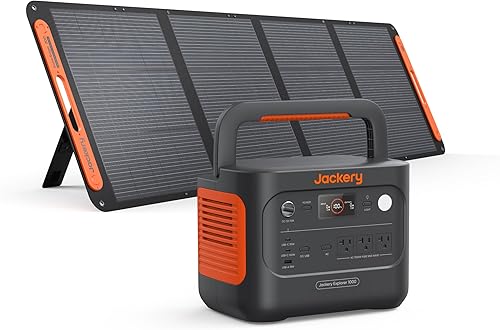
Jackery Solar Generator 1000 v2 and 200W
Best for upgrading beyond the Explorer 300
Which solar panel is best for the Jackery Explorer 300?
The best solar panel for Jackery Explorer 300 compatibility is the ZOUPW 100W N-Type 16BB, followed by two other panels that list the same DC7909/8mm connection. Larger 150W, 200W and 300W panels may be useful with bigger power stations, but they need an input-limit check first.
We compared the stated connectors, rated output, portability, panel protection and setup features. Our score weighs specs, features and buyer feedback against what you're shopping for.
| Product | Best for | Power | Folded size | Weight | Our score |
|---|---|---|---|---|---|
| ZOUPW 100W Portable Solar Panel N-Type 16BB | the original Explorer 300 | 100W | 23.39 x 23.23 x 1.77 in | 8 lb | 9.6 |
| EBL Solar Panel 100W Portable Solar Panel | a simple 100W setup | 100W | 9.4 | ||
| ZOUPW 100W Portable Solar Panel with Solar | angle guidance | 100W | 24.13 x 21.06 x 1.77 in | 9.2 | |
| ZOUPW 110 Watt Portable Solar Panel | a little more panel capacity | 110W | 23.7 x 22.9 x 1.57 in | 8.5 | |
| TWELSEAVAN 150W Portable Solar Panel for Power | faster charging potential | 150W | 8.4 lb | 8.7 | |
| TWELSEAVAN 200W Portable Solar Panel for Power | larger power stations | 200W | 23 x 22 in | 8.0 | |
| Renogy 300W Portable Solar Panel | high-output solar systems | 300W | 23.2 x 29.3 x 3.2 in | 9.0 | |
| DOKIO 300W Portable Foldable Solar Panel Kit | a controller-based kit | 300W | 19.3 x 37.4 x 1.1 in | 8.5 | |
| Jackery Solar Generator 1000 v2 and 200W | upgrading beyond the Explorer 300 | 9.6 |
ZOUPW 100W Portable Solar Panel N-Type 16BB: Best for the original Explorer 300
- 100W output
- 5-in-1 cable
- DC7909/8mm connector for Jackery 240/300/500
- 25% efficiency
- 7.98 lb
The included 5-in-1 cable lists DC7909/8mm compatibility for the Jackery 240, 300 and 500. Its 100W rating, foldable build and 25% efficiency suit Explorer 300 owners who want a direct panel match.
Pros
- Cable lists Jackery Explorer 300 compatibility
- 25% efficiency
- IP67 panel body
Cons
- Actual output changes with sunlight and angle
- The panel should not be immersed
The ZOUPW 100W N-Type 16BB is the clearest first choice for the original Explorer 300. Its included 5-in-1 cable lists the DC7909/8mm connector for the Jackery 240, 300 and 500, so you can start with a documented connection rather than guessing at an adapter.
The panel has a 100W maximum output and 25% efficiency. In daily use, that rating is a ceiling measured under standard conditions, not a promise of 100W in every location.
Clouds, heat, panel angle and shade can reduce the power reaching the Explorer 300.
Two adjustable kickstands let you set the panel from 35 to 60 degrees. The folded size is 23.39 x 23.23 x 1.77 inches, and the weight is about 8 lb, which suits car camping and short moves from a vehicle to a sunny spot.
The ETFE-coated monocrystalline panel body has an IP67 rating. Keep the connection area and power station dry, and don't immerse the panel.
Buy it if you want the strongest documented Explorer 300 cable match in this roundup.
EBL Solar Panel 100W Portable Solar Panel: Best for a simple 100W setup
- 100W output
- 23% efficiency
- 45-degree kickstands
- IP65 water resistance
- Multiple adapters
This 100W EBL panel includes several adapters for connecting to different power stations. Its 45-degree kickstands and 23% efficiency make it a practical alternative for Explorer 300 owners who confirm the connector first.
Pros
- 100W rated output
- Multiple included adapters
- Adjustable kickstands
Cons
- The product data does not name Explorer 300 compatibility
- IP65 is water-resistant, not immersion protection
The EBL 100W panel is a practical alternative when you want a standard 100W format with several adapters included. Its product data does not name the Explorer 300, so check that the included connector matches your station before ordering.
Its monocrystalline panel has a stated 23% efficiency. Two kickstands hold it at a 45-degree angle, which can help the panel face the sun instead of lying flat on the ground.
The box includes an MC4 to Anderson cable, an MC4 to DC5521 cable, and adapters for several DC barrel sizes. That gives you more connection options than a panel with only one fixed plug, but more adapters also mean more pieces to identify and store.
EBL describes the panel as IP65 water-resistant and says not to leave it under rain or soak it. Set it up in direct sun, keep the connectors protected, and follow the instructions before connecting it to the Explorer 300.
Buy it if you want a 100W panel with multiple included adapter sizes and can confirm the plug first.
ZOUPW 100W Portable Solar Panel with Solar: Best for angle guidance
- 100W output
- Solar angle guide
- 5-in-1 cable
- 23.5% efficiency
- 9.48 lb
The included cable lists DC7909/8mm compatibility for the Jackery 240, 300 and 500. Its solar angle guide and 2 kickstands help you set the panel toward the sun without laying it flat.
Pros
- Cable lists Jackery Explorer 300 compatibility
- 23.5% efficiency
- IP67 panel body
Cons
- Heavier than the other 100W ZOUPW pick
- The control box is not waterproof
The ZOUPW 100W panel with solar angle guide suits Explorer 300 owners who want documented compatibility plus a more guided setup. Its 5-in-1 cable lists the DC7909/8mm connection for the Jackery 240, 300 and 500.
The panel has a 100W maximum output and 23.5% stated efficiency. Its two kickstands let you adjust the panel toward the sun, while the angle guide gives you a reference for positioning instead of leaving the panel flat.
This model weighs 9.48 lb and folds to 24.13 x 21.06 x 1.77 inches. It is heavier than the other ZOUPW 100W choice, so compare the extra carrying weight with the angle guide and included connection options.
The panel uses ETFE-coated monocrystalline cells and has an IP67 rating. The control box is not waterproof, so protect it from rain even when the panel surface is outside.
Buy it if angle positioning and the listed Explorer 300 connector are worth more to you than the lowest weight.
ZOUPW 110 Watt Portable Solar Panel: Best for a little more panel capacity
- 110W output
- 25.6% efficiency
- 5-in-1 cable
- Built-in USB-C and USB-A ports
- 8.02 lb
This 110W panel gives you a little more rated capacity than a 100W panel, and its cable lists the Jackery 300 connection. The built-in USB-C and 2 USB-A ports can charge small devices directly in sunlight.
Pros
- 110W rated output
- Cable lists Jackery Explorer 300 compatibility
- 25.6% efficiency
Cons
- The USB hub and cables are not fully waterproof
- Output drops in shade and cloudy weather
The ZOUPW 110W is the best step up when you want more rated panel capacity without moving to a heavier 200W or 300W model. Its cable lists the DC7909/8mm connection for the Jackery 300, but the Explorer 300's accepted input still needs to guide your choice.
The panel is rated at 110W and lists 25.6% efficiency. The extra 10W is a small increase on paper, so don't expect the full difference in cloudy weather or poor positioning.
Its folded size is about 23.7 x 22.9 x 1.57 inches, and the listed weight is 3.64 kg. Two kickstands support quick positioning, while the built-in hub offers 1 USB-C port and 2 USB-A ports for direct device charging.
The panel body has an IP67 rating, but the USB hub and cables are not fully waterproof. Keep those connection points dry and use direct, unshaded sunlight when you want the fastest charging.
Buy it if you want a compact 110W option with a listed Explorer 300 cable connection and direct USB charging.
TWELSEAVAN 150W Portable Solar Panel for Power: Best for faster charging potential
- 150W output
- 25.8% efficiency
- MC4 5-in-1 cable
- 8.38 lb
- Adjustable kickstands
The 150W rating gives this panel more capacity than the Explorer 300's common 100W-size options, but you must confirm the power station's solar-input limit. Its MC4 5-in-1 cable and 3 DC adapters support a broad range of connections.
Pros
- 150W rated output
- 25.8% efficiency
- 8.4 lb portable build
Cons
- Do not connect panels in series or parallel
- Confirm the Explorer 300 input limit before buying
The TWELSEAVAN 150W panel is for Explorer 300 owners who are considering a larger solar panel, but it requires a power-input check before purchase. Its MC4 5-in-1 cable and 3 DC adapters support many power stations, while the product data does not specifically name the Explorer 300.
Its HPBC cells have a stated 25.8% conversion efficiency and a 150W maximum output. That extra capacity can be useful with a station that accepts it, but the Jackery's own input limit determines how much power it can use.
The panel weighs 8.4 lb and has adjustable kickstands plus a solar angle guide. Its listed voltage is 21.6V.
The package includes an MC4 5-in-1 cable, 3 DC adapters and a user manual.
The product data gives different waterproof details in its title and bullets, so treat outdoor placement carefully and follow the manual. It also says not to connect panels in series or parallel.
Buy it if you may use the panel with a larger compatible power station and will confirm the Explorer 300 limits first.
TWELSEAVAN 200W Portable Solar Panel for Power: Best for larger power stations
- 200W output
- 24% efficiency
- 4 adjustable kickstands
- 60W USB-C port
- 15.7 lb
This 200W panel is aimed at buyers who may also use a larger power station. For a Jackery Explorer 300, check the station's input limits before choosing a panel with this much rated output.
Pros
- 200W rated output
- 60W USB-C port
- 4 adjustable kickstands
Cons
- Heavier than the 100W and 110W picks
- Explorer 300 compatibility needs confirmation
The TWELSEAVAN 200W panel is better suited to a larger power station than to a basic Explorer 300 setup. Confirm the Jackery's accepted solar input, connector and voltage before choosing a panel rated at 200W.
The panel uses monocrystalline cells with a stated 24% efficiency and a 200W maximum output. Four adjustable kickstands help you change the angle, while the folded size is 23 x 22 inches.
It includes a 5-in-1 MC4 connector cable and 3 DC adapters. The built-in ports include a 60W USB-C port, an 18W QC3.0 USB port and a USB port rated at 5V/3A, so it can also charge small devices directly.
At 15.7 lb, it is nearly twice the weight of the lighter 100W choices. The IP65 rating is suitable for outdoor conditions with care, but keep connectors and connected electronics protected.
Buy it if your main goal is a 200W panel for compatible equipment, not the simplest Explorer 300 match.
Renogy 300W Portable Solar Panel: Best for high-output solar systems
- 300W output
- 25% efficiency
- 18.74 lb
- IP67 rating
- Folded suitcase design
The Renogy panel supplies a 300W rated output for larger power stations and wider solar setups. It is not the most natural Explorer 300 match, so confirm input limits and connectors before considering it.
Pros
- 300W rated output
- 25% efficiency
- IP67 rating
Cons
- 18.7 lb is the heaviest pick here
- Explorer 300 compatibility needs confirmation
The Renogy 300W panel is a high-output suitcase option for larger portable solar systems. It is not the natural first pick for a Jackery Explorer 300, so verify the station's solar-input limit and connector before considering it.
Its N-Type 16BB cells have a stated 25% efficiency and a 300W maximum output. The panel folds to 23.2 x 29.3 x 3.2 inches and weighs 18.7 lb, making it much less convenient to move than the 100W options.
Renogy lists a 1-minute setup using rust-resistant kickstands. The panel has an IP67 rating and an ETFE coating, with materials listed as monocrystalline silicon, aluminum, tempered glass and polymer backsheet.
The package includes the 300W solar panel suitcase. Renogy lists a 3-year output warranty and material and workmanship warranty.
Those details may matter more for a larger fixed campsite setup than for occasional Explorer 300 charging.
Buy it if you need a high-output suitcase panel for equipment that can accept 300W.
DOKIO 300W Portable Foldable Solar Panel Kit: Best for a controller-based kit
- 300W output
- Separate PWM controller
- 9.85 ft cable
- USB ports
- 15.2 lb
The DOKIO kit includes a separate PWM controller, cable and adapters for 12V battery systems and other setups. Its own guidance says some power stations restrict solar input, so verify the Explorer 300 limit before choosing it.
Pros
- Separate PWM controller
- 300W rated output
- 15.2 lb weight
Cons
- May exceed a power station's solar-input limit
- The product data does not name Explorer 300 compatibility
The DOKIO 300W kit is for buyers who want a panel, separate PWM controller and several connection choices in one package. It is not a confirmed Explorer 300 match, and its own guidance warns that some power stations restrict solar input to 100W to 200W.
The foldable panel has a 300W maximum output and weighs 15.2 lb. It folds to 19.3 x 37.4 x 1.1 inches, so its long folded shape may be harder to store than a square 100W panel.
The separate controller includes protection against reverse polarity, overcharge, overload and short circuit. A 9.85 ft cable lets you place the panel in sun while keeping the controller or power station shaded.
The kit includes SAE, XT60, alligator clip and several DC adapters, plus a storage bag and manual. The dual USB ports can charge small devices when the controller is connected to a 12V battery.
Buy it if you need a controller-based 300W kit for a compatible battery system, not as a plug-and-play Explorer 300 pick.
Jackery Solar Generator 1000 v2 and 200W: Best for upgrading beyond the Explorer 300
- 200W solar panel included
- 1,070Wh capacity
- 1,500W AC output
- LFP battery
- 23.8 lb power station
This is a solar generator bundle for moving beyond the original Explorer 300, not a standalone panel recommendation for that station. It includes a 200W panel with the Explorer 1000 v2 power station.
Pros
- 200W panel included
- 1,070Wh capacity
- 1,500W AC output
Cons
- It is a power station bundle, not a panel-only purchase
- The generator and panel ship separately
The Jackery Solar Generator 1000 v2 and 200W bundle is a larger-system upgrade rather than a solar panel for the original Explorer 300. It includes a 200W panel with an Explorer 1000 v2 power station, so compare it only if you are moving to a different Jackery platform.
The power station has a 1,070Wh capacity and 1,500W AC output. It weighs 23.8 lb and has a foldable handle, while the panel and generator ship separately.
The bundle includes 2 USB-C ports, 1 USB-A port, 1 DC car port and 3 pure sine wave AC ports. The power station uses an LFP battery, and Jackery states that it maintains over 70% of its original capacity after 4,000 charge cycles.
The 200W panel can charge the Explorer 1000 v2 to 80% in 6 hours under the stated setup. The app supports charging modes, including emergency charging, a quiet overnight mode and energy efficiency mode.
Buy it if you want a larger Jackery power system, not if you only need a panel for the original Explorer 300.
What size solar panel should you use with the Explorer 300?
A 100W panel is the safest starting point in this roundup because the ZOUPW 100W models list the Explorer 300 connection directly. That direct listing removes the need to guess about an adapter.
A 110W panel can also make sense if the station accepts its input. The increase is modest, but the panel remains in a similar portable size range.
By contrast, 150W and larger panels need more careful checking. Their higher rated output may suit a larger power station rather than the Explorer 300.
Rated wattage is not the same as charging wattage. Sun intensity, heat, angle, clouds, panel aging and shade all affect the power that reaches the power station.
A panel rated at 100W may produce close to that level in strong, direct sun. In weak light or at a poor angle, the same panel may deliver much less.
That is normal for portable solar gear. Planning around the rating as a best case ceiling is safer than treating it as a daily average.
For portable use, also compare folded size and weight. The 100W choices weigh about 8 to 9.5 lb, while the 200W TWELSEAVAN weighs 15.7 lb and the 300W Renogy weighs 18.7 lb.
Those weight differences grow quickly in a packed car or on a walk from the vehicle. A lighter panel is easier to move into sun and easier to pack away in the end.
Folded shape matters as well. A long, slim fold may fit a different storage space than a square fold, even when the weights look close.
Kickstands also affect daily setup. A stable stand makes it easier to angle the panel toward the sun and keep it from sliding on uneven ground.
Shade tolerance is another practical factor. Even when a panel has features that help with partial shade, full sun still gives the fastest charging.
Owners of other Jackery models can compare our guides to the best solar panel for Jackery Explorer 1000, best solar panel for Jackery Explorer 500 and best solar panel for Jackery Explorer 1000 V2. Those guides cover stations with different input needs.
Matching the panel to the station is the key step. The right choice depends on connector, voltage, accepted wattage and how you plan to carry the gear.
How do you connect a solar panel to a Jackery Explorer 300?
Connect a compatible panel cable to the Explorer 300's solar input, place the panel in direct sun, and check that the charging indicator appears. That indicator is your first sign that the connection is working.
Before you connect anything, match the plug and electrical limits. Check the panel cable, the station input and any adapter you plan to use.
Use the included DC7909/8mm cable on a panel that specifically lists the Explorer 300 connection. A listed match is safer than a plug that only looks close in size.
If a panel does not name the Explorer 300, confirm the connector before ordering. The same applies to voltage and accepted solar wattage, which should be checked in the station manual.
Don't force a plug, mix adapters without checking their fit, or leave the power station and connection points exposed to rain. A poor fit can damage the port or give unreliable charging.
Lay the cable so it is not under tension. Keep the panel, station and cable in positions where foot traffic or wind is less likely to pull on the connection.
Angle the panel toward the sun and adjust it during the day if needed. The sun moves, and a panel set well in the morning may not stay at the best angle by afternoon.
Keep the panel free from shade, but remember that even a small shadow can reduce real-world output. Tree shade, tent fabric and even a partial cloud can change charging speed.
Use the kickstands to lift the panel from a flat position when the model provides them. An angled panel can face the sun more directly than one lying on the ground.
Check the charging indicator again after you move the panel. That quick check tells you whether the new angle has helped.
When you finish, disconnect in a calm step and fold the panel only when it is dry. Store the cable with the panel so the correct connector is ready for the next use.
How should you care for a portable solar panel?
Store the folded panel dry, keep connectors clean, and avoid sharp bends or heavy objects on the folded surface. Those simple habits protect the panel face, cable and plugs over repeated trips.
Follow each model's manual for rain, storage and connection limits. The manual is the best source for the exact limits of the panel you own.
Water resistance differs across these picks. An IP67 or IP65 panel rating doesn't mean every cable, controller, USB hub or power station connection can be soaked.
Think of the rating as protection for the panel body, not as a blanket approval for the whole setup. Connection points and nearby electronics still need dry handling.
Let the panel dry before folding it away. Folding a wet panel can trap moisture against surfaces and in folds that are hard to air out.
Wipe the panel surface with a soft, dry cloth when it gets dusty. Dirt on the surface can block light, and rough cleaning can scratch the coating.
Check the cable and adapter fit before each trip. Look for loose plugs, bent pins or a cable that no longer sits firmly in the port.
Keep the panel's support legs stable so wind or foot traffic doesn't pull on the connection. A firm setup protects both the panel and the power station input.
Store the panel away from sharp edges in a vehicle. A hard edge pressed against a folded panel can damage the surface or stress the cells.
Keep the included cable and adapters together. Losing a small adapter can leave you with a panel you cannot connect on the next trip.
Inspect the panel before and after long trips. A quick look for loose stands, worn cable insulation or a dirty connector can catch a small issue early.
Best solar panel for Jackery Explorer 300: final verdict
Choose the ZOUPW 100W N-Type 16BB if you want the clearest documented Explorer 300 connector and a light foldable panel. It is the most direct match in this roundup.
Choose the ZOUPW 110W if you want slightly more rated capacity. It also lists the Explorer 300 cable connection and adds direct USB charging options.
Choose the EBL if you prefer a 100W panel with several adapters. Confirm the plug fit for your station before ordering, since its product data does not name the Explorer 300.
The 150W, 200W and 300W models make more sense for larger stations unless Jackery confirms the Explorer 300 can accept their input. Their extra rated output does not help if the station limit is lower.
Pick by connector, voltage, accepted solar wattage, folded size and the sunlight available where you'll use it. Those practical factors will shape your daily charging more than the headline number alone.
For most Explorer 300 owners, a 100W or 110W panel with a listed connection is the sensible path. Larger panels only make sense when the whole system is matched for them.
Our top 3 picks at a glance
-
1
Best for the original Explorer 300
ZOUPW 100W Portable Solar Panel N-Type 16BB
9.6/10 our score
See it on Amazon -
2
Best for a simple 100W setup
EBL Solar Panel 100W Portable Solar Panel
9.4/10 our score
See it on Amazon -
3
Best for angle guidance
ZOUPW 100W Portable Solar Panel with Solar
9.2/10 our score
See it on Amazon
Frequently asked questions
What is the best solar panel for Jackery Explorer 300?
The ZOUPW 100W N-Type 16BB is the strongest match because its included 5-in-1 cable lists the DC7909/8mm connection for the Jackery Explorer 300. Confirm the power station's input requirements before buying, because rated panel output changes with sunlight, angle, temperature and shade.
Can a 200W solar panel charge a Jackery Explorer 300?
A 200W panel may exceed the Explorer 300's accepted solar input, so check the station's manual or current specifications before connecting one. A higher panel rating does not force the power station to accept more power, but the connector and voltage must still match.
Is a 100W solar panel enough for the Jackery Explorer 300?
A 100W panel is the most direct size in this roundup, especially when its cable lists the Explorer 300 connection. Real charging power is usually below the rated 100W because sunlight, panel angle, temperature and shading affect solar output.
What cable does the Jackery Explorer 300 need for a solar panel?
The ZOUPW 100W panels here include a 5-in-1 cable with a DC7909/8mm connector listed for the Jackery 240, 300 and 500. Before connecting another panel, match its plug, voltage and power input to the Explorer 300.