EcoFlow DELTA 3 Ultra Plus Review: Worth It? (November 2026)
The EcoFlow DELTA 3 Ultra Plus is a strong fit for demanding home backup and RV use because it runs 3600W continuous power from a 3072Wh battery and expands to 11kWh. Pick the bundled extra battery version if you want more stored energy on day one, or the DELTA 3 Max Plus if you prefer a lighter unit.
On this page (11 sections)
- The EcoFlow DELTA 3 Ultra Plus at a glance
- Who the DELTA 3 Ultra Plus suits best
- The specs that matter in daily use
- How the UPS backup works for sensitive devices
- Charging options and recharge speed
- Setup and first use at home or in an RV
- Care, storage and battery life
- Trade-offs you should weigh before you buy
- How the Ultra Plus compares with the DELTA 3 Ultra
- How the Ultra Plus compares with the DELTA Pro Ultra
- Which version should you pick?
The EcoFlow DELTA 3 Ultra Plus is a strong fit for demanding portable backup, because it combines 3072Wh of storage with 3600W continuous output. In this ecoflow delta 3 ultra plus review, we compared the specs, expansion options and charging methods against two close alternatives.
You get fast UPS switching in under 10ms, quiet operation at 25dB and six ways to charge. Those details matter if you need backup for computers, routers or medical equipment during a sudden outage.
Our score weighs specs, features and buyer feedback against what you're shopping for.
The EcoFlow DELTA 3 Ultra Plus at a glance
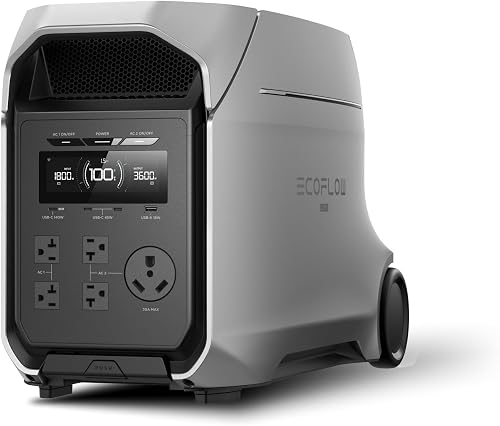
The Ultra Plus gives you 3072Wh, 3600W output and surge to 7200W in a 74 lb station. EcoFlow says it is engineered for 10 years of daily use with a LiFePO4 battery.
EF ECOFLOW DELTA 3 Ultra Plus 3072Wh: Best for demanding home backup
- 3072Wh capacity
- 3600W continuous output, 7200W surge
- Expandable from 3kWh to 11kWh
- Under 10ms UPS transfer
- 25dB quiet operation
- 6 ways to charge
The Ultra Plus variant for heavy appliances, power tools and RV essentials, with fast UPS switching and room to grow to 11kWh.
Pros
- 3600W output handles heavy household loads
- 3072Wh base capacity with expansion to 11kWh
- Under 10ms transfer protects sensitive devices
- Quiet 25dB operation for indoor use
Cons
- 74 lb is heavy to move often
- Extra batteries add cost and space
- Two outlets limit how many devices run at once
At 24.1 x 12.9 x 15.6 inches, it is a large portable unit rather than a handheld power bank. You will want a clear floor spot at home, a level RV bay or help to lift it into a vehicle.
It includes the DELTA 3 Ultra Plus unit. The model number is EF-DL-H02-3UP, and it is listed for camping and residential use.
The build uses metal, plastic and rubber components, with an inverter engine type and solar fuel type listed in the specifications. That mix is typical for a station meant to sit in a garage, utility area or RV storage bay rather than travel daily in a bag.
Who the DELTA 3 Ultra Plus suits best
This model suits home backup users who run heavy appliances and RV owners who need more than basic camping power. If you plan to run a refrigerator, power tools or several household loads at once, the 3600W output gives you headroom the smaller station does not.
It also fits people who work from home and need routers, computers and lights to stay on. The under 10ms transfer helps protect sensitive devices when the grid drops.
It is less suited to backpacking or frequent tent camping. At 74 lb, you will move it short distances, not carry it on long trails.
For weekend camping, a lighter station may serve you better.
Buyers who need to plug in many small devices at once should also plan around the outlet count. A priority list helps you decide what stays connected and what you rotate on and off during an outage.
If you want a broader way to compare types before you buy, our guide to the best portable power station explains how capacity, output and weight trade off.
The specs that matter in daily use
The key numbers are 3072Wh of storage, 3600W continuous output and 7200W surge. Capacity controls runtime.
Output controls which appliances you can run at the same time.
A higher wattage appliance needs enough continuous output, not just surge. Surge helps with motor starting loads, such as some compressors, but your normal running load must stay within 3600W.
The station expands from 3kWh to 11kWh with extra batteries. That range covers short outages at the base size and multi-day use when you add storage.
Start with the base unit if you are unsure how much you need, then add batteries later.
EcoFlow says X-Quiet 3.0 keeps noise at 25dB under load. That makes indoor placement more practical during nighttime backup.
Keep vents clear so cooling can do its job.
How size and weight shape daily placement
At 74 lb, this is a two person lift for stairs, truck beds and high RV compartments. The 24.1 inch length also means it will not fit in a small cabinet or under a low bench.
Measure the doorway, vehicle opening and storage bay before ordering. A station that is hard to move will be used less, even if its capacity is strong on paper.
The listed frequency is 50 hertz and the item type is a portable power station. Confirm compatibility for your appliances and location before you plan fixed use around it.
How the UPS backup works for sensitive devices
The DELTA 3 Ultra Plus switches to battery power in under 10 milliseconds when an outage hits. EcoFlow says no manual setup is needed for that switch.
That speed matters for computers, routers and medical equipment that can reboot or lose work within seconds. It does not mean every device in your home stays on.
You still choose which outlets and loads connect to the station.
Treat UPS use as a planned setup. Test the transfer with your actual devices during normal power, then label which cords move to the station first.
Write that list down so anyone at home can act fast.
For a larger EcoFlow unit with a similar backup role, see the ecoflow delta pro how to use guide. It covers day to day operation in more detail.
Charging options and recharge speed
You have six ways to charge: home outlet, solar, car, EV station, generator and the EcoFlow Smart Generator. EcoFlow says X-Stream fast charging reaches 80 percent in under an hour.
That flexibility helps at home, on the road and off grid. A wall outlet is fastest for routine readiness.
Solar suits extended outdoor trips, but output depends on panel size, sun and placement.
Keep the charging source matched to the situation. Charge fully before a forecast storm if you can.
For daily cost saving, EcoFlow says the app lets you schedule charging and set priorities.
Do not assume solar alone will refill a 3072Wh station quickly in winter. Plan recharge time around daylight and weather, and keep a car or generator option for backup where safe and allowed.
Setup and first use at home or in an RV
Setup starts with placing the station on a firm, level surface with vents clear. Charge it, connect your priority loads and confirm the app shows the expected capacity.
At home, choose a dry indoor spot near the devices you most need to protect. Keep the cord route clear so no one trips or pulls a plug during an outage.
In an RV, secure the station so it cannot shift while driving. At 74 lb, it can damage cabinetry or injure someone if it moves.
Use the RV maker's guidance for fixed storage and ventilation.
If you are comparing backup approaches for a house, our whole home battery backup system guide explains when a fixed system makes more sense than a portable station.
Care, storage and battery life
EcoFlow says the LiFePO4 battery and EV-grade CTC structure are engineered for 10 years of daily use. A 24/7 smart battery management system is said to protect against extreme heat, cold and heavy loads.
You can help that system by storing the station in a cool, dry place within the manual's limits. Avoid leaving it in a hot vehicle for long periods.
Charge it to the level the manual recommends for storage, and check it every few months.
Clean vents and the case with a dry cloth. Do not block airflow with blankets or storage boxes.
Inspect cords for damage before each season of use.
If you store extra batteries, keep them with the same care. Label each battery with its charge date so you rotate use.
A station that sits unused still needs periodic checks.
Trade-offs you should weigh before you buy
The Ultra Plus trades portability for power and storage. You gain 3600W output and 3072Wh base capacity, but you carry 74 lb and need real floor space.
It has two total power outlets in the specs we checked. That limit means you may need a power strip or a plan to rotate loads.
Count your essential devices before you decide.
Expansion is a strength and a cost. Growing to 11kWh adds runtime, but each battery adds weight and takes space.
If you only need backup for lights, phones and a refrigerator for a few hours, the base size may be enough.
Noise and charging claims come from EcoFlow. We compared those specs with the alternatives below rather than treat them as guaranteed results in every home.
How the Ultra Plus compares with the DELTA 3 Ultra
The standard DELTA 3 Ultra is the natural step down if the Ultra Plus feels larger than you need. We checked the ecoflow delta 3 ultra review to compare how the models differ for home backup.
Choose the Ultra Plus if you want the higher 3600W output and 3072Wh base storage in one unit. Choose the standard model if your loads are lighter and you want to compare capacity and price trade-offs first.
Both models fit the same general role. The deciding factors are your running wattage, how long you need to run and whether you plan to add extra batteries later.
How the Ultra Plus compares with the DELTA Pro Ultra
The DELTA Pro Ultra is the larger EcoFlow option for people who think in terms of whole home loads. Our ecoflow delta pro ultra review covers that bigger system for heavier backup plans.
Pick the Ultra Plus for portable use, RV trips and essential home loads. Pick the Pro Ultra path if you want a larger fixed style setup and have space for multiple batteries.
The Ultra Plus is easier to move between a home, shed and RV. A larger system is harder to relocate, so match the choice to where you will actually use it.
Alternative: EF ECOFLOW 3072Wh DELTA 3 Ultra Plus
This bundle suits buyers who know they need extra storage from day one. The power station and extra battery arrive in separate packages, so plan for two deliveries.
You keep the same 3600W output and UPS speed. The main gain is capacity without a second purchase later.
The main cost is more weight and storage space at home.
Alternative: EF ECOFLOW Portable Power Station DELTA
This DELTA 3 Max Plus suits buyers who move the station often. At 49 lb, it is far easier to lift into a car or RV than the 74 lb Ultra Plus.
You give up storage and output. It stores 2048Wh and runs 3000W, with 3800W X-Boost.
EcoFlow says it reaches 80 percent in 43 minutes and expands from 2kWh to 10kWh.
Choose this model if portability matters more than the Ultra Plus extra power. Choose the Ultra Plus if you need to run heavier loads for longer.
Which version should you pick?
Pick the Ultra Plus alone if you want the strongest base unit and may expand later. Pick the bundled extra battery version if you already know a single 3072Wh charge will not cover your outage plan.
Pick the DELTA 3 Max Plus if weight is your main concern. Its 49 lb weight and 2048Wh storage make it the easier station to move between home, camping and RV use.
For most home backup buyers, the Ultra Plus is the safer match. Its 3600W output, under 10ms transfer and expansion to 11kWh cover demanding needs without forcing you to buy a larger system today.
Check your essential loads, measure your storage space and confirm the exact model before you order. Then start with the version that fits how you will really move and store it.
Frequently asked questions
How long will the EcoFlow DELTA 3 Ultra Plus run a refrigerator?
Runtime depends on the refrigerator's wattage, how often its compressor runs and how much else you plug in. We divided the 3072Wh capacity by typical appliance loads to estimate, but real use varies with temperature and door openings.
Check the appliance label, add a safety margin, and plan on cycling less essential loads during an outage.
Can the DELTA 3 Ultra Plus power a whole home?
It can power essential circuits and appliances, but it is a portable power station, not a full whole home battery backup system. You select which loads to run and manage output within 3600W continuous.
For fixed-panel backup, compare a whole home battery backup system and get an electrician to confirm what your home needs.
What does expandable to 11kWh mean in daily use?
You start with 3072Wh and add EcoFlow extra batteries to reach up to 11kWh total storage. More capacity means longer runtime for the same loads or more loads for the same time.
It suits multi-day blackouts and RV living, but each added battery adds weight, cost and storage space you must plan for.
Is the DELTA 3 Ultra Plus quiet enough for indoor use?
EcoFlow says operation is 25dB even under load, which is quiet enough for most indoor backup use. That rating is a maker claim, so keep the unit ventilated and away from bedding.
Our score weighs specs, features and buyer feedback against what you are shopping for, including noise for nighttime outages.