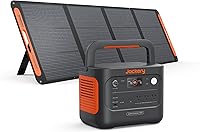
What Is a LiFePO4 Battery?
A LiFePO4 battery is a rechargeable lithium battery that uses lithium iron phosphate as its cathode material. It is used in portable power stations because it can store energy for backup power, camping, travel, and outages.
On this page (7 sections)
- How does LiFePO4 battery chemistry work?
- Why are LiFePO4 batteries used for backup power?
- Are LiFePO4 batteries any good for portable power?
- How do you recharge a LiFePO4 power station?
- What should you check before buying a LiFePO4 battery?
- How should you care for a LiFePO4 battery?
- What is the best LiFePO4 battery for your use?
A LiFePO4 battery is a rechargeable lithium battery that uses lithium iron phosphate as its cathode material. In practical terms, it stores electricity for uses such as portable power stations, camping equipment, travel gear, and backup power during an outage.
LiFePO4 is short for lithium iron phosphate. You may also see the chemistry called LFP.
That name describes the battery chemistry, not the whole product you plug devices into. A portable power station that uses LiFePO4 cells also needs an inverter to create AC power, charging circuits to refill the battery, ports for different devices, controls to show charge level, and safety systems to manage heat and overload.
Knowing the chemistry helps you understand how the station is built for repeated charging. It does not by itself tell you how much energy is stored, how much power it can deliver at once, or how long it will run your gear.
Capacity is usually shown in watt-hours. Output is shown in watts.
A station can have a large battery but modest output, or strong output with a smaller battery, and those two choices lead to very different daily use.
This guide uses the chemistry name as a starting point for comparison. The useful questions come next, including which devices you want to run, how long they need to run, and how often you will carry or recharge the station.
For backup power, the battery stores energy while the station manages how that energy is delivered. For camping or travel, the same system can charge smaller electronics directly through USB or DC ports.
For an outage, it can keep selected essentials running until wall power returns or the battery needs recharging.
Understanding that split between storage and delivery makes the rest of the comparison easier to judge.
How does LiFePO4 battery chemistry work?
LiFePO4 chemistry stores and releases energy through movement of lithium ions between the battery's electrodes. Lithium iron phosphate is the cathode material, while the complete cell also includes an anode, electrolyte, separator, and current collectors.
The chemistry matters because it affects how a battery behaves during charging and use. Capacity tells you how much energy the battery stores, while output wattage tells you how much power the connected equipment can draw at one time.
A portable power station converts the battery's stored energy into usable outputs. Its inverter supplies AC power through household-style outlets, while USB and DC ports can charge smaller electronics directly.
What does LiFePO4 mean in a portable power station?
LiFePO4 means the power station uses lithium iron phosphate battery cells rather than a different lithium chemistry. It does not tell you the station's total capacity, AC output, port count, size, or charging speed by itself.
For example, the Jackery Explorer 300 has a 292Wh capacity and a 300W rated output. The BLUETTI AC180 has a 1152Wh LiFePO4 battery and 1800W output, while the EF ECOFLOW DELTA Pro has a 3600Wh LFP battery and 3600W AC output.
Those differences affect daily use more than the chemistry name alone. A small station may suit phones, cameras, and laptops, while a larger one may support more demanding equipment for longer periods.
Why are LiFePO4 batteries used for backup power?
LiFePO4 batteries suit backup power because they provide rechargeable energy storage in portable systems. They can keep selected devices running when wall power is unavailable, but the result depends on the station's capacity and output limits.
Capacity is measured in watt-hours, written as Wh. A rough runtime estimate is:
Runtime in hours = battery capacity in Wh × conversion factor ÷ device power in watts
Real runtime varies because the inverter and other electronics use some energy. A device may also cycle on and off instead of drawing its maximum wattage continuously.
The Jackery Explorer 300 is aimed at smaller loads, with 292Wh, 300W rated output, 2 AC outlets, a 100W USB-C PD port, 2 USB-A ports, and a 120W car port. Its title and specifications make it a better match for portable electronics and modest backup needs than high-draw appliances.
The BLUETTI AC180 moves into a larger backup class with 1152Wh, 1800W output, 2700W peak output, and 8 outlets. BLUETTI also states that it can provide emergency power to essentials in 20 ms when used as a UPS.
For still larger storage, the EF ECOFLOW DELTA Pro has a 3600Wh LFP battery, 3600W AC output, and capacity expansion from 3.6kWh to 25kWh with DELTA Pro Extra Batteries or Smart Generators.
Are LiFePO4 batteries any good for portable power?
LiFePO4 batteries can be a good fit when you want rechargeable storage and repeated use from a portable power station. The best choice depends on the balance between energy capacity, output, charging time, weight, size, and intended use.
The Jackery Explorer 300 weighs 7.1 lb and has a compact enclosure. That makes it easier to carry than larger stations, but its 300W rated output and 292Wh capacity limit the devices and runtime it can support.
The BLUETTI AC180 weighs 37.4 lb and measures 13.39 x 9.72 x 12.48 in. Its larger battery and 1800W output provide more room for backup use, but the added capacity also makes it less convenient for long-distance carrying.
The DELTA Pro weighs 99 lb and measures 25 x 11.2 x 16.4 in. It is a much larger system for readers who value storage and output more than lightweight portability.
For a broader look at choosing a station by capacity, ports, and use case, see our guide to the best portable power station.
How do you recharge a LiFePO4 power station?
You recharge a LiFePO4 power station through an AC outlet, a vehicle connection, solar input, or another supported source. Always use the charging method and connection limits specified for the station.
The Jackery Explorer 300 can recharge through a car port or a compatible solar panel. Its data also describes charging with a 100W solar panel and a separately sold panel, so solar equipment is not automatically included with the station.
The BLUETTI AC180 supports up to 500W solar input and accepts solar input with an open-circuit voltage from 12V to 60V, along with a compatible connector. BLUETTI gives a 2.8 to 3.3 hour solar charging estimate under its stated conditions.
The DELTA Pro supports EV station charging, solar, wall outlets, a smart outdoor generator, and a car outlet. It can use 4 x 400W solar panels under the stated charging setup.
Solar panels generate electricity, but the battery stores it. Our guide to whether solar panels can store energy explains the difference between generation and storage.
For readers comparing EcoFlow expansion options, see the best EcoFlow extra battery guide before planning a larger setup.
What should you check before buying a LiFePO4 battery?
Start with the watt-hours and output wattage, then check the ports, charging methods, size, and weight. These details tell you whether the station fits your devices and how practical it will be to move or store.
Check the running wattage of each device you plan to use. Some equipment also needs extra power when starting, so a station's peak output may matter for certain loads.
Next, compare the battery capacity with the runtime you need. A 292Wh station and a 3600Wh station serve very different backup plans, even though both use LiFePO4 or LFP chemistry.
Measure the storage area and the route from storage to use. A larger battery may provide more runtime, but its weight and dimensions can affect whether you can move it safely.
If you are building a separate battery setup instead of using an all-in-one station, compare the best battery box for a LiFePO4 battery. A suitable enclosure can help organize a battery system, but it does not replace proper charging, wiring, or protection equipment.
How should you care for a LiFePO4 battery?
Use the correct charger, keep connections dry, avoid overloading the output, and store the station according to the brand's instructions. Check the ports and cables before use, especially after transporting the unit.
Don't connect equipment that exceeds the station's rated output. For a power outage, decide in advance which essential devices need power and connect only those loads.
Keep the station in a suitable indoor or protected location during storage. Leave space around its vents and controls, and avoid placing it where moisture or heat could damage the enclosure.
A LiFePO4 battery is not a reason to ignore basic electrical safety. If you are unsure about a connection, the load's starting demand, or a solar input, stop and check the device and power station instructions.
What is the best LiFePO4 battery for your use?
Choose the Jackery Explorer 300 for lighter portable power, the BLUETTI AC180 for higher-output emergency backup, and the DELTA Pro for large-capacity storage. The chemistry is only the starting point, so match the station to your devices and runtime needs.
The Explorer 300 suits readers who carry power often and run smaller loads. Its 292Wh capacity and 300W rated output keep expectations modest, so plan for phones, cameras, laptops, and similar electronics rather than high-draw appliances.
The AC180 suits readers who want more stored energy and higher output for selected home backup loads. Its 1152Wh battery and 1800W output give more room for essentials, while its 37.4 lb weight makes placement and movement part of the decision.
The DELTA Pro suits readers planning longer backup sessions or a larger home and outdoor setup. Its 3600Wh battery and 3600W AC output support heavier loads, but at 99 lb it is a system you plan to install in a set place more than carry by hand.
For a lower-cost entry into this battery type, compare the best budget LiFePO4 battery. If your main need is longer backup time, prioritize watt-hours; if you carry the station often, prioritize weight and size.
A LiFePO4 battery can be useful for backup power when the complete system matches the job. Check capacity, output, recharge options, and safe operating limits before choosing one.
Frequently asked questions
What is a LiFePO4 battery?
A LiFePO4 battery is a rechargeable lithium battery that uses lithium iron phosphate in its cathode. The chemistry is used in portable power stations because it stores energy in a compact battery system and suits repeated charging for backup power, camping, travel, and emergency use.
Are LiFePO4 batteries any good?
LiFePO4 batteries can be a good choice when you want rechargeable storage for a portable power station or backup system. The right choice still depends on capacity, output wattage, charging options, weight, size, and the devices you need to run.
Is LiFePO4 better than other lithium batteries?
LiFePO4 is not automatically better for every use. It is a useful chemistry for rechargeable power stations, but you still need to compare capacity, output, charging time, portability, connections, and the maker's stated cycle information for each model.
Can a LiFePO4 battery power a house?
A LiFePO4 power station can support selected household devices, but its capacity and output limit what it can run. Check the device wattage, starting demand, total runtime, and the power station's output before connecting appliances during an outage.