How to Choose a Microinverter for a 400W Solar Panel
Choose a microinverter whose input voltage and current limits sit above your panel's normal operating values, not just its peak values. For a 400 watt solar panel with micro inverter setup, check maximum power voltage, maximum power current, open circuit voltage and short circuit current before you buy.
On this page (12 sections)
- How does a 400 watt solar panel with micro inverter setup work?
- What panel voltage and current values matter most?
- How do you size a microinverter for a 400W panel?
- Which 400W panels in this guide fit a microinverter?
- How does shade change the microinverter choice?
- Series, parallel or one microinverter per panel?
- When is a microinverter the wrong choice?
- What connectors and wiring should you plan for?
- Can a roof mount handle two 200 watt panels?
- What mistakes should you avoid with a 400W panel and microinverter?
- How should you compare the three panels for this use?
- What is the final rule for choosing a microinverter?
A 400 watt solar panel with micro inverter works best when the panel and the microinverter agree on voltage, current and connector type. Start with the panel numbers, then match them to the microinverter specs.
Microinverters sit behind each panel and turn DC power into AC power at the panel. That design helps with shade, mixed directions and future expansion.
It also means each panel must be a good electrical fit on its own.
How does a 400 watt solar panel with micro inverter setup work?
A microinverter setup converts power panel by panel, instead of sending all DC power to one central inverter. Each panel feeds its own small unit, and the AC outputs join on the same circuit.
This helps when trees, vents or roof lines shade part of an array. A shaded panel can drop without pulling down every other panel.
It also helps when you add panels in different directions over time.
The trade off is cost and complexity. You buy more electronics, and each unit needs a safe mounting spot, airflow and a way to connect back to the panel.
For a single fixed panel, that added hardware only pays off if shade or layout is a real issue.
Check what a portable solar panel is before you choose fixed roof hardware. A portable panel is built to move and fold, while a microinverter system is usually fixed in place.
What panel voltage and current values matter most?
Match the microinverter to maximum power voltage and maximum power current first. Those values describe normal work, while open circuit voltage and short circuit current describe peak limits.
Open circuit voltage rises in cold weather. Short circuit current rises when sun hits the panel squarely.
A microinverter must survive both peaks without shutting down or taking damage.
Use this quick order when you read specs. Check maximum power voltage against the lower end of the microinverter window.
Check open circuit voltage against the top end. Then check maximum power current and short circuit current against the current limit.
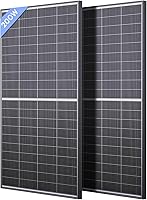
The first panel here is a 2 pack set with 37.44 volts maximum voltage and 6.85 A. That pairing suits a microinverter rated well above 37 volts at startup and well above 6.85 A in normal work.
Renogy describes this set as two 200 watt panels that make one 400 watt setup. That split matters, because a microinverter sees each 200 watt panel on its own if you wire them that way.
How do you size a microinverter for a 400W panel?
Size the microinverter with headroom above the panel's normal current and voltage. A unit that only just fits on paper can struggle in heat, cold or bright sun.
Most 400 watt panels here sit near 36 to 39 volts at peak voltage. That range fits many residential microinverters, but you still need the exact startup voltage and maximum input voltage.
Do not guess from the watt rating alone.
Current matters just as much. The two fixed Renogy sets sit near 6.85 A, while the portable blanket sits at 13.1 A.
A microinverter that accepts one may not accept the other without damage or lost power.
Think about real world heat too. Renogy notes this N-Type design for hot climates, with a low temperature coefficient.
Hot panels lose voltage, so a microinverter with a low startup window can matter more than a higher watt rating.
For broader panel options, see the best 400 watt solar panels and compare voltage and current before you shop for inverters.
H3: What if the panel is slightly over the limit?
Do not force a match. Pick a microinverter with a higher input limit or use a different panel.
A panel that exceeds the limit can shut the unit down or shorten its life.
Also check cold weather voltage. A panel that reads fine in summer can push past the limit on a clear winter morning.
Leave room for that rise when you compare open circuit voltage.
Which 400W panels in this guide fit a microinverter?
The fixed Renogy sets fit microinverter planning better than the portable blanket. Both fixed sets are made as two 200 watt panels, which maps cleanly to one microinverter per panel.
The N-Type set uses 16BB cells at 25 percent efficiency. Renogy says the design is 7.5 percent smaller and 11.7 percent lighter than its predecessor.
It also lists dimensions of 49.7 by 30.1 by 1.2 inches for the set.
That size helps on a Class B van roof, marine roof, cabin roof or farm building. It also helps when you need to keep panels clear of vents, hatches and walk paths.
The ShadowFlux set uses the same basic idea with ShadowFlux anti shading tech. Renogy says it is designed for partial shade from trees, buildings, plants and stains.
It is listed as two 200 watt panels in one 400 watt setup.
ShadowFlux is listed at 36.5 volts maximum voltage and 6.86 A. That is close to the first set, so the same class of microinverter should be a starting point, once you confirm startup voltage and current limits.
Renogy also lists an IP67 rating for this set. That rating speaks to dust and water exposure, not to electrical capacity.
It still needs a microinverter that matches its voltage and current.
H3: Why does the portable blanket need extra care?
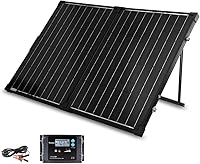
The portable blanket is built for power stations, not fixed AC wiring. It is a 16 fold blanket at 16.09 lb that folds to 16.54 by 15.83 by 4.13 inches.
That size helps in an SUV, van or camper.
It has MC4 output only, and the 4 in 1 adapter is sold separately. It is listed at 39.2 volts maximum voltage and 13.1 A.
That current is nearly double the fixed sets, so many small microinverters will not be a safe match.
Our score weighs specs, features and buyer feedback against what you are shopping for. The blanket scores lower here because a microinverter is a fixed setup, while this panel is built to move.
If you want portable options for camping or backup, see the best 400 watt portable solar panels before you decide between fixed and foldable designs.
How does shade change the microinverter choice?
Shade is the main reason to pick a microinverter for a 400 watt panel. One microinverter per panel limits the loss to that panel, while a string setup can lose power across the whole string.
ShadowFlux tech aims at the same problem from the panel side. Renogy says it helps with small spots, lines, patches and moving shadows.
It also says to keep over half the panel in direct sun for best results.
That advice is useful with any panel. A microinverter cannot create power from a fully shaded panel.
It can only stop that panel from dragging down the rest of the array.
Placement still matters. Put panels where morning sun hits first and where chimneys, masts or trees cast late day shade.
A better spot can beat a higher watt rating.
Also plan for snow, leaves and dirt. Renogy lists ShadowFlux for shade from leaves and snow.
Clean the glass and trim growth before you blame the inverter.
Series, parallel or one microinverter per panel?
With microinverters, you usually do not wire panels in series to raise voltage. Each panel feeds its own microinverter, and the units join on the AC side.
Series wiring raises voltage while current stays the same. Parallel wiring raises current while voltage stays the same.
Those ideas matter more for charge controllers than for microinverters.
Renogy notes that series can raise voltage and parallel can raise current for off grid systems. That is a reminder to read the microinverter manual.
Some units take one panel only, and some allow two panels under strict limits.
Do not mix panel types on one microinverter unless the maker allows it. Voltage and current should match closely.
Mixing a 200 watt fixed panel with a portable blanket is a poor idea.
When is a microinverter the wrong choice?
A microinverter is wrong when you need DC power for a battery or power station. A microinverter makes AC power, and converting back to DC wastes energy.
Off grid cabins, RVs and marine setups often charge a battery first. That path usually uses a charge controller, not a microinverter.
The panel voltage must match the controller input, and the controller must match the battery voltage.
That is why many buyers compare microinverter ideas with a best 400 watt solar panel charge controller guide. The right choice depends on the end use, not on the panel alone.
A microinverter can also be wrong when roof access is hard. Each unit needs inspection and possible replacement on the roof.
A central inverter on the ground may be easier to service.
Cost is another factor. More units mean more parts that can fail.
If your roof has no shade and you never plan to expand, simpler hardware may serve you better.
H3: How do you decide between AC and DC?
Ask where the power goes first. If the goal is home AC power, microinverters fit well.
If the goal is battery storage, a charge controller usually fits better.
Also ask how the system will grow. Microinverters make it easier to add a panel later in a new direction.
Charge controllers make more sense when you want one battery bank and one DC bus.
What connectors and wiring should you plan for?
Check connectors before you order. MC4 style connectors are common, but the microinverter end may use a different plug or a hard wired branch circuit.
The portable blanket here has an IP68 solar connector and MC4 output only. The fixed N-Type set lists a solar connector.
The ShadowFlux set does not list the same connector detail in the data we checked, so confirm before you buy.
Plan the AC run too. Microinverters often need a branch circuit, a breaker and a disconnect that meet local code.
That work may need a licensed electrician, depending on where you live.
Keep panel leads short where you can. Long DC runs add resistance and voltage drop.
Short runs also make a roof fault easier to find.
Label each panel and microinverter pair. A clear label saves time when you check output or swap a unit.
It also helps a future owner or inspector.
Can a roof mount handle two 200 watt panels?
Two 200 watt panels are often easier to place than one large 400 watt panel. You can split them around a vent, hatch or ridge line.
That split also pairs well with one microinverter per panel.
The N-Type set is listed at 49.7 by 30.1 inches for the set. The ShadowFlux set is listed at 30.08 by 49.69 inches.
Both are compact for RVs, boats and small cabin roofs.
Mounts matter as much as panel size. A low profile mount keeps wind lift down, while raised mounts help with heat and cleaning.
Follow the mount maker's wind and snow limits.
Leave room to walk and clean. A panel you cannot reach will lose output to dirt over time.
It will also be harder to inspect after a storm.
Check roof weight limits too. The ShadowFlux set is listed at 23.8 lb.
The portable blanket is listed at 16.1 lb, but it is not a roof mount design.
What mistakes should you avoid with a 400W panel and microinverter?
The biggest mistake is matching by watts alone. Two 400 watt panels can have very different voltage and current.
The fixed sets here sit near 6.85 A, while the blanket sits at 13.1 A.
The next mistake is ignoring startup voltage. A microinverter may need a higher voltage to wake up in low light.
Your panel can make power at midday and still fail to start in early morning.
A third mistake is skipping the manual. Microinverter makers set strict limits for voltage, current, temperature and panel count.
Those limits beat general advice every time.
A fourth mistake is poor placement. Shade at 10 a.m. can cost more power than a small panel downgrade.
Move the panel before you add more hardware.
A fifth mistake is mixing portable and fixed gear. A foldable blanket is built for ground setup and power stations.
A microinverter system is built for fixed panels and AC circuits.
If you want rear side power from a fixed panel, compare the best 400 watt bifacial solar panels. Bifacial panels need space behind the glass to work well.
How should you compare the three panels for this use?
For a fixed microinverter system, pick a fixed two panel set first. The portable blanket is a strong travel panel, but it is not the natural partner for roof mounted AC hardware.
The N-Type set is a clean choice for hot climates and tight roofs. It has 25 percent cell efficiency and a compact footprint.
Renogy says it is aimed at Class B vans and other off grid spaces.
The ShadowFlux set is the better pick for partial shade. It has the same 25 percent efficiency idea with anti shading tech.
It also lists a 5 year material and workmanship warranty and a 25 year power output warranty.
The portable blanket is best for camps, backup power and power stations. It folds to a small size and weighs 16.09 lb.
It can also fold from 400W to 300W, 200W or 100W along its seams, with no tools.
That folding feature is handy on rough ground. It is less handy on a roof, where you want flat, fixed panels with one microinverter each.
What is the final rule for choosing a microinverter?
Choose by limits first, watts second. Confirm maximum power voltage, open circuit voltage, maximum power current and short circuit current against the microinverter manual.
For the fixed Renogy sets, start with a microinverter that handles about 37 volts and about 7 A per panel with headroom. For the portable blanket, start with a unit that handles 39.2 volts and 13.1 A, and only if the maker allows that pairing.
Pick the N-Type set for a hot, compact roof. Pick ShadowFlux for partial shade.
Pick the blanket for portable power station use.
That rule keeps a 400 watt solar panel with micro inverter system safe, simple and matched to the job.
Frequently asked questions
Can one microinverter handle a full 400W panel?
Many microinverters can, but only if the panel's operating voltage and current stay inside the microinverter's input window. Check maximum power voltage, maximum power current, open circuit voltage and short circuit current against the microinverter limits.
If the panel runs near the top of the window, a larger unit is safer.
What voltage should I look for on a 400W panel?
Look for the panel's maximum power voltage and open circuit voltage, not the system voltage printed in a title. The Renogy N-Type 400W set is listed at 37.44 volts maximum voltage and 6.85 A.
The ShadowFlux set is listed at 36.5 volts and 6.86 A.
The portable blanket is listed at 39.2 volts and 13.1 A.
Do I still need a charge controller with a microinverter?
A microinverter converts DC from the panel to AC, so it replaces the charge controller role for a grid tied or AC coupled setup. An off grid battery setup usually still needs a charge controller and battery.
Choose based on whether the output goes to a home circuit, a battery, or a power station input.
Is a microinverter better than a string inverter for one panel?
A microinverter helps when one panel is shaded, faces a different direction, or may be expanded later. Each panel works on its own, so one weak panel does not drag down the rest.
A string inverter can cost less per watt, but a single shaded panel can limit the whole string.
Can I use a portable 400W blanket with a microinverter?
You can in theory, but most portable blankets are made to feed a power station through a solar input, not a microinverter. The Renogy portable blanket has MC4 output only and an adapter sold separately.
Check the microinverter input limits and connector type before pairing a foldable blanket with fixed AC hardware.