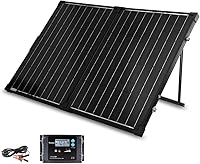
Best 100 Watt Flexible Solar Panels: Top 9 Picks (November 2026)
The best 100 watt flexible solar panels include the Renogy Flexible Solar Panel 100 Watt for balanced RV and boat use, the Renogy 100 Watt ShadowFlux Flexible Solar Panel for partial shade, and the ALLPOWERS SF100 100W Flexible Solar Panel for ALLPOWERS power stations.
On this page (5 sections)
The best 100 watt flexible solar panel for most curved vehicle and boat surfaces is the Renogy Flexible Solar Panel 100 Watt. It balances 240° flexibility, a 5.3 lb weight, 22% efficiency and an IP67 junction box.
That balance is why it sits at the top of this list for many RV, van, boat and cabin projects. You get a panel that can follow a gentle roof curve without the bulk of a rigid module, and the size is easy to plan around before you drill, bond or strap anything down.
This roundup focuses on panels that can sit closer to curved RV roofs, van tops, boat decks and other uneven surfaces than rigid modules. A flexible panel still needs careful support, cable routing and system matching, because bending a panel to fit does not remove the need to secure it properly for travel, weather and vibration.
Flexibility also changes how you should think about placement. A panel that rests flush on a curved surface may collect sun well, but a forced bend, loose cable or poorly matched controller can reduce the benefit.
The picks below are compared on bend limit, weight, stated efficiency, connectors and mounting method, so you can see what each design asks of you in daily use.
If you are new to this category, start with our guide to what is a portable solar panel. For a larger array, compare these picks with our guide to the best 200 watt flexible solar panel options.
Our score weighs specs, features and buyer feedback against what you are shopping for. It does not replace measuring your surface or checking the voltage and current limits of your battery, charge controller or power station.
In practice, the right panel is the one whose shape, bend direction and connection type match the surface you already have. Read the trade offs for weight and mounting as carefully as the headline power rating, because those details decide whether installation is simple or a compromise.
Our picks at a glance
-
1
 Best for balanced RV and boat use
Renogy Flexible Solar Panel 100 Watt
9.6/10 our score
See it on Amazon -
2
 Best for partial shade
Renogy 100 Watt ShadowFlux Flexible Solar Panel
9.4/10 our score
See it on Amazon -
3
 Best for ALLPOWERS power stations
ALLPOWERS SF100 100W Flexible Solar Panel
9.3/10 our score
See it on Amazon
- 4
 Check it
Callsun 100W Flexible Solar Panel
Best for marine and van surfaces - 5
 Check it
LETSFAB 100W Flexible Solar Panels
Best for high stated cell efficiency - 6
 Check it
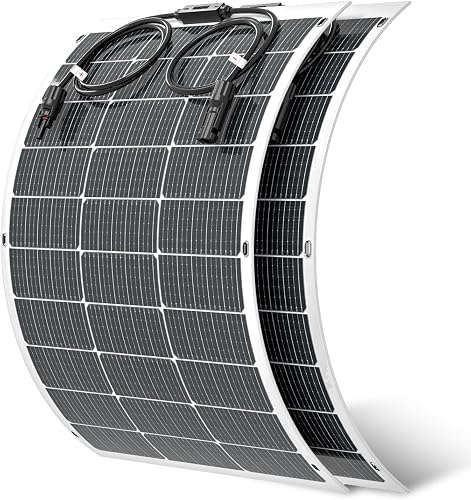
Viewsun Flexible Solar Panel 2PCS 100 Watt
Best for a two-panel setup - 7
 Check it
BougeRV Yuma 100W CIGS Thin-Film Flexible Solar
Best for maximum flexibility - 8
 Check it
Callsun 200W Flexible Solar Panel
Best for two 100W panels - 9
 Check it
Jackery SolarSaga 100W Light Solar Panel
Best for lightweight Jackery setups
Which 100 watt flexible solar panel is best for your setup?
The best choice depends on the surface curve, shade, weight limit and receiving device. Renogy is the strongest all-around pick, while ShadowFlux is better for partial shade and BougeRV bends the farthest.
Start with the curve itself, because the stated bend limit means little if the panel bends the wrong way for your roof or deck. Then check shade from vents, rigging, trees or roof hardware, since a panel that loses output under partial shade may suit a different site than the same rating on an open surface.
Weight matters next, especially on vans, boats and older roofs where every pound counts and wind can work at loose edges. Finally, confirm voltage, current and connector type against your charge controller, battery bank or power station before comparing efficiency figures.
| Product | Best for | Power | Dimensions | Bend limit | Our score |
|---|---|---|---|---|---|
| Renogy Flexible Solar Panel 100 Watt | balanced RV and boat use | 100 watts | 43 x 22.9 x 0.8 in | 240° | 9.6 |
| Renogy 100 Watt ShadowFlux Flexible Solar Panel | partial shade | 100 watts | 37.09 x 24.13 x 0.1 in | 9.4 | |
| ALLPOWERS SF100 100W Flexible Solar Panel | ALLPOWERS power stations | 100 watts ±5% | 39.68 x 22.8 x 0.12 in | 9.3 | |
| Callsun 100W Flexible Solar Panel | marine and van surfaces | 100 watts | 43.7 x 24.4 x 0.98 in | 9.2 | |
| LETSFAB 100W Flexible Solar Panels | high stated cell efficiency | 100 watts | 44 x 14.5 x 0.07 in | 8.9 | |
| Viewsun Flexible Solar Panel 2PCS 100 Watt | a two-panel setup | 36 x 23 x 0.08 in each | 8.7 | ||
| BougeRV Yuma 100W CIGS Thin-Film Flexible Solar | maximum flexibility | 100 watts | 42.59 x 25.98 x 0.06 in | 8.5 | |
| Callsun 200W Flexible Solar Panel | two 100W panels | 100 watts maximum per panel | 8.2 | ||
| Jackery SolarSaga 100W Light Solar Panel | lightweight Jackery setups | 100 watts | 221° | 8.0 |
Best 100 watt flexible solar panels compared
Renogy leads this group because it combines a useful bend range with practical mounting details and a moderate weight. The other panels are stronger choices for specific needs, such as shade, two-panel arrays, power-station pairing or adhesive mounting.
Renogy Flexible Solar Panel 100 Watt: Best for balanced RV and boat use
- 240° bendable design
- 22% efficiency
- 5.3 lb weight
- IP67 junction box
This 100 watt monocrystalline panel combines a 240° bend limit with a 5.3 lb weight. It suits curved RV, van, boat and cabin surfaces where low weight matters.
Pros
- 240° flexibility
- Pre-drilled mounting holes
- IP67 waterproof junction box
Cons
- Heavier than several thinner options
- Lower stated efficiency than the highest-scoring picks
Renogy's 100 watt flexible panel is a balanced choice for an RV, van, boat or cabin. Its 240° bendable design can follow curved surfaces, while the 43 x 22.9 in shape gives you a clear footprint to measure before installation.
The panel uses monocrystalline silicon and half-cut PERC cell technology. Its stated efficiency is 22%, and its maximum power is 100 watts with a 12-volt DC output.
At 5.3 lb, it is lighter than a rigid panel but not the lightest flexible option here. The pre-drilled mounting holes and 2.3 ft solar connector cables help with a planned installation.
The IP67 waterproof junction box and connectors suit outdoor placement. Renogy also states resistance to 5,400 Pa of snow load and 2,400 Pa of wind load.
Choose it when you want one panel with a clear 240° bend limit and standard mounting points. For a more detailed brand comparison, see our guide to the best Renogy flexible solar panel options.
Renogy 100 Watt ShadowFlux Flexible Solar Panel: Best for partial shade
- 25% efficiency
- 270° vertical bend
- N-Type cells
- IP68 outdoor protection
ShadowFlux uses cell-level bypass technology for more stable output when parts of the panel are shaded. Its 270° vertical bend suits curved RV roofs and boat surfaces.
Pros
- Highest stated efficiency here
- 270° vertical flexibility
- 4.2 lb weight
Cons
- Horizontal bending is limited
- Its amperage capacity is lower than several alternatives
Renogy ShadowFlux is the best fit when part of the panel may be shaded by leaves, rigging, vents or other objects. Its cell-level bypass technology uses up to 27 bypass diodes to help maintain more stable output in common shade patterns.
The panel uses N-Type cells with a stated efficiency of up to 25%. Its 37.09 x 24.13 x 0.1 in size is shorter and wider than the first Renogy pick, so compare the roof area in both directions.
It bends up to 270° vertically along the long axis. Horizontal bending is limited to protect the cells, so the mounting curve must match the intended bend direction.
At 4.2 lb, it keeps roof load modest. The IP68 protection, UV-resistant TPO material and glass-fiber reinforcement are useful details for a panel exposed to rain, vibration and repeated movement.
Choose ShadowFlux when shade handling and low weight matter more than a fully flexible bend in every direction. Keep more than half of the panel in direct sunlight for the best results.
ALLPOWERS SF100 100W Flexible Solar Panel: Best for ALLPOWERS power stations
- 25% efficiency
- IP68 waterproofing
- ETFE surface
- Works with named ALLPOWERS stations
The SF100 is a thin ETFE panel with IP68 protection and stated compatibility with ALLPOWERS R600, R1500 LITE, S2000 PRO and R2500 power stations.
Pros
- IP68 rating
- 25% stated efficiency
- 6 pre-drilled mounting holes
Cons
- Power-station compatibility is most specific to ALLPOWERS models
- Heavier than the lightest panel here
The ALLPOWERS SF100 suits buyers building around an ALLPOWERS portable power station. It is stated to work with the R600, R1500 LITE, S2000 PRO and R2500, so check your station's input limits before connecting.
This 100 watt ETFE panel is 3 mm thick and weighs 2.4 kg. It bends within 260° and measures 39.68 x 22.8 in, which can fit curved RV roofs, boat decks and other uneven surfaces.
Its stated efficiency reaches 25%. The maximum working voltage is 25.5 volts, and the panel includes 6 pre-drilled 8 mm mounting holes.
IP68 waterproofing and an operating range from -20 °C to 85 °C support outdoor use. Bypass diodes are included to reduce power loss from partial shading, although shade will still affect output.
Choose it when the named ALLPOWERS compatibility and IP68 protection fit your system. The 120-volt maximum system voltage also supports series or parallel planning when the rest of the system allows it.
Callsun 100W Flexible Solar Panel: Best for marine and van surfaces
- 23% efficiency
- 240° flexibility
- ETFE coating
- 11BB technology
Callsun combines a 240° bend with ETFE material and a 12-volt output. It fits buyers planning RV, boat, van, cabin or portable power-station setups.
Pros
- Marine-oriented ETFE construction
- 240° bendability
- Standard solar connectors
Cons
- Thicker stated height than most picks
- 5.7 lb weight is among the heaviest here
Callsun's 100 watt flexible panel suits marine, van and RV installations that need a low-profile shape. It bends up to 240°, uses ETFE material and measures 43.7 x 24.4 x 0.98 in.
Its 23% efficiency comes from monocrystalline cells with 11BB technology. The panel has a 12-volt DC output and a maximum voltage of 18.61 volts.
The 5.7 lb weight is among the heaviest in this roundup, so check the mounting surface and roof-load plan. The 0.1-inch item highlight also points to a slim profile, but the listed dimensions should guide your fit check.
Callsun includes standard solar connectors. The stated applications include EcoFlow, Jackery, Bluetti, Anker and Rockpals power stations, plus LiFePO4 batteries, trolling motors, sheds and cabins.
Choose this panel when the ETFE construction, 240° curve and broad setup range match your surface. For a two-panel Callsun array, see the 200W option below.
LETSFAB 100W Flexible Solar Panels: Best for high stated cell efficiency
- 25.4% efficiency
- 20BB N-Type cells
- ETFE coating
- MC4 connectors
LETSFAB uses 20BB N-Type monocrystalline cells and an ETFE coating in a 4.4 lb flexible panel. Its long, narrow dimensions may suit some limited mounting areas.
Pros
- Highest stated efficiency in this roundup
- 20BB N-Type cells
- Pre-installed MC4 connectors
Cons
- Long, narrow shape needs careful measuring
- The stated upper temperature rating is 100 °C
LETSFAB is aimed at buyers who place a high value on stated cell efficiency. Its 20BB N-Type monocrystalline cells have a listed conversion efficiency of 25.4%.
The 100 watt panel measures 44 x 14.5 x 0.07 in and weighs 4.4 lb. That long, narrow shape may work well on a specific roof section, but measure the available area before ordering.
An ETFE coating with matrix-distributed dots is designed to refract sunlight from different angles. The panel also has a waterproof junction box, reinforced installation holes and pre-installed MC4 connectors.
The maximum voltage is 18 volts, and the stated amperage capacity is 5.55 A. Its 100 °C upper temperature rating is another detail to compare if the panel will sit in a hot location.
Choose LETSFAB when its dimensions fit your surface and its 20BB N-Type design is the main draw. It is less suitable when you need a compact, square footprint.
Viewsun Flexible Solar Panel 2PCS 100 Watt: Best for a two-panel setup
- 2 panels
- 200 watts maximum total power
- 16BB monocrystalline cells
- IP67 junction boxes
Viewsun includes 2 flexible panels with 200 watts maximum total power. The pair suits buyers who want separate placement options across an RV, boat, balcony or other uneven surface.
Pros
- Two panels in one package
- 2 mm stated thickness
- 6 pre-drilled metal holes
Cons
- 30° arc is less flexible than several alternatives
- The package weighs 6 lb
Viewsun gives you 2 flexible panels rather than one. Each panel measures 36 x 23 x 0.08 in, and the pair has 200 watts maximum total power.
The 16BB monocrystalline cells have a stated efficiency of 23% to 24%. The fiberglass, glass and metal construction weighs 6 lb for the package.
These panels bend to a 30° arc, which is less than the bend range of most other picks here. That makes curve measurement especially important, since the panels are designed for an arc rather than a deep wrap.
IP67 waterproof junction boxes and built-in bypass diodes support outdoor installation. Six pre-drilled metal holes on each panel give you several mounting points, while adhesive, silicone, double-sided tape, cable ties or Velcro are listed installation methods.
Choose Viewsun when two separate panels help you spread solar collection across an RV, boat, balcony or cabin. Pick a deeper-bending model if the surface has a tight curve.
BougeRV Yuma 100W CIGS Thin-Film Flexible Solar: Best for maximum flexibility
- CIGS thin-film cells
- 360° flexibility
- IP68 protection
- Pre-applied tape
BougeRV uses CIGS thin-film cells in a panel designed to bend 360°. Pre-applied tape supports installation on suitable smooth, flat metal or plastic surfaces.
Pros
- 360° flexibility
- CIGS thin-film material
- IP68 connectors and junction box
Cons
- Adhesive installation needs a suitable surface
- A single panel is intended for a 12-volt system
BougeRV Yuma is the most flexible option in this group, with a stated 360° bend. Its CIGS thin-film cells are designed for curved RV, marine and yacht surfaces where a monocrystalline panel may be harder to shape.
The panel measures 42.59 x 25.98 x 0.06 in and weighs 4.3 lb. It has a 100 watt maximum power rating and a 25-volt maximum voltage.
Pre-applied adhesive tape supports installation, but the surface needs to be smooth, flat metal or plastic. Avoid porous, rough, oily, textured, dusty, damp or inflatable surfaces when using the adhesive-backed setup.
The panel has IP68 protection for its connectors and junction box. BougeRV states that one panel is suitable for a 12-volt system, while multiple panels in series can support a 24-volt system.
Choose Yuma when the surface shape is the deciding factor. Plan the installation carefully because adhesive-backed mounting is less convenient to move after it bonds.
Callsun 200W Flexible Solar Panel: Best for two 100W panels
- 2 x 100W panels
- 240° flexibility
- 23% efficiency
- Series or parallel setup
This Callsun package contains 2 white 100W flexible panels for a 200W array. Series or parallel connections let you match the setup to a battery bank or power station.
Pros
- Two-panel package
- 240° bendability
- Series and parallel options
Cons
- The product title states 200W, while each panel is rated 100W
- Each panel weighs 5.7 lb
This Callsun package is a two-panel setup with 2 x 100W panels. Each panel uses ETFE and monocrystalline silicon, bends up to 240° and measures 43.7 x 24.4 x 0.98 in.
The panels are designed for series or parallel connections. Series wiring can raise voltage, while parallel wiring can keep the system closer to a 12-volt arrangement, but the charge controller or power station must support the chosen configuration.
Each panel has a 100 watt maximum power rating and a 12-volt DC output. The product description also states that the array can produce up to 1 kWh per day under ideal conditions, but daily output varies with sunlight and system limits.
The white backsheet reflects heat and gives the panels a different look from the black options above. Each panel weighs 5.7 lb, so the complete pair needs a suitable mounting plan.
Choose this package when you want two matching panels and room to configure the array. For a single 100 watt panel, the other Callsun model is easier to compare.
Jackery SolarSaga 100W Light Solar Panel: Best for lightweight Jackery setups
- 25% efficiency
- 4.5 lb weight
- IP68 protection
- 221° bendability
The SolarSaga 100W Light weighs 4.5 lb and bends up to 221°. It includes adapters for DC7909 and DC8020 connections, plus a 3 m flat cable.
Pros
- Lightweight design
- IP68 protection
- Included connection adapters
Cons
- No dimensions are stated here
- Its bend limit is lower than the most flexible picks
Jackery SolarSaga 100W Light is a good match for buyers who want a lightweight flexible panel with included connection adapters. It weighs 4.5 lb and bends up to 221° with a 0.275 m radius.
The panel uses IBC cells with a stated 25% conversion efficiency. Its all-black front is designed to absorb sunlight from both sides, according to the product description.
IP68 protection supports outdoor use in wet or dusty locations. Jackery also states an operating range from -40 °C to 85 °C and includes a 3 m flat cable.
The package includes an Anderson to DC7909 adapter, an Anderson to DC8020 adapter, the SolarSaga 100 Light and a user manual. Those included adapters can reduce the number of extra connection parts in a compatible setup.
Choose it when the adapters, 4.5 lb weight and Jackery ecosystem fit your needs. Its 221° bend limit is useful, but buyers needing a tighter curve should compare the 270° Renogy or 360° BougeRV.
How do you choose a 100 watt solar panel flexible enough for your surface?
Choose by bend direction and mounting area first, then compare weight, material, connectors and voltage. A panel that is electrically suitable may still be a poor fit if its curve, dimensions or mounting method do not match the surface.
What bend range does a 100 watt flexible solar panel need?
A 100 watt flexible solar panel needs a bend range that matches the actual curve, not the curve you hope to create during installation. ShadowFlux bends up to 270° vertically, Renogy and Callsun reach 240°, ALLPOWERS reaches 260°, and BougeRV states 360° flexibility.
Do not assume every panel bends equally in every direction. ShadowFlux limits horizontal bending, and Viewsun is designed for a 30° arc.
Is ETFE or CIGS better for flexible solar panels?
ETFE is used on several panels here, including ALLPOWERS, Callsun, LETSFAB and BougeRV's ETFE-coated construction. BougeRV's cells are CIGS thin-film, while the other listed cell materials are monocrystalline or N-Type monocrystalline.
The better choice depends on the surface, bend needs and system match. CIGS is the clear material choice when you need the 360° flexibility described for the BougeRV Yuma.
How much energy can a 100 watt flexible panel produce?
A 100 watt rating describes maximum power under stated conditions, not a guaranteed daily amount. Sun angle, clouds, heat, shade, wiring, controller efficiency and the receiving device's input limits all affect the energy you get.
That distinction is important when you compare panels with similar ratings but different stated efficiencies and cell designs. A higher efficiency figure can help in tight spaces, yet it will not overcome a shaded mounting spot, a loose connection or a power station that cannot accept the panel input.
Keep the panel free from avoidable shade and point it toward stronger sunlight when the installation allows. On a fixed roof or deck you may not be able to tilt or turn the panel, so clearing leaves, dirt and nearby obstructions becomes the main way to protect output.
A power station can also limit the result if its solar input cannot accept the panel's voltage or current. Check the maximum input voltage and current before you connect, and leave margin where the system allows it.
Temperature deserves a place in the same check. Panels mounted flat on a hot roof can run warm, and heat can trim output even on a clear day.
Good airflow, secure wiring and a clean surface help the panel do its work, but they do not turn a 100 watt rating into a promise for every hour of sun.
Should you choose one panel or two 100W panels?
Choose one panel when space, weight or system simplicity matters most. Choose two when you need more total power or want separate placement across a larger curved roof, boat deck, balcony or cabin.
Viewsun and Callsun offer two-panel packages here. Before wiring panels in series or parallel, confirm the charge controller, battery bank or power station supports the resulting voltage and current.
How should you install and care for a flexible solar panel?
Install the panel on a clean, suitable surface with its bend direction supported by the design. Keep cables from sharp edges, protect connectors from unnecessary strain and follow the mounting method that matches the panel.
Begin with a dry, clean surface and a full size check of the panel footprint. Mark where the bend will fall, where cables will run and where water may collect, then confirm that the junction box and connectors can sit without tight strain or constant rubbing.
Secure the panel so it cannot lift at an edge in wind or shift under vibration. Screws through pre drilled holes give a firm fixing on suitable surfaces, while adhesive or tape needs a compatible material and a careful bond.
If you use cable ties or Velcro, keep them snug without pinching the panel or its leads.
Adhesive-backed BougeRV panels need smooth, flat metal or plastic. Other panels have pre-drilled holes, while several can also use adhesive, tape, silicone, cable ties or Velcro.
Treat adhesive as a long term decision rather than a temporary clamp. Once it bonds, removal can damage the surface or the panel backing, so plan the position twice and seal windward edges where the maker advises it to reduce lift and spray.
Avoid forcing a panel past its stated bend limit. Forcing a curve can stress cells, backing and junction points, and the short term fit may cost output later.
If the curve is tighter than the limit, choose a different panel rather than pressing this one to fit.
Check the junction box and cable connections after severe weather, and clear leaves, dirt or other shade sources when safe to do so. A quick look for loose fixings, cracked sealant or chafed cable costs little and can prevent a small fault from becoming a lost charging day.
Route cables with service loops and protect them where they pass edges or moving parts. Keep connectors out of standing water where you can, and use the controller or power station limits as the final word on voltage and current.
If you need a larger system, compare your planned array with how to choose a 400 watt flexible solar panel setup. For a smaller battery system with conversion hardware, see how to choose a 100 watt solar panel kit with an inverter.
Which 100 watt flexible solar panel should you buy?
The best 100 watt flexible solar panel overall is the Renogy Flexible Solar Panel 100 Watt because its 240° bend, 100 watt rating, mounting holes and outdoor protection suit many RV, boat and van installations.
It is the safer default when you want a known footprint, standard mounting points and a bend range that covers many curved roofs without asking for special surface prep. That makes it easier to plan wiring, sealing and future maintenance, which matters more on a vehicle than on a shed roof you can reach in minutes.
Choose Renogy ShadowFlux when partial shade is the main concern. Pick ALLPOWERS for a named ALLPOWERS power-station setup, BougeRV for the greatest stated flexibility, or one of the two-panel packages when you need a larger array.
Those alternatives trade one thing for another. ShadowFlux asks you to respect its bend direction, BougeRV asks for a suitable smooth surface for tape, and a two panel array asks for more roof space, more weight and a wiring plan that the receiving device can accept.
Measure the surface, confirm the bend direction and check the receiving system's voltage and current limits before you buy. Those checks matter more than a small difference in stated efficiency.
If the measurements point to a tight curve, shade or a specific power station, follow that evidence rather than the overall pick. The best panel in this group is the one that fits the surface, stays secure in weather and connects cleanly to the system you already own.
Our top 3 picks at a glance
-
1
Best for balanced RV and boat use
Renogy Flexible Solar Panel 100 Watt
9.6/10 our score
See it on Amazon -
2
Best for partial shade
Renogy 100 Watt ShadowFlux Flexible Solar Panel
9.4/10 our score
See it on Amazon -
3
Best for ALLPOWERS power stations
ALLPOWERS SF100 100W Flexible Solar Panel
9.3/10 our score
See it on Amazon
Frequently asked questions
What is the best 100 watt flexible solar panel?
The Renogy Flexible Solar Panel 100 Watt is the best 100 watt flexible solar panel for a balanced RV, boat or van setup. It combines 240° bendability, 22% efficiency, a 5.3 lb weight, pre-drilled holes and an IP67 waterproof junction box.
Choose another model if shade handling or maximum flexibility matters more.
Can a 100 watt flexible solar panel power a battery?
Yes, a 100 watt flexible solar panel can charge a battery when connected through a suitable solar charge controller or compatible power station. Actual energy depends on sunlight, panel position, wiring and the receiving device's voltage and current limits.
Check those limits before connecting the panel.
Are flexible solar panels good for curved roofs?
Flexible solar panels suit curved roofs because their bend limits let them follow surfaces that rigid panels cannot. Renogy panels here bend up to 240° or 270°, BougeRV states 360° flexibility, and Jackery states 221°.
Measure the curve and mounting area before choosing.
What should you check before installing a flexible solar panel?
Check the panel dimensions, bend direction, surface material, mounting holes, connector type and system voltage. Adhesive-backed panels need a clean, smooth surface.
Leave room for cable routing, keep connectors protected, and follow the charge controller or power station limits.