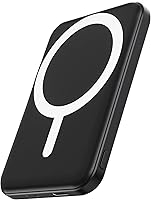
What Power Bank Capacity Do You Need?
The best mah for power bank use is the smallest capacity that covers your devices with room for charging losses. For one phone, 5,000 to 10,000 mAh is often enough. For a phone plus a tablet or a laptop, 20,000 to 25,000 mAh is a safer starting point.
On this page (12 sections)
- What does mAh mean for a power bank?
- How many charges do you really need?
- What is the best mah for power bank use with one phone?
- When does 20,000 mAh make more sense?
- Is 25,000 mAh better than 20,000 mAh?
- When should you go to 40,000 mAh?
- How does device size change the mAh you need?
- Why does wattage matter as much as mAh?
- How long will a large power bank take to recharge?
- What about solar, wireless and built-in cables?
- How do you compare large banks without overspending?
- Which capacity should you buy in the end?
The best mah for power bank use is the smallest size that still covers your daily devices after charging losses. A 5,000 mAh bank suits light phone backup.
A 10,000 mAh bank suits a full phone charge for most people. A 20,000 to 25,000 mAh bank suits two phones, a tablet or some laptops.
Capacity is only half the choice. Wattage decides how fast a device charges and whether a laptop will charge at all.
Size and weight decide whether you will actually carry the bank.
Start with the devices you carry, then work backward. Our power bank battery guide explains the basic parts before you compare sizes.
What does mAh mean for a power bank?
mAh tells you how much charge the battery inside can store. A higher mAh number means more total energy, but you lose some energy during conversion.
That loss happens in the cells and in the circuitry that changes the voltage for your phone.
A useful rule is to expect roughly 60 to 70 percent of the stated capacity to reach your device. Anker says its 20,000 mAh A1383 offers about 11,000 to 14,000 mAh to devices.
That range reflects about 30 to 45 percent loss during charging.
This is why you should not judge a bank by mAh alone. A 10,000 mAh bank may give one full phone charge in real use.
A 20,000 mAh bank may give two to three phone charges, depending on the phone.
Rule: divide the stated mAh by about 1.5 to estimate usable capacity, then compare that figure with your phone battery size.
How many charges do you really need?
Most people need one full phone charge per day, not three or four. Count how often you charge from empty, how long you go between wall outlets and whether you share the bank with another person.
A commuter who charges at home each night needs less capacity than a camper who is away for two days.
Write down your devices and their battery sizes if you can find them. Then add one extra charge as a buffer for losses and for a day when your phone starts below 20 percent.
If the total is under 5,000 mAh of usable energy, a small bank is enough.
If you carry a tablet, earbuds or a second phone, add those needs as well. A tablet can use as much energy as a phone.
Sharing a bank between two people doubles the demand.
Rule: buy for your longest normal stretch without a wall outlet, plus one buffer charge.
What is the best mah for power bank use with one phone?
For one phone, 5,000 to 10,000 mAh is the best mah for power bank use for most people. A 5,000 mAh bank is light and fits in a pocket, but it may not take a low phone to full.
A 10,000 mAh bank is the safer default for a single phone.
Look at our best 5000 mah power bank picks if you want the smallest option for a short day out. Look at our best 10000mah power bank picks if you want one full charge with some left over.
A small bank suits a phone that you charge each night and a bag you keep light. It also suits a backup bank that stays in a car or a desk drawer.
It is less suited to a long flight, a festival weekend or a second device.
The BLAVOR Solar Power Bank 10,000mAh Portable Wireless Charger for Cell Phones weighs 9.3 ounces and measures 5.9 x 3.1 x 0.8 inches. BLAVOR says it can charge an iPhone 8 3.6 times, an iPhone 14 Pro 2.2 times and an iPad Air once when fully charged.
Those figures show why 10,000 mAh is a practical single phone size.
BLAVOR also lists 20W USB-C fast charging and 10W wireless charging. It supports charging 3 devices at once and has dual flashlights.
Its solar panel is a backup for outdoor use, not a fast way to refill the bank.
Rule: pick 10,000 mAh for one phone you use all day, and 5,000 mAh only for light backup.
When does 20,000 mAh make more sense?
A 20,000 mAh bank makes sense when you charge more than one device or you go two days between outlets. It is a common size for travel because it balances capacity with portability.
It is also often approved for airline travel, though you should always confirm airline rules.
Anker says its 20,000 mAh bank is approved for airline travel. It weighs 15.2 ounces and measures 6.2 x 2.9 x 1.0 inches.
That size fits in a personal bag but is too large for a small pocket.
See our best 20000mah power bank roundup if this size fits your needs. It compares models by wattage and ports, not by mAh alone.
The Anker Power Bank, 20,000mAh Travel Essential, Built-in USB-C Cable delivers 87W across three devices, with a single device getting up to 65W. Anker says it can charge a 14-inch MacBook Pro to 50 percent in under 40 minutes.
A built-in cable charges an iPhone 15 Pro to 58 percent in 30 minutes.
Anker says the bank recharges in 1.5 hours with a 65W charger. The built-in cable is rated for over 10,000 bends.
The box includes the bank, a welcome guide and an 18-month warranty.
Rule: pick 20,000 mAh when you carry a phone plus one more device, or when you travel for two days.
Is 25,000 mAh better than 20,000 mAh?
A 25,000 mAh bank is better when you need laptop charging or extra capacity without moving to a very large bank. The jump from 20,000 to 25,000 mAh adds about one more half phone charge after losses.
The bigger gain is often wattage, because many 25,000 mAh models are built for laptops.
The UGREEN Nexode 25000mAh 145W 3-Port USB-C Power Bank measures 6.3 x 3.2 x 1.1 inches and weighs 505 g. UGREEN says a single USB-C1 port provides up to 140W and charges a 16-inch MacBook Pro from 0 to 56 percent in 30 minutes.
It says the bank can fully recharge laptops up to 1.3 times and mobile devices up to 5.2 times.
UGREEN says the bank recharges in about 2 hours with a 65W PD charger. It has two USB-C ports and one USB-A port.
A digital display shows remaining battery life.
Rule: pick 25,000 mAh when you want laptop power in a bank that still fits in a bag.
When should you go to 40,000 mAh?
A 40,000 mAh bank suits long trips, group use or a laptop plus phones for a full day. It is not the best choice for daily carry because of its weight and size.
It also takes longer to recharge, so a weak wall charger can leave it half full.
Our best power bank 40000 mah roundup helps you compare these large models by output and charging time. Check the recharge time before you buy, because a large bank that needs many hours to refill may not suit a short trip.
Large banks also raise travel questions. Some airlines limit the total watt hours you can carry, and some require approval for larger banks.
Check your airline before you pack a 40,000 mAh bank.
Rule: pick 40,000 mAh only when you can name a trip or workload that a 25,000 mAh bank cannot cover.
How does device size change the mAh you need?
A larger phone battery needs more energy for one full charge. Compare the bank's usable capacity with your phone's battery size, not with the bank's headline number.
A 3,500 mAh phone battery and a 5,000 mAh phone battery will use the same bank very differently.
Anker gives a simple estimate formula for its 20,000 mAh bank. Use power bank capacity times 0.65, then divide by your device battery capacity to estimate charges.
Its example gives about 3.8 charges for a 3,500 mAh device.
Tablets and laptops change the math again. A tablet battery can be two to three times a phone battery.
A laptop battery is larger still, and it also needs high wattage to charge at a useful speed.
Rule: estimate charges with usable capacity divided by your device battery, and add a buffer for losses.
Why does wattage matter as much as mAh?
Wattage is the speed of delivery, while mAh is the total amount stored. A high mAh bank with low wattage will charge a laptop slowly or not at all.
A lower mAh bank with high wattage may be the better buy for a laptop user.
The Anker bank above delivers 87W total. The UGREEN bank delivers 145W total with 140W from one port.
Those figures matter more for a MacBook than a small jump in mAh.
Check the wattage your device wants before you compare capacity. A phone may fast charge at 20W to 30W, while a laptop may want 65W, 100W or more.
If the bank cannot meet that figure, charging will be slow.
Rule: meet the wattage your laptop needs first, then choose the smallest mAh that covers your day.
How long will a large power bank take to recharge?
Recharge time grows with capacity and shrinks with charger wattage. A 25,000 mAh bank needs a strong wall charger to refill quickly.
UGREEN says its bank takes about 2 hours with a 65W PD charger and up to 6 hours with a 20W adapter.
Anker says its 20,000 mAh A1383 takes about 4.5 hours with a 30W PD charger at 77 degrees Fahrenheit. It also says the bank recharges in 1.5 hours with a 65W charger.
That gap shows how much charger choice matters.
Plan to recharge a large bank overnight with a charger that matches its input rating. A slow refill is fine at home, but it is a problem on a short trip when you need the bank the next morning.
Rule: buy a large bank only if you have a fast wall charger and time to refill it between trips.
What about solar, wireless and built-in cables?
Extra features change how you use a bank, but they do not replace capacity. Solar panels refill a bank slowly and work best as a backup.
BLAVOR says its solar panel has a maximum charging current of 0.23A and recommends charging the bank with a cable first.
Wireless charging adds convenience but usually delivers less power than a cable. BLAVOR lists 10W wireless charging for compatible devices.
That speed suits a phone left on a surface, not a laptop.
A built-in cable saves space and stops you forgetting a lead. Anker's built-in USB-C cable is rated for over 10,000 bends, which helps if you use it every day.
Check whether the built-in cable matches your phone port before you rely on it.
If you own an INIU bank, read our guide on iniu power bank recall checks before you travel. A recall check matters more than capacity when you pack for a flight.
Rule: choose solar, wireless or a built-in cable for convenience, and choose mAh for total energy.
How do you compare large banks without overspending?
Compare banks by usable capacity, wattage, weight and recharge time together. Our best large power bank roundup sorts high capacity models so you can see those trade-offs side by side.
A heavier bank is not always better if its wattage is low.
Our best Anker power bank roundup helps if you prefer a single brand for cables and support. Brand choice can matter for warranty and customer service, but it does not change the capacity math.
We compared these three models by their stated specs and features. The BLAVOR bank is smallest at 10,000 mAh and lightest at 9.3 ounces.
The Anker bank sits in the middle at 20,000 mAh and 15.2 ounces. The UGREEN bank is largest at 25,000 mAh and heaviest at 505 g.
That order shows the core trade-off. More capacity means more weight and a longer refill.
Higher wattage helps laptops but does not add total charges for a phone.
Rule: pick the lightest bank that covers your devices, and move up in size only for a clear need.
Which capacity should you buy in the end?
Pick 5,000 to 10,000 mAh for one phone, 20,000 mAh for travel with two devices, and 25,000 mAh or more for laptops or long trips. That answer covers most readers without forcing you to carry extra weight.
It also keeps recharge time manageable for daily life.
The best mah for power bank use depends on your devices, not on the largest number in a store. A 10,000 mAh bank that you carry every day beats a 40,000 mAh bank that stays at home.
A 20,000 mAh bank with enough wattage beats a larger bank that charges your laptop too slowly.
Start with your phone battery size and your longest day without a wall outlet. Add a buffer for charging losses.
Then choose the smallest bank that meets both needs.
Next, check our best 20000mah power bank picks if you need a mid-size travel bank. If you need laptop power, compare the UGREEN 25,000 mAh model above by its 145W output.
If you need light outdoor backup, the BLAVOR 10,000 mAh solar model fits that role.
Frequently asked questions
What is mah power bank capacity in simple terms?
It is a measure of the battery inside the power bank, not the amount you get in your phone. A larger number means more stored energy before charging losses.
That is why a 20,000 mAh bank will not give you a flat 20,000 mAh of phone charging.
What is the best mah for power bank use on a plane?
Many buyers choose 10,000 to 20,000 mAh for travel because it is portable and widely accepted for cabin use. Always check the airline and airport rules for your trip, since limits vary by airline and country.
Keep the bank in your carry-on baggage.
How many charges will a 20,000 mAh power bank give?
It depends on your phone battery size and charging losses. Anker says its 20,000 mAh A1383 offers about 11,000 to 14,000 mAh to devices after losses.
A 3,500 mAh phone battery would get about 3.8 charges by Anker's estimate formula.
Do I need 40,000 mAh for a laptop?
Not always. A laptop needs high wattage as well as capacity, and many 25,000 mAh banks deliver more useful power than a larger but lower wattage bank.
Check the output watts against your laptop charger before you buy a very large bank.
Can solar charging replace a cable for a power bank?
Solar is best as a backup for outdoor emergencies on many solar banks. BLAVOR says its solar panel has a maximum charging current of 0.23 A and recommends using a cable to charge the bank, with solar as a backup method.