9 Best Portable Battery Power Stations (November 2026)
The best portable battery power stations include the Anker SOLIX C1000 Gen 2 Portable Power for most home and outdoor backup, the Jackery Explorer 300 Portable Power Station for lightweight camping power, and the DaranEner Daran Portable Power Station 89.6Wh LiFePO4 for pocket-size device charging.
On this page (7 sections)
- The best portable battery power stations by use
- How do portable power stations battery systems work?
- How do you choose a lithium battery portable power station?
- How should you use and store a portable power station battery?
- Portable power station vs generator: which is better?
- How are portable power stations different from power banks?
- Which portable battery power station should you buy?
The best portable battery power station for most buyers is the Anker SOLIX C1000 Gen 2, with 1,024Wh capacity, 2,000W output and fast AC and solar charging. Choose Jackery for lighter outdoor use, or Anker SOLIX S2000 for longer home backup.
A portable battery power station stores electricity for use away from a wall outlet. The right size depends on the devices you need to run, how long you need them powered and how easily you need to carry the unit.
For a broader explanation of capacity, output and charging, read our guide to the best portable power station. If solar charging is central to your plan, compare the best portable solar power station.
Our picks at a glance
-
1
 Best for most home and outdoor backup
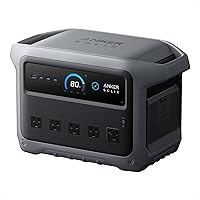
Anker SOLIX C1000 Gen 2 Portable Power
9.7/10 our score
See it on Amazon -
2
 Best for lightweight camping power
Jackery Explorer 300 Portable Power Station
9.6/10 our score
See it on Amazon -
3
 Best for pocket-size device charging
DaranEner Daran Portable Power Station 89.6Wh LiFePO4
9.5/10 our score
See it on Amazon
- 4
 Check it
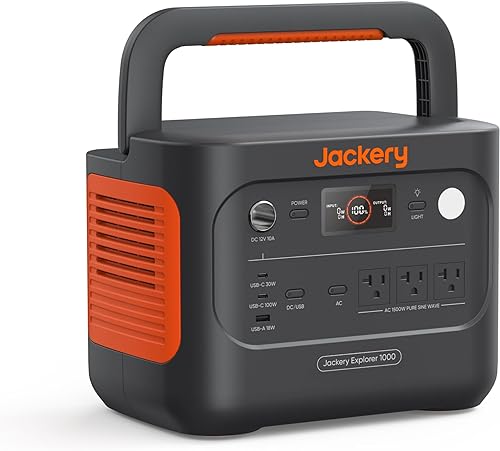
Jackery Explorer 1000 v2 Portable Power Station
Best for larger camping loads - 5
 Check it
BLUETTI Elite 30 V2 Portable Power Station
Best for flexible charging options - 6
 Check it
HOWEASY Portable Power Station
Best for simple light-duty backup - 7
 Check it
Anker SOLIX C300 DC Portable Power Station
Best for USB-C equipment - 8
 Check it
Anker SOLIX S2000 Portable Power Station
Best for extended home backup - 9
 Check it
MARBERO Portable Power Station 88Wh
Best for emergency lighting
The best portable battery power stations by use
The best portable battery power station depends on your load. The C1000 Gen 2 is the most balanced pick, while the smaller stations suit personal electronics and the S2000 is better for extended backup.
We compared capacity, continuous output, peak output, charging methods, portability, ports and backup features. Our score weighs specs, features and buyer feedback against what you're shopping for.
| Product | Best for | Capacity | Output | Solar input | Our score |
|---|---|---|---|---|---|
| Anker SOLIX C1000 Gen 2 Portable Power | most home and outdoor backup | 1,024Wh | 2,000W, 3,000W peak | 600W, 60V maximum | 9.7 |
| Jackery Explorer 300 Portable Power Station | lightweight camping power | 292Wh | 300W, 600W peak | 9.6 | |
| DaranEner Daran Portable Power Station 89.6Wh LiFePO4 | pocket-size device charging | 89.6Wh | 100W, 200W peak | 10–30V DC, 40W maximum | 9.5 |
| Jackery Explorer 1000 v2 Portable Power Station | larger camping loads | 1,070Wh | 1,500W, 3,000W peak | 9.5 | |
| BLUETTI Elite 30 V2 Portable Power Station | flexible charging options | 288Wh | 600W, 1,500W Power Lifting | 9.3 | |
| HOWEASY Portable Power Station | simple light-duty backup | 88Wh | 120W, 240W peak | 9.2 | |
| Anker SOLIX C300 DC Portable Power Station | USB-C equipment | 288Wh | 300W | 9.2 | |
| Anker SOLIX S2000 Portable Power Station | extended home backup | 2,010Wh | 1,500W, 3,000W peak | 9.1 | |
| MARBERO Portable Power Station 88Wh | emergency lighting | 88Wh | 80W | 8.9 |
Anker SOLIX C1000 Gen 2 Portable Power: Best for most home and outdoor backup
- 1,024Wh LiFePO4 battery
- 2,000W output and 3,000W peak
- 49-minute AC recharge at 1,600W
- 10 ms UPS backup
The C1000 Gen 2 balances useful capacity, high output and fast recharging in a portable design. Its UPS function also suits laptops and other vital equipment.
Pros
- High output for appliances and tools
- Fast AC and solar charging
- 10 ms UPS switchover
Cons
- Expansion feature removed
- Solar panel is not included
The Anker SOLIX C1000 Gen 2 is the strongest all-around choice in this group. Its 1,024Wh LiFePO4 battery and 2,000W output give you more room for appliances, work equipment and outdoor loads than compact power stations.
It can deliver up to 3,000W peak output and power up to 10 devices through its stated ports. The 49-minute recharge claim applies to 1,600W UltraFast AC charging, which you enable in the Anker app.
Solar charging is also practical for longer trips or outage planning. The C1000 Gen 2 accepts up to 600W of solar at 60V maximum, with a stated full solar recharge time of 1.8 hours.
Its 10 ms UPS switchover suits laptops and other vital equipment. Anker also states that the battery retains at least 80% capacity after 4,000 cycles.
The trade-off is that this Gen 2 model does not include an expansion feature. The box includes the power station, AC charging cable, quick start guide and safety and warranty card.
Choose it for a mix of home backup, remote work, camping and fast recharge needs.
Jackery Explorer 300 Portable Power Station: Best for lightweight camping power
- 292Wh capacity
- 300W output and 600W peak
- 7.5 lb weight
- 6 charging ports
The Explorer 300 is easy to carry for camping, travel and small electronics. Its 300W output fits laptops, cameras and drones, but not high-draw appliances.
Pros
- Lightweight integrated-handle design
- LiFePO4 battery
- AC, USB-C, USB-A and car outputs
Cons
- Solar panel is optional
- Lower output than larger picks
The Jackery Explorer 300 is the easiest pick to carry for light outdoor power. At 7.5 lb, it fits camping and travel plans where a larger battery would add unnecessary weight.
Its 292Wh capacity and 300W rated output support laptops, drones and cameras. The 600W peak rating gives some extra startup room, but high-draw kitchen appliances need a larger station.
You get 2 AC outlets, a 100W USB-C PD port, 2 USB-A ports and a 120W car port. Jackery states that a 100W solar panel can bring it to 80% in about 2.8 hours, while the panel is sold separately.
That solar timing suits campers who plan a slow daytime top up rather than a quick full recharge. It also means you should pack the station with enough charge for the first evening instead of counting on sunshine arriving straight away.
The Explorer 300 uses a LiFePO4 battery and has a stated cycle life of over 4,000 cycles before reaching 70% capacity. The box includes the station, AC adapter, car charger cable and user guide.
For daily use, the integrated handle and compact shape help when you move between tent, car and picnic table. Keep vents clear during use and check the total wattage of connected devices before you switch on the AC outlets.
Choose it for laptops, cameras, phones and other moderate camping loads.
DaranEner Daran Portable Power Station 89.6Wh LiFePO4: Best for pocket-size device charging
- 89.6Wh LiFePO4 battery
- 100W output and 200W peak
- 7 output ports
- 2.54 lb weight
This small DaranEner station fits a backpack and handles devices under 100W. It suits phones, compatible laptops, cameras and other light loads.
Pros
- Very small and light
- Fanless operation
- AC, USB and DC outputs
Cons
- Only suitable for devices within 100W
- Solar panel is not included
The DaranEner Daran station is the smallest pick for light personal equipment. Its 89.6Wh LiFePO4 battery and 2.54 lb weight make it easy to place in a backpack.
The 100W output suits devices within 100W, including compatible laptops, phones, e-readers, speakers and cameras. It has 2 AC sockets, 2 USB-C ports, 2 USB-A ports and DC5521 ports.
This model is designed for quiet use because it operates without a fan. Its 4-level LED flashlight includes steady and SOS modes, which can help during a short outage or while camping.
The station supports AC, USB-C, car and solar charging. Solar input is limited to 10–30V DC and 40W maximum, and the solar panel is not included.
DaranEner recommends charging and discharging the unit twice at first. For storage, turn it off, keep it dry and charge it once every 3 months.
Choose it when portability and quiet charging matter more than long runtime.
Jackery Explorer 1000 v2 Portable Power Station: Best for larger camping loads
- 1,070Wh capacity
- 1,500W output and 3,000W peak
- 1-hour emergency charging mode
- Three pure sine wave AC ports
The Explorer 1000 v2 gives camping and emergency users more capacity than compact stations while keeping a foldable handle. Its app controls charging modes and quiet charging.
Pros
- Large capacity with 1,500W output
- LFP battery
- Multiple charging modes
Cons
- Solar panel is not included
- Emergency charging must be enabled in the app
The Jackery Explorer 1000 v2 is the better fit for larger outdoor loads and emergency use. Its 1,070Wh capacity and 1,500W output provide substantially more room than the Explorer 300.
It can reach 3,000W peak output and includes 3 pure sine wave AC ports, 2 USB-C ports, 1 USB-A port and 1 DC car port. The 23.8 lb body has a foldable handle for moving it between a vehicle, campsite and home.
Jackery gives you several charging modes through its app. Emergency charging can reach full capacity in 1 hour, while the default 1.7-hour mode is intended to optimize battery health.
The station also has a 30 dB quiet overnight charging mode and energy efficiency mode. Its LFP battery is stated to retain over 70% capacity after 4,000 cycles.
The solar panel is not included, and this model is compatible only with Jackery solar panels for solar charging.
Choose it for road trips, emergency loads and camping equipment that needs more than a compact station can provide.
BLUETTI Elite 30 V2 Portable Power Station: Best for flexible charging options
- 288Wh capacity
- 600W output and 1,500W Power Lifting
- 8 charging modes
- 10 ms UPS
The Elite 30 V2 combines a light body with several recharge methods, including AC, car, solar and lead-acid battery charging. Its UPS mode suits laptops, routers and CPAP machines.
Pros
- Flexible charging choices
- Fast 0–80% wall charging
- Bluetooth and Wi-Fi app control
Cons
- Power Lifting is different from continuous output
- Solar charging cable needs checking for some panels
The BLUETTI Elite 30 V2 stands out for recharge flexibility. It supports AC, car, lead-acid battery and solar charging, along with combined AC and solar input.
Its 288Wh battery supplies 600W continuous output and up to 1,500W through Power Lifting Mode. Power Lifting is not the same as 1,500W continuous output, so check your device's normal demand before connecting it.
The station weighs 9.5 lb and has 9 outlets. BLUETTI states that wall charging can reach 80% in 45 minutes and full charge in 70 minutes.
The 10 ms UPS function suits laptops, routers and CPAP machines. You can monitor and control the unit through the BLUETTI app using Bluetooth or Wi-Fi.
The box includes the station, AC charging cable, car charging cable and user manual. Some solar panels need a separate charging cable, so match the panel and cable before setting up.
Choose it when you want several recharge paths and a compact UPS-capable station.
HOWEASY Portable Power Station: Best for simple light-duty backup
- 88Wh capacity
- 120W output and 240W peak
- Three recharge methods
- Built-in LED lighting
The HOWEASY H120 is a small station for phones, tablets, lights, cameras and other loads below 120W. Its AC adapter, car charger and LED modes make it practical for basic emergencies.
Pros
- Lightweight hidden-handle design
- AC, car and solar charging
- Separate AC and DC controls
Cons
- Not intended for high-draw equipment
- Solar panel is not included
The HOWEASY H120 is a simple light-duty station for camping and short outages. Its 88Wh capacity and 2.3 lb weight make it easy to store in a car or carry around a campsite.
It provides 120W running output and 240W peak output through 2 AC sockets, USB ports and DC ports. HOWEASY says it can power night lights, mini fans and other equipment below 120W.
Three recharge methods are available: an AC outlet, a compatible solar panel rated from 15V to 24V, or a 12V/24V car socket. The AC adapter and car charger are included.
The built-in light has steady, flash and SOS modes. Separate AC and DC buttons make it easier to activate only the outputs you need.
The H120 is not intended for high-draw devices. HOWEASY says its 88.8Wh capacity may not sustain CPAP use all night, so choose a larger battery for that need.
Choose it for phones, lights, cameras and small camping equipment.
Anker SOLIX C300 DC Portable Power Station: Best for USB-C equipment
- 288Wh capacity
- 300W output
- Two 140W USB-C ports
- 7 charging ports
The C300 DC focuses on direct charging for laptops and other USB-C equipment. It is a strong fit when you want high USB-C output without relying on AC adapters.
Pros
- Two-way 140W USB-C charging
- Compact design
- Solar, car and USB-C recharge options
Cons
- No AC outlets
- Shoulder strap is not included
The Anker SOLIX C300 DC is the best match for USB-C equipment. Its 288Wh battery and 300W output focus on direct charging instead of AC outlets.
It includes two 140W two-way USB-C ports, a 100W USB-C port, a 15W USB-C port, 2 USB-A ports and a 120W car socket. That layout suits laptops and other devices that charge directly over USB-C.
The unit weighs 2.8 kg and has a design Anker describes as 30% smaller than similar power stations. It can recharge through USB-C, a car outlet or compatible solar panels.
For first use, recharge it with an 18W or higher USB-C wall charger using the USB-C2 or USB-C3 port. Anker recommends 60W or 100W solar panels and states that the C300 DC is not compatible with several named 5V/3A USB-C panels.
The shoulder strap is sold separately. The box includes the station, a 60 cm 140W USB-C to USB-C cable, safety manual and warranty information.
Choose it when your equipment is mostly USB-C and you don't need AC outlets.
Anker SOLIX S2000 Portable Power Station: Best for extended home backup
- 2,010Wh LiFePO4 battery
- 1,500W output and 3,000W peak
- Up to 400W solar input
- Under-10 ms UPS switchover
The S2000 provides the largest battery in this group for home backup, including refrigerator support. Its 35.7 lb body is less suited to frequent carrying than the smaller picks.
Pros
- Highest capacity here
- 35-hour refrigerator backup claim
- Six recharge methods
Cons
- Heavier than compact stations
- No 12V DC port
The Anker SOLIX S2000 is the capacity choice for longer home backup. Its 2,010Wh LiFePO4 battery is the largest in this roundup, and its 1,500W continuous output covers many everyday essentials.
It can reach 3,000W peak output and has 8 outlets. Anker states that it can keep a refrigerator powered for up to 35 hours under specified test conditions.
The S2000 supports up to 400W solar input and six recharge methods, including AC, solar, generator, alternator charger and car outlet options. Its under-10 ms UPS switchover suits a home office setup.
At 35.7 lb, it is much heavier than compact stations. It also has no 12V DC port, so check the connection needs of any vehicle equipment before choosing it.
Anker recommends using the app for settings and firmware updates. Silent Mode and charging power of 600W or below can help reduce fan noise.
Choose it for refrigerator backup, home-office continuity and longer outages.
MARBERO Portable Power Station 88Wh: Best for emergency lighting
- 88Wh capacity
- 80W output
- 8 output ports
- Three brightness levels and SOS mode
The MARBERO M82 combines light device charging with a built-in flashlight. It suits road trips, tents and short outages where lighting is as useful as battery power.
Pros
- Built-in adjustable light
- Eight output ports
- Short-circuit and overload shutdown
Cons
- Lowest stated output in this group
- Solar panel is optional
The MARBERO M82 is a compact emergency station with a useful built-in light. Its 88Wh battery and 80W output suit phones, tablets, small TVs, projectors and other light loads.
It has 8 output ports and weighs 3.2 lb. The included car DC output cable can supply compatible vehicle equipment, while USB and USB-C ports cover common personal devices.
The built-in flashlight offers three brightness levels plus SOS mode. MARBERO states that the light can run for different durations depending on the brightness level.
You can recharge it with the included adapter or with MARBERO's dedicated 30W or 60W solar panel. The box includes the station, power adapter, cigarette lighter output and user manual.
Its stated output is lower than the HOWEASY H120 and DaranEner station, so check your device wattage before connecting it. Automatic shutdown helps protect against short circuits and overloads.
Choose it when emergency lighting and basic device charging are the main goals.
How do portable power stations battery systems work?
A portable power station battery stores energy in watt-hours, then an inverter changes stored DC power into AC power for compatible appliances. USB and DC ports can charge some devices directly with less conversion.
Capacity tells you how much energy is available. Output tells you how much power the station can supply at one time, and both numbers matter when you plan a setup.
A rough runtime estimate is Runtime in hours = watt-hours × conversion efficiency ÷ device watts. Use the device wattage you expect during normal running, not a brief startup figure.
Actual runtime changes with inverter use, device cycling, temperature and connected loads. Treat the formula as a planning estimate rather than a guarantee.
Output matters just as much. A station may have a high capacity but still shut down if one appliance exceeds its continuous output.
Peak output helps with brief startup demand, but it should not be used as the normal running limit. When you add several devices, add their normal wattages together and compare that total with the continuous rating.
It also helps to separate essential loads from optional ones before an outage or trip. A light, a phone charger and a laptop draw very different amounts of power, and planning in that order keeps the estimate more useful.
Store the station with vents clear and check the charge level before you need it. A small amount of care at setup makes the runtime estimate easier to trust in real use.
How do you choose a lithium battery portable power station?
Start with the device that uses the most power, then add the smaller devices you expect to run at the same time. For a laptop and phone, a compact station may be enough, while a refrigerator or appliance needs more output and capacity.
Check these points:
- Capacity: More watt-hours generally give longer runtime.
- Continuous output: This should cover the normal combined load.
- Peak output: Compare it with motor or compressor startup demand.
- Ports: USB-C, USB-A, AC and car outputs serve different devices.
- Recharge options: AC, car and solar charging give more flexibility away from home.
- Weight: A 2.3 lb station is easier to carry than a 35.7 lb home-backup unit.
- UPS timing: A 10 ms or under-10 ms switchover can help keep some equipment powered during an outage.
The phrase portable power station lithium battery usually points to stations using lithium-ion or LiFePO4 cells. LiFePO4 appears across several picks here, but battery chemistry alone does not tell you the right size or output for your devices.
How should you use and store a portable power station battery?
Use the station on a dry, stable surface with its cooling vents clear. Keep connected loads within the continuous output rating and allow room around the unit while it charges or powers equipment.
Before a trip, charge the station and confirm the cables match your devices. If you plan to use solar charging, check panel voltage, maximum input and connector requirements first.
For storage, follow the model's instructions and check the battery level from time to time. The DaranEner station specifically recommends charging once every 3 months during prolonged storage.
A station with UPS mode can help protect a laptop, router or CPAP machine during a power cut, but it is not a substitute for checking the equipment's own power requirements. Read our guide to how a UPS battery backup switches to battery power for the basic changeover process.
Portable power station vs generator: which is better?
A portable battery power station is usually better for quiet indoor backup, personal electronics and short outages. A fuel generator may suit longer high-load use, but it requires fuel, ventilation and outdoor operation.
Battery stations also work well for camping because they produce no exhaust while operating. Their limits are stored capacity and recharge time, especially for high-draw appliances run for many hours.
For indoor backup, quiet operation is a practical advantage. You can keep a laptop, router or light running without the noise and fumes of a fuel generator.
For outdoor work, the comparison shifts with the job. A generator can be refuelled and kept running for long shifts, while a battery station needs recharging from a wall outlet, vehicle or solar panels.
That recharge step is the main trade-off to plan around. A heavy continuous load may drain a battery station before the task ends, even when its output rating looks strong enough on paper.
Peak output can also mislead in this comparison. A station may handle a brief startup surge yet fall short over several hours as its stored watt-hours run down.
Consider setting as well as size. Indoor use favours a battery station for quiet operation, while outdoor use may favour a generator when fuel storage and ventilation are sorted.
Running costs and maintenance also differ. Battery stations use stored energy charged in advance, while generators depend on fuel, oil, safe handling and outdoor space.
Read our portable power station vs generator comparison before choosing between stored battery power and fuel-based generation. If your priority is a small backup unit for electronics, a portable UPS guide explains where UPS features fit.
The right choice often comes down to runtime and setting rather than output alone. Work out your normal combined load and the hours you need, then match that plan to the source you can recharge or refuel most easily.
How are portable power stations different from power banks?
A power bank battery is usually designed for phones, tablets and other USB devices. A portable power station may add AC outlets, car outputs, higher capacity and solar charging.
The DaranEner and MARBERO picks sit near the compact end of the power-station range. The Anker SOLIX C300 DC focuses on USB-C equipment, while larger Jackery and Anker units support heavier loads through AC output.
That split can make names confusing at first glance. A compact station may look like a large power bank, yet its AC outlet and higher output open up a wider set of devices.
For phone-first charging, compare our power bank battery guide with the station options above. Choose a power station when you need more ports, more stored energy or AC power.
Capacity is a useful starting point. A power bank is aimed at one or two small devices, while even a compact station usually stores enough energy for several items over an evening.
Output matters in the same way. A phone charger needs far less power than a small TV, fan or laptop, so the AC rating on a station gives you more room when plans change.
Ports also shape the choice in daily use. USB-only charging suits a phone and tablet, but AC and car outputs let you run equipment built for a wall socket or vehicle.
Size and weight follow the same pattern. A power bank slips into a small bag, while a power station needs more space in a car or cupboard and should be stored where it can be reached quickly.
Recharging options help separate the two as well. Some power stations accept solar input or car charging, which suits longer trips away from a wall outlet.
There is no need to use the larger option for every task. If your devices all use USB-C and your bag already carries a phone charger, a power bank may be the simpler carry.
Choose a power station when you want flexibility beyond USB charging. That extra flexibility matters most when you need AC power, several ports at once or longer runtime for shared devices.
Which portable battery power station should you buy?
Choose the Anker SOLIX C1000 Gen 2 if you want the best balance of capacity, output, fast recharge and UPS support. Pick the Jackery Explorer 300 for lightweight camping electronics, or the DaranEner Daran for a pocket-size station under 100W.
Choose the Jackery Explorer 1000 v2 for larger outdoor loads, the BLUETTI Elite 30 V2 for flexible charging methods, and the Anker SOLIX S2000 for extended home backup.
For a station built around USB-C, choose the Anker SOLIX C300 DC. For basic lighting and light device charging, the HOWEASY H120 and MARBERO M82 keep the setup small and simple.
Start with the device that matters most to you. A laptop, phone and light for an evening are very different from a refrigerator or camping appliances that need power for many hours.
That first choice narrows the field quickly. Small stations suit personal electronics and short trips, while larger stations make more sense when AC appliances or longer backup are part of the plan.
Next, check continuous output against your normal combined load. Peak output helps with startup demand, but the continuous rating is the safer guide for everyday running.
Then consider how you will recharge the station. Wall charging suits home backup, while car and solar options matter more for road trips and remote campsites.
Weight should match how often you will move the unit. A backpack-size station will be used more often for camping than a heavier home-backup model.
Ports deserve a close look before you decide. USB-C, USB-A, AC and car outputs serve different devices, and matching ports to your kit avoids extra adapters later.
For home use, UPS timing can be a deciding factor. A fast switchover suits a laptop, router or other equipment you want to keep running through a power cut.
For outdoor use, capacity and recharge time matter more. A larger battery gives you more room for the evening, while fast charging helps when you have a short window to top up.
Solar input is worth checking if you plan to stay off grid. Panel voltage, maximum wattage and connector needs vary, so match the panel to the station before you rely on it.
Storage plans also affect the pick. Compact stations are easier to keep in a car or cupboard, while larger home-backup units need a clear space with room around the vents.
Choose the C1000 Gen 2 when you want one station to cover home, work and outdoor use without moving up to the largest size. Its mix of capacity, output and fast recharge makes it the safest starting point for most buyers.
Choose a compact pick when portability is the priority and your loads stay within its output limit. Choose the S2000 when longer home backup matters more than easy carrying.
Match capacity, output, ports and recharge options to the devices you actually use, and the right station becomes much clearer.
Our top 3 picks at a glance
-
1
Best for most home and outdoor backup
Anker SOLIX C1000 Gen 2 Portable Power
9.7/10 our score
See it on Amazon -
2
Best for lightweight camping power
Jackery Explorer 300 Portable Power Station
9.6/10 our score
See it on Amazon -
3
Best for pocket-size device charging
DaranEner Daran Portable Power Station 89.6Wh LiFePO4
9.5/10 our score
See it on Amazon
Frequently asked questions
What is the best portable battery power station for most people?
The Anker SOLIX C1000 Gen 2 is the strongest general choice here because it combines 1,024Wh capacity, 2,000W output, 3,000W peak power, fast AC charging and a 10 ms UPS function.
Choose a smaller station for phones and laptops, or the Anker SOLIX S2000 when longer home backup matters most.
What is the difference between battery capacity and output?
Battery capacity, measured in watt-hours, describes how much stored energy a station has. Output, measured in watts, describes the load it can run at one time.
A 2,010Wh station can store more energy than an 88Wh model, but you still need to check the output required by each device before connecting it.
Are lithium battery portable power stations safe for outages?
Lithium battery portable power stations can provide quiet backup power without fuel or exhaust. Use the station within its stated output limits, keep vents clear and follow the charging instructions for the model.
For sensitive equipment, check whether the station includes a UPS function and note its switchover time.
Can a portable power station run a refrigerator?
A portable power station can run a refrigerator if its continuous output covers the refrigerator's running demand and its peak output covers startup demand. Runtime depends on the refrigerator, temperature and how often the compressor runs.
The Anker SOLIX S2000 lists 1,500W continuous output and a 3,000W peak, with a stated refrigerator runtime of up to 35 hours under test conditions.
Can you charge a portable power station with solar panels?
Yes, many portable power stations battery systems accept solar input, but the voltage, wattage and connector must match. Panels are not included with several picks in this roundup.
The C1000 Gen 2 accepts up to 600W and 60V, while the DaranEner station accepts 10–30V DC and up to 40W.