Portable Power Station vs Generator: Which to Choose? (November 2026)
Choose a portable power station for quiet, clean backup and a fuel generator for longer high-power outages. Your best choice depends on runtime, load size, noise, fuel storage and whether you need power indoors.
On this page (10 sections)
- Portable power station vs generator: what is the main difference?
- Which option is quieter and cleaner indoors?
- Which has more runtime during a long outage?
- Which option handles larger appliances?
- Which portable power station fits each use?
- How should you compare battery capacity and runtime?
- Portable generator vs power station: what about charging?
- Is a portable power station a generator for emergency backup?
- What should you check before buying?
- Portable power station vs generator: which should you choose?
Choose a portable power station for quiet indoor backup and a fuel generator for longer, higher-power outages. The portable power station vs generator decision comes down to battery capacity, appliance demand, runtime, noise, fuel and safe operating space.
A battery power station stores electricity for later use. A fuel generator creates electricity while its engine runs, so the 2 options behave differently during an outage or outdoor trip.
This comparison looks at practical use, output, runtime, charging, safety and the 4 portable power stations selected for A to Z Battery.
 Best for light camping loads
Jackery Explorer 300 Portable Power Station
 Best for high-output battery backup
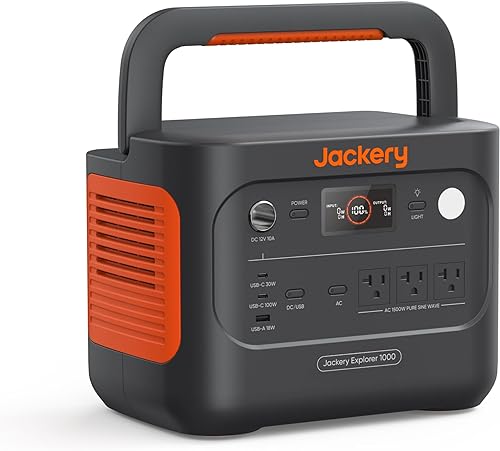
Jackery Explorer 1000 v2 Portable Power Station
Portable power station vs generator: what is the main difference?
A portable power station stores energy, while a fuel generator produces energy from fuel. That basic difference explains most of the gap in noise, emissions, refueling and indoor use.
A power station needs to be charged before you need it. You can recharge some models from an AC outlet, a vehicle, or solar panels, depending on the model and compatible accessories.
For brand-specific options, compare OUPES portable power stations.
A fuel generator needs suitable fuel and an outdoor operating location. Its runtime depends on fuel supply, engine load and the generator's design rather than a battery capacity measured in watt-hours.
The phrase “portable generator power station” can cause confusion because battery stations are often marketed as generators. Read the power source and charging details, not only the word generator in a product name.
For a broader look at battery units, see our guide to the best portable power station. If you are comparing a battery station with a panel-based setup, read portable power station vs solar generator.
Which option is quieter and cleaner indoors?
A portable power station is the better fit for quiet indoor backup because it does not need a running fuel engine. A fuel generator must operate outdoors, away from doors, windows and vents.
Battery stations can support quiet tasks such as charging phones, keeping a router running, powering lights or working on a laptop. Fan noise and charging noise can still vary by model and operating mode.
Fuel generators create engine noise and combustion exhaust. Never run one inside a home, garage, shed or other enclosed area, even if a door is open.
A power station also avoids fuel storage for routine use. You still need to store the battery in a suitable location and follow the instructions for temperature, charging and maintenance.
Which has more runtime during a long outage?
A fuel generator usually has the advantage for a long outage if you can keep adding fuel safely. A battery power station has a fixed stored capacity until you recharge it.
Battery runtime depends on the load. A station rated at 1070Wh can support a suitable load much longer than one rated at 88Wh, but a high-watt appliance will drain either unit faster.
Solar charging can extend battery use during daylight, but weather, panel position and the station's charging limits affect the result. Solar panels also add equipment to carry and set up.
Fuel generators can continue running through the night if they have fuel and are operated safely. That convenience comes with engine noise, exhaust, fuel handling and routine maintenance.
Use the solar generator guide to plan a panel-assisted battery setup. For load planning, the what size solar generator guide explains how capacity and device wattage work together.
Which option handles larger appliances?
Choose by continuous watts first, then check startup surge. A battery station can run a large appliance only if its output supports both the normal operating load and the starting demand.
The Jackery Explorer 300 has 300W rated output and 600W peak surge, so it suits smaller electronics and devices under its total limit. It is not the right choice for a high-draw kitchen appliance.
The Jackery Explorer 1000 v2 has 1500W AC output and a 3000W surge peak. Its 1070Wh capacity makes it the strongest match here for compatible appliances such as fridges, AC units and electric pots.
The BLUETTI Elite 30 V2 provides 600W continuous output and 1500W Power Lifting Mode. Power Lifting Mode does not turn the unit into a 1500W continuous power station, so check the appliance's normal draw.
The HOWEASY station provides 120W output and 240W peak. It fits small electronics, night lights and mini fans, but it is not intended for larger appliances.
A fuel generator may suit heavy loads better, but the exact generator still needs a suitable rated output and surge capacity. For an installed battery option, see our whole home battery backup guide.
Add the wattage of devices you plan to use together, then leave room for startup demand.
Which portable power station fits each use?
The right battery station depends on the load you need to carry and how long you need it. More capacity and output usually mean more weight, more cost and more setup space.
Jackery Explorer 300: best for light camping loads
The Jackery Explorer 300 Portable Power Station has a 292Wh capacity, 300W rated output and 7.5 lb weight. Its 2 AC outlets, 100W USB-C port, 2 USB-A ports and 120W car port support up to 6 devices.
It suits camping, travel, cameras, drones and laptops that stay within the output limit. The integrated handle and compact size make it easier to carry than the larger station in this comparison.
The battery can be recharged from AC, a car port or compatible Jackery solar panels. The solar panel is sold separately, so include panel planning if you need to recharge away from the grid.
Jackery Explorer 1000 v2: best for high-output battery backup
The Jackery Explorer 1000 v2 Portable Power Station has 1070Wh capacity, 1500W AC output, 3000W surge peak and a 23.8 lb weight. It includes 3 pure sine wave AC ports, 2 USB-C ports, 1 USB-A port and 1 DC car port.
It suits larger backup loads than the other 3 options here. Its 1.7-hour default charging mode favors battery health, while emergency charging can reach full charge in 1 hour when enabled in the Jackery App.
Its solar charging is compatible only with Jackery solar panels. The panel is not included, so check your charging plan before relying on solar recharging during an outage.
BLUETTI Elite 30 V2: best for UPS backup
The BLUETTI Elite 30 V2 has 288Wh capacity, 600W continuous output and 1500W Power Lifting Mode. Its 10ms UPS switch suits selected devices that need a quick transition during a power cut.
It is a useful match for laptops, routers, CPAP machines and other compatible loads. The 10ms switch does not remove the need to confirm that your specific device accepts the unit's UPS behavior.
The station supports AC, car, lead-acid battery and solar charging, plus combined AC and solar input. Its 380W wall charging can reach 80% in 45 minutes and full charge in 70 minutes according to the stated charging details.
HOWEASY Portable Power Station: best for simple low-watt use
The HOWEASY Portable Power Station has 88Wh capacity, 120W output, 240W peak and a 2.3 lb weight. It has 2 AC sockets, USB ports, a USB-C port and 2 DC ports, for 8 output ports in total.
It suits phones, cameras, wireless headphones, lights, mini fans and other equipment below 120W. The built-in LED has steady, flash and SOS modes for basic lighting during a trip or outage.
The 88Wh battery is small for long backup sessions. The supplied guidance says it may not sustain CPAP use all night, so choose a larger station for overnight medical-device needs.
How should you compare battery capacity and runtime?
Compare watt-hours with the wattage of the devices you plan to run. A larger watt-hour figure usually gives you more stored energy, but inverter losses and the actual load affect the time you get.
A rough estimate is:
runtime = battery capacity in Wh × conversion factor ÷ device watts
For example, the Explorer 300's stated estimate uses 300Wh × 0.85 ÷ device watts. A 60W device would run for about 4.3 hours under that estimate, although actual use can vary.
The BLUETTI Elite 30 V2 uses a more detailed calculation with battery capacity, depth of discharge, inverter efficiency and self-consumption. Its stated self-consumption varies by AC and DC operating mode.
Do not compare a generator's fuel runtime directly with a power station's watt-hour rating. Fuel use changes with engine load, while battery runtime changes with device draw and conversion losses.
Portable generator vs power station: what about charging?
A fuel generator makes power while it runs, while a power station needs a recharge plan. Choose the battery option only after deciding how you will refill its stored energy.
AC charging is simple before an expected storm. Car charging helps during travel, but it may be slow compared with wall charging.
Solar charging can make a station useful away from the grid. It needs sunlight, panel space and compatible cables, and some stations restrict which panels can be used.
The Explorer 1000 v2 is compatible only with Jackery solar panels. The Elite 30 V2 supports several charging methods, while the HOWEASY station accepts a 15V to 24V solar panel within its stated guidance.
Our guide to the best solar generator for home can help if your priority is home backup with solar recharging.
Is a portable power station a generator for emergency backup?
A portable power station can serve as emergency backup, but it does not replace every fuel generator. It works best when your priority is quiet power for selected devices and you can plan around its capacity.
Use a battery station for phones, lighting, internet equipment, laptops and other loads within its output. A larger unit may also support a fridge or other appliance when its rated output and surge capacity are suitable.
Use a fuel generator for longer outages and higher loads when outdoor operation, fuel storage and safe connections are practical. Never connect a generator to home wiring through an improvised backfeed connection.
For sensitive electronics, a station with a UPS function may be useful. The BLUETTI Elite 30 V2 specifies a 10ms UPS switch, while the Jackery Explorer 1000 v2 includes an uninterruptible power supply mode in its stated features.
Our guide to What Is a Portable UPS? The Complete Guide explains how UPS behavior differs from ordinary portable charging.
What should you check before buying?
Write down your devices, their watts and the hours you need them before choosing either power source. This prevents a small station from being asked to run a load it cannot support.
Check these points:
- Add the running watts of devices used at the same time.
- Check startup surge for fridges, pumps, motors and compressors.
- Estimate watt-hours for the full backup period.
- Measure the route and storage area for the station or generator.
- Decide whether noise and indoor use matter.
- Plan AC, car or solar recharging.
- Store fuel only as allowed by local rules and the generator manual.
- Keep generators outdoors and away from openings.
- Follow the power station's charging, temperature and connection instructions.
If you are also considering an inverter, read portable power station vs inverter before deciding. An inverter may need a separate battery and installation plan, while a power station combines the battery, inverter and outlets in one unit.
Portable power station vs generator: which should you choose?
Pick a portable power station for quiet, low-maintenance backup and choose a fuel generator for extended high-power use. Pick the Explorer 300 or HOWEASY for lighter loads, the Elite 30 V2 for UPS-style backup, and the Explorer 1000 v2 for the highest output among these battery options.
A battery station is the simpler choice for indoor essentials, camping electronics and planned solar charging. A fuel generator makes more sense when long runtime and high wattage matter more than quiet operation and indoor convenience.
Your final choice should match the exact devices you need to run. Check watts, surge demand, capacity, charging method and safe operating conditions before you buy.
Frequently asked questions
Is a portable power station the same as a generator?
A portable power station is a rechargeable battery system, while a fuel generator makes electricity by running an engine. Some battery stations are marketed as solar generators, but they do not burn fuel.
The difference affects noise, emissions, refueling, runtime and where you can safely use each one.
Which is better for a power outage, a portable power station or generator?
A portable power station is usually better for quiet indoor backup of phones, routers, lights and selected medical electronics. A fuel generator is better for extended outages and larger loads if you can operate it outdoors with proper ventilation, fuel and safe electrical connections.
Can a portable power station run a refrigerator?
Some larger portable power stations can run a refrigerator if their continuous output and surge capacity match the refrigerator's startup demand. The Jackery Explorer 1000 v2 has 1500W AC output and a 3000W surge peak, but check your refrigerator's exact power requirements before choosing.
How long will a portable power station last?
Runtime depends on watt-hours, inverter losses, self-consumption and the device load. A simple estimate is capacity in watt-hours divided by device watts, then reduced for conversion losses.
A 60W load on a 300Wh station may run for about 4.3 hours using the stated 0.85 estimate.
Can you use a portable power station indoors?
Battery power stations do not produce combustion exhaust, so they are suited to indoor use when operated according to their instructions. Fuel generators must stay outdoors because carbon monoxide can build up indoors, in garages or near openings.
Keep every device dry and use its electrical guidance.


