9 Best Portable Solar Generators with Panels (November 2026)
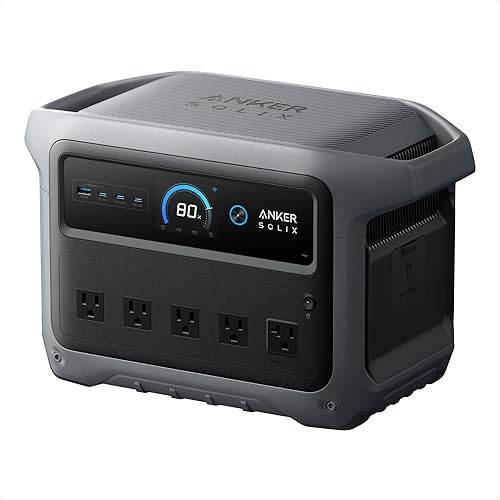
The best portable solar power stations with panels include the Anker SOLIX C1000 Gen 2 Portable Power for whole-day backup, the Jackery Explorer 300 Portable Power Station for lightweight camping, and the Jackery Explorer 1000 v2 Portable Power Station for Jackery panel owners.
On this page (9 sections)
- Which portable solar power station is best for each use?
- How we compared solar generator and panel kits
- What battery capacity do you need?
- Are solar panels included with these portable power stations?
- How should you set up a solar generator with panels included?
- How do these stations compare with other backup options?
- How can you care for a portable solar power station?
- Which portable solar power station should you choose?
- Your final choice should start with your largest device and the longest runtime you need. Once you know that load, capacity, output, panel needs and weight will point to the station that fits your habits rather than the one with the loudest headline number.
The best portable solar power station for most buyers is the Anker SOLIX C1000 Gen 2, with 1,024Wh capacity, 2,000W output and 600W solar input. It suits emergency backup at home, camping, RV trips and remote work.
For a complete solar generator with panels included, choose the MARBERO M823 or the smaller Takki kit. Those kits suit first time buyers because the panel and matched cables arrive in the box.
A panel kit lets you recharge away from a wall outlet, but the battery still decides how much power you can store. A large battery helps when several devices must run through an outage or a full day outdoors.
A large battery and high output may suit home backup better, while a small complete kit is easier to carry on a hike. Think about where you will carry it and whether you must lift it into a car or up steps.
Output matters as much as capacity for daily use. A large battery can still struggle with a device that needs high starting power, so check running watts and peak watts before you plug anything in.
Panel wattage affects charging time, not how long the battery runs devices. A larger panel refills faster in good sun, while a small panel suits topping up phones and lights over several hours.
For a broader explanation of capacity, ports and recharge methods, see our guide to the best portable power station. It helps you match these specs to the loads you use at home or on a trip.
Price is not the only cost when you choose between a station only model and a full kit. A separate panel costs more upfront, but gives you choice over size, folding style and replacements later.
For camping, a lighter station is often easier to live with for fewer high demand loads. For home backup, extra capacity and stronger AC output usually matter more than saving a few pounds.
Start with your biggest load, then work down to smaller devices sharing the same battery. That order helps you pick capacity, output and panel size for real use.
Our picks at a glance
-
1
-
2
 Best for lightweight camping
Jackery Explorer 300 Portable Power Station
9.6/10 our score
See it on Amazon -
3
 Best for Jackery panel owners
Jackery Explorer 1000 v2 Portable Power Station
9.5/10 our score
See it on Amazon
- 4
 Check it
BLUETTI Portable Power Station AC180
Best for high AC output - 5
 Check it
BLUETTI Elite 30 V2 Portable Power Station
Best for compact UPS backup - 6
 Check it
Anker SOLIX C300 DC Portable Power Station
Best for USB-C travel gear - 7
 Check it
MARBERO 237Wh Solar Generator with Solar Panel
Best complete mid-size kit - 8
 Best for built-in solar chargingCheck it
- 9
 Check it
Takki Solar Generator 120W Peak Portable Power
Best for backpack-sized kits
Which portable solar power station is best for each use?
The best choice depends on the load, battery size, panel arrangement and weight you can manage. A model that works well for a tent trip may be too light for a fridge, while a heavy high output station may be more than you want to carry to a campsite.
The MARBERO is the best complete mid-size kit, while the Anker SOLIX C1000 Gen 2 is the strongest all-around station for higher-demand backup. The MARBERO suits buyers who want a panel in the box, and the Anker suits buyers who want more output and faster charging.
Our score weighs specs, features and buyer feedback against the needs of someone shopping for a portable solar power station. The scores are not a promise of runtime, because sunlight, device demand and conversion losses affect actual use.
Runtime changes when a device cycles on and off, when a fridge compressor starts, or when a laptop screen stays bright. A planning estimate can guide you, but it will not match every real night or every real load.
Weight changes how often you will use a station as well as how you will use it. A lighter model is easier to move from room to room during an outage, while a heavier model may stay in one place as a backup hub.
Panel arrangement changes the buying decision in a practical way. A complete kit removes guesswork for first time users, while a station only model lets experienced buyers bring panels they already own.
Charging speed matters when storms, travel days or work deadlines limit your time. Fast AC charging can refill a station before you leave, and solar charging can keep it topped up once you arrive.
Ports also shape everyday use in ways that specs alone do not show. A station with the right mix of AC, USB-C and car ports can charge several devices at once without extra adapters.
Care needs differ by chemistry and by how often you cycle the battery, but simple habits help every model. Keep the unit dry, check the charge before a trip, and use only cables and panels that match the limits in the manual.
The sections ahead break down capacity, panel inclusion, set up and care so you can see the trade offs in plain terms. Use them to match a station to your loads first, then to your preferred way of charging.
| Product | Best for | Capacity | Output | Solar input | Our score |
|---|---|---|---|---|---|
| Anker SOLIX C1000 Gen 2 Portable Power | whole-day backup | 1,024Wh | 2,000W, 3,000W peak | 600W, 60V maximum | 9.7 |
| Jackery Explorer 300 Portable Power Station | lightweight camping | 292Wh | 300W, 600W peak | 9.6 | |
| Jackery Explorer 1000 v2 Portable Power Station | Jackery panel owners | 1,070Wh | 1,500W, 3,000W surge | 9.5 | |
| BLUETTI Portable Power Station AC180 | high AC output | 1,152Wh | 1,800W, 2,700W peak | 500W | 9.4 |
| BLUETTI Elite 30 V2 Portable Power Station | compact UPS backup | 288Wh | 600W, 1,500W lifting power | 9.3 | |
| Anker SOLIX C300 DC Portable Power Station | USB-C travel gear | 288Wh | 300W | 9.2 | |
| MARBERO 237Wh Solar Generator with Solar Panel | complete mid-size kit | 237Wh | 300W, 375W peak | 9.1 | |
| BROWEY 1600W | built-in solar charging | 1,024Wh | 1,600W, 3,200W peak | 9.0 | |
| Takki Solar Generator 120W Peak Portable Power | backpack-sized kits | 88.8Wh | 80W, 120W peak | 8.8 |
Anker SOLIX C1000 Gen 2 Portable Power: Best for whole-day backup
- 1,024Wh LiFePO4 battery
- 2,000W output and 3,000W peak
- 600W solar input
- 49-minute AC recharge
The C1000 Gen 2 combines high output with a 1,024Wh battery and fast charging. It suits emergency backup, camping, RV use and remote work.
Pros
- High 2,000W output
- Fast AC and solar charging
- 10 ms UPS backup
Cons
- Solar panels are not included
- Expansion feature is removed
Jackery Explorer 300 Portable Power Station: Best for lightweight camping
- 292Wh capacity
- 300W output and 600W peak
- 7.5 lb weight
- Solar panel sold separately
The Explorer 300 is a compact choice for laptops, cameras, drones and small camping loads. It includes charging cables but not a solar panel.
Pros
- Lightweight integrated-handle design
- 300W rated output
- LiFePO4 battery
Cons
- Solar panel is optional
- Smallest capacity among the larger picks
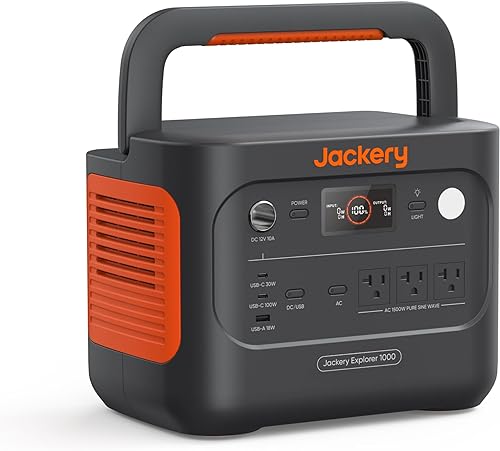
Jackery Explorer 1000 v2 Portable Power Station: Best for Jackery panel owners
- 1,070Wh capacity
- 1,500W output and 3,000W surge
- Four thousand charge cycles
- Solar panel sold separately
The Explorer 1000 v2 provides substantial capacity in a 23.8 lb body. It is compatible only with Jackery solar panels for solar charging.
Pros
- Large 1,070Wh battery
- One-hour emergency charging mode
- Three pure sine wave AC ports
Cons
- Panels are not included
- Solar charging requires Jackery panels
BLUETTI Portable Power Station AC180: Best for high AC output
- 1,152Wh LiFePO4 battery
- 1,800W output and 2,700W peak
- 500W solar input
- 20 ms UPS backup
The AC180 is a strong fit for larger emergency loads and off-grid use. It includes AC, car and solar charging cables, but no solar panel.
Pros
- Highest capacity in this group
- Works with compatible panels from other brands
- Fast AC charging
Cons
- 37.4 lb weight
- Solar panel is not included
BLUETTI Elite 30 V2 Portable Power Station: Best for compact UPS backup
- 288Wh capacity
- 600W output and 1,500W lifting power
- 10 ms UPS
- 45-minute 0-to-80% charge
The Elite 30 V2 keeps the size and weight low while offering 600W output and UPS backup. It is suited to laptops, routers, CPAP machines and small outdoor loads.
Pros
- 9.5 lb weight
- 10 ms UPS switchover
- Eight charging modes
Cons
- 288Wh capacity limits runtime
- Solar panel is not included
Anker SOLIX C300 DC Portable Power Station: Best for USB-C travel gear
- 288Wh capacity
- 300W output
- Two 140W USB-C ports
- Seven charging ports
The C300 DC focuses on direct charging for laptops and other USB devices. Its solar panel is optional, and it is not compatible with Anker PS30, PS200 or PS400 panels.
Pros
- Compact 2.8 kg design
- Two 140W USB-C ports
- Can recharge from solar or a car
Cons
- No AC outlets
- Shoulder strap is sold separately
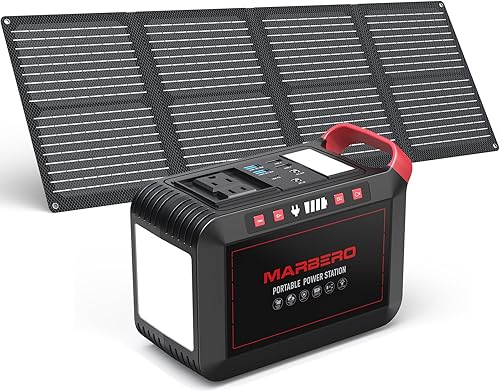
MARBERO 237Wh Solar Generator with Solar Panel: Best complete mid-size kit
- 237Wh battery
- 300W pure sine wave output
- 60W foldable solar panel included
- LED flashlight with SOS mode
The MARBERO M823 is one of the clearest solar generator and panel kits here. It pairs a 237Wh power station with a 60W foldable panel for small devices and outdoor trips.
Pros
- Panel included
- Two pure sine wave AC outlets
- Multiple USB outputs
Cons
- 300W limit rules out high-draw appliances
- Lower capacity than the larger stations
BROWEY 1600W: Best for built-in solar charging
- 1,024Wh capacity
- 1,600W output and 3,200W peak
- Built-in 40W solar panel
- Eight ports
The BROWEY S1600 combines a large battery with a built-in 40W panel. It also accepts other solar panels and suits emergency backup, RV trips and off-grid use.
Pros
- Built-in solar panel
- High 1,600W output
- Accessory bag and adapters included
Cons
- 26 lb weight
- Built-in panel is only 40W
Takki Solar Generator 120W Peak Portable Power: Best for backpack-sized kits
- 88.8Wh capacity
- 80W output and 120W peak
- 21W foldable solar panel included
- 2.29 lb power station
The Takki kit is made for small electronics, lights and short trips where low weight matters most. The power station and 21W panel fit easily into a backpack.
Pros
- Lowest weight here
- Panel included
- Two AC outlets and USB-C
Cons
- 80W continuous limit
- Smallest battery capacity in the roundup
How we compared solar generator and panel kits
We compared the battery capacity, continuous output, peak output, solar input, included panels, charging options and portability of each product. Those numbers help you separate a station for phones and lights from a station for fridges, tools and home backup loads.
A complete solar generator kit with panels has a clear advantage when you want to start charging from sunlight without choosing a separate panel. You still need to learn how panel angle and shade affect input, but the basic match is already done.
For the battery distinction, see solar generators and batteries. The terms can overlap in shops, so it helps to know that the battery stores energy while the panel makes electricity during the day.
The Anker SOLIX C1000 Gen 2 leads because it combines 1,024Wh, 2,000W output, a 3,000W peak and 600W solar input. It also has a 49-minute full AC recharge and a 10 ms UPS switchover for selected electronics during a power cut.
The BLUETTI AC180 offers slightly more capacity at 1,152Wh and works with compatible panels from other manufacturers. Its 1,800W output and 2,700W peak make it a strong home backup option, but its 37.4 lb weight matters if you plan to carry it often.
The Jackery Explorer 1000 v2 sits in the same large battery group with 1,070Wh and 1,500W output. It suits buyers who already own Jackery panels, because solar charging is limited to Jackery panels for this model.
For a solar generator with solar panels included, the MARBERO M823 is more complete out of the box. Its 237Wh station includes a 60W foldable panel, while the Takki includes an 88.8Wh station and a 21W panel for smaller loads.
The BROWEY S1600 takes another approach with a built-in 40W solar panel. That design means the panel is always part of the unit, but 40W is slower than the separate 60W panel included with the MARBERO.
Smaller models such as the Jackery Explorer 300, BLUETTI Elite 30 V2 and Anker SOLIX C300 DC trade capacity for lower weight and easier transport. They fit phones, cameras, laptops and lights better than they fit sustained high draw appliances.
The comparison shows a clear split between complete kits and station only models. Complete kits reduce set up effort, while station only models give more choice if you already own panels or want a larger panel later.
What battery capacity do you need?
Battery capacity tells you how much energy a power station can store, while output tells you which devices it can run. Capacity is measured in watt hours and output in watts, so the two numbers answer different questions.
A 1,024Wh station stores more energy than a 288Wh station, but runtime depends on the device and conversion losses. A device drawing more watts drains the same battery faster, even when the station is well matched.
For phones, lights, cameras and small USB devices, the Takki, Anker SOLIX C300 DC and BLUETTI Elite 30 V2 are more portable than heavier 1,000Wh-class models. Their smaller batteries are easier to carry and suit loads that draw power steadily rather than in long bursts.
For laptops, routers, CPAP machines or several devices during an outage, move up to the Jackery Explorer 1000 v2, BLUETTI AC180, Anker SOLIX C1000 Gen 2 or BROWEY S1600. Those models offer more stored energy and stronger output for loads that run for hours.
A simple estimate is:
Estimated runtime = watt-hours × 0.85 ÷ device watts
Treat this only as a planning estimate. Device draw can change, and the station uses some energy to convert battery power into usable output.
Conversion loss matters more when devices run through AC outlets for long periods. USB charging can be more direct for some gear, but the station still spends energy on heat, screens and internal systems.
Starting power can be the hidden limit with motors and compressors. A fridge or tool may need a short surge above its running watts, so peak output matters as much as continuous output.
Battery size also shapes how you plan a trip or an outage. A larger battery gives more room for error when a device draws more than expected or solar charging is slower than hoped.
Panel size does not change stored capacity, but changes how fast you refill it. A small panel may keep a light load running in good sun, while a larger panel suits recovery after a deep discharge.
Compare capacity and output together rather than ranking by either number alone. The best fit covers your largest load, lasts long enough for your use, and is light enough that you will actually carry it.
Are solar panels included with these portable power stations?
Only some of these products are complete solar generator and panel kits. The MARBERO includes a 60W foldable solar panel, the BROWEY has a built-in 40W panel, and the Takki includes a 21W foldable panel.
The Jackery Explorer 300, Jackery Explorer 1000 v2, BLUETTI AC180, BLUETTI Elite 30 V2 and Anker SOLIX C300 DC are station-only choices in this comparison. The Anker SOLIX C1000 Gen 2 also includes its AC charging cable and guides, not a solar panel.
A station only model can still be a good solar choice if you plan to add a panel. You may want a larger panel, a panel you already own, or a panel style that folds or mounts in a way that suits your vehicle.
Panel compatibility matters as much as panel wattage. The Jackery Explorer 1000 v2 is compatible only with Jackery solar panels for solar charging, while the BLUETTI AC180 accepts compatible panels with a 12V to 60V open-circuit voltage and up to 500W total solar input.
Voltage limits protect the station from input it cannot handle. A panel that is too strong for the input range can cause charging problems, so check the manual before you connect an unfamiliar panel.
Connector type is a smaller detail that can still stop a set up on day one. The right cable or adapter matters, and some kits include several adapters while others expect you to use the cable supplied with the panel.
For a plain explanation of storage, read can solar panels store energy. Panels make electricity, but the station's battery stores it.
That storage role is why panel wattage should not be confused with battery capacity. A 60W panel charges faster than a 21W panel in the same sun, but neither panel changes the total watt hours stored in the station.
Built in panels offer a different trade off from foldable panels in a kit. The BROWEY panel is always attached and ready, while the MARBERO and Takki panels can be angled, moved and stored separately from the station.
When you shop, check the box contents first and the input limits second. Those two checks will tell you whether you are buying a complete kit, a station that needs a panel, or a station that can work well with panels you already own.
How should you set up a solar generator with panels included?
Set up the panel in direct sunlight, connect the correct cable and adapter, then confirm that the power station shows solar input. A clear view of the input reading helps you spot a loose cable or a panel that has slipped into shade.
Keep the panel clear of shade, dust and obstructions, because these reduce the power available for charging. Even a small shadow across part of a panel can cut output, so give the panel open sky when you can.
For the MARBERO kit, connect the provided DC cable to the panel, attach the suitable adapter to the M823, and place the panel in direct sunlight. That order keeps the connection simple and lets you check the station before you leave the panel unattended.
The Takki panel folds for carrying, but its 21W rating means charging is intended for small loads and slower recharging. It works best when you treat solar as a top up for phones, lights and small electronics rather than a fast refill for a drained battery.
Do not assume the panel will deliver its rated wattage at every moment. Cloud cover, panel angle, heat and the station's input limit all affect charging speed during the day.
Morning and late afternoon sun can be weaker than midday sun, even on a clear day. You may need to move the panel or turn it as the sun crosses the sky if you want steady input.
Before connecting an unfamiliar panel, confirm voltage, connector type and maximum input. A panel that does not match those limits can prevent charging or damage the equipment.
Cables should lie flat and stay dry where they pass through doors or tent openings. Pinched cables can wear over time, and loose plugs can break the connection when the panel is moved by wind.
It also helps to place the station in shade or at least out of direct heat while it charges. A cooler location is easier on the battery and on the person who has to carry it back inside.
Once charging starts, check the reading after a few minutes rather than waiting until you need the power. That early check shows whether the panel, cable and adapter are working together before you move on to other tasks.
How do these stations compare with other backup options?
A portable solar power station stores electricity in a battery and can recharge from AC, a car or solar panels, depending on the model. That mix makes it useful for home backup, camping and road trips.
See our power station vs solar generator guide for how the terms differ. The names overlap in shops, so battery, output and panel contents matter more than the label on the box.
A fuel generator produces power while running, and an inverter normally needs a separate battery source. A power station combines battery, inverter and charging controls in one case, which simplifies set up for most users.
Read our portable power station vs inverter comparison if you already own a battery and are deciding whether you need an inverter. That choice depends on your battery, the loads you want to run, and how much set up work you want.
Our portable power station vs generator guide covers fuel, noise, runtime and charging. A fuel generator runs as long as fuel lasts, while a battery station runs until stored energy is used.
A UPS mode can help keep selected electronics running during a power cut. The Anker SOLIX C1000 Gen 2 and BLUETTI Elite 30 V2 specify 10 ms UPS backup, while the BLUETTI AC180 specifies 20 ms emergency power.
For a station designed around emergency electronics, see What Is a Portable UPS? The Complete Guide.
It explains switchover time in plain terms and helps you decide which devices are worth protecting.
A UPS feature does not suit every appliance, so check the connected device's power needs. Small electronics such as routers and laptops fit better than high draw appliances that cycle on and off.
Solar charging is quiet and fuel free while the sun shines, but depends on weather, panel size and the station's input limit. For home use, a station can sit charged for a short outage, and for camping it can move between car, tent and picnic table.
The best option depends on runtime, noise tolerance, storage space and the loads you care about most. A battery station suits quiet portable use, while other options may fit longer runs or larger appliances.
How can you care for a portable solar power station?
Store the station in a dry location and keep its ports, cables and ventilation areas clear. Dust and moisture can cause trouble over time, so a simple shelf or cabinet is better than a damp floor.
Recharge it according to the manufacturer's instructions, and check the battery level before a planned trip or storm. A station that sits unused for months may not be ready when you need it, so a quick top up is worth the effort.
Use only compatible charging cables and panels. Matching the input limits protects the battery and the electronics inside, and it also helps the station charge at the speed you expect.
Do not connect a high-draw appliance to a station whose output limit is lower than the appliance's running or starting demand. The station may shut down to protect itself, and repeated overloads are not good for the equipment.
Keep the station away from direct heat and physical knocks when you can. Heat speeds wear in most batteries, and a hard drop can damage the case, ports or internal parts.
Wipe the panel and case with a soft dry cloth and check cables for cuts or loose plugs. Small fixes early are easier than sorting out a charging fault in bad weather or at a campsite.
For model-specific comparisons, see our guides to the best Anker portable power station and the best Jackery power stations. Those guides focus on one brand at a time, while this roundup compares different brands side by side.
A care routine does not need to be complex to be useful. Keep it dry, keep it charged, keep the vents clear, and check the manual when you change panels or add a new load.
Which portable solar power station should you choose?
Choose the Anker SOLIX C1000 Gen 2 if you want the strongest mix of capacity, output, fast charging and UPS support. It fits emergency backup, camping, RV use and remote work when you need more than a small travel station.
Choose the BLUETTI AC180 if 1,152Wh capacity and compatibility with suitable third-party panels matter more than weight. Its higher capacity and panel flexibility suit home backup and off-grid use, but you will need to plan for the 37.4 lb weight.
Pick the MARBERO M823 for a ready-made solar generator kit with panels, or the Takki SP81 when low weight and small electronics are the priority. The MARBERO gives you more capacity and a stronger panel, while the Takki is easier to carry for phones, lights and short trips.
The BROWEY S1600 fits buyers who want a large battery with a built-in panel. That design keeps the panel with the station at all times, though the 40W panel is slower than larger separate panels.
If you already have Jackery panels, the Jackery Explorer 1000 v2 gives you a large battery and 1,500W output. It makes the most sense when your existing panels match its solar charging requirement and you want to avoid buying another panel.
For USB-C travel gear, the Anker SOLIX C300 DC is the more focused choice. Its direct charging design suits laptops and other USB devices, but it has no AC outlets for household plugs.
The BLUETTI Elite 30 V2 adds 10 ms UPS support in a compact 9.5 lb design. It suits laptops, routers, CPAP machines and small outdoor loads, though the 288Wh battery limits how long those loads can run.
Your final choice should start with your largest device and the longest runtime you need. Once you know that load, capacity, output, panel needs and weight will point to the station that fits your habits rather than the one with the loudest headline number.
Our top 3 picks at a glance
-
1
-
2
Best for lightweight camping
Jackery Explorer 300 Portable Power Station
9.6/10 our score
See it on Amazon -
3
Best for Jackery panel owners
Jackery Explorer 1000 v2 Portable Power Station
9.5/10 our score
See it on Amazon
Frequently asked questions
What is the best portable solar power station with panels included?
The MARBERO M823 and Takki SP81 are the clearest complete kits because each includes a portable power station and a foldable solar panel. The MARBERO has more capacity and output, while the Takki weighs less and suits phones, lights and other small loads.
Do portable solar generators always include solar panels?
No. Many portable power stations are sold without panels, including the Jackery Explorer 300, Jackery Explorer 1000 v2 and BLUETTI AC180.
Check the box contents before buying, then confirm the panel voltage, wattage and connector match the power station.
How many watts should a portable solar generator have?
Choose output by the device with the highest starting or running demand. Small electronics may fit an 80W to 300W model, while refrigerators, tools and larger appliances need a station rated around 1,000W or more.
Check both running and surge power.
Can a portable power station charge while using solar panels?
Some models support charging devices while they recharge, but the exact behavior depends on the station, input source and connected load. Use the maker's instructions, keep the panel in full sunlight and avoid exceeding the station's input or output limits.
What is the difference between a solar generator and a power station?
A solar generator usually means a battery power station paired with solar charging, while a portable power station can be sold by itself. The terms overlap in everyday shopping.
Our guide to portable power station vs solar generator explains the difference.


