6 Best Solar Generators for Refrigerators (November 2026)
The best solar generators for refrigerators include the EF ECOFLOW Solar Generator Delta 3 Classic for refrigerator startup power, the Jackery Solar Generator 1000 v2 and 200W for a lighter refrigerator backup, and the BLUETTI Elite 200 V2 Solar Generator for longest refrigerator runtime.
On this page (4 sections)
The best solar generator for refrigerator use is the EF ECOFLOW DELTA 3 Classic because it combines 1,024Wh of battery capacity, 1,800W output and 3,600W surge output with a 220W solar panel. That mix matters when a compressor starts and needs more power than it draws while running.
The BLUETTI Elite 200 V2 gives you the most battery reserve at 2,073.6Wh. The Jackery Solar Generator 1000 v2 offers a lighter 1,070Wh option at 23.8 lb.
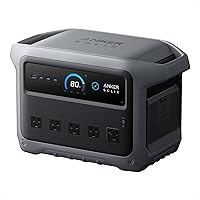
The BLAVOR S1600 offers a built-in panel for convenient top-ups.
A refrigerator is a harder load than a phone, lamp or laptop because its compressor cycles on and can demand extra power at startup. That startup draw can be brief, but it is enough to stop a generator that only matches the running watts.
For that reason, compare both the generator's continuous output and its surge rating. Also consider how quickly its solar panels can replace energy during the day, not only how large the battery is at the start of an outage.
Battery capacity tells you how much stored energy you have. Output tells you whether the generator can start the compressor and run it without shutting down.
You need both for dependable refrigerator backup.
If you are new to this category, our best portable power station buying guide explains battery capacity, inverter output and recharge methods. For whole-home planning, see the guide to the best portable power station for home.
A 1,000Wh class unit suits many refrigerators when its output ratings fit the appliance. A larger battery helps through longer outages, while a smaller unit may only cover light loads.
Check the refrigerator label or manual for running and startup needs before choosing. That check keeps you from buying on capacity alone and then finding the inverter too small for compressor startup.
Think about where the generator will live between outages as well. It should sit dry and stable, with vents clear, and it should be charged and ready before a storm or outage arrives.
Our picks at a glance
-
1
 Best for refrigerator startup power
EF ECOFLOW Solar Generator Delta 3 Classic
9.7/10 our score
See it on Amazon -
2
 Best for a lighter refrigerator backup
Jackery Solar Generator 1000 v2 and 200W
9.6/10 our score
See it on Amazon -
3
 Best for longest refrigerator runtime
BLUETTI Elite 200 V2 Solar Generator
9.5/10 our score
See it on Amazon
- 4
 Check it
Apowking Solar Powered Generator 100W
Best for small refrigerators and light loads - 5
 Best for built-in solar chargingCheck it
- 6
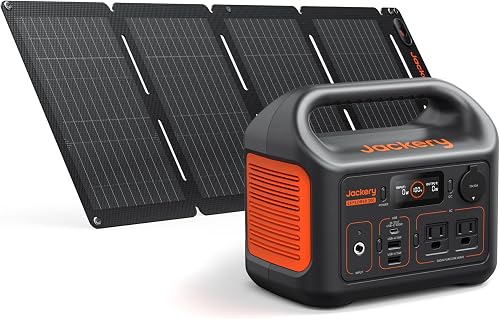 Check it
Jackery Solar Generator 300 and 40W Solar
Best for portable emergency charging
The best solar generators for refrigerators
The best solar generators for refrigerators have enough startup headroom, useful battery capacity and a practical way to recharge. The picks below are ordered by score, with the strongest refrigerator match first.
Our score weighs specs, features and buyer feedback against what you're shopping for. We compared refrigerator startup capacity, overnight battery reserve and daytime solar replenishment.
EF ECOFLOW Solar Generator Delta 3 Classic: Best for refrigerator startup power
- 1,024Wh capacity
- 1,800W output
- 3,600W surge output
- 220W solar panel included
The DELTA 3 Classic combines a 1,024Wh battery with 1,800W output and 3,600W surge output. Its included 220W panel is designed for solar replenishment during an outage.
Pros
- High startup headroom
- 220W panel included
- 10ms UPS
Cons
- Panel and generator arrive separately
- 34-minute runtime listed
The EF ECOFLOW DELTA 3 Classic is the strongest overall choice for a refrigerator because its 1,800W output and 3,600W surge output leave useful room for compressor startup. Its 1,024Wh battery is large enough for a more serious outage setup than the small portable units in this group.
The included 220W solar panel gives you a way to replenish the battery during daylight. EcoFlow states that the panel can recharge the generator in 5.8 hours, although sunlight, shade and panel position affect real charging time.
This kit also includes a 10ms UPS function. That feature is useful when a refrigerator or other connected device needs a quick transfer during a power interruption, but you should still confirm that your appliance is suitable for this operating mode.
The panel and generator arrive separately, so don't assume both boxes will arrive at the same time. The unit measures 7.9 x 11.1 x 15.7 in and uses LiFePO4 battery cells.
Choose it when startup headroom and balanced solar replenishment matter most. Its listed runtime is 34 minutes, so use the battery capacity and your refrigerator's actual energy use to estimate longer operation rather than treating that figure as a refrigerator runtime.
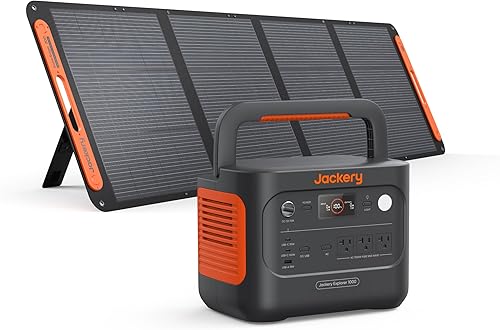
Jackery Solar Generator 1000 v2 and 200W: Best for a lighter refrigerator backup
- 1,070Wh capacity
- 1,500W AC output
- 3,000W surge output
- 200W solar panel included
The Jackery Solar Generator 1000 v2 offers slightly more battery capacity than the DELTA 3 Classic, with 1,500W AC output and 3,000W surge output in a 23.8 lb package.
Pros
- 1,070Wh capacity
- 23.8 lb weight
- 200W panel included
Cons
- Lower continuous output than the top pick
- Panel and generator may ship separately
The Jackery Solar Generator 1000 v2 is a strong choice when you want 1,070Wh of capacity in a 23.8 lb package. It has 1,500W AC output and 3,000W surge output, which gives a refrigerator more startup headroom than the 300W-class options.
The included 200W solar panel can charge the unit to 80% in about 6 hours under Jackery's stated conditions. That makes it a practical middle ground for daytime replenishment without moving up to the heavier BLUETTI kit.
Jackery includes three pure sine wave AC ports, two USB-C ports, one USB-A port and one DC car port. The unit also has an app with emergency charging, quiet overnight charging and energy efficiency modes.
Emergency charging can reach a full battery in 1 hour when enabled in the Jackery App. The default 1.7-hour charging mode is intended to support battery health, so choose the mode that fits your situation.
Choose this model if portability matters almost as much as refrigerator capacity. The generator and 200W panel may ship separately, so plan your setup after both pieces arrive.
BLUETTI Elite 200 V2 Solar Generator: Best for longest refrigerator runtime
- 2,073.6Wh capacity
- 2,600W AC output
- 3,900W power lifting
- Two 200W panels included
The BLUETTI Elite 200 V2 has the largest battery in this group at 2,073.6Wh. Its 2,600W AC output and two 200W panels suit longer outage coverage when weight is less important.
Pros
- Largest battery here
- 2,600W continuous output
- 400W of included solar panels
Cons
- 53.4 lb weight
- Panels ship separately
The BLUETTI Elite 200 V2 is the best choice for the largest battery reserve, with 2,073.6Wh of capacity and 2,600W of continuous AC output. Its 3,900W power-lifting rating also gives it the highest stated peak figure in this group.
Two 200W solar panels are included, for 400W of panel capacity. BLUETTI states that the kit can fully recharge in 5.5 hours with the 400W panels, while a separate 1,000W panel setup can recharge it faster.
The trade-off is size and weight. At 53.4 lb, this is far heavier than the Jackery 1000 v2 or the small Jackery 300, so it makes more sense as a home backup station than a grab-and-go camping unit.
BLUETTI states that the Elite 200 V2 can run high-demand appliances such as refrigerators, hair dryers and coffee makers. It also lists a runtime of 8 hours and 48 minutes, but refrigerator runtime depends on compressor cycling and actual energy use.
Choose it when a longer outage reserve matters more than easy carrying. The two solar panels ship separately, and the unit measures 13.78 x 9.84 x 12.74 in.
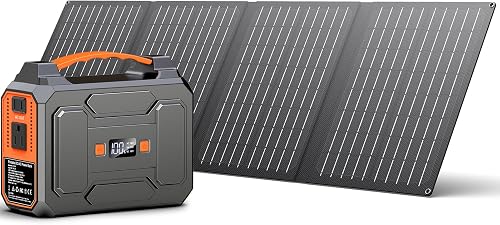
Apowking Solar Powered Generator 100W: Best for small refrigerators and light loads
- 146Wh capacity
- 100W output
- 200W peak output
- 40W solar panel included
The Apowking is a very small 146Wh power station with 100W output and 200W peak output. It is better suited to light devices than a full-size refrigerator compressor.
Pros
- 3.3 lb weight
- 40W panel included
- Seven outputs
Cons
- 100W output limits refrigerator use
- Smallest battery here
The Apowking 100W Solar Powered Generator is a small emergency power bank, not a general refrigerator backup. Its 146Wh battery, 100W output and 200W peak output are better suited to phones, tablets, cameras, lights and other light loads.
The 40W solar panel is included, and the power station weighs only 3.3 lb. That makes it easy to carry, but the 100W output limits its use with refrigerator compressors.
Apowking gives the unit 2 AC outlets rated for appliances within 100W, along with USB and DC outputs. Its seven total outputs make it useful for small devices during an outage, especially when you need a compact solar kit.
The built-in battery management system includes voltage and temperature control. Keep the cooling vents clear and use the unit within its stated output limits.
Choose this model only when your refrigerator's required running and startup power fit the generator's ratings. For a standard full-size refrigerator, a 1,000Wh-class option is usually a more practical starting point.
BLAVOR 1600W Solar Generator: Best for built-in solar charging
- 1,024Wh capacity
- 1,600W output
- 3,200W peak output
- Built-in 40W panel
The BLAVOR S1600 gives refrigerator loads 1,600W of rated output and 3,200W of peak power. Its built-in 40W panel is convenient for top-ups, while external solar input can reach 200W.
Pros
- Built-in 40W panel
- 1,024Wh capacity
- Eight output ports
Cons
- Built-in panel charges slowly
- 26 lb weight
The BLAVOR 1600W Solar Generator is a good fit if you want a built-in solar panel and strong refrigerator output. Its 1,024Wh battery delivers 1,600W rated output and 3,200W peak power.
The built-in 40W panel makes emergency top-ups convenient because you don't have to carry a separate panel. BLAVOR also supports up to 200W of external solar input, which is the better route when you need faster daytime replenishment.
The S1600 has eight output ports, a 100W USB-C port and an LCD showing input, output and remaining battery. It can recharge from a wall outlet, car socket, built-in panel or compatible external panel.
Its built-in panel is mainly intended for emergency top-ups. Sun angle, shade, dust and weather affect the result, so place the panel directly toward the sun and keep it clean when charging.
The unit weighs 26 lb and measures 5.6 x 13.3 x 17.2 in. Choose it when convenient built-in solar matters, but use an external panel or AC charging when you need faster replenishment.
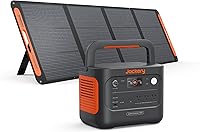
Jackery Solar Generator 300 and 40W Solar: Best for portable emergency charging
- 292Wh capacity
- 300W AC output
- 600W peak surge
- 40W solar panel included
The Jackery Solar Generator 300 is a portable 292Wh unit with 300W AC output and 600W peak surge. Its compact size makes it useful for small electronics, but refrigerator startup needs careful checking.
Pros
- 12.9 lb weight
- 40W panel included
- 600W peak surge
Cons
- Small battery for overnight refrigerator use
- 300W rated output
The Jackery Solar Generator 300 is the most portable pick here, weighing 12.9 lb with a 292Wh battery. It has 300W AC output and 600W peak surge, so it can handle smaller electronics but may not provide enough refrigerator startup capacity.
The included 40W SolarSage panel is useful for maintaining small devices during outdoor trips or short emergencies. Jackery states that a 100W panel can reach 80% capacity in about 2.8 hours, while the included 40W panel takes about 7.5 hours to reach 80% under stated conditions.
The Explorer 300 has two AC outlets, a 100W USB-C port, two USB-A ports and a 120W car port. Its output is automatically limited to devices within the 300W total rating.
Use the formula 300Wh x 0.85 divided by device watts as a rough estimate for working time, then expect real use to vary. A refrigerator's compressor cycles make its average draw different from its startup draw.
Choose this model for emergency electronics and very small loads. For a full-size refrigerator, move up to the Jackery 1000 v2, DELTA 3 Classic or BLUETTI Elite 200 V2 after checking your appliance's ratings.
How to choose a solar generator good for a fridge
A solar generator good for a fridge needs enough surge power for the compressor and enough battery capacity for the hours between solar charging periods. See our portable power stations for refrigerators for model picks.
Start with the refrigerator's running watts, then look for a generator whose surge rating is comfortably higher than the startup demand.
What output should the best solar powered generator for refrigerator use have?
The best solar powered generator for refrigerator use should have more continuous output than the refrigerator's running draw and more surge output than its compressor startup requirement. The DELTA 3 Classic, Jackery 1000 v2, BLUETTI Elite 200 V2 and BLAVOR S1600 all offer substantially more output than the 300W Jackery or 100W Apowking.
Do not judge a generator by battery capacity alone. A large battery with insufficient inverter output can still shut down when the compressor starts.
How much battery capacity does a solar generator for fridge use need?
A solar generator for fridge use needs enough watt-hours to cover the refrigerator's average consumption between recharges. The 146Wh Apowking and 292Wh Jackery 300 are compact options, while the 1,024Wh to 2,073.6Wh models provide a larger reserve.
Actual runtime depends on compressor cycling, room temperature, door openings, food load and inverter losses. Keep the door closed during an outage and move the generator into a cool, dry location with open vents.
Is solar replenishment important during an outage?
Solar replenishment is important when an outage may last beyond one battery cycle. A battery can run a refrigerator for a period, but daytime charging can rebuild that reserve for the next night.
The BLUETTI kit includes two 200W panels, the DELTA 3 Classic includes a 220W panel, and the Jackery 1000 v2 includes a 200W panel. More panel wattage generally means faster replenishment in good sun.
The BLAVOR has a built-in 40W panel but can accept up to 200W of external solar input. That built-in panel is convenient for top-ups, while an external panel is the better choice for faster daytime charging.
The smaller Jackery and Apowking kits include 40W panels, which are easier to carry but slower for rebuilding a refrigerator-sized battery reserve. They suit small loads better than long refrigerator backup.
Panel placement affects real charging. Direct sunlight, a clean surface, a stable position and little shade help the panel produce more of its rated power.
Cloud cover, panel temperature, sun angle and cable loss can all reduce input. Plan for solar as a way to extend runtime, not as a guarantee of a full recharge every day.
For another appliance comparison, see our guide to the best solar generator to power a freezer. If your refrigerator and freezer are in one appliance, the best solar generator for refrigerator freezer guide covers that combined load.
How to set up a solar generator for refrigerator backup
Set up the generator before an outage by checking the refrigerator's running and startup requirements. Note those figures and compare them with the generator's continuous output and surge rating.
Charge the battery fully and store the generator where it stays dry and stable. Keep its vents clear so heat can escape during use.
Connect the refrigerator directly to the generator's AC output unless you have a professionally installed transfer solution. Direct connection is the normal way to run a single appliance from a portable station.
Test the connection before an emergency if you can do so safely. A short test helps you confirm the refrigerator starts, the cables reach, and the placement works.
During an outage, avoid opening the refrigerator more than needed. Each opening lets cold air escape and can make the compressor work harder.
Put the solar panel in direct sunlight, keep it clean and stable, and monitor the generator's input, output and remaining battery display where available. Reposition the panel when the sun moves if that is safe and practical.
Prioritize the refrigerator over nonessential loads during an outage. Other devices can wait, while food safety depends on keeping the refrigerator running.
Never connect a portable power station to a household wall outlet to backfeed a home circuit. That can create a serious shock hazard and requires an approved transfer switch installed by a qualified electrician.
Keep cords away from water and walkways. Use the generator as directed, follow its manual, and keep it away from household wiring you do not have an approved setup for.
Solar generator for refrigerator: final picks
The EF ECOFLOW DELTA 3 Classic is the best overall solar generator for refrigerator use because its 1,800W output, 3,600W surge rating and included 220W panel balance startup headroom with daytime replenishment.
Choose the BLUETTI Elite 200 V2 if the largest battery reserve matters most, with 2,073.6Wh and 2,600W continuous output. Its weight makes it better suited to a fixed home backup spot than to frequent carrying.
Pick the Jackery Solar Generator 1000 v2 if you want a lighter 1,070Wh option at 23.8 lb. It still gives 1,500W AC output and 3,000W surge output for compressor startup.
Choose the BLAVOR S1600 if a built-in solar panel is useful for emergency top-ups. Its 1,024Wh battery, 1,600W output and 3,200W peak power suit refrigerator loads within those limits.
The Apowking and Jackery 300 are better for small electronics unless your refrigerator's measured requirements fit their lower output ratings. Their smaller batteries also give less reserve through a long outage.
Always check the appliance label before choosing a generator for compressor startup. Match both running watts and startup needs, then leave headroom rather than buying to the exact limit.
For most full-size refrigerators, start with a 1,000Wh class model and at least 1,500W of output. Move up in capacity when you want longer coverage or daytime solar replenishment.
Our top 3 picks at a glance
-
1
Best for refrigerator startup power
EF ECOFLOW Solar Generator Delta 3 Classic
9.7/10 our score
See it on Amazon -
2
Best for a lighter refrigerator backup
Jackery Solar Generator 1000 v2 and 200W
9.6/10 our score
See it on Amazon -
3
Best for longest refrigerator runtime
BLUETTI Elite 200 V2 Solar Generator
9.5/10 our score
See it on Amazon
Frequently asked questions
What size solar generator do I need for a refrigerator?
Most refrigerators need a power station with enough continuous output for the running load and extra surge capacity for compressor startup. A 1,000Wh-class battery with at least 1,500W output gives more practical headroom than a small 300W unit.
Check your refrigerator's label or manual before choosing.
Startup power varies by model, age and operating conditions.
Can a solar generator run a refrigerator overnight?
Yes, but overnight runtime depends on the refrigerator's duty cycle, battery capacity and inverter losses. A 2,073.6Wh power station should provide more reserve than a 292Wh or 146Wh unit, but no battery rating alone guarantees a fixed number of hours.
Keep the refrigerator closed during an outage and recharge during daylight when possible.
How many watts does a refrigerator need to start?
A refrigerator can need much more power when its compressor starts than it uses while running. The exact startup demand depends on the refrigerator, so compare its peak requirement with the generator's surge or starting-watt rating.
Leave extra headroom instead of matching the numbers exactly.
Can solar panels recharge a refrigerator generator during the day?
Yes, if the panels produce enough energy for the refrigerator's use and the power station accepts the panel input. Cloud cover, shade, panel angle and cable loss reduce real-world charging.
A 400W panel kit should replenish faster than a 40W panel, while a built-in panel is easier to deploy but slower.
Is a solar generator safe for a refrigerator?
A solar generator can power a refrigerator when its output, surge rating and connection method match the appliance. Use the generator's AC output as directed, keep vents clear and place the unit where it stays dry and stable.
Do not connect a portable power station to household wiring unless a qualified electrician installs an approved transfer setup.