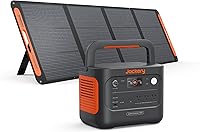
9 Best Portable Power Stations for Home Backup (November 2026)
The best portable power stations for home backup include the EF ECOFLOW Portable Power Station Delta for whole-room essentials, the Jackery Explorer 300 Portable Power Station for small emergency loads, and the Jackery Explorer 1000 v2 Portable Power Station for fast emergency recharge.
On this page (7 sections)
- Which portable power station is best for home emergencies?
- How do you choose a portable power station for home backup?
- How much power do refrigerators and freezers need?
- Do portable power stations work with TVs, CPAP machines and routers?
- How should you recharge and store a power station?
- More guides on this topic
- Which portable power station is best for home backup?
The best portable power station for home backup is the EF ECOFLOW DELTA 3 Classic because its 1024Wh battery, 1800W output and 3600W surge cover many common emergency loads. Choose the Anker SOLIX S2000 for longer refrigerator backup, or the Jackery Explorer 300 for a lighter station for phones and laptops.
A home backup station works best when you decide which devices matter before the outage. List your refrigerator, router, lights, medical equipment and communication devices, then check their running and startup wattage.
Our score weighs specs, features and buyer feedback against what you're shopping for. We checked capacity, output, recharge options, portability, UPS features and the practical trade-offs between short emergency use and longer appliance backup.
If you need a broader explanation of battery size, output and recharge methods, read our best portable power station complete buying guide. For solar-focused systems, compare our best solar generator for home guide.
Our picks at a glance
-
1
 Best for whole-room essentials
EF ECOFLOW Portable Power Station Delta
9.7/10 our score
See it on Amazon -
2
 Best for small emergency loads
Jackery Explorer 300 Portable Power Station
9.6/10 our score
See it on Amazon -
3
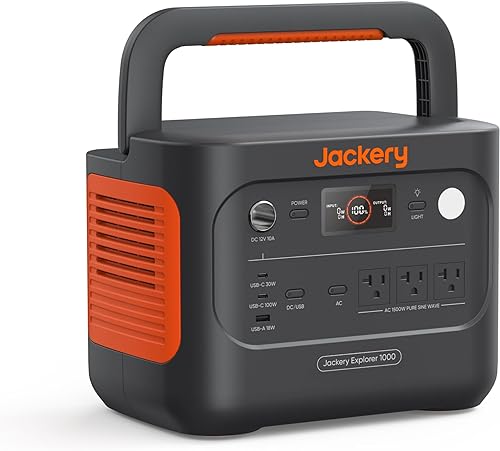 Best for fast emergency recharge
Jackery Explorer 1000 v2 Portable Power Station
9.5/10 our score
See it on Amazon
- 4
 Check it
BLUETTI Portable Power Station AC180
Best for high-output home backup - 5
 Check it
BLUETTI Elite 30 V2 Portable Power Station
Best for portable UPS backup - 6
 Check it
ALLWEI Portable Power Station 300W
Best for compact family backup - 7
 Check it
Anker SOLIX S2000 Portable Power Station
Best for refrigerator runtime - 8
 Check it
Anker SOLIX C2000 Gen 2 Portable Power
Best for large appliance loads - 9
 Check it
MARBERO Portable Power Station 88Wh
Best for lights and small devices
Which portable power station is best for home emergencies?
The best portable power station for emergencies depends on the load. High-output models suit refrigerators and several appliances, while smaller stations are easier to carry and are enough for phones, lights, routers and laptops.
EF ECOFLOW Portable Power Station Delta: Best for whole-room essentials
- 1024Wh capacity
- 1800W output
- 3600W surge
- 45-minute 0–80% AC charging
- 10ms UPS
The DELTA 3 Classic combines a 1024Wh battery with 1800W output, fast AC charging and a 10ms UPS. It fits home backup plans that include refrigerators, laptops and other moderate loads.
Pros
- High output for home essentials
- Fast 0–80% AC charging
- 10ms UPS
Cons
- Not compatible with DELTA 2 Smart Extra Battery or Delta 3 Series Smart Extra Battery
The EF ECOFLOW DELTA 3 Classic is the strongest all-purpose choice in this group. Its 1024Wh battery and 1800W output give it more appliance headroom than the compact 300W stations, while the 3600W surge rating helps with short startup demands.
For a smaller EcoFlow model, see our EcoFlow RIVER 2 Pro review.
Its AC charging system reaches 0–80% in 45 minutes. EF ECOFLOW also lists a 10ms UPS, which suits computers, servers and medical devices that need a quick switch to battery.
Our portable power station vs UPS guide explains the difference between the two.
The DELTA 3 Classic measures 7.9 x 11.1 x 15.7 inches and weighs 26.7 lb. That is manageable for indoor storage, but it is less convenient to carry than the Jackery Explorer 300 or ALLWEI 300W.
A 500W solar panel can recharge it in about 2.5 hours, but the panel is optional. The model is not compatible with the DELTA 2 Smart Extra Battery or Delta 3 Series Smart Extra Battery.
Choose it when your emergency plan includes a refrigerator, microwave-sized load or several electronics. For indoor placement questions, see our guide to the best portable power station for indoor use.
Jackery Explorer 300 Portable Power Station: Best for small emergency loads
- 292Wh capacity
- 300W output
- 600W peak surge
- 2 AC outlets
- 100W USB-C PD
The Explorer 300 is easy to carry and suits phones, laptops, cameras and other devices under its 300W total output. Its 292Wh capacity is better for short outages than long appliance backup.
Pros
- Lightweight 7.1 lb design
- Six-device charging
- Solar charging option
Cons
- Limited to 300W total output
- Solar panel sold separately
The Jackery Explorer 300 is the easiest pick to carry. At 7.1 lb, it suits a bedroom, office, car or emergency kit where the main goal is keeping small electronics active.
Its 292Wh capacity and 300W output can handle laptops, cameras and similar devices under the total output limit. It has 2 AC outlets, a 100W USB-C PD port, 2 USB-A ports and a 120W car port.
Jackery gives an estimated working-time formula of 300Wh multiplied by 0.85, divided by the device's operating power. A 60W device would use about 4.3 hours under that estimate, though real use changes with the device and conditions.
AC charging takes about 4 hours in the listed charging options. A 100W solar panel can reach 80% in about 2.8 hours, and the solar panel is sold separately.
Choose the Explorer 300 for phones, laptops, lights and short CPAP use where the device stays within its output limit. It is not the right size for high-draw kitchen appliances or long refrigerator backup.
Jackery Explorer 1000 v2 Portable Power Station: Best for fast emergency recharge
- 1070Wh capacity
- 1500W output
- 3000W surge
- Three AC ports
- 1-hour emergency charging
The Explorer 1000 v2 gives home users 1070Wh and 1500W output in a 23.8 lb body. Its emergency charging mode can reach full charge in 1 hour when enabled in the Jackery App.
Pros
- High capacity for its weight
- Fast emergency charging mode
- Three pure sine wave AC ports
Cons
- Solar charging is limited to Jackery solar panels
- Solar panel sold separately
The Jackery Explorer 1000 v2 balances capacity and weight for a household emergency kit. Its 1070Wh battery and 1500W output are enough for a wider mix of essential devices than the Explorer 300.
It weighs 23.8 lb and includes three pure sine wave AC ports, two USB-C ports, one USB-A port and one DC car port. LED lights and a foldable handle add practical value during an outage.
The emergency charging mode can charge from 0% to 100% in 1 hour when enabled in the Jackery App. The default 1.7-hour mode is intended to optimize battery health, so the fastest setting is not the only charging choice.
Jackery states that the LFP battery maintains over 70% of its original capacity after 4,000 charge cycles. Solar charging is limited to Jackery solar panels, and a panel is not included.
Choose it when you want more capacity than a compact station without moving into the heaviest models. Its 1500W output also gives more room for appliance startup than the 300W picks.
BLUETTI Portable Power Station AC180: Best for high-output home backup
- 1152Wh LiFePO4 battery
- 1800W output
- 2700W peak
- 500W solar input
- 20ms UPS
The AC180 pairs a 1152Wh battery with 1800W output and 8 outlets. It is a strong fit when you need more appliance headroom than a compact 300W station can provide.
Pros
- 1800W output
- 500W solar input
- 20ms UPS
Cons
- Heavier at 37.4 lb
- Larger than the compact picks
The BLUETTI AC180 is a high-output option for emergency loads that may exceed the limits of smaller stations. Its 1152Wh LiFePO4 battery and 1800W output make it suitable for a refrigerator, several electronics or other moderate appliances.
The AC180 has 8 outlets and can provide 2700W peak output. BLUETTI lists 0–80% charging in 45 minutes and full AC charging in 1 hour at 1440W input.
Solar input reaches 500W, with a stated solar charging time of 2.8 to 3.3 hours. The station also includes AC, car and solar charging cables.
At 37.4 lb, this is a stay-in-place backup more than a lightweight grab-and-go battery. It has a 20ms UPS function for essential equipment during a power cut.
Choose it when output and outlet count matter more than carrying weight. If your main load is a refrigerator, compare it with our guide to the best portable power station for refrigerator.
BLUETTI Elite 30 V2 Portable Power Station: Best for portable UPS backup
- 288Wh capacity
- 600W output
- 1500W lifting power
- 10ms UPS
- 380W wall charging
The Elite 30 V2 offers more output than many small stations while staying at 9.5 lb. Its 10ms UPS suits laptops, routers and CPAP machines during short interruptions.
Pros
- 10ms UPS
- 600W continuous output
- Multiple charging methods
Cons
- 288Wh capacity limits long appliance runtime
- Power lifting mode is not the same as 1500W continuous output
The BLUETTI Elite 30 V2 is a compact UPS-style station for short emergencies. Its 288Wh capacity, 600W output and 10ms UPS fit laptops, routers, lights and CPAP machines.
It suits people who want backup power close to a desk or bedside. The small size makes it easier to move between rooms during an outage.
The 1500W Power Lifting Mode is useful for some higher-wattage devices, but it is not the same as 1500W continuous output. Plan around the 600W running rating when checking your equipment.
That distinction matters for appliances that draw power in short bursts. A device may start with lifting mode and still need to stay within normal limits for steady use.
The unit weighs 9.5 lb and measures 9.8 x 7 x 6.6 inches. It supports AC, car, solar, lead-acid battery and combined AC plus solar charging.
Several charging options help when wall power is not available. Car and solar charging can be useful for road trips or extended outages.
BLUETTI lists 0-80% wall charging in 45 minutes and 0-100% in 70 minutes. The box includes the station, AC charging cable, car charging cable and user manual.
Fast charging matters if an outage ends and returns over several days. Keeping cables with the station makes it ready to use without extra searching.
Choose it when portability and fast UPS switching matter more than long runtime. A smaller battery means you should reserve it for selected devices rather than a whole room.
Use it for a laptop, router, lights or a CPAP machine during a short interruption. Longer appliance backup calls for a larger station from this group.
ALLWEI Portable Power Station 300W: Best for compact family backup
- 256Wh capacity
- 300W output
- 600W peak surge
- Six output ports
- AC plus solar charging
The ALLWEI 300W is a light option for small appliances, laptops, phones and CPAP equipment. Its six output ports and pass-through charging make it useful when several low-power devices need attention.
Pros
- Light 6.4 lb body
- Six output ports
- AC and solar charging
Cons
- 300W output limits appliance choices
- Solar panel sold separately
The ALLWEI 300W is a practical small station for a car, apartment or emergency shelf. Its 256Wh LiFePO4 battery and 300W output cover laptops, phones, lights and other modest loads.
The station has 1 AC outlet, 2 DC5521 ports, 1 car port, 1 USB-A fast-charge port and 1 USB-C PD port. That gives six output ports for low-power devices.
AC wall charging takes about 3.5 to 4 hours. A 100W solar panel takes about 4 to 5 hours, while AC plus solar charging can reduce the stated full-charge time to 2 to 2.5 hours.
The ALLWEI weighs 6.4 lb and measures 9.25 x 5 x 6.8 inches. Its 3-level LED light includes an SOS mode, which adds value during a blackout or roadside emergency.
Choose it for small loads shared by several people. Its 300W limit means it is not a substitute for the 1500W and 1800W stations above.
Anker SOLIX S2000 Portable Power Station: Best for refrigerator runtime
- 2010Wh capacity
- 1500W output
- 3000W peak
- 35-hour refrigerator runtime claim
- 400W solar input
The S2000 stands out for long refrigerator backup, with 2010Wh capacity and a stated 35-hour runtime under specific conditions. Actual runtime depends on refrigerator use, temperature and energy demand.
Pros
- Large 2010Wh battery
- 35-hour refrigerator runtime claim
- Under 10ms UPS
Cons
- No 12V DC port
- 35-hour figure depends on test conditions
The Anker SOLIX S2000 is the best match here for longer refrigerator backup. Its 2010Wh battery and 1500W output give it nearly twice the capacity of the 1000Wh-class options.
Anker states that it can keep a refrigerator powered for up to 35 hours under specific laboratory conditions. Those conditions include a 700 L refrigerator, a 77°F ambient temperature, a 37°F main compartment and a 0°F freezer.
The S2000 measures 8.19 x 11.1 x 12.7 inches and weighs 35.7 lb. It has 8 outlets, but no 12V DC port, so check the connection needs of your equipment before choosing it.
It supports up to 400W solar input and has a sub-10ms UPS switchover. For refrigerator-specific planning, compare the best portable power station for refrigerator guide and our explanation of how to run a refrigerator on a solar generator.
Choose it when runtime matters more than weight. A refrigerator's cycling pattern, temperature and daily energy use will decide the actual hours.
Anker SOLIX C2000 Gen 2 Portable Power: Best for large appliance loads
- 2048Wh capacity
- 2400W output
- 4000W peak
- 58-minute full recharge
- 800W alternator charging
The C2000 Gen 2 offers the highest continuous output in this group at 2400W. It suits buyers who need to run several appliances or handle higher startup loads, but its 41.7 lb weight affects portability.
Pros
- 2400W continuous output
- 4000W peak power
- 2048Wh capacity
Cons
- Heaviest pick here
- Longer body needs more storage space
The Anker SOLIX C2000 Gen 2 is the highest-output pick in this roundup. Its 2048Wh capacity, 2400W rated output and 4000W peak make it suitable for several appliances and higher startup loads.
Anker says it can power a dual-door refrigerator for up to 32 hours and can reach full charge in 58 minutes with AC and solar charging. It also supports 800W alternator charging, with a stated 3-hour full charge from a car setup.
The C2000 Gen 2 measures 18.1 x 9.8 x 10.1 inches and weighs 41.7 lb. That weight limits easy movement, so plan its storage location near the devices you expect to use.
An expansion battery can increase total capacity to 4kWh. The station includes an AC charging cable, quick start guide, safety manual and warranty card.
Choose it for large appliance loads, multiple devices or a longer outage plan. If you live in an apartment, compare the space and handling needs with our guide to the best portable generator for apartments.
MARBERO Portable Power Station 88Wh: Best for lights and small devices
- 88Wh capacity
- 80W output
- 120W surge
- 8 output ports
- Three-level LED light with SOS
The MARBERO M82 is a small emergency power bank for lights, phones, tablets and other low-power devices. Its 88Wh capacity and 80W output are not intended for refrigerators or high-draw appliances.
Pros
- Very compact 3.2 lb design
- Eight output ports
- Built-in LED and SOS mode
Cons
- Lowest capacity here
- 80W output limits connected devices
The MARBERO M82 is a compact emergency power bank for lighting and small electronics. Its 88Wh capacity and 80W output suit phones, tablets, small TVs and other devices that stay below the output limit.
The unit weighs 3.2 lb and measures 6.5 x 4.6 x 3.1 inches. It has 8 output ports, including two AC outputs, USB and USB-C ports, plus a car DC output cable.
The built-in LED has three brightness levels and an SOS flashing mode. MARBERO gives light runtime figures of 68 hours, 48 hours and 37 hours for the three levels, though room size and usage affect the result.
The included power adapter charges the station from 0% to 80% in about 2 hours. The station can charge connected devices at the same time.
Choose it for a grab bag, bedside drawer or car emergency kit. Its 80W output and 88Wh capacity rule it out for refrigerators, microwaves and most large appliances.
How do you choose a portable power station for home backup?
Start with running wattage, startup wattage and battery capacity. A station must support the device's normal draw, handle any startup surge and store enough watt-hours for the number of hours you need.
Use this basic estimate for runtime:
Estimated runtime = battery capacity in Wh × usable efficiency ÷ device wattage
A station's real usable energy is lower than its printed capacity because the inverter and other systems use some power. The product data gives an 85% conversion estimate for the Jackery Explorer 300 and a 90% inverter efficiency figure for the BLUETTI Elite 30 V2 calculation.
For a refrigerator, check the Energy Guide label and daily energy use when available. Anker's S2000 guidance uses capacity multiplied by inverter efficiency, divided by daily energy use.
Output is just as important as capacity. The MARBERO M82 has 80W output, while the C2000 Gen 2 has 2400W.
A larger battery does not automatically mean the station can run a higher-wattage appliance.
How much power do refrigerators and freezers need?
Refrigerators and freezers need a station that can handle running demand and startup surge. Leave headroom because compressor startup can briefly draw more power than normal use.
Running wattage is what the appliance uses while operating. Startup wattage is what it may need when the compressor begins.
A station can have enough battery capacity and still fail to start an appliance if output is too low. Output and capacity must both match the planned load.
The S2000 and C2000 Gen 2 are the strongest refrigerator choices here, with large batteries and 1500W and 2400W continuous output. The DELTA 3 Classic and AC180 also offer 1800W output for household emergency loads.
Larger output gives more room for startup demand. It also lets a few small loads stay connected at the same time.
Battery capacity decides how long the station can keep running. A larger battery may last through a longer outage, but exact time still depends on daily use.
Refrigerators do not draw power at a constant rate all day. The compressor cycles on and off as temperature changes inside the cabinet.
Ambient temperature affects that cycle and total energy use. A warm room, frequent door opening or a nearly empty fridge can change runtime.
Use the Energy Guide label or manufacturer information when available. Daily energy use gives a better estimate than guessing from wattage alone.
Anker provides a formula for its S2000 estimate using capacity multiplied by inverter efficiency, divided by daily energy use. The stated 35-hour figure came from specific lab conditions with a defined fridge size and set compartment temperatures.
Real homes may not match those conditions. Treat the figure as a comparison point rather than a promise for every refrigerator.
Freezers need the same check as refrigerators. They may run for long periods and can be sensitive to repeated interruptions.
Do not connect a freezer and refrigerator plus other appliances without adding their loads together. Combined running and startup demand can exceed station output.
Keep the station in a dry, ventilated place and connect only planned devices. Do not assume a portable station can safely backfeed household wiring, and place it where air can move around its vents.
For freezer planning, read our guide to the best solar generator to power freezer. If you need both appliances supported, compare solar generators for refrigerators and freezers.
Prioritise food safety when deciding what to connect first. A refrigerator or freezer usually matters more than entertainment or general charging.
Test the setup before an outage if you can do so safely. A short test shows whether the appliance starts and how cables reach each outlet.
Do portable power stations work with TVs, CPAP machines and routers?
Yes, a suitable portable power station can run a TV, CPAP machine or router when output and runtime match the device. Smaller models often make sense because these loads are lower than heating appliances.
These devices usually draw far less power than a microwave or electric kettle. That makes them a practical fit for compact stations during short outages.
A TV is often the easiest load to support at home. It can keep a living area usable while other priorities are handled elsewhere.
The Jackery Explorer 300 fits a TV, laptop or camera under 300W. The BLUETTI Elite 30 V2 adds 10ms UPS switching for laptops, routers and CPAP machines, while the DELTA 3 Classic lists under 10ms UPS switching for sensitive electronics.
A router can keep internet equipment active for a time. That may help with communication, work or checking outage information.
UPS switching matters most for equipment that should not restart after a power cut. A laptop, router or work computer can benefit from a quick changeover.
A CPAP machine should be planned in advance. Its normal draw may be modest, but extra features can change total use.
Check the device adapter before connecting it. A CPAP humidifier and heated tubing can change energy use, so estimate runtime with those features included if you plan to use them.
Do not assume every CPAP machine runs the same way on AC power. Some setups need a specific adapter or different outlet type.
Start with the lowest settings that meet your needs. Lower settings can extend runtime and leave more capacity for other essentials.
Separate essential loads from optional ones in your plan. A TV, router and CPAP machine may be a better combination than adding a large appliance.
For more focused comparisons, see the guides to the best portable power station for TV and the best portable power station for CPAP.
Keep the station charged and stored where you can reach it at night. Test the full setup during the day if possible to check adapters, cable reach and settings.
How should you recharge and store a power station?
Recharge the station before storm season, keep the cables with it and check the battery level on a regular schedule. Use AC, solar, car or other supported charging methods according to the model's instructions.
Solar charging is not identical across these products. The DELTA 3 Classic accepts a 500W solar panel, the AC180 accepts up to 500W with a compatible connector, and the Jackery Explorer 1000 v2 is limited to Jackery solar panels.
Keep vents clear and avoid placing a station where heat or moisture can build up. Store it where you can reach it during an outage, but do not place it where water leaks or where the unit can be knocked over.
A station with UPS mode can stay connected to selected equipment, but check the model's UPS behavior and intended use first. A UPS feature does not turn the station into a whole-house electrical system.
More guides on this topic
- If refrigerators are your main concern, read our Best Bluetti Power Stations for Refrigerators guide before you decide, since it covers output, capacity and runtime for that specific appliance load.
Which portable power station is best for home backup?
Choose the EF ECOFLOW DELTA 3 Classic if you want the best balance of 1024Wh capacity, 1800W output, fast AC charging and UPS switching.
It suits households that need more than small electronics backup. Refrigerators, laptops and several moderate loads can be planned around its output.
Choose the Anker SOLIX S2000 if refrigerator runtime is your priority. Its larger battery gives more room for a longer outage than the 1000Wh-class options.
Choose the Anker SOLIX C2000 Gen 2 for the highest continuous output in this group. That extra output suits several appliances or higher startup loads.
For a compact emergency kit, choose the Jackery Explorer 300, ALLWEI 300W or MARBERO M82 based on the devices you need to keep active. Each suits a different load size and storage space.
The Jackery Explorer 300 is a light choice for phones, laptops and cameras. It works well when portability matters more than appliance headroom.
The ALLWEI 300W is also light and has several output ports for small devices. It suits a car, apartment or emergency shelf.
The MARBERO M82 is the smallest option here for lights and small electronics. It fits a grab bag or bedside drawer where space is limited.
The BLUETTI Elite 30 V2 sits between compact size and UPS use. It suits selected devices during short interruptions rather than a whole room.
The Jackery Explorer 1000 v2 and BLUETTI AC180 offer larger capacities for wider household loads. They cost more in weight and storage space than the compact picks.
If you need a refrigerator or freezer plan, compare the best solar generator for refrigerator guide before deciding. That guide focuses on the appliance checks that matter most for cold storage.
A portable power station works best as planned backup for selected loads. Write down those loads, measure their wattage and choose enough capacity for the outage window you expect.
Add startup wattage to your list before you buy any model. A station must start the appliance as well as keep it running.
Store the station charged, with cables and instructions nearby. Regular checks make it easier to use during a storm or sudden outage.
Do not try to power a whole house with one portable unit. Selected devices, a clear plan and realistic runtime estimates give the safest result.
Our top 3 picks at a glance
-
1
Best for whole-room essentials
EF ECOFLOW Portable Power Station Delta
9.7/10 our score
See it on Amazon -
2
Best for small emergency loads
Jackery Explorer 300 Portable Power Station
9.6/10 our score
See it on Amazon -
3
Best for fast emergency recharge
Jackery Explorer 1000 v2 Portable Power Station
9.5/10 our score
See it on Amazon
Frequently asked questions
What is the best portable power station for home backup?
The EF ECOFLOW DELTA 3 Classic is the best portable power station for home backup in this group because it combines a 1024Wh battery, 1800W output, 3600W surge and fast AC charging. Choose a larger 2000Wh model for longer refrigerator backup, or a smaller station for phones and laptops.
How big should a portable power station be for emergencies?
Choose capacity by the devices you need and how long they must run. A 256Wh to 292Wh station suits phones, lights and laptops.
A 1000Wh or larger station gives more room for refrigerators, routers and repeated charging during a longer outage.
Can a portable power station run a refrigerator?
Yes, some can run a refrigerator if the station supports both its running wattage and startup surge. The Anker SOLIX S2000 lists a 35-hour refrigerator runtime under specific test conditions.
Check your refrigerator's energy use and startup demand before choosing a station.
Is a portable power station the same as a UPS?
A portable power station stores energy for later use, while a UPS is designed to switch connected equipment to battery during a power cut. Some stations here include UPS modes, such as the DELTA 3 Classic, BLUETTI Elite 30 V2 and Anker SOLIX S2000.
Can a portable power station power a whole house?
Usually not. These stations power selected devices through their outlets, and their runtime depends on battery capacity and load.
A whole-house setup requires careful load planning, transfer equipment where applicable and an electrician's guidance.