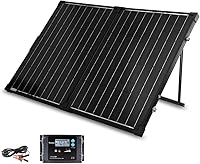
9 Best Solar Panels for the EcoFlow DELTA 3 (November 2026)
The best solar panels for the EcoFlow DELTA 3 include the EF ECOFLOW Solar Generator Delta 3 Classic (best complete delta 3 solar kit), the EF ECOFLOW 220W Portable Solar Panel (best overall panel for delta 3), and the MHPOWOS 110W Portable Solar Panel for Power for a lighter solar setup.
On this page (7 sections)
- The best solar panels for EcoFlow DELTA 3
- How do you choose a solar panel for EcoFlow DELTA 3?
- What wattage is best for EcoFlow DELTA 3?
- How should you set up solar panels for EcoFlow DELTA 3?
- Can a solar panel keep EcoFlow DELTA 3 charged during an outage?
- How does the EcoFlow 220W panel compare with larger panels?
- Verdict: which solar panel is best for EcoFlow DELTA 3?
The best solar panel for EcoFlow DELTA 3 is the EF ECOFLOW 220W Portable Solar Panel because its 220W rating, 21.5V output and bifacial design make it the clearest match for this power station. Higher-output panels can charge faster only when their voltage and current stay inside the DELTA 3's solar input limits.
This guide compares panels for the EcoFlow DELTA 3, including 220W, 160W, 200W, 400W and 450W choices. A higher wattage number isn't automatically better because the power station can limit accepted input, and an incompatible voltage can make a panel unsuitable.
If you're new to this type of equipment, start with what is a portable solar panel before comparing connectors, output and folding size. For general setup steps, see how to use an EcoFlow solar panel.
Our picks at a glance
-
1
 Best complete DELTA 3 solar kit
EF ECOFLOW Solar Generator Delta 3 Classic
9.7/10 our score
See it on Amazon -
2
 Best overall panel for DELTA 3
EF ECOFLOW 220W Portable Solar Panel
9.6/10 our score
See it on Amazon -
3
 Best for a lighter solar setup
MHPOWOS 110W Portable Solar Panel for Power
9.6/10 our score
See it on Amazon
- 4
 Check it
EF ECOFLOW DELTA 3 MAX Portable Power
Best for a larger DELTA power station - 5
 Check it
ZOUPW 450W Portable Solar Panel N-Type 16BB
Best for high-wattage DELTA charging - 6
 Check it
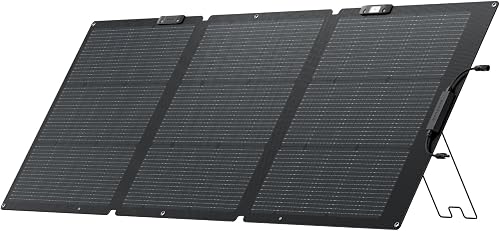
EF ECOFLOW 160 Watt Portable Solar Panel
Best compact EcoFlow panel - 7
 Check it
Ecosonique 200W Portable Foldable Solar Panel MC4
Best for multi-device charging - 8
 Check it
TWELSEAVAN 400W Portable Solar Panel for Power
Best for large-panel value - 9
 Check it
EF ECOFLOW 400W Portable Solar Panel
Best for EcoFlow high-output setups
The best solar panels for EcoFlow DELTA 3
The 220W EcoFlow panel is the best overall fit, while the other picks suit different output, weight and system needs. We compared the stated voltage, wattage, connector details, weather protection and portability against the needs of a DELTA 3 solar setup.
EF ECOFLOW Solar Generator Delta 3 Classic: Best complete DELTA 3 solar kit
- DELTA 3 Classic with 220W solar panel
- 1024Wh capacity
- 1800W output
- 220W panel with up to 25% conversion efficiency
This complete kit pairs the DELTA 3 Classic with a 220W solar panel. It suits buyers who want the power station and matching solar input together.
Pros
- Complete DELTA 3 Classic and panel kit
- 1800W output
- 220W bifacial panel
Cons
- The two items may arrive separately
- Not a panel-only purchase
The EF ECOFLOW Solar Generator Delta 3 Classic is the simplest choice when you need the power station and solar panel together. This kit includes the DELTA 3 Classic, a 1024Wh power station, and a 220W solar panel, so you don't have to match a separate panel to the system at the start.
The power station provides 1800W output and 3600W surge output. Its X-Boost feature can expand output to 2600W for heavier loads, while the built-in UPS switches to battery in under 10ms.
The included panel uses N-Type solar cells and has a conversion rate of up to 25%. EcoFlow states that the 220W panel can recharge the DELTA 3 Classic in 5.8 hours, but sunlight and the station's input limit affect real charging time.
The kit's main drawback is that it isn't a panel-only purchase. EcoFlow also notes that the DELTA 3 Classic and 220W panel may arrive separately, so allow time for both items to arrive.
Buy it if you need a complete EcoFlow DELTA 3 solar setup. If you already own the power station, the standalone 220W panel below is the more direct choice.
EF ECOFLOW 220W Portable Solar Panel: Best overall panel for DELTA 3
- 220W maximum power
- 21.5V output voltage
- Bifacial N-Type design
- 30-60 degree adjustable angle
The 220W output and 21.5V voltage make this the clearest panel match in this group for a DELTA 3 solar setup. Its foldable design and adjustable angle also suit mobile charging.
Pros
- Clear 220W DELTA 3 match
- Up to 25% conversion efficiency
- IP68 waterproof rating
Cons
- Lower wattage than the 400W and 450W picks
- Weighs 15.4 lb
The EF ECOFLOW 220W Portable Solar Panel is the best match for most DELTA 3 owners who want a standalone panel. It has 220W maximum power, 21.5V output voltage and an MC4 connector, which gives you clear electrical details to compare with your power station.
Its bifacial design uses N-Type solar cells and reaches up to 25% conversion efficiency. The adjustable bracket covers 30 to 60 degrees, and the built-in angle guide helps you point the panel toward the sun instead of leaving it flat.
The panel folds for transport and weighs 15.4 lb. Its IP68 rating protects the panel from water and dust, while the ETFE and tempered-glass construction is suited to outdoor use.
The 220W output is not the highest in this roundup, but it is easier to evaluate than a large panel with a much higher open-circuit voltage. Use this pick when direct EcoFlow matching and manageable setup matter more than maximum rated wattage.
Choose it first for a normal DELTA 3 solar panel setup. For a lower-output option, compare it with the 160W EcoFlow model.
MHPOWOS 110W Portable Solar Panel for Power: Best for a lighter solar setup
- 110W maximum power
- 20V output voltage
- 23.5% conversion efficiency
- Foldable design with kickstands
The MHPOWOS 110W panel is a lower-output option for buyers who value a lighter foldable panel. Check the DELTA 3 input limits and connector needs before ordering.
Pros
- Lightest panel in this group
- 20V output
- Includes multi-connector cable
Cons
- Lower 110W output
- Compatibility still needs a DELTA 3 input check
The MHPOWOS 110W Portable Solar Panel suits DELTA 3 buyers who want a lighter panel for basic outdoor charging. It produces 110W maximum power at 20V, weighs 8.5 lb and folds for transport.
Its 23.5% conversion efficiency and two kickstands help you position the panel on a flat surface. The panel has an IP67 waterproof rating, while the included cable connects to Anderson, XT60, DC7909 and DC5521 interfaces.
The lower output is the trade-off. It won't replenish a DELTA 3 as quickly as a 220W or 400W panel under similar conditions, and you still need to verify that the 20V output fits the DELTA 3's solar input range.
MHPOWOS includes a solar extension cable and instruction manual. The product information also describes an 18-month warranty, but check the current terms before relying on it for a long-term setup.
Pick it for lower weight and modest solar input. If you want more panel power while staying with an EcoFlow-branded option, the 160W or 220W models are easier comparisons.
EF ECOFLOW DELTA 3 MAX Portable Power: Best for a larger DELTA power station
- DELTA 3 MAX with 220W solar panel
- 2048Wh LFP battery
- 3400W X-Boost output
- Less than 10ms transfer time
This is a DELTA 3 MAX kit rather than a standalone DELTA 3 panel. It belongs here for buyers comparing a larger EcoFlow system with a matching 220W panel.
Pros
- 2048Wh LFP battery
- Includes a 220W panel
- 3400W X-Boost output
Cons
- Not the DELTA 3 Classic
- Much larger power station than a panel-only setup
The EF ECOFLOW DELTA 3 MAX Portable Power Station with 220W Solar Panel is for buyers comparing the DELTA 3 family rather than adding a panel to a standard DELTA 3. It includes a 2048Wh LFP battery and a 220W solar panel.
The DELTA 3 MAX provides 3400W X-Boost output and a 10ms transfer time. EcoFlow also describes 0–80% AC charging in 1.13 hours and app control for monitoring energy use and charging schedules.
The included 220W panel keeps the solar side familiar, but the power station is much larger than the DELTA 3 Classic. Its stated dimensions are 19.5 x 9.4 x 12 in, and the kit includes an AC charging cable.
Choose this kit when your real need is more battery capacity and higher appliance output. It isn't the right answer if you already own a DELTA 3 and only need a compatible solar panel.
Consider it for a larger EcoFlow system. For the standard DELTA 3, start with the standalone 220W panel instead.
ZOUPW 450W Portable Solar Panel N-Type 16BB: Best for high-wattage DELTA charging
- 450W maximum power
- 45.9V open-circuit voltage
- 25% efficiency
- 4-in-1 adapter cable
The ZOUPW 450W panel offers much more rated power than the 220W choices, but its 45.9V open-circuit voltage requires careful DELTA 3 input verification.
Pros
- Highest rated wattage here
- 25% efficiency
- IP68 waterproof panel
Cons
- 29.5 lb weight
- Must verify the power station supports its voltage
The ZOUPW 450W Portable Solar Panel is the high-wattage choice, but it needs the most careful compatibility check. It has 450W maximum power, 38.3V output voltage and 45.9V open-circuit voltage, so verify the DELTA 3's maximum supported voltage before connecting it.
The panel uses N-Type monocrystalline cells with a 16-busbar design and a stated 25% efficiency. Four kickstands adjust to 45 degrees, and the panel weighs 29.5 lb.
Its IP68 rating applies to the panel, with an ETFE coating and sealed lamination. The connection kit includes XT60, Anderson, DC7909 and DC8020 options, plus a 13.12 ft extension cable, four ground stakes, a storage bag and a user manual.
The 450W rating may be attractive for a high-capacity power station, but the DELTA 3 can still cap the input. The panel is also much heavier than the 160W or 220W choices.
Pick it only when the DELTA 3 voltage limit is confirmed. If you want the simplest electrical match, use the 220W EcoFlow panel.
EF ECOFLOW 160 Watt Portable Solar Panel: Best compact EcoFlow panel
- 160W maximum power
- 21.4V output voltage
- 25% conversion efficiency
- 30-60 degree adjustable bracket
This 160W EcoFlow panel gives you a smaller step below the 220W model while keeping a 21.4V output and foldable design. It suits lighter charging needs.
Pros
- 21.4V output
- 25% conversion efficiency
- IP68 rating
Cons
- 160W output is below the 220W panel
- Not the highest-capacity option
The EF ECOFLOW 160 Watt Portable Solar Panel is a compact EcoFlow option for buyers who want less weight than the 220W model. It provides 160W maximum power at 21.4V and weighs 12.3 lb.
Its N-Type solar technology reaches 25% conversion efficiency, and the adjustable bracket covers 30 to 60 degrees. EcoFlow also describes a 40-second setup, which suits short stops at a campsite or roadside rest area.
The panel has an IP68 rating and an ETFE coating. The box includes a solar-to-XT60i charging cable, a portable panel bag, a quick start guide, safety instructions and a warranty card.
You give up 60W of rated output compared with the 220W panel. In return, the 160W model is lighter and still has a 21.4V output that is close to the 220W EcoFlow panel's stated voltage.
Choose it for a smaller EcoFlow panel with a similar voltage profile. If faster solar input matters more than carrying weight, step up to the 220W model.
Ecosonique 200W Portable Foldable Solar Panel MC4: Best for multi-device charging
- 200W maximum power
- 20V MC4 output
- USB-C PD3.0 and USB-A QC3.0
- Six-fold design
The Ecosonique panel combines a 200W solar output with USB-C and USB-A charging ports. Its 20V output makes input verification important before pairing it with a DELTA 3.
Pros
- 200W output
- USB-C and USB-A ports
- 11 lb weight
Cons
- 20V output needs compatibility checking
- Lower efficiency than the 220W EcoFlow panel
The Ecosonique 200W Portable Foldable Solar Panel suits buyers who want solar output plus direct USB charging. It has 200W maximum power, 20V MC4 output, USB-C PD3.0 at 45W and USB-A QC3.0.
The six-fold panel weighs 11 lb and folds to 18.04 x 16.35 x 2.95 in. Four adjustable kickstands help set the angle, while the stated conversion rate reaches 23.5%.
Its included cables provide MC4, XT60, Anderson, DC7909 and DC5525 connections. The panel also has a 3M MC4 cable, a user manual and a stated 12-month warranty.
The 20V output must be checked against the DELTA 3's solar input range before use. Its separate USB ports may help when you want to charge smaller devices without routing every device through the power station.
Pick it for mixed power needs and compact storage. For the most direct EcoFlow pairing, the 220W panel remains easier to match.
TWELSEAVAN 400W Portable Solar Panel for Power: Best for large-panel value
- 400W maximum power
- 46.9V maximum voltage
- 24% efficiency
- Four adjustable kickstands
The TWELSEAVAN 400W panel can deliver more rated power than compact panels, but its 46.9V maximum voltage rules out some smaller power stations. Confirm the DELTA 3 input range first.
Pros
- 400W output
- 24% efficiency
- 22 lb fiberglass design
Cons
- 46.9V maximum voltage needs verification
- IP65 does not mean the control box can be submerged
The TWELSEAVAN 400W Portable Solar Panel is a large-panel option for a DELTA 3 setup that supports its voltage. It reaches 400W maximum power, 24% efficiency and 46.9V maximum voltage, so the voltage check comes before the wattage comparison.
The fiberglass panel weighs 22 lb and folds to 26 x 35.5 in. Four adjustable kickstands help with positioning, and the MC4 cable system includes Anderson, XT60, 8020 and 7909 adapters.
The panel has an IP65 rating, but the control box is not waterproof and should stay dry. TWELSEAVAN includes the 400W panel, a 5-in-1 MC4 cable, three DC adapters and a user manual.
A 400W rating doesn't mean the DELTA 3 will accept 400W. The power station's input cap and the panel's 46.9V maximum voltage are more important than the headline wattage.
Choose it only after confirming the DELTA 3 voltage limit. A lower-voltage 160W or 220W panel is a simpler choice when compatibility is uncertain.
EF ECOFLOW 400W Portable Solar Panel: Best for EcoFlow high-output setups
- 400W maximum power
- 23% efficiency
- IP68 rating
- Foldable design with adjustable carry case
The EcoFlow 400W panel is a high-output, foldable option for compatible EcoFlow systems. Its 35.3 lb weight makes it less convenient than the 160W or 220W panels.
Pros
- 400W rated input
- EcoFlow brand pairing
- IP68 main panel rating
Cons
- Heaviest panel here
- Connection points should not be immersed
The EF ECOFLOW 400W Portable Solar Panel is a high-output EcoFlow option for systems that can accept its electrical input. It provides 400W maximum power, 23% efficiency and 23V direct-current output.
The foldable panel weighs 35.3 lb and comes with an adjustable carry case. Its layers of EVA and fiberglass support a portable design, but this is the heaviest panel in the roundup.
The main panel has an IP68 rating. EcoFlow warns that the junction box and connection points should not be immersed in water, so keep those areas dry even during outdoor use.
The larger panel can make sense when the connected station accepts its input and you want more rated solar capacity. It is less appealing for short trips where lifting 35.3 lb and spreading out a larger panel adds work.
Pick it for an EcoFlow high-output setup with confirmed input limits. For regular DELTA 3 portability, the 220W panel is easier to carry and match.
How do you choose a solar panel for EcoFlow DELTA 3?
Choose by voltage first, then accepted current, wattage, connector and physical setup. The DELTA 3 can limit solar input, but a panel with excessive voltage is a compatibility problem rather than a performance upgrade.
A 220W panel is the safest starting point for many buyers because it offers useful output without the large size of 400W and 450W panels. The 160W EcoFlow panel is a lighter alternative, while the 110W MHPOWOS panel is the smallest output choice here.
High-wattage panels need extra care. The ZOUPW 450W panel reaches 45.9V open-circuit voltage, and the TWELSEAVAN 400W panel reaches 46.9V maximum voltage.
Check the exact DELTA 3 model's solar input range before connecting either one.
Connector fit matters too. MC4, XT60 and adapter cables are not interchangeable by appearance alone, so match the cable to the power station's solar input and follow the panel instructions.
For a broader comparison, see our guide to the best solar panel for EcoFlow DELTA 2. The DELTA 2 and DELTA 3 names are similar, but you should still verify the input specifications for the exact station you own.
What wattage is best for EcoFlow DELTA 3?
The best wattage depends on the DELTA 3's solar input limit and your space for setup. A 220W panel is a balanced choice, while 400W and 450W panels are useful only when their voltage and current are accepted.
A larger panel can collect more energy in good light, but it is also heavier and wider. The EF ECOFLOW 400W panel weighs 35.3 lb, compared with 15.4 lb for the 220W model and 12.3 lb for the 160W model.
Rated power is measured under favorable conditions. Shade, clouds, dust, panel angle and the station's input cap can all reduce the power reaching the DELTA 3.
Keep the panel aimed at the sun and clear of shadows. Follow the cable limits and keep junction boxes and connection points dry when the panel is outdoors.
How should you set up solar panels for EcoFlow DELTA 3?
Set the panel on a stable surface, angle it toward direct sunlight, connect the approved cable, then confirm that charging begins on the DELTA 3. Keep cables clear of walkways and protect connection points from water.
Adjustable brackets make positioning easier. The EcoFlow 220W and 160W panels use 30-60 degree brackets, while the ZOUPW 450W panel has kickstands that adjust to 45 degrees.
Avoid placing weight on a foldable panel or stepping on it. Keep the surface clean, remove dust and debris with a gentle method, and allow the panel to dry before storage.
For detailed use instructions, read How to Use an EcoFlow Solar Panel and follow the manual for your exact DELTA 3 model. Stop using a setup if cables, connectors or the panel show damage.
Can a solar panel keep EcoFlow DELTA 3 charged during an outage?
A solar panel can recharge the DELTA 3 during an outage when sunlight is available, but it doesn't store energy by itself. The power station stores the collected energy for later use.
The DELTA 3 Classic kit combines a 1024Wh power station with a 220W solar panel. That setup can support emergency devices, but the runtime depends on the connected load and the battery's available charge.
For more background, read Can Solar Panels Store Energy?. If you need battery backup that can also use solar input, our guide to [What Is a Solar UPS?
The Essential Guide](/what-is-a-solar-ups/) explains the basic idea.
Solar charging is strongest when the panel has clear sunlight and a useful angle. It becomes less predictable under heavy cloud, shade or poor placement, so keep another charging method available for critical equipment.
How does the EcoFlow 220W panel compare with larger panels?
The EcoFlow 220W solar panel review is the best next read if you're deciding between a compact matching panel and a larger high-voltage option. The 220W panel has less rated output, but it is lighter and easier to evaluate for a DELTA 3.
The ZOUPW 450W and TWELSEAVAN 400W panels have more rated power, yet their maximum voltage values are much higher. That makes input verification essential before setup.
The EcoFlow 400W panel is also heavy at 35.3 lb. A larger panel may be worthwhile for a compatible high-capacity system, but it adds storage and carrying demands.
Verdict: which solar panel is best for EcoFlow DELTA 3?
The EF ECOFLOW 220W Portable Solar Panel is the best solar panel for EcoFlow DELTA 3 when you want a clear 220W match, 21.5V output, bifacial collection and manageable portability. Choose the complete DELTA 3 Classic kit if you also need the 1024Wh power station.
Pick the 160W EcoFlow panel for a lighter setup, or choose the 110W MHPOWOS panel when lower output and lower weight matter most. Consider the 400W and 450W panels only after confirming the DELTA 3 accepts their voltage and current.
If your real need is a larger EcoFlow system, compare the best solar panels for EcoFlow DELTA Pro 3 and best solar panels for EcoFlow DELTA Pro guides before choosing a panel.
Our top 3 picks at a glance
-
1
Best complete DELTA 3 solar kit
EF ECOFLOW Solar Generator Delta 3 Classic
9.7/10 our score
See it on Amazon -
2
Best overall panel for DELTA 3
EF ECOFLOW 220W Portable Solar Panel
9.6/10 our score
See it on Amazon -
3
Best for a lighter solar setup
MHPOWOS 110W Portable Solar Panel for Power
9.6/10 our score
See it on Amazon
Frequently asked questions
What is the best solar panel for EcoFlow DELTA 3?
The EF ECOFLOW 220W Portable Solar Panel is the clearest match for most DELTA 3 buyers because it provides 220W maximum power and 21.5V output. It also has a foldable bifacial design, adjustable 30-60 degree angle and an MC4 connector.
Check the exact DELTA 3 input requirements before using another panel.
Can I use a 400W solar panel with EcoFlow DELTA 3?
You can use a 400W panel with the EcoFlow DELTA 3 only if its voltage, current and connector match the power station's solar input limits. A panel's 400W rating does not force the DELTA 3 to accept 400W, and excessive voltage can be unsafe.
Confirm the DELTA 3 manual and panel output before connecting them.
What voltage solar panel does EcoFlow DELTA 3 need?
The EcoFlow DELTA 3 needs a solar panel whose output stays within its solar charging voltage and current limits. The 220W EcoFlow panel in this guide has a 21.5V output, while the ZOUPW 450W panel reaches 45.9V open-circuit voltage.
Compare both numbers with your exact DELTA 3 model.
Can I connect two solar panels to EcoFlow DELTA 3?
Only connect two solar panels when the DELTA 3 manual permits that arrangement and the combined voltage and current stay within its limits. Series wiring raises voltage, while parallel wiring raises current.
Don't combine panels until you have checked their electrical values and the required cable setup.
How long does EcoFlow DELTA 3 take to charge with solar?
Charge time depends on panel wattage, sunlight, panel angle, shade, dust and the DELTA 3's input limit. The DELTA 3 Classic kit pairs a 1024Wh power station with a 220W panel, and EcoFlow states that the panel can recharge it in 5.8 hours.
Real conditions can take longer.