EcoFlow DELTA Pro vs DELTA Pro 3: Which Should You Choose? (November 2026)
Pick the DELTA Pro 3 for more capacity and higher output, and pick the DELTA Pro for a lighter unit with proven expansion. In this ecoflow delta pro vs delta pro 3 comparison, the newer model leads on power, while the older model can still suit camping and smaller backup jobs.
On this page (11 sections)
- EcoFlow DELTA Pro vs DELTA Pro 3: the quick verdict
- The two side by side
- Capacity and runtime: which holds more energy?
- Output and voltage: which runs bigger appliances?
- Charging speed and methods: which refills faster?
- Size, weight and noise: which is easier to live with?
- Home backup and switch-over: which keeps power on?
- Solar bundles: which kit makes sense?
- Expansion and long-term cost: which grows with you?
- Who should buy which?
- Final verdict: ecoflow delta pro vs delta pro 3
Pick the DELTA Pro 3 for more capacity and higher output, and pick the DELTA Pro for a lighter unit with proven expansion. In this ecoflow delta pro vs delta pro 3 comparison, the newer model leads on power, while the older model can still suit camping and smaller backup jobs.
The DELTA Pro 3 offers 4096Wh and 4000W, while the DELTA Pro offers 3600Wh and 3600W. That difference shapes the whole choice, because capacity sets how much energy you store and output sets which appliances you can run.
We compared the specs, output, charging and expansion for both generations. We also looked at weight, voltage, noise and switch-over, since those details matter in daily use at home and outdoors.
The DELTA Pro 3 lists 120V/240V output, which opens the door to larger home loads. The DELTA Pro lists 120V output, so it fits a different set of jobs even though its headline output still looks strong.
Our score weighs specs, features and buyer feedback against what you are shopping for. A high score does not mean a unit fits every home, and a lower score does not mean it fails for camping or short outages.
The choice comes down to load size, weight you can move and how you plan to recharge. Start with the appliances you must keep running, then check whether the output can start them and the battery can run them for long enough.
Think about where the unit will live most of the time. A fixed spot in a garage or utility area makes weight less of an issue, while frequent moves in an RV or at a campsite make every pound count.
Think about recharge too, because capacity only helps if you can refill it in time. Wall charging, solar charging and other methods suit different routines, and the best option depends on your home setup and travel plan.
The DELTA Pro 3 suits buyers who want room at the top end for home backup. Its larger battery and higher output give more headroom for big loads, and its expansion path is larger for longer outages.
The DELTA Pro suits buyers who want a lighter unit for portable power. It still offers a large LFP battery and strong output, but it asks less in terms of lifting and storage space.
Neither unit is small, so measure your space and plan how you will move it. A cart, a trolley or a second person can make setup far easier than trying to carry either station alone.
Read the sections below with your own load list in mind. The right pick is the one that matches your appliances, your space and your way of recharging, not simply the one with the biggest numbers.
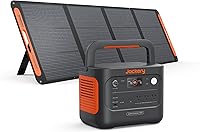
 Best for solar kits with a panel
EF ECOFLOW Solar Generator 3.6KWh DELTA Pro

EcoFlow DELTA Pro vs DELTA Pro 3: the quick verdict
The DELTA Pro 3 wins for home backup, and the DELTA Pro wins for lighter portable use. The DELTA Pro 3 has 496Wh more capacity and 400W more AC output than the DELTA Pro.
The DELTA Pro 3 also supports 120V/240V output, which matters for larger home appliances. The DELTA Pro lists 120V/3600W output in its highlight.
Weight cuts the other way. The DELTA Pro weighs 99 lb, while the DELTA Pro 3 weighs 115 lb.
If you plan a whole home battery backup system, the DELTA Pro 3 is the stronger base. If you want a unit for camping and short outages, the DELTA Pro may be enough.
The two side by side
The DELTA Pro 3 leads on capacity, output and expansion, while the DELTA Pro leads on weight. We checked the core specs for both units before the details below.
| Spec | DELTA Pro | DELTA Pro 3 |
|---|---|---|
| Capacity | 3600Wh | 4096Wh |
| AC output | 3600W, 4500W with X-Boost | 4000W, 6000W with X-Boost |
| Voltage | 120V | 120V/240V |
| Expansion | to 25kWh | to 48kWh |
| Weight | 99 lb | 115 lb |
| Battery | LFP | LFP |
The DELTA Pro 3 lists an 8000W starting wattage in one bundle. That helps with motor loads that need a short surge at startup, such as appliances that draw extra power for a few seconds when they switch on.
Starting wattage matters because a load can fail to start even when its running wattage looks fine. Check the label on each appliance for both figures before you decide which output class you need.
The DELTA Pro lists pairing two units to reach 7200W. That path needs two stations, while the DELTA Pro 3 reaches higher output in one unit.
Pairing two units adds cost, weight and storage needs, so it suits buyers who already own one station or who need more output than a single unit gives. A single DELTA Pro 3 keeps setup simpler for home backup, even though it weighs more than a single DELTA Pro.
X-Boost also changes the picture on both units. The DELTA Pro lists 4500W with X-Boost, while the DELTA Pro 3 lists 6000W with X-Boost and output scalable up to 12000W with added units.
Use X-Boost as help for short surges, not as a replacement for stored energy. A load that runs near the limit will drain the battery faster, and runtime will fall as draw rises.
Capacity and runtime: which holds more energy?
The DELTA Pro 3 holds more energy at 4096Wh, compared with 3600Wh for the DELTA Pro. That gap is about 14% more stored energy in the newer unit.
EcoFlow says the DELTA Pro 3 can provide 2 to 4 days of whole-home backup power. That claim depends on which appliances you run and for how long each day.
The DELTA Pro expands from 3.6kWh to 25kWh with extra batteries or smart generators. The DELTA Pro 3 expands to 48kWh with extra batteries or smart generators.
Think in terms of loads, not days alone. A fridge, lights and phones draw far less than a central AC or a water pump.
Capacity only helps if your output can run the load. The DELTA Pro 3 pairs its larger battery with 4000W output, while the DELTA Pro pairs 3600Wh with 3600W output.
Output and voltage: which runs bigger appliances?
The DELTA Pro 3 runs bigger loads with 4000W output and 120V/240V support. EcoFlow says it can power a 3-ton central AC or a 1 HP water pump.
The DELTA Pro outputs 3600W and can reach 4500W with X-Boost. EcoFlow says it can power 99.99% of heavy-duty devices at home, outdoors or at work.
X-Boost helps with short surges, but it does not add stored energy. A load that runs near the limit will drain the battery faster.
The DELTA Pro 3 lists scalable output up to 12000W. That figure applies with added units, so plan on more hardware for that level.
Check each appliance label for running watts and starting watts. A motor load may need more power for a few seconds at startup.
Our best portable power station guide explains how to match output to your load list. Start there if you are unsure which wattage you need.
Charging speed and methods: which refills faster?
The DELTA Pro has a clear fast-charge claim, while the DELTA Pro 3 has more charging methods. The DELTA Pro recharges in 1.8 hours with 240V outlets at 3000W, EcoFlow says.
The DELTA Pro also lists 2.7 hours with 1800W wall outlets. With solar, it lists 2.8 hours with 4 x 400W solar panels.
The DELTA Pro 3 lists 7 unique and 18 combo charging methods. Those include AC wall outlets, solar panels, gas generators, EV charging piles and the EcoFlow smart home panel 2.
More methods help during outages, when your usual outlet may not work. Solar and generator charging can keep the battery topped up after the first drain.
The DELTA Pro bundle includes a 400W solar panel that recharges it in 11 hours alone. With 3 x 400W panels, EcoFlow says recharge takes 3.5 hours.
Charging speed depends on the source you use. A 240V outlet at home is not the same as a car outlet on a trip.
Size, weight and noise: which is easier to live with?
The DELTA Pro is lighter and smaller, while the DELTA Pro 3 runs quieter in a room. The DELTA Pro weighs 99 lb and measures 25 x 11.2 x 16.4 inches.
The DELTA Pro 3 weighs 115 lb and measures 16.16 x 13.43 x 27.38 inches. That extra 16 lb matters on stairs and longer carries.
The DELTA Pro 3 lists X-Quiet technology at as low as 30 dB. EcoFlow says it is quiet enough for indoor use beside a bed.
Neither unit is a pocket-sized power bank. Both need a fixed parking spot, a cart, or help from a second person.
Measure your storage spot before you order either unit. Leave room for cables, vents and the doors or ports you will use.
If you mainly camp with a vehicle, weight and footprint may matter more than peak output. If you keep the unit at home, output and expansion may matter more.
Home backup and switch-over: which keeps power on?
The DELTA Pro 3 has a 10 ms switch-over for sensitive gear. EcoFlow says that speed helps NAS systems, servers and entertainment devices ride through outages.
The DELTA Pro does not list a switch-over time in the specs we checked. It does list smart app control to monitor devices and customize settings.
For whole-home use, the DELTA Pro 3 pairs 120V/240V output with expansion to 48kWh. That combination suits larger circuits and longer outages.
The DELTA Pro pairs 3600W output with expansion to 25kWh. That can cover essential circuits, but it has less headroom for large loads.
Plan your load list before you choose. Put the fridge, lights, phones and medical gear you need on the priority list first.
Use the ecoflow delta pro how to use guide to learn setup steps for the older model. The DELTA Pro 3 also uses the EcoFlow app for remote monitoring and control.
Solar bundles: which kit makes sense?
Buy a bundle when you want panels included, and buy the base unit when you already own panels. The DELTA Pro bundle includes a 400W portable solar panel and a solar charge cable.
The panel folds, weighs 35.3 lb and has an IP68 waterproof rating. EcoFlow lists its conversion rate at 22.4%.
The DELTA Pro 3 solar generator includes 2 x 400W panels with the station. The station and panels ship in separate packages.
Panels help most during long outages and off-grid trips. They help less if you only need backup for a few hours at home.
Check the included components for each box before you order. The DELTA Pro 3 base unit includes only the station, while bundles add panels.
If you want to compare a newer EcoFlow model for home use, read our ecoflow delta 3 ultra review. It can help you place the DELTA Pro 3 in the current lineup.
Expansion and long-term cost: which grows with you?
The DELTA Pro 3 expands higher, to 48kWh, while the DELTA Pro expands to 25kWh. Both use extra batteries or smart generators to grow capacity.
Expansion helps when your first outage teaches you what you really need. You can start with one unit and add storage later.
The DELTA Pro 3 also lists a 5-year warranty. EcoFlow backs the LFP cells and IP65-rated CTC battery pack technology.
The DELTA Pro lists an LFP battery with a battery management system. EcoFlow calls its X-Stream charging fast and safe.
Buy the capacity you need for your first winter or storm season. Extra batteries add cost, weight and storage needs.
Compare the ecoflow delta 2 max vs delta 3 max if you are also weighing mid-size units. That comparison can show whether you need this higher output class.
Who should buy which?
Buy the DELTA Pro 3 for home backup and large loads, and buy the DELTA Pro for lighter portable use. The DELTA Pro 3 suits buyers who run central AC, a water pump or 240V circuits.
The DELTA Pro suits buyers who camp, travel in an RV or run smaller home loads during short outages. Its 99 lb weight is still heavy, but it is the lighter option here.
Read ecoflow delta pro reviews if you want more owner patterns for the older model. Buyer reports can show which loads and setups work well in real homes.
Choose the DELTA Pro 3 base unit if you plan to add panels or batteries later. Choose a solar bundle if you want panels in the box on day one.
Skip both units if you only need phone charging for a weekend. A smaller power bank will be easier to carry and store.
Final verdict: ecoflow delta pro vs delta pro 3
Pick the DELTA Pro 3 if you want the most capacity, output and expansion in one unit. Pick the DELTA Pro if you want lower weight and a lower output class that still covers essential loads.
In this ecoflow delta pro vs delta pro 3 choice, the newer model is the safer pick for whole-home backup. The older model remains a solid pick for camping and smaller outages.
Check your load list, your storage space and the weight you can move. Then choose the unit that matches those three facts, not the one with the longest spec list.
Start with the load list, then match it to the 4000W or 3600W output. Size the battery to the runtime you need, and add panels or extra batteries only if your plan calls for them.
Frequently asked questions
Is the DELTA Pro 3 better than the DELTA Pro?
The DELTA Pro 3 has more capacity at 4096Wh and higher output at 4000W, compared with 3600Wh and 3600W on the DELTA Pro. It also adds 120V/240V support and a 10 ms switch-over.
The DELTA Pro is lighter at 99 lb and can suit smaller backup needs.
Which EcoFlow unit is better for whole home backup?
The DELTA Pro 3 is better for whole home backup because it delivers 4000W and supports 120V/240V loads such as a 3-ton central AC. EcoFlow says it can expand to 48kWh with extra batteries or smart generators.
The DELTA Pro expands to 25kWh and outputs 3600W.
Can the DELTA Pro charge faster than the DELTA Pro 3?
The DELTA Pro lists full recharge in 1.8 hours with 240V outlets at 3000W. The DELTA Pro 3 lists 7 unique and 18 combo charging methods, including AC wall outlets, solar panels, gas generators and EV charging piles.
Compare the charging method you will actually use at home.
Do I need solar panels with either unit?
You do not need panels, since both units charge from wall outlets. Panels help during outages and off-grid use.
The DELTA Pro bundle includes one 400W panel, and the DELTA Pro 3 solar generator includes 2 x 400W panels.
Which unit is easier to move?
The DELTA Pro is easier to move at 99 lb, compared with 115 lb for the DELTA Pro 3. Neither is light enough for casual one-handed carrying over distance.
Use a cart, two people, or a fixed spot with short moves.