EcoFlow DELTA 2 Max vs DELTA 3 Max: Which to Choose? (November 2026)
Pick the DELTA 3 Max if you want faster charging, lighter carry and newer backup features. In this EcoFlow DELTA 2 Max vs DELTA 3 Max comparison, the DELTA 3 Max is the better upgrade for most buyers, while keeping a DELTA 2 Max makes sense if it already meets your needs.
On this page (10 sections)
- DELTA 2 Max vs DELTA 3 Max side by side
- Charging speed: EcoFlow DELTA 2 Max vs DELTA 3 Max
- Output and X-Boost: which station runs more appliances
- Battery life and capacity for daily use
- Home backup and transfer time
- Size, weight and carry for RV and camping
- Solar charging and the panel bundle
- App control, care and setup in general terms
- Who should buy which model
- Final verdict on DELTA 2 Max vs DELTA 3 Max
Pick the DELTA 3 Max if you want the newer station with faster charging and a lighter build. This ecoflow delta 2 max vs delta 3 max guide explains when an upgrade makes sense and when your current station is still enough.
We compared the specs, features and buyer patterns for the DELTA 3 Max models to help you choose with clear numbers. The DELTA 3 Max offers 2048Wh, 2400W output and 3400W X-Boost mode.
That mix targets home backup, RV use and camping. It also charges from 0 to 80 percent in 1.13 hours, which cuts wait time before a trip or after an outage.
If you already own a DELTA 2 Max, ask what it fails to do today. Slow charging, heavy carry or limited output are reasons to upgrade.
If it runs your fridge, lights and phones fine, keep it and save the cost.
Our score weighs specs, features and buyer feedback against what you are shopping for. Higher scores here reflect stronger output, faster charging and more flexible battery chemistry for daily use.
The DELTA 3 Max is listed as solar powered for camping and residential use. Its inverter design and portable form help it move between a home closet, an RV and a campsite without a fixed install.


DELTA 2 Max vs DELTA 3 Max side by side
The DELTA 3 Max brings 2048Wh, 2400W output and a LiFePO4 battery in a lighter, faster charging design. Those facts decide most upgrade choices.
| Point | DELTA 3 Max | Why it matters |
|---|---|---|
| Capacity | 2048Wh | Sets how long you can run loads |
| Continuous output | 2400W | Runs most household appliances |
| X-Boost output | 3400W | Helps with high demand appliances |
| Charging | 0 to 80 percent in 1.13 hours | Less wait before use |
| Transfer time | Less than 10ms | Helps protect sensitive electronics |
| Battery | LiFePO4, built for 10 years of daily use | Long service life for frequent use |
| Size | About 19.5 x 9.4 x 12 inches | Needs storage and vehicle space |
| App control | Real time monitoring and schedules | Helps manage cost and use |
The DELTA 3 Max Plus raises output to 3000W with 3800W X-Boost. It also expands capacity up to 10kWh with extra batteries.
That model suits buyers who want more headroom without changing brands.
The River 3 Max sits in a different class at 572Wh and 600W. It is light at 10.4 pounds, but it cannot match a 2048Wh station for home backup.
Use our best portable power station guide if you are still unsure about size. It explains how capacity and output work together for real loads.
The bundle version lists aluminium, plastics and metals in its build. The station alone lists aluminium and plastic, so check the exact listing you plan to buy before you compare materials.
Charging speed: EcoFlow DELTA 2 Max vs DELTA 3 Max
Choose the DELTA 3 Max if fast charging matters to you, since it reaches 80 percent in 1.13 hours. That speed helps after a blackout or before a road trip.
EcoFlow uses X-Stream technology for this fast charging. You get less waiting and more time to run appliances, charge devices or prepare for travel.
The Plus model charges even faster to 80 percent in 43 minutes. It offers five charging options, including AC wall outlet, solar panels, car, Smart Generator and PV plus car charging.
How the 1.13 hour figure fits real prep
The 0 to 80 percent claim is the figure EcoFlow gives for the DELTA 3 Max. It is not a claim for a full 0 to 100 percent charge, so plan your load list around that 80 percent marker.
That timing matters most when an outage warning gives you a short window. A station that is mostly ready in just over an hour is easier to use than one you must watch for most of the day.
It also matters at a campsite where you may top up from a wall outlet before you leave. You can charge essential devices and the station itself in the same short stop.
Fast charging does not create free energy. It needs a suitable power source and enough input power to deliver that speed.
Plan your charging point before you need it. A wall outlet at home is the simplest option for a quick top up.
Solar charging depends on panel size, sun and cable length.
Our guide to the best EcoFlow power station compares models across the range. Read it if you want to see where the DELTA 3 Max fits by size and price tier.
Output and X-Boost: which station runs more appliances
The DELTA 3 Max gives 2400W continuous output and up to 3400W in X-Boost mode. That covers fridges, microwaves and power tools in many homes.
X-Boost helps with appliances that need more power at start up. EcoFlow says it can power 99 percent of appliances in X-Boost mode, but you should still check each appliance plate.
Add up the watts for every load you plan to run at once. A fridge plus a microwave plus lights can exceed continuous output even if each item works alone.
The Plus model offers 3000W output and 3800W X-Boost. That extra headroom helps when you run several large loads or a demanding tool.
The River 3 Max offers 600W output and 1200W X-Boost. It suits laptops, phones and small devices, not a full kitchen load.
Think in two groups before you buy. Group one is must run items during an outage.
Group two is nice to have items you can switch off.
The DELTA 3 Max lists three total power outlets in its specs. That outlet count can limit how many large appliances you plug in at the same time, even when the wattage total looks fine.
Battery life and capacity for daily use
A 2048Wh LiFePO4 battery gives long service life and enough energy for essential loads. EcoFlow says the DELTA 3 Max is built for 10 years of daily use.
LiFePO4 chemistry is known for stability and long cycle life. EcoFlow also includes an extended 5 year service on this station.
Capacity is energy, while watts are power. A 2048Wh station can run a 200W load longer than a 1000W load, but total energy still limits runtime.
Make a simple list of your outage loads. Write the watts for a fridge, lights, a phone charger, a laptop and a fan.
Then sort them by must run and optional.
The Plus model can expand from 2kWh to 10kWh with extra batteries. That helps for long RV trips or extended home backup, but each battery adds weight and cost.
The station alone lists a runtime figure of 10 hours in its specs. Treat that as a reference point for the loads EcoFlow used, not as a promise for every appliance you own.
If you want step by step use tips, read how to use EcoFlow DELTA 2. Many setup steps carry over to the newer station.
Home backup and transfer time
The DELTA 3 Max is designed for home backup with a transfer time of less than 10ms. That fast switch helps protect computers and medical devices during an outage.
EcoFlow describes ultra quiet operation for night use. That matters in a bedroom, a home office or an RV where noise can disturb sleep.
The app lets you monitor energy use in real time and set charging and discharging schedules. You can also set priorities for your most important appliances.
Home backup still needs planning. Decide which outlets or circuits the station will support before an outage hits.
Test the setup when power is stable. Plug in your target devices, confirm the transfer works and note which loads you can run together.
Our EcoFlow DELTA 3 Max review covers this model in more detail. Read it if home backup is your main reason to buy.
The Plus model also uses an instant 10ms transfer for home backup. That shared speed means you can compare the two Max models on output and expansion, not on transfer time alone.
Size, weight and carry for RV and camping
The DELTA 3 Max is lighter and more durable for carry, but it is still a large station. It measures about 19.5 x 9.4 x 12 inches in the bundle version.
EcoFlow says the lighter build makes it easier to carry from home to an RV or campsite. That helps, but a 2048Wh station is not a pocket power bank.
The Plus model weighs 49 pounds. That weight can be hard to lift into a high RV bay or onto a camp table.
The River 3 Max weighs 10.4 pounds and measures 9.2 x 9.1 x 5.8 inches. It is far easier to carry, but its 572Wh capacity is much smaller.
Measure your storage space before you order. Check height, width and door clearance in your RV, car trunk or home closet.
Plan where the station will sit during use. Keep vents clear, cables safe and the unit level so it can run without strain.
The station alone lists dimensions of 19.44 x 12 x 9.4 inches. That is the same footprint turned on a different axis, so use the depth and height figures when you check a shelf or bay.
Solar charging and the panel bundle
Choose the bundle if you want a 220W solar panel included for off grid charging. The station alone still charges from AC, car and solar with suitable panels.
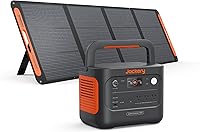
The bundle includes a 220W solar panel, an AC charging cable and the DELTA 3 Max station. That saves guesswork if you do not own a panel yet.
Solar charging is slow compared with wall charging. It works best for topping up during the day, camping or RV use with strong sun.
The Plus model offers five charging options and solar panel use is optional. That flexibility helps if you charge in different places.
Keep panels clean and angled toward the sun. Use the cables that came with your gear and keep connections dry.
For a wider view of power station types, see our EcoFlow DELTA vs DELTA 2 comparison. It helps place the Max models in the full range.
The bundle highlight lists a bifacial solar panel. That panel design is part of the bundle value, while the station alone lists the solar panel as optional rather than included.
App control, care and setup in general terms
Use the EcoFlow app to monitor use, set schedules and save on electricity costs. That control helps you plan charging when power costs less.
Set output priorities for your most important appliances. That way, the station supports essentials first during an outage.
For care, store the station at a moderate charge level when you do not use it for weeks. Charge it before long storage and check the level now and then.
Keep the unit dry, clean and ventilated. Wipe the case with a dry cloth and keep dust away from vents and ports.
Follow the manual for charging, storage and transport. Use the AC charging cable that came in the box for wall charging.
Check cables and connectors before each trip. A damaged cable can stop charging or cause unsafe heat during use.
The station alone also includes manuals and a warranty card. The bundle listing focuses on the panel, the AC cable and the station, so check the box contents for the exact listing you choose.
Who should buy which model
Buy the DELTA 3 Max bundle for solar home backup, the station alone for a core upgrade and the Plus for expansion. Each choice fits a clear need.
Pick the bundle with the 220W panel if you want solar charging ready on day one. It suits camping, RV use and home backup in sunny areas.
Pick the station alone if you already own solar panels or want lower upfront cost. Focus on AC charging speed and 2400W output for home use.
Pick the Plus if you want 3000W output, 3800W X-Boost and expansion to 10kWh. It fits long trips and buyers who plan to add batteries later.
Pick the River 3 Max if you want light carry for small devices. Its 572Wh capacity and 600W output are not for whole home backup.
Keep a DELTA 2 Max if it already runs your essential loads without stress. An upgrade should fix a real problem, not just add a newer name.
All three larger models share the 2048Wh starting capacity. That shared starting point makes the choice turn on output, charging options, expansion and whether a panel is in the box.
Final verdict on DELTA 2 Max vs DELTA 3 Max
Upgrade to the DELTA 3 Max if you want faster charging, lighter carry and stronger backup features. That is the clearest answer in this ecoflow delta 2 max vs delta 3 max comparison.
Choose the bundle for solar ready home backup. Choose the station alone if you already have panels.
Choose the Plus for higher output and expansion.
Keep your DELTA 2 Max if it meets your needs today. Spend on extra batteries or panels only when your loads require them.
Next, compare your must run loads against 2048Wh and 2400W output. If your list fits with headroom, the DELTA 3 Max is a strong upgrade.
If your list does not fit, the Plus model and its expansion path give you a clearer upgrade route. That path adds cost and weight, so only take it when your loads need that extra room.
Frequently asked questions
Is the DELTA 3 Max better than the DELTA 2 Max?
The DELTA 3 Max is better for most buyers who want faster charging, a lighter build and newer app control. It charges from 0 to 80 percent in 1.13 hours and offers 2400W output with 3400W X-Boost.
If your DELTA 2 Max already runs your loads well, an upgrade is a choice, not a need.
How long will a 2048Wh DELTA 3 Max run a fridge?
Runtime depends on the fridge draw and start cycles, which are not given for a specific fridge here. Use the wattage of your fridge and divide it into the usable capacity you expect from 2048Wh.
A high draw appliance will drain the station much faster than phones or lights.
Can the DELTA 3 Max power a microwave?
EcoFlow says the DELTA 3 Max X-Boost mode up to 3400W can run high demand appliances such as fridges, microwaves and power tools. Check the wattage plate on your microwave before you buy, since start surge and continuous draw both matter for safe use.
Does the DELTA 3 Max work as home backup?
Yes, it is designed for home backup with a transfer time of less than 10ms to help protect sensitive electronics. EcoFlow also describes ultra quiet operation for night use.
Plan which circuits and appliances it will support before an outage, rather than expecting whole house power.