EcoFlow DELTA vs RIVER: Which Power Station Should You Buy? (November 2026)
Choose EcoFlow DELTA for larger household loads and RIVER for lighter travel power. The right EcoFlow DELTA vs RIVER choice depends on capacity, output, charging speed and how often you need to carry the unit.
On this page (9 sections)
- EcoFlow DELTA vs RIVER: which one fits your use?
- How much capacity do you need?
- Which EcoFlow station is easiest to carry?
- Which model charges fastest?
- How do DELTA and RIVER compare for solar charging?
- Which model works better for high-wattage appliances?
- What does each product suit best?
- What should you check before buying?
- EcoFlow DELTA vs RIVER: which should you buy?
Choose EcoFlow DELTA for larger household loads and RIVER for lighter travel power. The EcoFlow DELTA vs RIVER decision comes down to how much energy you need, which devices you want to run and how often you'll carry the power station.
The DELTA 3 and DELTA 3 Max offer more capacity than the RIVER models in this comparison. The RIVER 2 Pro and RIVER 2 Max 500 take less stored energy in exchange for a more travel-focused size and use case.
We compared the listed capacity, output, charging, solar input, expansion and portability details. For a broader overview, start with this best portable power station guide.


EcoFlow DELTA vs RIVER: which one fits your use?
Choose DELTA for home backup and RIVER for camping, travel or smaller devices. That simple rule works because DELTA models hold 1024Wh or 2048Wh, while the RIVER models hold 768Wh or 499Wh.
Capacity affects how long a power station can supply a load. A 100W device uses about 100Wh for each hour of operation before conversion losses, so a larger battery gives you more room for extended use.
Output matters too. The DELTA 3 Max has 2400W output, the DELTA 3 has 1800W, the RIVER 2 Pro has 800W running wattage and the RIVER 2 Max 500 has 1000W output.
Check the power label on each device you plan to connect. Starting loads, heating elements and motor-driven devices can need more power than their normal running figure.
EcoFlow DELTA models for household backup
The DELTA 3 Max is the best fit when your priority is stored energy and high output. Its 2048Wh LFP battery, 2400W output and 3400W X-Boost mode give it the widest operating range in this comparison.
It also has a stated 10ms transfer time for home backup use. That makes the model worth considering when keeping computers or other sensitive electronics powered during an outage matters.
The DELTA 3 is a smaller step into the DELTA range. It has a 1024Wh battery, 1800W AC output and 500W solar input, plus expansion up to 5kWh with compatible EcoFlow battery packs.
The DELTA 3 also has a stated 56-minute full-charge time using its charging setup. Its 12.5kg weight and 15.7 x 8 x 11.2 in dimensions make it more substantial than the RIVER 2 Max 500.
EcoFlow RIVER models for travel power
The RIVER 2 Pro suits trips where 768Wh is enough for your devices and you want a built-in handle. It weighs 8.25kg, offers 800W running wattage and can use 220W solar input.
Its AC recharge time is stated as 70 minutes. The 1600W X-Boost figure is different from the 800W running rating, so check the requirements of each appliance before connecting it.
The RIVER 2 Max 500 is the lighter option in this group. Its 499Wh LiFePO4 battery, 1000W output and 13.3lb weight suit short trips, small backup tasks and devices that don't need long runtime.
Its AC recharge time is stated as 1 hour, and its 220W solar input gives you another charging route. The lower capacity means you'll need to manage connected loads more closely than with either DELTA model.
How much capacity do you need?
Choose 499Wh to 768Wh for shorter device sessions and 1024Wh to 2048Wh for longer backup periods. Your real choice should follow the devices you need to run and how long you expect an outage or trip to last.
The RIVER 2 Max 500 has the lowest capacity at 499Wh. It can suit phones, lights, small electronics and other modest loads, but a high-power appliance will use its stored energy faster.
The RIVER 2 Pro increases capacity to 768Wh. That extra room may help when several devices need power at once or when you want longer sessions between charges.
The DELTA 3 doubles the RIVER 2 Pro's stated capacity to 1024Wh. It also supports expansion up to 5kWh with DELTA 3, DELTA Pro 3 and DELTA 2 Max battery packs.
The DELTA 3 Max has 2048Wh, the largest battery here. For another expandable home-backup option, compare Anker SOLIX F3800 models.
It is the clearest choice when your backup plan includes several devices or longer periods away from a wall outlet.
Write down each device's wattage and expected hours of use before you choose. Add the estimated watt-hours, then leave room for conversion losses and changes in load.
Which EcoFlow station is easiest to carry?
The RIVER 2 Max 500 is the lightest named option here, while the RIVER 2 Pro is the next travel-focused choice by weight. DELTA models make more sense when capacity matters more than frequent lifting.
The RIVER 2 Max 500 weighs 13.3lb. Its 10.6 x 10.2 x 7.7 in dimensions make it the most compact option by the listed measurements.
The RIVER 2 Pro weighs 8.25kg and measures 10.5 x 10.1 x 8.5 in. It gives you more capacity than the RIVER 2 Max 500 while remaining designed for portable use.
The DELTA 3 weighs 12.5kg and measures 15.7 x 8 x 11.2 in. The DELTA 3 Max measures 9.4 x 12 x 19.44 in, so check your storage space and carrying route before choosing it for travel.
For a closer look at the smaller line, read our EcoFlow RIVER 2 Pro review, EcoFlow RIVER 3 Plus review and EcoFlow RIVER 2 Max review.
Which model charges fastest?
The DELTA 3 has the shortest stated full-charge time, while the DELTA 3 Max has the clearest fast partial-charge figure. Charging speed matters most when you have limited time before a trip or outage.
The DELTA 3 reaches a stated full charge in 56 minutes with its 500W solar input and 1500W maximum AC input. It can reach 80% in 30 minutes under the stated charging setup.
The DELTA 3 Max reaches 0–80% in 1.13 hours. The RIVER 2 Pro reaches a full AC charge in 70 minutes, and the RIVER 2 Max 500 reaches a full AC charge in 1 hour.
These times describe the charging methods and conditions associated with each model. Keep the charging cable and station where you can reach them, and follow the manual when setting up solar input.
If you need replacement cable guidance for the larger line, see our guide to the best EcoFlow DELTA charging cable.
How do DELTA and RIVER compare for solar charging?
All 4 models support solar charging, but their stated solar input differs. The DELTA 3 accepts 500W solar input, while both RIVER models list 220W solar input.
The DELTA 3 Max is described as solar powered and supports an optional solar panel. The available data does not give a solar input wattage for this model, so compare the exact charging limits before buying panels.
The RIVER 2 Pro can recharge with 220W solar input in as fast as 3.5 hours. The RIVER 2 Max 500 can recharge with 220W solar input in as fast as 2.3 hours.
Solar charging time depends on conditions and the panel setup. Place panels where they can receive direct sun, keep cables organized and check the station's instructions before connecting equipment.
Which model works better for high-wattage appliances?
The DELTA 3 Max has the highest output rating here, followed by the DELTA 3. The RIVER models can support smaller loads, but their running ratings leave less room for demanding appliances.
The DELTA 3 Max lists 2400W output and 3400W continuous X-Boost. The DELTA 3 lists 1800W AC output and 2200W output, with 3600W surge and X-Boost support for resistive appliances over 2600W continuously.
The RIVER 2 Pro lists 800W running wattage and up to 1600W with X-Boost. The RIVER 2 Max 500 lists 1000W output and X-Boost support for devices requiring up to 1000W.
A high X-Boost figure doesn't mean every appliance will work in every situation. Check the appliance label, account for startup demand and test the planned setup before relying on it during an outage.
What does each product suit best?
Pick the DELTA 3 Max for the largest backup reserve, the DELTA 3 for expandable capacity, the RIVER 2 Pro for more portable energy and the RIVER 2 Max 500 for lighter trips. The best choice is the one that matches your load without adding unnecessary weight.
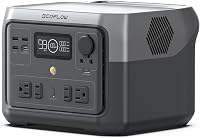
EF ECOFLOW DELTA 3 Max
The DELTA 3 Max has a 2048Wh LFP battery and 2400W output. Its 3400W X-Boost mode is intended to support high-demand appliances, and the stated 10ms transfer time suits backup plans that include sensitive electronics.
It measures 9.4 x 12 x 19.44 in and has a listed runtime of 10 hours. It includes an AC charging cable, manuals and a warranty card.
The solar panel is optional.
EF ECOFLOW Delta 3
The DELTA 3 combines a 1024Wh battery with 1800W AC output. Its charging details include 500W solar input, 1500W maximum AC input, a stated 56-minute full charge and an 80% charge in 30 minutes under the stated setup.
Its LiFePO4 cells are rated for 4000 cycles to 80% capacity, and the battery pack has an IP65 rating. The unit measures 15.7 x 8 x 11.2 in and weighs 12.5kg.
EF ECOFLOW Portable Power Station RIVER 2 Pro
The RIVER 2 Pro has a 768Wh battery, 800W running wattage and up to 1600W output with X-Boost. It has a listed 70-minute AC recharge time and supports 220W solar input.
It weighs 8.25kg and measures 10.5 x 10.1 x 8.5 in. The box includes the RIVER 2 Pro power station, AC charging cable and Quick Start Guide.
EF ECOFLOW Portable Power Station River 2 Max 500
The RIVER 2 Max 500 has a 499Wh LiFePO4 battery and 1000W output. It can recharge from AC in a stated 1 hour and supports 220W solar input in as fast as 2.3 hours.
It weighs 13.3lb and measures 10.6 x 10.2 x 7.7 in. The box includes the power station, AC charging cable and quick start guide.
What should you check before buying?
Check your device wattage, total runtime, storage space and carrying route before choosing between EcoFlow DELTA and RIVER. A larger battery is useful only if you can store and move the station comfortably.
Start with the highest-power device you plan to run. Compare its running and starting needs with the power station's output, then decide whether other devices must run at the same time.
Next, estimate the energy needed. Multiply each device's watts by the hours you expect to use it, add the results and leave extra capacity for losses and changing conditions.
Measure the shelf, closet, vehicle area or campsite storage space. Include room for cables, ventilation and safe access to the charging ports.
Finally, plan how you'll recharge. AC charging is useful at home, while solar input can help away from an outlet.
Keep the station dry unless the exact model's instructions allow the conditions you expect.
For comparison outside EcoFlow, our Jackery Explorer 500 review shows how another portable power station fits into this category. You can also read about what an Anker SOLIX Power Dock is and where Bluetti power stations are made.
EcoFlow DELTA vs RIVER: which should you buy?
Buy the DELTA 3 Max for the largest reserve and highest output, the DELTA 3 for expandable backup, the RIVER 2 Pro for a balanced travel setup or the RIVER 2 Max 500 for lighter loads.
Choose DELTA when your plan centers on household backup, high-demand appliances or longer runtime. Choose RIVER when carrying size, lower capacity and simpler travel power matter more.
The portable power station buying guide can help you compare these choices with other battery generators. Match the power station to your actual load, estimated hours and storage space before you order.
Frequently asked questions
Is EcoFlow DELTA better than RIVER?
EcoFlow DELTA is better for larger household backup loads because the DELTA 3 has 1024Wh and 1800W output, while DELTA 3 Max has 2048Wh and 2400W output. RIVER models are better when lower capacity, smaller size or easier carrying matters more than long backup time.
What is the main difference between EcoFlow DELTA and RIVER?
The main difference is the balance between stored energy and portability. The DELTA models here provide 1024Wh or 2048Wh, while the RIVER 2 Pro provides 768Wh and the RIVER 2 Max 500 provides 499Wh.
Output ratings and charging features also vary.
Which EcoFlow power station is best for home backup?
The DELTA 3 Max is the strongest home-backup choice here because it has a 2048Wh LFP battery, 2400W output, 3400W X-Boost and a 10ms transfer time. The DELTA 3 suits smaller backup needs and can expand up to 5kWh with compatible EcoFlow battery packs.
Which EcoFlow RIVER should you choose for camping?
Choose the RIVER 2 Max 500 for lighter camping loads and the RIVER 2 Pro for more stored energy. The RIVER 2 Max 500 weighs 13.3lb and has a 499Wh battery, while the RIVER 2 Pro has 768Wh and weighs 8.25kg.