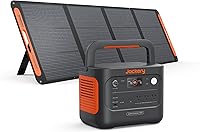
What Is the EcoFlow Alternator Charger?
The EcoFlow Alternator Charger uses power from a vehicle's alternator to charge a compatible EcoFlow portable power station while you drive. It can add another charging method when wall or solar charging is not convenient.
On this page (8 sections)
- How does the EcoFlow alternator charger work?
- Why use alternator charging instead of wall power?
- What should you check before choosing an EcoFlow alternator charger?
- Which other charging options may fit a small power station?
- Can a small power station use alternator charging?
- How does alternator charging compare with other EcoFlow options?
- What are the main safety and care points?
- Is an EcoFlow alternator charger worth it?
The EcoFlow alternator charger uses a vehicle's alternator to charge a compatible EcoFlow portable power station while you drive. It gives you a third charging route beside AC wall power and solar input.
That makes it useful for road trips, camping, work vehicles, and backup plans where you may not have a reliable outlet. It can also help when you want to top up stored power between stops without hunting for a campsite hookup.
Before choosing one, match the charger to the power station, vehicle, wiring, and charging limits. Compatibility is not automatic, and the right choice depends on the exact station model you own.
An alternator charger suits drivers who spend regular time on the road. It is less useful for short local trips where wall charging at home already keeps the station ready.
Think about how you use the station each day. If you mainly need power for phones, lights, a laptop, or small tools, vehicle charging can add convenience without changing your normal routine.
It also helps to consider storage and setup. The charger adds wiring and a fixed vehicle connection, so the benefit should outweigh the extra work involved.
A regular AC cable is different. It connects a station to a wall outlet, while an alternator charger is built around a vehicle charging source and its own installation requirements.
Start by checking the station manual and the charger's stated compatibility. That first check will save time and help you avoid a setup that looks right but does not suit your vehicle.
How does the EcoFlow alternator charger work?
An EcoFlow alternator charger takes electrical energy produced by a vehicle's alternator and sends suitable charging power to a compatible power station. The power station stores that energy in its battery for later use.
The vehicle must be running for the alternator to produce power. The exact connection method depends on the charger design and vehicle electrical system, so installation should follow EcoFlow's instructions.
This is different from plugging a power station into a vehicle's regular accessory socket. A dedicated alternator charger is designed for a separate charging connection and may support a higher charging rate than a small cabin outlet.
In daily use, the idea is simple. You drive as normal, the charger sends power to the station, and you use that stored energy later at camp, at work, or during an outage.
Set up matters as much as the charging itself. Cables need a safe route, connections need to stay secure, and the station should sit where it can stay stable and ventilated during travel.
Care starts with the basics. Keep wiring away from heat, moisture, sharp edges, and moving parts, and check the setup before each longer trip.
EcoFlow's official product information is the right place to confirm current model compatibility and installation requirements.
Use that source to check input limits and wiring steps before you buy. A careful check at the start makes the whole setup easier to own and safer to use.
Why use alternator charging instead of wall power?
Alternator charging helps when you need to refill a power station away from an outlet. Driving time can become useful charging time instead of leaving the battery dependent on a campsite hookup or generator.
It also works as part of a mixed setup. You might use AC power before leaving, solar panels during a sunny stop, and alternator charging during the next drive.
Solar remains useful when the vehicle is parked. Our guide to portable power station solar charging explains how panel voltage, current, weather, shade, and available space affect that method.
An alternator charger does have trade-offs. It depends on the vehicle running, adds wiring and installation work, and requires careful compatibility checks.
It also does not replace a power station's own output limits.
What should you check before choosing an EcoFlow alternator charger?
Check the power station model, vehicle system, cable path, input limits, and installation instructions before buying. A charger that fits one EcoFlow unit may not fit another.
Start with the power station's input port and supported charging method. Then check whether the charger is intended for your vehicle and whether the installation needs access to the battery, alternator, fuse panel, or another connection point.
Cable length matters because the route from the vehicle's electrical system to the power station may pass through a cabin, cargo area, or camper interior. Keep cables protected from heat, moving parts, sharp edges, and moisture.
Also consider where the power station will sit during charging. It should remain stable, ventilated, and easy to monitor without interfering with driving controls or passenger movement.
Can a regular charging cable replace an alternator charger?
No. A regular AC cable connects a power station to an AC outlet, while an alternator charger manages vehicle-based charging.
The connector may look familiar, but the charging source and electrical path are different.
The HulkGoo Heavy-Duty Power Station Charging Cable is a 6 ft, 14AWG AC power cord with a NEMA 5-15P to IEC C13 connection. It is rated at 125 volts and 15 amps, with a 3-prong plug and PVC outer layer.
This cable suits a wall-outlet setup where the power station accepts the matching IEC C13 connection. It does not turn a vehicle alternator into a charging source.
Check the power station's required cord and connector before use. Keep the cable dry, avoid pinching it, and route it so people will not trip over it.
Which other charging options may fit a small power station?
A wall adapter can be useful for a compact station that supports the adapter's voltage, current, and connector. It is usually simpler than vehicle wiring, but it needs an AC outlet.
The MARBERO 19V AC/DC Adapter Power Cord Power is an adapter for MARBERO M82, M82MAX, M822, M822MAX, M87, M88, M168, and M85B portable power stations. It has a 100–240V, 50/60Hz input, an 18–19V output range, and a 1.5A current rating.
Its compact form measures 2.8 x 1.7 x 1.6 inches, with a 47.2 in cable. The housing uses polycarbonate, and the adapter has over-current and short-circuit protection.
This adapter is not an EcoFlow alternator charger. Use it only with a compatible MARBERO model and matching connection, voltage, and current requirements.
For a broader comparison of charging choices, see best portable power station charger.
Can a small power station use alternator charging?
A small power station can be useful with vehicle charging if its input supports the charging method and its stored capacity matches your needs. Small units are easier to carry, but they have less energy available for larger loads.
The DaranEner Daran Portable Power Station 89.6Wh LiFePO4 has a 100W output and 200W peak output. It has 2 AC sockets, 2 USB-C ports, 2 USB-A ports, and DC5521 ports, with a digital display and a LiFePO4 battery.
This unit measures 6.5 x 3.3 x 4 inches and weighs 2.54 lb. Its package includes the power station, an AC fast charging cable, and a user guide.
The solar panel is optional and not included.
The station supports AC wall charging, USB-C charging, car charging, and solar charging. Its DC5521 solar input accepts 10–30V DC and up to 3A, with a maximum of 40W.
It is designed for devices within 100W, and total connected device power should stay below that limit. That makes it a better fit for small electronics than high-wattage heaters, kettles, cooking appliances, or large tools.
How does alternator charging compare with other EcoFlow options?
Alternator charging is strongest when you drive often and want stored power at the end of each trip. Solar charging is stronger when you can park in good sunlight, while AC charging is usually easiest when an outlet is nearby.
A vehicle charging setup may suit van travel, remote work, emergency preparation, and long drives between campsites. It may be less useful for someone who rarely drives or already has dependable wall charging.
For another vehicle-based option, compare what is Anker SOLIX alternator charger. The connector, power station, and installation rules will differ, so treat each system as its own compatibility decision.
If you are considering a specific EcoFlow unit, our EcoFlow 800W alternator charger review can help you examine that model's intended use and trade-offs.
What are the main safety and care points?
Follow the charger and vehicle instructions, protect the wiring, and avoid exceeding the power station's input limits. Incorrect connections can damage equipment or create a vehicle electrical hazard.
Keep cables away from hot engine parts, belts, fans, sharp edges, and water. Use the specified fuse and connection method, and stop if a cable becomes damaged, unusually hot, or loose.
Do not install equipment where it can block pedals, seat movement, ventilation, cargo access, or visibility. Secure the power station during travel so it cannot slide or fall.
Store a portable station in a dry, well-ventilated, room-temperature space when it is not in use. For the DaranEner unit, charging it once every 3 months during prolonged storage helps keep the battery ready.
Is an EcoFlow alternator charger worth it?
The EcoFlow alternator charger is worth considering if you regularly drive and want to store vehicle-generated power in a compatible EcoFlow station. It is less necessary if wall outlets or solar panels already cover your charging needs.
Choose an alternator charger after confirming the exact power station, vehicle, input limits, cable route, and installation steps. Choose a regular AC cable for outlet charging, a matching wall adapter for a supported compact station, or a small power station such as the DaranEner when your loads stay under 100W.
For the larger buying decision, start with best portable power station. If you also carry phone backups, see best magnetic power bank for iPhone and best 20000mAh power bank.
Frequently asked questions
What does the EcoFlow alternator charger do?
The EcoFlow alternator charger connects a vehicle's charging system to a compatible EcoFlow portable power station. It turns alternator output into power the station can store, giving you a driving-based charging option for road trips, camping, backup preparation, and other situations where wall power or solar input is limited.
Can an alternator charger charge any portable power station?
No. Compatibility depends on the charger's connector, input range, charging method, and the power station's supported input.
Check the exact EcoFlow model, vehicle setup, cable requirements, and installation instructions before buying.
A general AC cable or wall adapter is not automatically an alternator charger.
Is an EcoFlow alternator charger better than solar charging?
Neither option is always better. Alternator charging can work while the vehicle is running or driving, while solar charging can add energy without fuel or engine use when sunlight and panel space are available.
Many travelers choose based on driving time, weather, storage space, and the station's input limits.
Do I need an alternator charger for an EcoFlow power station?
You only need one if vehicle-based charging solves a real need. Wall charging may be simpler at home, and solar may suit longer outdoor stays.
An alternator charger is most useful when you spend time on the road and want to refill a compatible power station during travel.