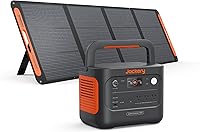
What Is an Anker SOLIX Alternator Charger?
An Anker SOLIX alternator charger is vehicle charging hardware that uses power from an engine's alternator to recharge a compatible Anker SOLIX portable power station while driving. It can add another charging method beside wall and solar power, but compatibility and installation details must match your vehicle and power station.
On this page (9 sections)
- How does an Anker SOLIX alternator charger work?
- Why would you use one with a portable power station?
- What should you check before buying?
- Can a regular charging cable replace an alternator charger?
- What other charging accessories may fit a smaller station?
- Which small power station shows the trade-off?
- Does an alternator charger replace solar and wall charging?
- What is the safest way to plan installation?
- Is an Anker SOLIX alternator charger worth it?
An Anker SOLIX alternator charger is vehicle charging hardware that uses an engine's alternator to recharge a compatible Anker SOLIX portable power station while you drive.
It gives you a second charging path beside wall charging and portable power station solar charging.
That matters on longer trips, when you may not pass a wall outlet and daylight may not be strong enough for solar.
The charger does not replace the power station itself. It simply feeds that station from the vehicle, so you can recover charge during the journey instead of starting every stop with whatever was left from home.
It also does not suit every vehicle or every station. The alternator, wiring, connector, and input limits all have to match.
The key point is compatibility. The charger, vehicle electrical system, wiring, and portable power station must work together as one matched setup.
A mismatch can mean slow charging, a poor connection, or damage to the vehicle system. That is why model checks come before any purchase or installation plan.
Read Anker's current SOLIX information for the exact model requirements before planning an installation.
Check which stations the charger supports and what vehicle fitment is required.
Then confirm your own station model and vehicle type against that list.
If either one is not named, do not assume it will work.
Think of it as an extra input method, not a universal car cable.
Wall and solar charging still have clear roles, and this option fills the gap while the engine is running and you are on the move.
How does an Anker SOLIX alternator charger work?
An Anker SOLIX alternator charger draws electrical energy from a running vehicle and sends it to a compatible portable power station. The alternator produces power while the engine runs, and the charger manages the connection between the vehicle and the station.
This differs from plugging a small power station into a vehicle accessory socket. An accessory socket is a convenient low-power option, while an installed alternator charger is vehicle hardware that needs a suitable connection and a safe installation plan.
The charger doesn't create free energy. Fuel, engine operation, cable routing, and the vehicle's electrical limits still matter.
It also won't recharge a station when the vehicle is off unless the system is designed for that use.
Why would you use one with a portable power station?
An alternator charger helps when you need to recover battery power during a drive. This can suit road trips, camping, emergency travel, and off-grid work where a wall outlet isn't available and sunlight is uncertain.
The main benefit is timing. A vehicle can cover distance while the power station recharges, so you don't have to stop at a campground outlet or wait for ideal solar conditions.
Solar charging still has a place. It works without running the engine, but output changes with sunlight, panel position, shading, and weather.
A portable power station buying guide can help you compare capacity, output, charging inputs, and portability before choosing a system.
What should you check before buying?
Start with the exact portable power station model, vehicle type, and charger connection. Don't assume that an Anker SOLIX charger works with every Anker station or every vehicle.
Check these points:
- The charger is intended for your portable power station model.
- The vehicle's alternator and electrical system can support the planned setup.
- The cable route keeps wiring away from heat, moving parts, and sharp edges.
- The installation instructions match your vehicle.
- The charger has the connection and input requirements your station needs.
- You understand when the system operates and when it should be disconnected.
If the instructions call for professional installation, follow that direction. A vehicle electrical system can be damaged by incorrect wiring, poor grounding, or an unsuitable fuse arrangement.
How is it different from the EcoFlow version?
An Anker SOLIX alternator charger and an EcoFlow alternator charger serve a similar purpose, but they are not automatically interchangeable. Their connectors, input ranges, installation methods, and supported power stations may differ.
Compare the details with what the EcoFlow alternator charger does before mixing brands. Our EcoFlow 800W alternator charger review is another useful comparison point for readers deciding which charging system fits their setup.
Can a regular charging cable replace an alternator charger?
A regular AC cable cannot replace installed alternator charging hardware. An AC cable connects a power station to a compatible wall-style outlet, while an alternator charger connects the vehicle's electrical supply to a compatible station through a different charging setup.
The HulkGoo Heavy-Duty Power Station Charging Cable is useful for AC charging when your power station accepts its connector. It is a 6 ft, 14AWG, 3-conductor cable with a NEMA 5-15P to IEC C13 connection, rated at 125 V and 15 A.
Its listed compatibility includes Jackery Explorer 3000, 2000, 1500, and 1000 Pro models, EcoFlow DELTA and RIVER series models, Bluetti EB3A, and Anker 757 or 767. Confirm your station's socket before ordering.
Choose this type of cable for a wall outlet or another suitable AC source. Choose an alternator charger when you need vehicle-based charging designed for that charging system.
What other charging accessories may fit a smaller station?
A compact AC/DC adapter is better suited to a compatible small power station than to an installed alternator-charging setup. It can help when the station accepts the adapter's voltage, current, and connector.
The MARBERO 19V AC/DC Adapter Power Cord Power Supply Plug has an AC input range of 100V to 240V at 50/60Hz and an 18V to 19V output for devices drawing less than 1.5A. It has a 47.2 in wire, a compact 2.8 x 1.7 x 1.6 in body, and a 2-pin Type A plug.
Use it only with a compatible MARBERO model and the correct connector. Its purpose is adapter-based charging, not direct replacement of an Anker SOLIX alternator charger.
Which small power station shows the trade-off?
A small power station can be easy to carry, but its charging needs and output limits are different from a large Anker SOLIX setup. The Daran Portable Power Station has an 89.6Wh LiFePO4 battery, 100W output, and 200W peak output.
It measures 6.5 x 3.3 x 4 in and weighs 2.54 lb. It has 2 AC sockets, 2 USB-C ports, 2 USB-A ports, and DC5521 ports, with a digital display and a 4-level LED flashlight.
DaranEner says the station supports AC wall charging, USB-C PD charging, car charging, and solar charging. The solar panel is optional and not included.
Its DC5521 input is 10V to 30V DC, 3A maximum, with a recommended solar panel voltage of 18V to 35V.
This station suits lightweight needs such as phones, laptops, cameras, and other devices within its 100W limit. It isn't a substitute for a higher-capacity system when you need longer runtime or heavier loads.
Does an alternator charger replace solar and wall charging?
No. An alternator charger adds another input method, while wall and solar charging remain useful in different situations.
Wall charging is convenient before a trip, solar charging works during suitable daylight, and alternator charging works while the vehicle is running.
A practical setup may use all three:
- Charge from a wall outlet before leaving.
- Use solar when parked in clear sunlight.
- Use alternator charging during longer drives.
- Keep an AC cable or compatible adapter for backup charging.
Each method covers a different gap. Wall charging is simple at home, but it is not available on the road.
Solar charging is quiet and works at a campsite, but it depends on weather, angle, and shade.
Alternator charging covers travel time, but it needs a compatible vehicle setup and a running engine.
Use the best portable power station charger guide to compare charging accessories by connector, source, and station compatibility.
What is the safest way to plan installation?
Treat vehicle charging as an electrical installation, not as a casual cable swap. Match the charger to the vehicle and station, follow the manufacturer's instructions, and protect wiring from heat, movement, moisture, and abrasion.
Before using the system, confirm that connections are secure and that the cable cannot contact belts, fans, exhaust parts, pedals, or sharp body panels. Stop if a cable becomes hot, damaged, loose, or unusually discolored.
Also separate the charger from the power station's storage needs. A station should be stored according to its instructions, and a vehicle should not be left running in an enclosed space because of exhaust risk.
Is an Anker SOLIX alternator charger worth it?
An Anker SOLIX alternator charger is worth considering if you regularly drive and need a compatible power station to recharge during travel. It is less useful if you mostly camp near wall power, rely on solar, or don't want vehicle installation work.
Choose alternator charging for drive-time recovery. Choose solar for quiet charging while parked, and choose wall charging for simple preparation at home.
If you are comparing complete systems, review what an Anker SOLIX Power Dock is, compare Anker SOLIX F3800 vs F3800 Plus, and see how the options fit within the best Anker solar generators. The right choice depends on your vehicle, station model, charging habits, and expected load.
Frequently asked questions
What does an Anker SOLIX alternator charger do?
An Anker SOLIX alternator charger sends charging power from a vehicle's alternator to a compatible portable power station. It gives you a way to recharge during travel instead of relying only on a wall outlet or solar panel.
Check the exact Anker SOLIX model, vehicle system, wiring, and installation requirements before use.
Is an alternator charger the same as a car charger?
No. A basic car charger usually plugs into a vehicle accessory outlet and has limited output.
An alternator charger is installed into the vehicle's electrical system and is designed to draw power from the alternator for a compatible power station.
The correct hardware depends on the vehicle and the station.
Can I use any portable power station with an Anker SOLIX alternator charger?
No. Compatibility depends on the charger connections, input range, charging method, and the power station's design.
Anker SOLIX equipment should be matched with compatible Anker SOLIX models.
A different brand may need different cables, voltage, or charging hardware.
Does an Anker SOLIX alternator charger replace solar charging?
No. Alternator charging and solar charging solve different problems.
An alternator charger can work while the vehicle is running, while solar charging can work away from the vehicle in suitable sunlight.
Many off-grid users choose between them based on travel time, weather, parking, and how much energy they need.