Best 400 Watt Solar Panels for Homes: Top 9 Picks (November 2026)
The best 400 watt solar panels for home backup power include the Callsun N-Type 16BB 400W Bifacial Solar Panel for shaded home backup arrays, the Renogy Solar Panels 400 Watt N-Type for compact rigid installations, and the ECO-WORTHY 400W Solar Panels N-Type 4pcs for modular DIY arrays.
On this page (3 sections)
The best 400 watt solar panels for homes are Callsun's 400W bifacial panels, which combine 25.6% efficiency with a dual-module design that can reduce the effect of partial shade.
That mix makes practical sense for a home battery that sits in real conditions rather than test conditions.
Renogy is the better fit for a compact rigid setup, while its foldable blanket suits portable power stations and emergency charging.
Those two paths cover most home needs, since a panel that stays mounted will behave differently from one you unfold only when needed.
A 400W panel can support a home battery, but the panel rating is only one part of the system.
Your result also depends on sunlight, temperature, shade, wiring, controller limits and the battery's usable capacity.
Heat and shade matter in daily use, because a panel on a hot roof or partly shaded wall will not match its rating at midday.
Wiring and controller limits matter too, because a charging system can only accept power within its stated voltage and current range.
Battery size shapes the outcome as well, since a small bank fills quickly and then stops taking much charge even if the panel is still producing.
Those limits do not make a 400W panel a poor choice.
They simply mean it works best as part of a matched system rather than as a standalone answer.
Rigid panels suit a fixed roof, shed or ground mount where the array can stay in place through changing weather.
Foldable panels suit storage, travel and outage use where you want to carry charging power and set it up on clear ground.
Choosing between those forms early helps you avoid buying a panel that is harder to mount or harder to store than your home setup allows.
If you're new to portable systems, start with our guide to what is a portable solar panel.
For a movable setup, our best portable solar panels for home use guide explains the trade-offs between foldable and rigid designs.
Use those guides to compare how each style fits your space, your battery and the way you plan to use the system.
Then return to the panel list with a clearer sense of whether fixed output or portable access matters more for your home.
Our picks at a glance
-
1
 Best for shaded home backup arrays
Callsun N-Type 16BB 400W Bifacial Solar Panel
9.7/10 our score
See it on Amazon -
2
 Best for compact rigid installations
Renogy Solar Panels 400 Watt N-Type
9.7/10 our score
See it on Amazon -
3
 Best for modular DIY arrays
ECO-WORTHY 400W Solar Panels N-Type 4pcs
9.3/10 our score
See it on Amazon
- 4
 Best for compact bifacial layoutsCheck it
- 5
 Best for long-life off-grid arraysCheck it
- 6
 Check it
Callsun 450W Bifacial Solar Panel 2-Pack
Best for larger rooftop arrays - 7
 Check it
Renogy 400W Portable Solar Panel for Power
Best for foldable emergency charging - 8
 Best for high-output 12V or 24V banksCheck it
- 9
 Check it
TWELSEAVAN 400W Portable Solar Panel for Power
Best for portable station adapter flexibility
The best 400 watt solar panels for homes
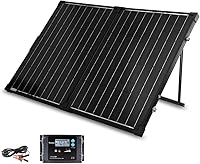
The best 400 watt solar panels for homes fall into two groups: rigid modules for fixed arrays and foldable panels for portable battery charging.
Rigid modules are made to stay mounted on a roof, shed, cabin or ground bracket for long term use.
Foldable panels are made to be carried, unfolded for a charging session and then packed away again.
That basic split helps narrow the choice before you compare efficiency, size or price style details.
Callsun and Renogy lead this list because their 400W options combine useful output with clear system applications.
Callsun offers a two panel bifacial set aimed at supported portable stations and off grid systems with partial shade concerns.
Renogy offers both a compact rigid set and a foldable blanket, so it covers fixed and portable home backup paths.
The rest of the list fills in the gaps between those two main routes.
Smaller 100W modules suit layouts that need more placement choices, while larger 450W and 800W options suit homes that need more than a 400W array.
Our score weighs specs, features and buyer feedback against the needs of home backup power.
Specs help you check size, voltage, current and connector fit before you commit to a mounting plan.
Features help you see whether a panel is bifacial, foldable, rigid or built for a specific station or battery system.
Buyer feedback adds context about how a product behaves in ordinary use, although it does not replace checking the electrical limits yourself.
The products are listed from highest score to lowest score.
That order is meant to put the strongest overall matches for home backup near the top.
It does not mean a lower ranked panel will fail in your home, since fit depends on your roof space, battery and controller.
Read the ranking as a starting point for comparison rather than as a final sizing decision.
Then use the detailed notes for each panel to confirm that its size, wiring and system limits match the setup you actually plan to build.
Callsun N-Type 16BB 400W Bifacial Solar Panel: Best for shaded home backup arrays
- 2 x 200W N-type panels
- 25.6% efficiency
- Bifacial design
- Dual-module parallel anti-shade design
Two 200W bifacial panels form a 400W series setup for supported portable power stations and off-grid systems. The dual-module design helps limit the effect of partial shade.
Pros
- 25.6% efficiency
- Bifacial power generation
- Two-panel 400W setup
Cons
- Rigid panels need mounting space
- Power depends on supported voltage and current limits
Callsun's 400W set uses 2 x 200W N-type bifacial panels, so it gives you a two-module layout rather than one large 400W slab. Each panel measures 51.3 x 30.3 x 1.4 in and weighs 23.8 lb.
The 25.6% efficiency rating is useful when roof or mounting space is limited. The bifacial design can also collect light from the rear when the installation leaves room for reflected or diffuse light to reach it.
Its dual-module parallel anti-shade design divides each panel into 2 operating sections. If part of a panel is shaded by a tree or nearby structure, the unshaded section can continue producing power.
Two panels in series reach 400W total and about 54.62V open-circuit voltage according to the product information. Check your power station's maximum solar voltage and current before connecting them.
This is the strongest match for a fixed backup array that may face partial shade. It also works for supported 12V and 24V systems, but the panel's system label does not mean its actual output voltage is 12V or 24V.
Renogy Solar Panels 400 Watt N-Type: Best for compact rigid installations
- 2 x 200W N-type panels
- 25% efficiency
- 16BB cell technology
- 12V and 24V battery system support
This two-panel 400W set uses a compact footprint for Class B vans, roofs and other space-limited systems. Its 24V panel design can reduce current loss in a compatible setup.
Pros
- Compact panel size
- 25% efficiency
- Works with 12V and 24V battery systems
Cons
- Requires a charge controller and battery for storage
- Series wiring needs a controller with suitable PV input voltage
Renogy's rigid 400W set includes 2 x 200W N-type panels with 25% cell efficiency. Each panel measures 49.7 x 30.1 x 1.2 in, making the pair a compact choice for a roof, Class B van or other tight installation.
The panels are described as 24V panels for 12V and 24V battery systems. That label refers to the battery-system fit, not the panel's measured voltage, so select a charge controller using the actual PV input requirements.
The 16BB cell design is intended to improve current collection and reduce microcrack risk. Renogy also gives a low-degradation claim with 25-year output at 80%, which may matter for a fixed array planned for long service.
You need a charge controller, battery and suitable cables to turn the panel set into a stored-energy system. For series wiring, choose a controller with a maximum PV input voltage that exceeds the combined panel voltage.
Choose this set when roof space is limited and you want 400W from 2 rigid modules. It is less convenient than a blanket if you need to pack the panels away after each use.
ECO-WORTHY 400W Solar Panels N-Type 4pcs: Best for modular DIY arrays
- 4 x 100W panels
- 25% efficiency
- 12V/24V system support
- IP68 junction boxes
Four 100W panels give you more layout choices than two larger modules. The set suits DIY home, garden, RV, boat and off-grid charging systems.
Pros
- Flexible panel placement
- N-type bifacial design
- Pre-drilled mounting holes
Cons
- Four panels create more connections
- The complete set arrives across 2 boxes
ECO-WORTHY takes a different approach with 4 x 100W N-type bifacial panels. Each module measures 35.63 x 23.03 x 1.18 in, so you can arrange the 400W total around roof edges, brackets or smaller clear areas.
The four-panel layout gives you more placement choices than two 200W modules. It also creates more connectors and cable paths, so plan the wiring before mounting anything.
Each panel is rated at 100W and uses MC4 connectors. The set is intended for 12V and 24V battery charging in home, garden, RV, boat and off-grid systems.
The panels have 25% efficiency and IP68-rated junction boxes with bypass diodes. Those details can help with outdoor use and partial-shade management, but they don't remove the need for correct tilt, wiring and controller sizing.
The complete set arrives across 2 boxes. Check that both arrive before starting installation, especially if you are planning one combined array.
JJN 400W Bifacial Solar Panel: Best for compact bifacial layouts
- 2 x 200W modules
- 23% efficiency
- 10BB cell design
- Bifacial rear-side power generation
This two-panel bifacial set suits RVs, boats, cabins and home backup arrays where rear-side light can reach the modules. It is a rigid panel-only package.
Pros
- Bifacial construction
- 23% efficiency
- MC4 connectors
Cons
- No extra components included
- Heavier two-panel package
JJN's package contains 2 x 200W bifacial modules with a 23% efficiency rating and 10BB cell design. Each panel measures 53.7 x 30.3 x 1.18 in, while the complete package weighs 46.2 lb.
The bifacial design can use light from the rear side when the mounting surface reflects sunlight. The possible gain depends on the surface below and the amount of space around the panel, so a tightly enclosed roof mount may benefit less.
JJN describes the modules for RVs, boats, cabins, farms, homes and off-grid systems. The panels have MC4 connectors, an IP65 junction box and IP67 connectors.
This is a panel-only package. You will need the rest of the charging system, including the controller, battery connections and mounting hardware suited to your installation.
Choose JJN when you want a compact bifacial layout and already know which system parts you need. The lack of extra components makes it less suitable for someone expecting a complete backup kit.
HQST 400W Solar Panel: Best for long-life off-grid arrays
- 2 x 200W N-type panels
- 25.4% efficiency
- Bifacial design
- IP68 waterproofing
HQST combines two compact 200W modules with bifacial generation and a stated 30-year service life. It fits rooftops, trailers, boats, farms and other off-grid systems.
Pros
- 25.4% efficiency
- Compact 200W modules
- Strong stated wind and snow load ratings
Cons
- The package is rigid
- The product data does not specify a full accessory kit
HQST supplies 2 x 200W N-type bifacial panels with a stated 25.4% efficiency. Each module measures 47.2 x 30.1 x 1.2 in and weighs 21.58 lb, giving this set a compact footprint for campervans and rooftops.
The bifacial design is intended to collect direct and reflected light from both sides. HQST states that the panels can produce up to 30% more energy in suitable conditions, but the actual gain depends on surface reflectivity, panel height and tilt.
The 16BB cell design and IP68 waterproofing suit a fixed outdoor array. HQST also states 2400 Pa wind resistance, 5400 Pa snow load capacity and an 87.4% output level after 30 years.
Those long-life figures are useful for comparing fixed installations, but they don't predict the energy your home will receive each day. Sun exposure and system design still control daily charging.
Choose HQST when compact 200W modules and long-term outdoor use matter. Confirm the included hardware and electrical limits before planning the complete array.
Callsun 450W Bifacial Solar Panel 2-Pack: Best for larger rooftop arrays
- 450W panels
- 25.6% efficiency
- N-type 16BB cells
- Dual-module parallel anti-shade design
These 450W modules offer more rated power per panel than the 400W picks. Choose them only when the larger size and higher-voltage system requirements fit your array.
Pros
- More power per panel
- Bifacial double-glass design
- 25.6% efficiency
Cons
- Larger footprint
- Not a 400W-rated panel
Callsun's 450W option is the highest-output module here, with 450W per panel and 25.6% efficiency. The 2-pack uses large panels measuring 69.37 x 44.65 x 1.18 in each, so measure your roof or ground-mount area first.
The N-type 16BB cells and bifacial design suit larger arrays where you want more rated power from each module. The dual-module parallel anti-shade layout can reduce the impact of uneven shade across a panel.
The double-glass construction and aluminum frame are designed for outdoor use. Callsun gives a 30.08V maximum voltage and 14.97A amperage capacity, so your controller or inverter must support the electrical configuration.
This is not a 400W panel. It belongs on this list because a 450W panel may reduce the number of modules needed for a larger home backup array.
Choose it when you have room for large modules and a compatible high-voltage MPPT system. Choose a 400W set instead if your mounting space or controller is sized around 400W modules.
Renogy 400W Portable Solar Panel for Power: Best for foldable emergency charging
- 400W foldable solar blanket
- 25% efficiency
- 16-fold design
- MC4 output
This 400W solar blanket stores in a compact folded form and suits power stations, camping, RVs and blackout preparation. The 4-in-1 adapter is sold separately.
Pros
- Foldable storage
- Lightweight for a 400W option
- 25% efficiency
Cons
- MC4 output only
- Output depends on power-station input limits
Renogy's portable option is a 400W solar blanket that folds to 16.54 x 15.83 x 4.13 in and weighs 16.1 lb. The 16-fold design suits emergency storage, SUVs, vans, campers and temporary charging areas.
Its 25% efficiency rating and N-type cells help it make useful power from a portable footprint. You can place it on sunny ground, across a windshield or between trees and racks when the setup is secured.
The blanket has MC4 output and is described as compatible with supported Jackery, EcoFlow and Anker power stations. The 4-in-1 adapter is sold separately, so check your station's connector and solar input limits before ordering accessories.
A foldable panel is easier to store than a rigid rooftop array, but it needs to be unfolded and positioned for each charging session. Output also changes with sun angle, temperature, shade and cable length.
Choose this blanket when home backup means keeping a portable battery charged during an outage. For a permanent roof array, a rigid panel set is usually easier to leave in place.
DOKIO 800W Solar Panels: Best for high-output 12V or 24V banks
- 2 x 400W panels
- 800W total
- 9.84 ft lead per panel
- MC4 connectors
DOKIO is for buyers who need more than a 400W array and have room for two large panels. Its long leads can help place the array farther from the controller.
Pros
- 800W total output
- Long leads
- Tempered glass and aluminum frame
Cons
- Large and heavy package
- Needs a controller and inverter sized for total current
DOKIO is the high-output choice, with 2 x 400W panels for 800W total. Each panel measures 67.8 x 44.6 x 2.4 in, and the package weighs 44.45 kg, so this setup needs substantial mounting space and planning.
Each panel has a 9.84 ft MC4 lead. That extra reach can help place the array farther from the controller, while fewer panels than an 8 x 100W layout mean fewer connection points.
DOKIO describes the panels for 12V and 24V systems and recommends a controller sized for the total current. Parallel wiring is the default for 12V use, while series wiring requires a suitable controller.
The tempered glass and aluminum frame suit outdoor installations such as yards, sheds, cabins, patios and off-grid systems. The sealed junction boxes are rated IP65.
Choose DOKIO when 400W is not enough and your battery bank, controller and inverter can handle 800W. It is too large for buyers who only need a compact home backup panel.
TWELSEAVAN 400W Portable Solar Panel for Power: Best for portable station adapter flexibility
- 400W foldable panel
- 24% efficiency
- 8-in-1 MC4 converter setup
- 4 adjustable kickstands
This foldable panel includes an MC4 connector cable and DC adapters for supported portable power stations. Confirm that your station accepts more than 46.9V before connecting it.
Pros
- 24% efficiency
- Foldable design
- Multiple adapter options
Cons
- Not suitable for small stations below its voltage requirement
- Keep the control box dry
TWELSEAVAN's 400W portable panel uses a foldable design, 24% efficiency and 4 adjustable kickstands. It weighs 22 lb and folds to 26 x 35.5 in, so it can be stored between emergency charging sessions.
The package includes a 5-in-1 MC4 connector cable and 3 DC adapters. Those connection options can help with compatible Jackery, EcoFlow, Bluetti, Flashfish and Anker power stations, but the station still needs to accept the panel's electrical output.
The key check is voltage. TWELSEAVAN gives a 46.9V open-circuit voltage and says the panel is not suitable for small power stations that support less than that.
The ETFE laminated case, polyester canvas back and IP65 rating suit outdoor use. Keep the control box dry, wipe dust away with a damp cloth and store the panel clean, dry and cool.
Choose this panel when adapter flexibility and foldable storage matter. For a fixed home battery array, compare its voltage requirement with a rigid panel system before choosing it.
How should you choose 400 watt solar panels for home backup?
Choose a rigid 400W set for a fixed roof or off-grid array, and choose a foldable panel when you need to store and move the charging system. The correct choice also depends on voltage, available space, shade and the battery you plan to charge.
Rigid panels or foldable panels?
Rigid panels stay in position and suit a roof, shed, cabin or ground mount.
That fixed position is the main benefit, because the array can keep charging without daily setup or packing away.
It is also the main limit, because you must have clear mounting space that will suit the panel size for the long term.
Callsun, Renogy, ECO-WORTHY, JJN and HQST all provide rigid options, but their module counts range from 2 x 200W to 4 x 100W.
Two larger modules are simpler to wire and need fewer connection points across the array.
Four smaller modules give more choice in placement around roof edges, brackets or odd shaped clear areas.
That flexibility comes with more cables and connectors to plan, route and secure.
Foldable panels are easier to store during an outage or outdoor trip.
Renogy's blanket folds into a smaller package, while TWELSEAVAN adds kickstands and several adapter options.
A foldable panel can be moved to follow better sun during the day, which rigid roof panels cannot do.
That mobility helps in a yard, campsite or driveway where shade changes with the sun and nearby objects.
The trade off is that you must unfold, position, connect and store the panel each time you use it.
It also needs a power station or battery system that can accept its voltage and current.
If you need charging for an electric vehicle, read our guide to using a portable solar panel for EV charging before choosing a panel.
EV charging usually needs more planning than charging a small battery.
A vehicle battery is much larger than a home backup bank, so a 400W panel may add useful charge without filling it quickly.
Cable length, station limits and connector types also become more important when the vehicle and panel are not stored together.
Check those points before assuming a portable panel will be a practical EV charging solution at home.
For most home backup use, the simpler question is whether you want a panel that stays mounted or one you can carry and set up when needed.
Answer that first, then check space, voltage and battery fit for the style you prefer.
How much space do you have?
Measure the clear mounting area before comparing efficiency. Two 200W panels may fit differently from four 100W panels, while the 450W Callsun and 800W DOKIO options need substantially more room.
Leave space for wiring, mounting hardware, airflow and safe access. Do not assume the product's total wattage tells you how many panels will fit.
What voltage and current limits matter?
Check the panel's voltage, current and connection layout against the charge controller or portable power station. Series wiring raises voltage, while parallel wiring raises current, so both the controller and the battery system must support the chosen arrangement.
A panel's “12V” or “24V” label describes the system it is intended to serve. It is not necessarily the panel's measured operating or open-circuit voltage.
How should you care for the panels?
Keep rigid panels and portable panels free of heavy dust and debris. Clean the surface gently with a damp cloth when needed, and let a portable panel cool before folding and storing it.
Inspect cables and connectors before charging. For portable units, keep the control box dry and follow the power station's input limits.
Which 400 watt solar panel is best for your home?
The Callsun N-Type 16BB 400W Bifacial Solar Panel is the best overall match for a home backup array because it combines 2 x 200W modules, 25.6% efficiency and partial-shade support.
That combination suits a fixed array where part of a panel may be shaded while the rest of the system still needs steady charging.
Choose Renogy's rigid set when compact roof dimensions matter.
Its two 200W panels have a smaller footprint than several other rigid options, which helps on a limited roof or van top.
Pick ECO-WORTHY if you want 4 smaller panels for flexible placement.
That layout can spread 400W across separate clear areas instead of forcing one large rectangle into a single spot.
Choose Renogy or TWELSEAVAN when you need a foldable panel for a portable battery.
A foldable panel makes more sense when you want to store the system in a closet, vehicle or garage between uses.
Choose DOKIO or the 450W Callsun when your system needs more output than a 400W array.
Those options need more mounting space and a controller or inverter sized for the higher total power.
Your next step is to match panel voltage, current and total wattage to the battery and controller.
That check should come before you compare minor differences in efficiency between two panels.
Series wiring raises voltage and parallel wiring raises current, so the connection layout must fit the input limits of your equipment.
Confirm the connector types as well, since a panel with the wrong plug style can add adapter costs and extra connection points.
Then use our guide to how backup power works for electronics and our explanation of how a UPS switches to battery power to plan what your system should keep running during an outage.
That planning helps you set realistic limits for lights, phones, routers and other essentials.
It also helps you decide whether 400W is enough for the loads you want to support.
For lighting during a blackout, see our guide to the best lanterns for power outages.
A balanced home setup pairs a panel that fits your space with a battery and controller that fit the panel.
When those three parts match, a 400W array can provide dependable daytime charging for home backup use.
Our top 3 picks at a glance
-
1
Best for shaded home backup arrays
Callsun N-Type 16BB 400W Bifacial Solar Panel
9.7/10 our score
See it on Amazon -
2
Best for compact rigid installations
Renogy Solar Panels 400 Watt N-Type
9.7/10 our score
See it on Amazon -
3
Best for modular DIY arrays
ECO-WORTHY 400W Solar Panels N-Type 4pcs
9.3/10 our score
See it on Amazon
Frequently asked questions
Are 400 watt solar panels enough for home backup power?
A 400W panel can help recharge a home battery, but it won't define the whole backup system by itself. Your usable energy depends on sunlight, shade, panel angle, wiring, charge-controller limits and battery capacity.
For larger loads or faster recovery, connect multiple compatible panels and size the controller for the array.
What does 400W mean on a solar panel?
400W is the panel's rated maximum power under standard test conditions. Real output is usually lower because sun angle, heat, shade, dirt, wiring and device input limits reduce available power.
A 400W set may also use multiple panels, such as 2 x 200W or 4 x 100W.
Should home backup panels be rigid or portable?
Rigid panels suit a fixed roof, shed or off-grid array where you can leave the system mounted. Portable blankets suit emergency storage, camping and power stations because they fold away after use.
Check voltage, current and connector limits before pairing either style with a battery system.
Can bifacial solar panels improve home backup charging?
Bifacial panels can produce extra energy from light reaching their rear side, but the gain depends on installation height, tilt and the reflectiveness of the surface below. They need suitable spacing and exposure to benefit from rear-side light.
A shaded or tightly mounted panel may gain less.
How many solar panels do I need for my house?
The number depends on your daily watt-hour use, battery size, available sunlight and the output of each panel. A 400W panel is a starting point, not a complete sizing answer.
Use our guide to how many solar panels you need for your house before choosing an array.