9 Best Portable Power Stations for TVs (November 2026)
The best portable power stations for TVs include the Jackery Explorer 300 Portable Power Station for most TVs, the Jackery Explorer 1000 v2 Portable Power Station for long outage viewing, and the BLUETTI Elite 30 V2 Portable Power Station for TV and sensitive electronics.
On this page (7 sections)
- The best portable power stations for TVs
- How do you choose a portable power station to run a TV?
- What output should a portable power station for TV have?
- How much battery capacity do you need for outage viewing?
- AC or DC: which output is better for a TV?
- How should you set up a portable power station for TV use?
- Which portable power station is best for your TV?
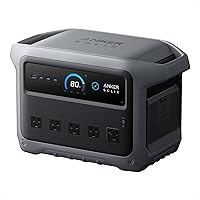
The best portable power station for most TVs is the Jackery Explorer 300, with 292Wh of capacity, 300W output and a compact 7.5 lb design. Choose the Jackery Explorer 1000 v2 or Anker SOLIX S2000 when you want longer outage coverage or power for several devices.
A portable power station for TV use needs two things: enough AC output for the TV and enough battery capacity for the viewing time you want. The output rating answers whether the station can power the TV, while watt-hours help estimate how long it can keep running.
For a wider explanation of battery size, ports and recharge options, read our best portable power station complete buying guide. If you need backup for several household devices, compare these picks with our guide to the best portable power station for home.
Our picks at a glance
-
1

-
2
 Best for long outage viewing
Jackery Explorer 1000 v2 Portable Power Station
9.5/10 our score
See it on Amazon -
3
 Best for TV and sensitive electronics
BLUETTI Elite 30 V2 Portable Power Station
9.3/10 our score
See it on Amazon
- 4
 Check it
Anker SOLIX C300 DC Portable Power Station
Best for DC-focused setups - 5
 Check it
ALLWEI Portable Power Station 300W
Best lightweight AC option - 6
 Check it
Anker SOLIX S2000 Portable Power Station
Best for whole-room backup - 7
 Check it
Anker SOLIX C300 Portable Power Station
Best for compact AC setups - 8
 Check it
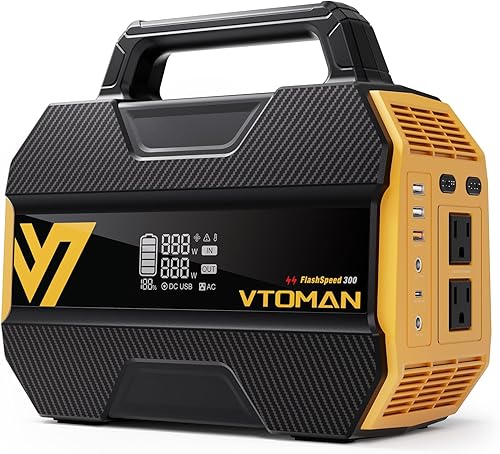
VTOMAN FlashSpeed 300 Portable Power Station
Best for TV and camping gear - 9
 Check it
EnginStar Portable Power Station 300W 296Wh Solar
Best for a simple emergency setup
The best portable power stations for TVs
The best portable power station for TV use depends on your viewing time, TV wattage and the other devices you plan to connect. Compact 230Wh to 296Wh models are easier to carry, while 1,070Wh and 2,010Wh stations offer a much larger reserve.
We compared the stated capacity, output, AC outlets, weight and charging features against a typical TV backup job. Our score weighs specs, features and buyer feedback against what you're shopping for.
| Product | Best for | Capacity | Rated output | Weight | Our score |
|---|---|---|---|---|---|
| Jackery Explorer 300 Portable Power Station | most TVs | 292Wh | 300W | 7.5 lb | 9.6 |
| Jackery Explorer 1000 v2 Portable Power Station | long outage viewing | 1,070Wh | 1,500W | 9.5 | |
| BLUETTI Elite 30 V2 Portable Power Station | TV and sensitive electronics | 288Wh | 9.3 | ||
| Anker SOLIX C300 DC Portable Power Station | DC-focused setups | 288Wh | 9.2 | ||
| ALLWEI Portable Power Station 300W | lightweight AC option | 256Wh | 9.2 | ||
| Anker SOLIX S2000 Portable Power Station | whole-room backup | 2,010Wh | 35.7 lb | 9.1 | |
| Anker SOLIX C300 Portable Power Station | compact AC setups | 288Wh | 9.1 | ||
| VTOMAN FlashSpeed 300 Portable Power Station | TV and camping gear | 230Wh | 9.0 | ||
| EnginStar Portable Power Station 300W 296Wh Solar | a simple emergency setup | 296Wh | 8.6 |
Jackery Explorer 300 Portable Power Station: Best for most TVs
- 292Wh capacity
- 300W rated output
- 2 AC outlets
- 7.5 lb compact design
The Explorer 300 balances enough battery capacity for many TV sessions with a small 7.5 lb body. Its 2 AC outlets and 300W output suit a TV plus modest streaming equipment.
Pros
- Light to carry
- 2 AC outlets
- 300W output
- 292Wh capacity
Cons
- Less capacity than the larger picks
- Solar panel sold separately
The Jackery Explorer 300 is the strongest all-around choice for a TV because it pairs a 292Wh battery with 300W rated output in a compact body. At 7.5 lb, it is easier to move from a living room to a campsite than the larger stations.
Two AC outlets let you connect a TV and one additional AC device. The 100W USB-C port, 2 USB-A ports and 120W car port also give you other ways to charge phones or small electronics without using an AC outlet.
Jackery gives a simple working-time formula of 300Wh multiplied by 0.85, then divided by the device's operating power. Using the stated 60W example gives about 4.3 hours, but the Explorer 300's 292Wh title capacity means your real estimate should use the actual capacity and TV wattage.
The Explorer 300 shuts off if the total load goes above 300W. Check the TV label and include accessories such as a streaming box, soundbar or game console before connecting them.
The station includes an AC adapter, car charger cable and user guide. A solar panel is not included, and Jackery says a 100W solar panel can reach 80% capacity in about 2.8 hours.
Jackery Explorer 1000 v2 Portable Power Station: Best for long outage viewing
- 1,070Wh capacity
- 1,500W output
- 3 pure sine wave AC ports
- 23.8 lb weight
The Explorer 1000 v2 gives a large reserve for long TV sessions and extra home equipment. Its 1,500W output also leaves more room for devices that draw more power than a TV.
Pros
- Large capacity
- 1,500W output
- 3 AC ports
- Foldable handle
Cons
- Heavier than compact picks
- Solar panel sold separately
The Jackery Explorer 1000 v2 is the better choice when a TV may need to run through a long outage. Its 1,070Wh capacity and 1,500W AC output give you much more room than the compact stations in this roundup.
Three pure sine wave AC ports can support a TV and other household electronics at the same time. The 23.8 lb weight and foldable handle make it portable, but it takes more planning to move than a 7 lb class station.
Jackery gives this model a 3,000W surge peak and says its LFP battery maintains more than 70% of its original capacity after 4,000 cycles. The large output rating is useful when a TV setup includes devices with higher startup demand, but always check each device's rating.
The station defaults to a 1.7-hour charging mode. Emergency charging can reach a full charge in 1 hour through the Jackery App, and the app also offers a 30 dB quiet overnight charging mode.
The box includes the Explorer 1000 v2 and user manual. A solar panel is not included, and this model is compatible only with Jackery solar panels for solar charging.
BLUETTI Elite 30 V2 Portable Power Station: Best for TV and sensitive electronics
- 288Wh capacity
- 600W continuous output
- 10ms UPS switch
- 9 total power outlets
The Elite 30 V2 combines a compact 288Wh battery with 600W output and a 10ms UPS switch. It fits a TV setup that also includes a router, laptop or other electronics.
Pros
- 600W continuous output
- 10ms UPS function
- 9 total outlets
- 9.4 lb weight
Cons
- Similar capacity to smaller 300W models
- Power Lifting Mode is a separate 1,500W mode
The BLUETTI Elite 30 V2 is a smart match for a TV setup that also includes sensitive electronics. It combines 288Wh capacity, 600W continuous output and a 10ms UPS switch in a unit weighing about 9.4 lb.
The 600W continuous rating gives more output headroom than the 300W compact models. That can help when the TV shares power with a router, laptop or other small electronics, although the battery still limits total viewing time.
BLUETTI's runtime formula uses 288Wh, 95% depth of discharge and 90% inverter efficiency, then subtracts device power and self-consumption. That makes the model's actual TV runtime dependent on both the TV's wattage and whether you use AC or DC output.
The Elite 30 V2 has 9 total power outlets and supports AC, car, lead-acid battery and solar charging. BLUETTI states that AC charging can reach 80% in 45 minutes and 100% in 70 minutes.
It includes an AC charging cable, car charging cable and user manual. The 10ms UPS function is useful if you want a TV setup to keep receiving power during a sudden interruption, but it doesn't create extra battery capacity.
Anker SOLIX C300 DC Portable Power Station: Best for DC-focused setups
- 288Wh capacity
- 300W output
- 7 charging ports
- Two 140W USB-C ports
The C300 DC is a good fit when your setup relies on USB-C and car-style power rather than AC outlets. It has 288Wh and 300W output, but check that your TV setup can connect to its available ports.
Pros
- Compact 4.89 x 7.87 x 4.72 in body
- Two 140W USB-C ports
- 7 ports
- 300W output
Cons
- DC model needs a compatible TV connection
- No AC outlet is stated in the product title or data
The Anker SOLIX C300 DC is best for a TV setup that can use DC or USB-C power. It has 288Wh capacity, 300W output and 7 ports, including two 140W USB-C ports and a 120W car socket.
This model is different from the AC version of the C300 because the supplied product data focuses on DC and USB-C connections. Confirm your TV's input requirements before choosing it, especially if your TV normally uses a standard AC plug.
The compact body measures 4.89 x 7.87 x 4.72 inches and weighs 2.8 kg. Anker recommends a 100W or 60W solar panel and says the station can recharge to 80% in 1 hour through its dual USB-C setup.
The first activation requires an 18W or higher USB-C wall charger through the USB-C2 or USB-C3 ports. The box includes a 60 cm 140W USB-C to USB-C charging cable, safety manual and warranty information.
ALLWEI Portable Power Station 300W: Best lightweight AC option
- 256Wh capacity
- 300W continuous output
- Pure sine wave AC outlet
- 6.4 lb weight
The ALLWEI 300W keeps the setup light at 6.4 lb while offering a pure sine wave AC outlet for a TV. Its 256Wh capacity is best for shorter sessions than the larger stations.
Pros
- Lightweight
- Pure sine wave AC outlet
- Pass-through charging
- 6 output ports
Cons
- Lowest capacity among the main compact picks
- Only 1 AC outlet
The ALLWEI Portable Power Station 300W is a lightweight AC option for shorter TV sessions. Its 256Wh battery and 300W continuous output fit a single TV, while the pure sine wave AC outlet is intended for sensitive electronics.
At 6.4 lb, it is one of the easier stations to carry between rooms or pack in a vehicle. The single AC outlet keeps the setup simple, while the 2 DC5521 ports, car port, USB-A port and 60W USB-C port can handle other devices.
ALLWEI states that the station supports pass-through charging, so it can charge connected devices while it recharges. It also gives 3.5 to 4 hours for AC or car charging and 4 to 5 hours with a 100W solar panel.
The 300W continuous rating is the key limit. Add the TV, streaming device and any sound equipment together, then leave room below the station's output limit.
The box includes an AC cable, DC car cable and user manual. The solar panel is sold separately.
Anker SOLIX S2000 Portable Power Station: Best for whole-room backup
- 2,010Wh capacity
- 1,500W continuous output
- 3,000W peak output
- 8 power outlets
The S2000 is the strongest choice for a TV plus several home essentials during a long outage. Its 2,010Wh battery is substantial, but the 35.7 lb body is less convenient to move.
Pros
- Largest capacity here
- 1,500W continuous output
- 35-hour refrigerator runtime claim
- 8 outlets
Cons
- Heaviest pick
- No 12V DC port
The Anker SOLIX S2000 is the best choice when the TV is only one part of a larger outage setup. Its 2,010Wh battery, 1,500W continuous output and 8 outlets give it the largest reserve in this roundup.
Anker states that the S2000 can keep a refrigerator running for up to 35 hours under its test conditions. That does not predict TV runtime, but it shows why this model suits buyers who want to power a TV along with other home essentials.
The station measures 8.2 x 11.1 x 12.7 inches and weighs 35.7 lb. Its size is manageable for a home backup unit, but it is much less convenient for frequent carrying than the compact picks.
The S2000 supports up to 400W solar input and has 6 recharge methods, including AC, solar, generator, alternator charger and car outlet options. It has no 12V DC port, so check your accessory plans before choosing it.
Anker states that the station has a less-than-10ms UPS switchover. The UPS feature can help keep connected equipment powered during a short interruption, but the TV still needs to stay within the station's output limits.
Anker SOLIX C300 Portable Power Station: Best for compact AC setups
- 288Wh capacity
- 300W output
- 3 AC outlets
- 25dB stated sound level
The AC version of the C300 gives a compact TV setup 3 AC outlets, 300W output and 288Wh capacity. It works well when you want to keep a TV, streaming device and small accessories together.
Pros
- 3 AC outlets
- Compact design
- 25dB stated sound level
- 50-minute wall charge to 80%
Cons
- Shorter runtime than 1,000Wh-class picks
- Shoulder strap sold separately
The Anker SOLIX C300 is a good compact AC station for a TV, streaming device and small accessories. Its 288Wh capacity, 300W output and 3 AC outlets make it more flexible for a standard plug-in setup than the C300 DC model.
The station also has a 120W car socket, two 140W USB-C ports, a 15W USB-C port and a 12W USB-A port. That gives you several charging options without filling the 3 AC outlets.
Anker says the C300 can reach 80% charge in 50 minutes from a wall outlet. It also supports solar charging with a recommended 60W or 100W Anker panel, and the company states that the model produces 25dB of sound from 3.3 ft away.
The product data states that solar panels should be within 11 to 28V and use an XT60 connector. Anker warns that panels over 100W can cause a malfunction, so match the panel carefully.
The box includes the station, AC charging cable, safety manual and warranty information. A shoulder strap is not included.
VTOMAN FlashSpeed 300 Portable Power Station: Best for TV and camping gear
- 230Wh capacity
- 300W output
- 7 outlets
- 100W USB-C input and output
The FlashSpeed 300 suits portable TV use where low weight and several charging ports matter. Its 230Wh capacity is smaller, so it makes more sense for shorter viewing or simple setups.
Pros
- 7 outlets
- 7.4 lb weight
- 100W USB-C
- Pass-through charging
Cons
- Smallest capacity in this roundup
- Runtime depends heavily on TV power draw
The VTOMAN FlashSpeed 300 suits a portable TV setup that also needs several small charging ports. It offers 230Wh capacity, 300W output and 7 outlets, including 2 AC outputs, a 100W USB-C port, 3 USB-A ports and a DC port.
At 7.4 lb, it remains easy to move for camping or emergency use. The 230Wh battery is smaller than the other compact options here, so choose it for shorter viewing or a TV with a lower operating draw.
VTOMAN supports four recharge methods: wall power, solar, a 12V or 24V car or RV outlet and 100W USB-C input. The company states that wall charging takes about 2.5 hours and that the station supports pass-through charging.
The integrated LED light has steady, strobe and SOS modes. Those features can help around a campsite or during an outage, but they don't add TV runtime.
The box includes an AC adapter and charging cable, vehicle cigarette lighter cable, USB-C to USB-C cable, USB-A to USB-C cable and user manual. Turn the AC and DC buttons on before using the matching ports, and shut the unit down fully when it is not in use to reduce standby drain.
EnginStar Portable Power Station 300W 296Wh Solar: Best for a simple emergency setup
- 296Wh capacity
- 300W AC output
- 2 pure sine wave AC outlets
- 8 output ports
The EnginStar R300 provides 296Wh, 300W AC output and 2 pure sine wave AC outlets for a basic TV backup. Its battery care guidance makes regular recharging part of ownership.
Pros
- 2 pure sine wave AC outlets
- 8 output ports
- 6.5 lb weight
- 296Wh capacity
Cons
- Only 300W output
- Battery care requires regular top-ups
The EnginStar R300 is a straightforward emergency backup for a TV and a few small devices. It has 296Wh capacity, 300W AC output and 2 pure sine wave AC outlets, plus 8 output ports in total.
Its 6.5 lb body is easy to carry, and the 2 regulated DC outputs support 12V and 24V devices. USB-A output is rated at 5V/3.1A maximum, while USB-C output is 18W, so use the AC outlets for equipment that needs more power.
EnginStar gives a working-time formula of 296Wh multiplied by 0.85, divided by device power. For a 50W load, that works out to about 5 hours before other factors, but your TV's actual wattage should replace the example.
The station can recharge from a wall outlet, a 12V car socket or a compatible 12V to 25V solar panel. EnginStar recommends fully charging it every 2 to 3 months and recharging before the battery is completely drained.
The box includes the power station, user manual and home charger. The product data also mentions a car charger cable and advises keeping the unit away from water and fire.
How do you choose a portable power station to run a TV?
Choose the station by checking the TV's wattage first, then selecting enough watt-hours for the viewing time you want. A 300W station can power a TV below that limit, but the battery may run out sooner than a 1,000Wh or 2,000Wh model.
Use this rough formula:
Estimated runtime = battery capacity in watt-hours × 0.85 ÷ TV wattage
For example, a 292Wh station paired with a 60W TV gives about 4.1 hours before accounting for inverter losses and other connected devices. If you add a router, streaming stick or soundbar, add their wattage to the TV's load.
The 0.85 factor is only a planning estimate. Display brightness, audio volume, standby draw, inverter efficiency and the TV's power mode can all change the result.
What output should a portable power station for TV have?
Output is the first check for any portable power station for TV use. The continuous or rated AC output must sit above the TV operating wattage so it can run without tripping into overload.
That headroom matters once anything beyond the TV is connected. A streaming box, router, soundbar or game console adds to the total load and is easy to overlook on paper.
The 300W models in this roundup suit basic TV setups where the screen and accessories stay well below that limit. They work well for a few hours of viewing without larger household appliances running at the same time.
A 600W model such as the BLUETTI Elite 30 V2 leaves more room for a TV plus several small electronics. That extra headroom helps when a router and other sensitive gear must stay on during an outage.
The 1,500W models, including the Jackery Explorer 1000 v2 and the Anker SOLIX S2000, give the most flexibility. They can support a TV alongside other home essentials when a whole room needs power.
Do not use the peak or surge number as the normal operating rating. Compare the continuous output with the combined TV and accessory load, because surge ratings cover brief startup demand only.
Check what each device draws before connecting it, since the TV label or manual should state its operating wattage. Adding the ratings for connected accessories gives a clearer picture of real demand.
Pure sine wave AC output can suit electronics that expect normal household style power. The ALLWEI 300W and EnginStar R300 include pure sine wave outlets, while other models list their own outlet features.
If your TV or accessories are sensitive to power quality, check the outlet type before buying. Matching the station to devices you already own is simpler than testing a setup after it is in the room.
Choosing a little more output than you need is usually safer for TV backup. It leaves room for accessories and startup demand, while battery capacity still decides how long you can watch.
How much battery capacity do you need for outage viewing?
Battery capacity decides how long a station can keep a TV running, while output decides whether it can power the TV at all. You need both numbers for a sensible choice for outage viewing.
A 230Wh to 296Wh station is a practical starting point for short sessions. It can suit an evening of viewing with a modest power TV, though higher wattage or extra accessories will shorten that time.
Larger batteries suit longer outages or several devices at once. A 1,070Wh or 2,010Wh model gives a much bigger reserve, but adds weight and takes up more space at home.
Choose the smallest battery that meets your real viewing plan. Too much capacity makes a station harder to move, store or pack, while too little can leave you without power earlier than expected.
The Jackery Explorer 300, BLUETTI Elite 30 V2, Anker SOLIX C300 and EnginStar R300 all sit near 288Wh to 296Wh. That group suits a compact station for a TV and a few small devices rather than whole home backup.
The VTOMAN FlashSpeed 300 has 230Wh, while the ALLWEI model has 256Wh. Those smaller capacities suit shorter sessions or lower power TVs and reward users who value light weight for camping or travel.
For longer backup, the Explorer 1000 v2 has 1,070Wh and the Anker SOLIX S2000 has 2,010Wh. Those models suit extended outages or sharing power with other essentials than just one screen.
Think in terms of sessions rather than a single evening. If you expect several hours at a time or use across more than one outage, the larger reserve can reduce repeated recharging and planning.
If you also need to cover a refrigerator, compare our guide to the best portable power station for refrigerator. That added load changes the battery size to choose, because a fridge can use a large share of the available energy.
AC or DC: which output is better for a TV?
AC output is usually the simplest choice for a standard household TV plug, while DC or USB-C output can work when the TV accepts a matching input. Confirm the TV's connection before choosing a DC-focused station.
The Anker SOLIX C300 DC is aimed at USB-C and car-style power, so it needs more careful compatibility checking. The AC version of the Anker SOLIX C300 has 3 AC outlets, and the Jackery Explorer 300 has 2 AC outlets.
A portable UPS can be useful when you want connected equipment to stay powered through a short interruption. Read what a portable UPS is before choosing a model for a TV, router or home office setup.
How should you set up a portable power station for TV use?
Place the station on a dry, stable surface with room around its vents, connect the TV directly or through a suitable accessory, and keep the combined load below the continuous output rating. Charge the station before an expected outage and confirm that the display shows the AC output is active.
Keep the power station away from water, heat and open flames. Do not cover its vents, and follow the model's instructions for solar panels, wall charging and pass-through use.
For indoor placement ideas and other household devices, see our guide to the best portable power station for indoor use. If sleep equipment is also part of your emergency plan, compare the best portable power station for CPAP.
Which portable power station is best for your TV?
The right pick depends on how long you want to watch, how much other gear you need to power, and how often you expect to move the station. A light station is easier to keep ready, while a larger one gives you more time when outages stretch on.
Jackery Explorer 300 is the balanced choice for most TV setups. Its 292Wh capacity and 300W output suit a TV plus modest streaming equipment, and its compact design makes it easier to carry between rooms or pack for a trip.
Choose the Jackery Explorer 1000 v2 when you want much longer runtime and more output headroom. Its larger battery and higher output make it a better fit for long outage viewing or a TV setup that shares power with extra household devices.
The Anker SOLIX S2000 suits buyers who want a TV plus several home essentials in one station. Its large reserve is helpful when viewing is only part of a wider backup plan, although its heavier body is less convenient for frequent carrying.
If your setup needs a fast UPS switch, the BLUETTI Elite 30 V2 stands out with its 10ms UPS function. That feature can help keep connected electronics powered through a sudden interruption, which matters when routers or other sensitive gear sit alongside the TV.
For a simple lightweight AC setup, the ALLWEI 300W and EnginStar R300 keep the focus on portability, pure sine wave AC power and basic emergency use. They suit shorter viewing sessions and simpler setups where weight matters more than a large battery reserve.
The compact Anker SOLIX C300 and VTOMAN FlashSpeed 300 also work well when portability is the priority. Check the outlet types and capacity against your TV and accessories first, because DC focused or smaller battery models need a closer match to the job.
Before you decide, add up the wattage for the TV and every accessory you plan to connect. That simple check, paired with the viewing time you actually want, will point you to the station size that fits your home rather than the largest option in the list.
Our top 3 picks at a glance
-
1
-
2
Best for long outage viewing
Jackery Explorer 1000 v2 Portable Power Station
9.5/10 our score
See it on Amazon -
3
Best for TV and sensitive electronics
BLUETTI Elite 30 V2 Portable Power Station
9.3/10 our score
See it on Amazon
Frequently asked questions
Can a portable power station run a TV?
Yes, a portable power station can run a TV if its AC output exceeds the TV's operating wattage and the station has enough usable battery capacity. Check the TV label or manual, then compare that number with the power station's rated output.
Runtime also changes with screen size, brightness and connected devices.
What size portable power station do I need for a TV?
A compact station around 230Wh to 300Wh can suit shorter TV sessions when the TV uses modest power. Choose 1,000Wh or more for longer outages, several viewing sessions or a TV setup that also powers a router, soundbar, game console or streaming box.
How long will a portable power station run a TV?
A rough estimate uses battery capacity multiplied by 0.85, divided by the TV's wattage. A 292Wh station paired with a 60W TV gives about 4.1 hours before accounting for other losses, while actual time can be shorter when the AC inverter and accessories draw power.
Can I use a portable power station for a smart TV?
Yes, if the station supplies compatible AC power and enough wattage. A smart TV may also need a router or streaming device, so include those loads in your estimate.
Keep the station in a dry, ventilated place and follow its instructions for charging and operation.
Should a TV use a surge protector with a portable power station?
A surge protector can add another layer between the TV and its power source, but it doesn't increase battery runtime. Check the station's instructions before adding one, and read our guide on whether you should plug a TV into a surge protector for setup considerations.