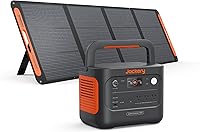
9 Best Portable Power Stations for CPAP Machines (November 2026)
The best portable power stations for CPAP machines include the Anker SOLIX C1000 Gen 2 Portable Power for long CPAP backup, the Jackery Explorer 300 Portable Power Station for balanced camping use, and the BLUETTI Elite 30 V2 Portable Power Station for efficient CPAP backup.
On this page (8 sections)
- How we chose the best portable power station for CPAP
- Best portable power station for CPAP: our top picks
- How long will a portable power station run a CPAP?
- Should you use a humidifier with a CPAP battery?
- Is a portable UPS better than a solar generator for CPAP?
- How should you choose a CPAP power station?
- Can one CPAP power station run other emergency devices?
- Final choice: which portable power station is best for CPAP?
The best portable power station for CPAP machines is the Anker SOLIX C1000 Gen 2 when you need the most runtime, fast recharge and a 10 ms UPS. Smaller options such as the Jackery Explorer 300 or MARBERO 150Wh are easier to carry, but they leave less reserve for a full night.
A CPAP power station must match more than the machine's plug. You also need to account for the CPAP's watt draw, the inverter, the sleep duration, the humidifier and heated tubing.
For broader sizing help, start with our guide to the best portable power station. If you need household backup rather than bedside backup, compare the best portable power station for home.
Our picks at a glance
-
1
-
2
 Best for balanced camping use
Jackery Explorer 300 Portable Power Station
9.6/10 our score
See it on Amazon -
3
 Best for efficient CPAP backup
BLUETTI Elite 30 V2 Portable Power Station
9.3/10 our score
See it on Amazon
- 4
 Check it
ALLWEI Portable Power Station 300W
Best for several small devices - 5
 Check it
VTOMAN FlashSpeed 300 Portable Power Station
Best for fast USB-C charging - 6
 Check it
MARBERO Portable Power Station 150Wh Camping Solar
Best for short CPAP outages - 7
 Check it
BLUETTI Elite 10 Mini Portable Power Station
Best for travel and carry-on use - 8
 Check it
EnginStar Portable Power Station 300W 296Wh Solar
Best for regulated DC accessories - 9
 Check it
HOWEASY Portable Power Station 300W
Best for compact home backup
How we chose the best portable power station for CPAP
The best portable power station for CPAP use needs enough watt-hours for your sleep period, an output rating above the machine's demand and a recharge plan that fits your outage risk. We compared capacity, output, UPS details, charging methods, weight and CPAP-specific information in the supplied product data.
Capacity sets the basic limit for how long the battery can help. A larger battery gives more reserve, but it also adds weight and takes up more space at the bedside.
Output is a different question from capacity. The station must meet the machine's operating draw and handle any startup demand without shutting down.
UPS detail matters when the goal is automatic backup. A stated switchover time helps you judge whether power will continue at the moment the wall supply fails.
Charging methods shape daily use after an outage. A station that can refill from the wall, a car or solar power gives you more options when the outage lasts for a day or more.
Weight decides whether the station can move with you. A light unit suits camping, travel and a nightstand, while a heavier unit often suits a fixed shelf in a bedroom or RV.
We gave more weight to practical fit than to raw numbers alone. A long-runtime home backup and a compact travel station serve different needs, even when their output ratings look close.
Specs and listed features form the base of each score. Runtime for a CPAP still depends on the machine, its settings and any heated accessories connected to it.
A CPAP may use less energy without heat, but a humidifier and heated tubing can change the result. Measure the complete setup if possible, then add reserve instead of sizing to the machine's average watt draw alone.
Startup draw is easy to miss in a quick estimate. The motor, humidifier plate and tubing heater do not always draw power at a steady level through the night.
Inverter loss also reduces the energy that reaches the machine. That loss is part of why a simple watt-hour figure rarely matches real runtime exactly.
A DC adapter, when approved for your model, can avoid some of that loss. It should be checked against the CPAP manual for voltage, polarity and connector fit before use.
Care needs sit alongside the electrical math. You should not change heat or airflow settings just to stretch a battery without checking the guidance for your treatment.
Storage and charging habits matter between outages. Keep the station charged as its maker directs, test the setup before you need it and store it where you can reach it quickly.
The right pick is the one that matches your sleep length, your machine's draw and your likely outage scenario. Extra reserve is useful, but only if the unit is easy enough to keep ready and use.
Best portable power station for CPAP: our top picks
The Anker SOLIX C1000 Gen 2 is the best overall pick for long backup, while the Jackery Explorer 300 is a more portable choice for camping. BLUETTI's Elite 30 V2 stands out when you want higher continuous output in a smaller battery class.
| Product | Best for | Capacity | Output | UPS | Our score |
|---|---|---|---|---|---|
| Anker SOLIX C1000 Gen 2 Portable Power | long CPAP backup | 1,024Wh | 2,000W, 3,000W peak | 10 ms switchover | 9.7 |
| Jackery Explorer 300 Portable Power Station | balanced camping use | 292Wh | 300W, 600W peak | 9.6 | |
| BLUETTI Elite 30 V2 Portable Power Station | efficient CPAP backup | 288Wh | 600W, 1,500W lifting power | 9.3 | |
| ALLWEI Portable Power Station 300W | several small devices | 256Wh | 300W, 600W peak | 9.2 | |
| VTOMAN FlashSpeed 300 Portable Power Station | fast USB-C charging | 230Wh | 300W | 9.0 | |
| MARBERO Portable Power Station 150Wh Camping Solar | short CPAP outages | 150Wh | 100W, 150W peak | 9.0 | |
| BLUETTI Elite 10 Mini Portable Power Station | travel and carry-on use | 128Wh | 200W | 8.8 | |
| EnginStar Portable Power Station 300W 296Wh Solar | regulated DC accessories | 296Wh | 300W | 8.6 | |
| HOWEASY Portable Power Station 300W | compact home backup | 222Wh | 300W | 8.2 |
Anker SOLIX C1000 Gen 2 Portable Power: Best for long CPAP backup
- 1,024Wh capacity
- 2,000W output
- 3,000W peak
- 10 ms UPS
- 600W solar input
The 1,024Wh battery gives the most reserve in this group, while the 10 ms UPS suits CPAP machines during sudden outages.
Pros
- Largest capacity here
- Fast 49-minute AC recharge
- 10 ms UPS
Cons
- Heavier than compact picks
- Expansion feature removed
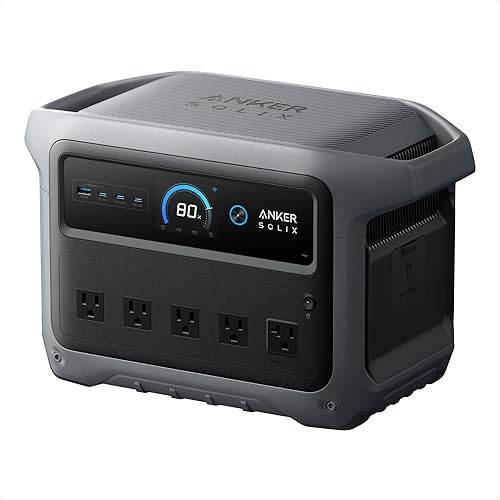
The Anker SOLIX C1000 Gen 2 Portable Power Station is the strongest choice when a CPAP must stay powered for a longer outage. Its 1,024Wh capacity is the largest in this roundup, and the 2,000W output leaves wide headroom above a typical CPAP load.
The station also specifies a 10 ms UPS backup, which helps reduce interruption during a sudden power cut. That matters most when your CPAP is connected to AC power and you want the station to take over automatically.
Anker gives the C1000 Gen 2 a 49-minute full recharge at 1,600W with HyperFlash enabled in the app. It also accepts up to 600W of solar input and can recharge fully in 1.8 hours under the stated conditions.
The trade-off is size and weight. It weighs 11.3 kg and measures 15.1 x 8.2 x 9.6 in, so it suits a bedroom, emergency shelf or RV more than a light backpack.
Jackery Explorer 300 Portable Power Station: Best for balanced camping use
- 292Wh capacity
- 300W rated output
- 600W peak
- 2 AC outlets
- 100W USB-C PD
This compact 292Wh station combines a 300W output with AC, USB-C, USB-A and car charging ports for CPAP camping trips.
Pros
- Light 7.1 lb design
- LiFePO4 battery
- Solar charging option
Cons
- Solar panel sold separately
- Less capacity than larger picks
The Jackery Explorer 300 Portable Power Station is a good middle ground for CPAP camping because it weighs 7.1 lb while carrying a 292Wh battery. Its 300W rated output and 600W peak are enough for many small CPAP setups, but you should check your machine's total draw first.
It has two AC outlets, a 100W USB-C PD port, two USB-A ports and a 120W car port. The mix works well when you need to power a CPAP and charge a phone or small device without carrying another charger.
Jackery gives several recharge paths. The Explorer 300 can charge from AC, a car port or a compatible solar panel, with the solar panel sold separately.
This is not the longest-runtime option here. If your CPAP uses a heated humidifier all night, the 292Wh capacity may be less suitable than the larger Anker or a direct DC setup.
For cooler Setup without humidification, the balance of weight and capacity is easier to justify. Keep the panel and cables within easy reach if you plan to recharge away from home.
BLUETTI Elite 30 V2 Portable Power Station: Best for efficient CPAP backup
- 288Wh capacity
- 600W output
- 1,500W Power Lifting
- 10 ms UPS
- 380W wall charging
The Elite 30 V2 offers a 600W output, low stated standby use and a 10 ms UPS in a compact 288Wh format.
Pros
- 600W continuous output
- 45-minute 0 to 80% charge
- App control
Cons
- Heavier than several 300W models
- Solar charging cable may be needed
The BLUETTI Elite 30 V2 Portable Power Station suits buyers who want 600W continuous output in a 288Wh station. Its 10 ms UPS feature is useful for CPAP backup, while the 1,500W Power Lifting mode gives extra output for selected loads.
BLUETTI states that the station uses 4.5W of standby power in AC mode, 5W in DC mode and 8W with AC and DC active. Lower self-consumption can help preserve energy, although your CPAP and its accessories remain the main variables.
The Elite 30 V2 reaches 80% in 45 minutes and full charge in 70 minutes at the stated wall charging rate. It supports AC, car, solar, lead-acid battery and combined AC plus solar charging.
At 9.5 lb, it is heavier than the Jackery and several smaller stations. It is better for a car, nightstand or emergency kit than for long-distance carrying.
That trade-off suits buyers who value output headroom over the lightest possible pack.
ALLWEI Portable Power Station 300W: Best for several small devices
- 256Wh capacity
- 300W output
- 600W peak
- 6 output ports
- Pure sine wave AC
Six output ports and a 256Wh LiFePO4 battery make this a practical choice for a CPAP, phone and other low-power camping gear.
Pros
- Lightweight 6.4 lb body
- Pass-through charging
- AC plus solar recharge
Cons
- Solar panel sold separately
- 300W output limit
The ALLWEI Portable Power Station 300W is a practical pick for a CPAP plus several small electronics. Its 256Wh LiFePO4 battery delivers 300W continuous power and 600W peak surge through a pure sine wave AC outlet.
The output layout includes one AC outlet, two DC5521 ports, one car port, one USB-A fast-charge port and one 60W USB-C PD port. It can charge up to 6 devices at the same time, although using several outputs reduces the energy available for the CPAP.
ALLWEI states that AC or car charging takes 3.5 to 4 hours, while a 100W solar panel takes 4 to 5 hours. AC plus solar charging can take 2 to 2.5 hours under the stated conditions.
The 6.4 lb weight makes this easier to move than larger stations. Its 256Wh capacity is still best for shorter backup periods or CPAP use without heavy humidifier demand.
Sharing the station with small accessories is easiest when you total the combined watt draw first.
VTOMAN FlashSpeed 300 Portable Power Station: Best for fast USB-C charging
- 230Wh capacity
- 300W output
- 100W USB-C PD
- 7 outlets
- LiFePO4 battery
The FlashSpeed 300 fits buyers who want 100W USB-C input and output alongside a 300W station for CPAP and personal electronics.
Pros
- 100W USB-C PD
- Four recharge methods
- Pass-through charging
Cons
- 230Wh capacity is mid-range
- Complete shutdown is needed to avoid standby drain
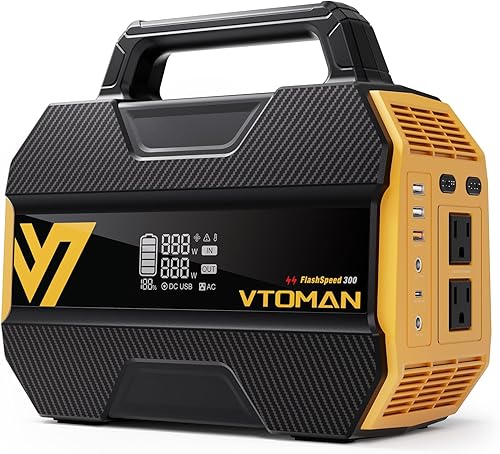
The VTOMAN FlashSpeed 300 Portable Power Station fits buyers who want a compact CPAP backup with a strong USB-C charging path. It has a 230Wh LiFePO4 battery, 300W output and 7 outlets, including two AC outputs, one 100W USB-C port, three USB-A ports and one DC port.
The 100W USB-C port works as both an input and output channel. That can make it useful for charging modern electronics, while the AC outlets handle CPAP equipment that needs a standard wall plug.
VTOMAN gives four recharge methods: wall power, solar, a 12V or 24V vehicle or RV outlet and the 100W USB-C input. It also supports pass-through charging.
The station weighs 7.4 lb and measures 10.24 x 4.72 x 7.87 in. Its 230Wh capacity gives less reserve than the Jackery, so measure your CPAP draw before choosing it for a full night.
Pass-through charging can help keep devices powered while the station itself refills.
MARBERO Portable Power Station 150Wh Camping Solar: Best for short CPAP outages
- 150Wh capacity
- 100W AC output
- 150W peak
- 4 USB ports
- Built-in flashlights
MARBERO states that its 150Wh station can run a CPAP machine for 3 to 3.5 hours, making it suited to brief outages or travel.
Pros
- Lightest pick here
- CPAP runtime estimate supplied
- Three recharge methods
Cons
- Shorter backup time
- 100W AC output limit
The MARBERO Portable Power Station 150Wh Camping Solar is best for a short outage or a low-draw CPAP setup. MARBERO states that the 150Wh station can power a CPAP machine for 3 to 3.5 hours, so it is not the first choice for a full night with high humidifier demand.
It weighs only 2.9 lb and measures 7.25 x 4.31 x 4.66 in. That makes it the easiest model here to carry in a small travel bag or keep beside a camping bed.
The unit has a 100W AC outlet with a 150W peak, 3 USB ports, one QC3.0 USB port and 4 DC ports. Two built-in LED flashlights offer steady and SOS modes for outages or outdoor use.
MARBERO includes a wall adapter, car cables and a user manual. A solar panel is not included, and the 150Wh capacity calls for careful runtime planning.
Its light weight is a clear benefit when a short backup is enough.
BLUETTI Elite 10 Mini Portable Power Station: Best for travel and carry-on use
- 128Wh capacity
- 200W AC output
- 10 ms UPS
- 100W USB-C
- 4 lb weight
The 128Wh Elite 10 Mini is the easiest station here to carry, with a 10 ms UPS and 200W AC outlet for lower-demand CPAP setups.
Pros
- Compact 4 lb design
- 10 ms UPS
- Fast 70-minute AC charge
Cons
- Smallest battery among the main UPS picks
- Airline approval is required
The BLUETTI Elite 10 Mini Portable Power Station is the best travel-sized pick when low weight matters. Its 128Wh battery, 200W AC output and 10 ms UPS fit smaller CPAP backup needs, but the capacity is limited compared with the other UPS models.
The station weighs 4 lb and measures 7.8 x 5.7 x 4.3 in. BLUETTI says the 128Wh unit falls within the 100 to 160Wh range and may be carried on most major airlines with prior approval, with a limit of 2 per passenger.
It supports 150W AC charging, 100W solar charging and 100W car charging. Bluetooth app control lets you monitor power and adjust settings, while the built-in light offers warm, cool and SOS modes.
Choose it for short trips or a CPAP setup with modest draw. For all-night operation with a heated humidifier, its 128Wh capacity may be too small.
Prior airline approval should be arranged before travel.
EnginStar Portable Power Station 300W 296Wh Solar: Best for regulated DC accessories
- 296Wh capacity
- 300W AC output
- 2 pure sine wave AC outlets
- Regulated 12V and 24V DC outputs
- 8 output ports
EnginStar pairs a 296Wh battery with regulated 12V and 24V DC outputs, which can help when your CPAP setup uses compatible DC equipment.
Pros
- Two AC outlets
- 296Wh capacity
- Three recharge methods
Cons
- USB-C output is 18W
- Solar panel sold separately
The EnginStar Portable Power Station 300W 296Wh Solar Generator is useful when your CPAP setup includes compatible DC equipment. It has regulated 12V and 24V DC outputs, two 110V pure sine wave AC outlets and a total of 8 output ports.
The 296Wh battery is close to the Jackery's capacity, while the 300W AC output handles devices below that limit. EnginStar gives a working-time formula of 296Wh multiplied by 0.85, divided by the device's operating watts.
It can recharge through a wall outlet, a 12V car socket or a compatible 12 to 25V solar panel. At a maximum charging speed of 65W, EnginStar states that it can reach 80% in 2 hours.
The station weighs 3.6 kg and measures 9.1 x 5 x 7 in. Its USB-C output is 18W, so check the charging needs of any laptop or accessory before connecting it.
Regulated DC outputs may help when an approved adapter is part of your setup.
HOWEASY Portable Power Station 300W: Best for compact home backup
- 222Wh capacity
- 300W output
- 65W USB-C
- 9-device charging
- Pure sine wave AC
The HOWEASY K300 offers a 222Wh battery, 300W output and nine charging connections in a 5.5 lb body.
Pros
- 65W USB-C port
- Folding handle
- Three recharge methods
Cons
- Solar panel sold separately
- No stated CPAP runtime
The HOWEASY Portable Power Station 300W offers a compact 222Wh option for CPAP backup at home, in a car or at a campsite. Its 300W output uses a pure sine wave AC design, and the station can charge 9 devices at once.
The port layout includes two QC3.0 USB ports, one USB port, one 65W USB-C port, three DC ports and two AC sockets. The separate ports are useful when a CPAP shares the station with phones, lights or other low-power equipment.
HOWEASY supports solar charging from an 18 to 24V panel, AC wall charging and car charging. The solar panel is not included.
The folding handle helps reduce the footprint, while the 5.5 lb weight keeps it fairly easy to move. Since no CPAP runtime is stated, calculate from your machine's measured draw before relying on it overnight.
That calculation should include any humidifier or tubing draw.
How long will a portable power station run a CPAP?
A portable power station's CPAP runtime depends on battery capacity, inverter loss, the machine's watt draw and any heated accessories. A useful estimate is:
Estimated hours = watt-hours × usable efficiency ÷ total watts
For example, a 300Wh station at an assumed 85% usable efficiency would provide about 255Wh before the CPAP load is applied. If the complete setup draws 30W, the simple estimate is about 8.5 hours.
That example is only a calculation method, not a promise of runtime. Your CPAP may draw more when the humidifier or heated tubing is active, and some stations use energy while the inverter is on.
The product data gives specific formulas for several models. Jackery uses 300Wh multiplied by 0.85, divided by operating power, while BLUETTI uses battery capacity multiplied by 95% depth of discharge and 90% inverter efficiency, then divides by device power plus self-consumption.
Should you use a humidifier with a CPAP battery?
A CPAP humidifier can shorten backup time because heating water uses more energy than airflow alone. If a full night of backup is your priority, compare your machine's draw with the humidifier and heated tubing turned on.
The difference is often largest when the room is cold. The heater may cycle more often, so a runtime measured in a warm room may not hold on a cold night.
Airflow alone is usually the lower-energy part of the setup. That is why two nights that look the same on paper can use very different amounts of battery power.
Total draw is the figure that matters for sizing. Add the machine, the humidifier plate and the heated tubing before you compare the result with a station's capacity.
Some users may prefer a lower-energy setup without heat, but comfort and care needs differ. Follow your CPAP manufacturer's instructions and ask your sleep clinician before changing settings that affect your treatment routine.
Do not treat lower energy use as a reason to change your prescribed settings. Comfort during sleep and the care plan for your condition come first.
If you test a setup without heat, treat that test as information only. It shows what the battery can do, but it does not decide what your machine should do.
A direct DC adapter may reduce inverter losses when it is approved for your CPAP model. It can also make the setup easier to pack, since you carry a smaller cable instead of a full AC supply.
Never assume that a plug or voltage match is enough. The adapter needs to match the exact CPAP model and its power input requirements.
Confirm the adapter's compatibility and polarity before connecting it. An approved part number from the CPAP maker is a safer guide than a similar-looking third-party cable.
Check the station's DC output as well. The voltage and current range must suit the adapter, not just the station's other ports.
Heat settings can also affect how the machine behaves through the night. A setting that feels fine for an hour may be costly over eight hours of backup.
For a short outage, you may accept a smaller battery and a simpler setup. For a full night, you should plan around the highest realistic draw, then add reserve.
Pack the adapter and cables together so the setup is easy to find in the dark. That small step matters when power fails and you need to get the machine running quickly.
Label the tested setup if you use more than one machine or adapter. Clear labels reduce the chance of pairing the wrong parts during an emergency.
Is a portable UPS better than a solar generator for CPAP?
A portable UPS is better when your main concern is an automatic handoff during a blackout. A solar generator is better when you also need to recharge away from the wall, such as at a campsite or during a long outage.
The Anker SOLIX C1000 Gen 2, BLUETTI Elite 30 V2 and BLUETTI Elite 10 Mini specify 10 ms UPS switching. The Jackery Explorer 300, ALLWEI, VTOMAN, MARBERO, EnginStar and HOWEASY provide portable battery power, but the data does not specify a UPS switchover time for each one.
Read What Is a Portable UPS? The Complete Guide if automatic backup is your main goal.
For solar-focused household planning, compare the best solar generator for home.
How should you choose a CPAP power station?
Choose capacity first, then confirm output, adapter needs, recharge options and carrying weight. A station that can run a CPAP for 3 hours may be ideal for a short outage but unsuitable for a full night.
Use these checks before buying:
- Measure the CPAP's complete watt draw, including the humidifier and heated tubing.
- Choose more watt-hours than the basic runtime calculation requires.
- Confirm the AC output is above the CPAP's operating and startup demand.
- Check whether a manufacturer-approved DC adapter is available.
- Look for a UPS feature if a short interruption could wake you or stop therapy.
- Decide whether wall, car or solar charging matters most.
- Keep the station charged and follow its storage guidance.
A larger unit may be safer for long outages, but it takes more room and weighs more. A small unit is easier to carry, yet it leaves less room for humidifier use, phone charging or a second night.
Can one CPAP power station run other emergency devices?
Yes, a station can also support selected low-power devices, but every connected load reduces CPAP runtime. Add the watt draw of a phone charger, fan, light or router before deciding how much capacity you need.
For a refrigerator, use a station with enough continuous and peak output for the compressor. Our guide to the best portable power station for refrigerator explains why startup demand matters.
If you need apartment-friendly backup for several small devices, see the best portable generator for apartments. For battery chemistry, our guide to the best LiFePO4 power station compares why LiFePO4 appears across many of these picks.
Final choice: which portable power station is best for CPAP?
The Anker SOLIX C1000 Gen 2 is the best portable power station for CPAP machines when you want the largest battery, fast recharge and a specified 10 ms UPS. It suits a bedroom shelf, an RV or a home backup spot where weight is less of a concern.
Pick the Jackery Explorer 300 for a lighter camping setup. Its 292Wh battery and 300W output fit a smaller CPAP load, but you should check the machine's full draw before relying on it all night.
Pick the BLUETTI Elite 30 V2 for 600W output in a 288Wh station. Its 10 ms UPS and higher continuous output give more headroom, while its 9.5 lb weight makes it better for a car or nightstand than for long carrying.
Pick MARBERO for a short outage where low weight matters most. Its 150Wh battery and 2.9 lb body suit brief backup and travel, but the stated CPAP runtime of 3 to 3.5 hours is not a full-night plan for every setup.
Measure your complete CPAP setup before choosing. Include the humidifier and heated tubing if you use them, since those parts can raise the draw well above airflow alone.
If the humidifier stays on, favor extra capacity and confirm the station's output, adapter and backup behavior with the CPAP manufacturer. That check protects therapy first and helps you size the battery second.
Our top 3 picks at a glance
-
1
-
2
Best for balanced camping use
Jackery Explorer 300 Portable Power Station
9.6/10 our score
See it on Amazon -
3
Best for efficient CPAP backup
BLUETTI Elite 30 V2 Portable Power Station
9.3/10 our score
See it on Amazon
Frequently asked questions
What is the best portable power station for CPAP machines?
The Anker SOLIX C1000 Gen 2 is the strongest overall choice here because its 1,024Wh capacity gives the most reserve and its 10 ms UPS supports sudden power changes.
For shorter trips, the Jackery Explorer 300 and BLUETTI Elite 30 V2 offer smaller 288Wh to 292Wh batteries with 300W or higher output.
How many watt-hours do I need for a CPAP machine?
Your required capacity depends on the CPAP's measured watt draw, hours of sleep and whether the humidifier or heated tubing is active.
A simple estimate is battery capacity multiplied by usable efficiency, divided by total watts. Use your machine's manual or a watt meter, then add reserve for startup and changing demand.
Does a CPAP humidifier use more power?
Yes, a heated humidifier and heated tubing can increase the total power draw compared with CPAP airflow alone.
For the longest backup, check whether your machine supports a DC adapter and consider turning off heat only if that fits your care plan and comfort. Confirm settings with your sleep clinician when needed.
Can a portable power station run a CPAP all night?
It can, but runtime depends on the CPAP machine, pressure settings, humidifier, heated tubing, inverter loss and battery capacity.
A larger station such as the 1,024Wh Anker gives more reserve than the 128Wh BLUETTI Elite 10 Mini. Calculate from your actual watt draw instead of relying on capacity alone.
Is a UPS feature useful for a CPAP machine?
A UPS can help keep a CPAP powered when household electricity drops or fails. The Anker SOLIX C1000 Gen 2, BLUETTI Elite 30 V2 and BLUETTI Elite 10 Mini specify 10 ms UPS switching.
Check your CPAP manufacturer's guidance before using any backup power source.