8 Best Portable Power Stations for Refrigerators (November 2026)
The best portable power stations for refrigerators include the Anker SOLIX C1000 Gen 2 Portable Power for fast refrigerator backup, the EF ECOFLOW Portable Power Station Delta for UPS refrigerator backup, and the Jackery Explorer 1000 v2 Portable Power Station for lightweight refrigerator backup.
On this page (9 sections)
- Which portable power station is best for a refrigerator?
- How we ranked these refrigerator backup power stations
- What battery capacity do you need for a refrigerator?
- How much startup power does a refrigerator need?
- Which station is best for solar refrigerator backup?
- Portable power station trade-offs for refrigerator use
- How to use a portable power station with a refrigerator
- Are smaller power stations enough for a refrigerator?
- Verdict: which portable power station should you choose?
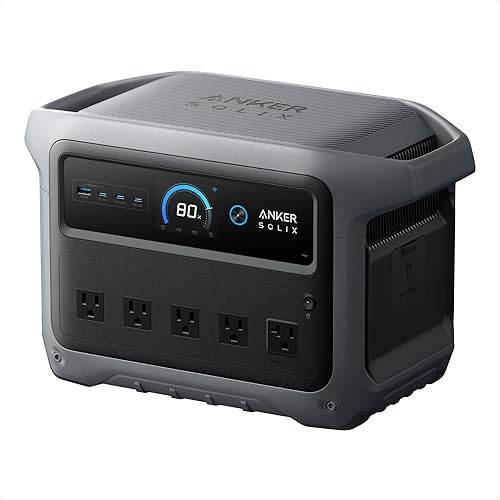
The best portable power station for refrigerator backup is the Anker SOLIX C1000 Gen 2 because it combines a 1,024Wh battery with 2,000W output and a 3,000W peak.
The EF ECOFLOW DELTA 3 Classic is another strong pick for under-10ms UPS switching, while the Jackery Explorer 1000 v2 offers 1,070Wh in a lighter design.
A refrigerator needs more than enough running watts.
Its compressor can draw a higher startup surge, then cycle on and off as the temperature changes.
That cycling pattern is why sizing for running watts alone can leave you short on the first start.
A station may be fine for an hour of running and still trip when the compressor kicks in.
Capacity decides how long the battery can keep supplying that cycling load before a recharge is needed.
Output decides whether the station can handle the load at all, including the brief surge at startup.
UPS switching matters when the power cut happens while the refrigerator is already plugged in and running.
With a fast switchover, the gap is smaller, and the appliance sees less interruption.
With a slower switchover, some equipment may notice the change more, even if the battery takes over.
This roundup compares capacity, continuous output, peak output, UPS switching, charging options and portability.
We checked the stated product specifications and features, but we did not test these units with a refrigerator.
That distinction matters because real runtime depends on your refrigerator, its cycling, and what else you plug in.
A full-size refrigerator and a mini-fridge can place very different demands on the same battery.
Check the refrigerator label or manual for running watts and, if listed, starting watts before you shortlist a station.
For broader advice on choosing a best portable power station, start with the battery, output and recharge sections before comparing extra ports.
Look first at the numbers that govern runtime and startup, then weigh port count, app features and added extras.
Extra ports help when you want lights or phones on the same battery, but they do not raise the output ceiling.
Recharge options matter for the next outage, especially if you plan to use solar or a car socket.
Fast AC charging is useful for getting ready again at home, while solar input helps when the outage lasts longer.
Choose the balance that fits your home, your storage space, and how far you expect to carry the unit.
Our picks at a glance
-
1
 Best for fast refrigerator backup
Anker SOLIX C1000 Gen 2 Portable Power
9.7/10 our score
See it on Amazon -
2
 Best for UPS refrigerator backup
EF ECOFLOW Portable Power Station Delta
9.7/10 our score
See it on Amazon -
3
 Best for lightweight refrigerator backup
Jackery Explorer 1000 v2 Portable Power Station
9.5/10 our score
See it on Amazon
- 4
 Check it
BLUETTI Portable Power Station AC180
Best for high-output refrigerator loads - 5
 Check it
OUPES Mega 1 Portable Power Station 1024Wh
Best for expandable refrigerator backup - 6
 Check it
BLUETTI Elite 30 V2 Portable Power Station
Best for small refrigerator loads - 7
 Check it
Anker SOLIX C300 DC Portable Power Station
Best for DC refrigerator setups - 8
 Check it
EnginStar Portable Power Station 300W 296Wh Solar
Best budget-size option for mini-fridges
Which portable power station is best for a refrigerator?
The Anker SOLIX C1000 Gen 2 is the best overall match for many refrigerators because its 2,000W output and 3,000W peak leave useful room for compressor startup.
Its 1,024Wh capacity also gives it a practical reserve for an outage.
The 2,000W continuous rating means the running load has room to breathe, rather than sitting near the limit.
The 3,000W peak gives extra headroom for the short burst when the compressor starts.
That combination suits a home where the refrigerator is the main item on the battery and you want reserve without a much larger unit.
It also fits a setup where a few small extras, such as lights or phones, may share the battery for a time.
The EF ECOFLOW DELTA 3 Classic is close behind with 1,800W output, 3,600W surge and under-10ms UPS switching.
Choose it when fast transfer and app controls matter as much as battery size.
Its 1,800W output covers many refrigerator running loads, and the 3,600W surge rating gives strong room for startup.
The under-10ms UPS figure is a clear advantage when the refrigerator should stay connected through a sudden cut.
App control adds scheduled charging and backup modes, which can help you plan around storms or peak periods.
That planning value grows if the station will sit plugged in at home between occasional uses.
The trade-off is that the surge rating is higher than the continuous output, so running watts still need a careful check.
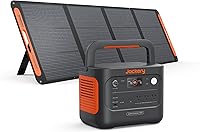
The Jackery Explorer 1000 v2 has a 1,070Wh battery and weighs 23.8 lb.
It is a good fit when you want substantial capacity without moving the 37.4 lb BLUETTI AC180.
Its 1,500W output and 3,000W surge peak suit many refrigerators, but the margin is narrower than the 2,000W models above.
The larger 1,070Wh battery helps offset that when runtime is the main concern.
The foldable handle and lighter body make it easier to move from a closet to the kitchen when a warning arrives.
That ease of movement matters in a real outage, when you may need to lift the unit up stairs or load it into a car.
If your refrigerator has a high startup demand, check that figure before leaning on the lighter option.
Pick the Jackery when weight and capacity balance well for your space, and the Anker or EcoFlow when output headroom is the priority.
Anker SOLIX C1000 Gen 2 Portable Power: Best for fast refrigerator backup
- 1,024Wh capacity
- 2,000W output
- 3,000W peak
- 10ms UPS
The C1000 Gen 2 combines enough output for refrigerator startup surges with a 1,024Wh battery. Its 10ms UPS mode also suits refrigerators and other equipment that should stay connected during an outage.
Pros
- High peak output
- Fast AC recharge
- 10ms UPS
Cons
- No expansion feature
- Solar panel is separate
EF ECOFLOW Portable Power Station Delta: Best for UPS refrigerator backup
- 1,024Wh capacity
- 1,800W output
- 3,600W surge
- Under 10ms UPS
The DELTA 3 Classic offers strong surge headroom for refrigerator startup and under 10ms UPS switching. Its app adds charging schedules and backup modes for planned outage use.
Pros
- High surge rating
- Under 10ms UPS
- Fast AC charging
Cons
- Not compatible with the stated DELTA extra batteries
- Solar panel is optional
Jackery Explorer 1000 v2 Portable Power Station: Best for lightweight refrigerator backup
- 1,070Wh capacity
- 1,500W output
- 3,000W surge
- 23.8 lb weight
The Explorer 1000 v2 gives you the largest stated battery in this group while keeping its weight at 23.8 lb. Its 1,500W output and 3,000W surge suit many refrigerators, but check the refrigerator's startup demand first.
Pros
- Largest stated capacity here
- Foldable handle
- App charging modes
Cons
- Solar panel is not included
- Emergency charging must be enabled in the app
BLUETTI Portable Power Station AC180: Best for high-output refrigerator loads
- 1,152Wh capacity
- 1,800W output
- 2,700W peak
- 20ms UPS
The AC180 has the highest battery capacity in this roundup and 1,800W output for refrigerator backup. Its 20ms UPS mode and 8 outlets make it useful when you also need to power other essentials.
Pros
- Highest capacity here
- 8 outlets
- 500W solar input
Cons
- Heavier at 37.4 lb
- UPS switching is slower than the under-10ms picks
OUPES Mega 1 Portable Power Station 1024Wh: Best for expandable refrigerator backup
- 1,024Wh capacity
- 2,000W output
- 4,500W surge
- Expandable to 5,120Wh
The Mega 1 is a strong choice when refrigerator backup may grow into a larger home power setup. Its expansion system can raise total capacity from 1,024Wh to 5,120Wh with up to 2 B2 Extra Batteries.
Pros
- Highest surge rating here
- Expandable capacity
- App control
Cons
- Expansion batteries add cost and bulk
- Under-20ms UPS is not the fastest in the group
BLUETTI Elite 30 V2 Portable Power Station: Best for small refrigerator loads
- 288Wh capacity
- 600W output
- 1,500W lifting power
- 10ms UPS
The Elite 30 V2 is the lightest AC-capable option here, but its 288Wh battery is better suited to short backup periods. Its 600W output and 1,500W Power Lifting Mode may work for a smaller refrigerator if startup demand fits.
Pros
- Lightweight
- 10ms UPS
- Multiple charging methods
Cons
- Much less capacity than the larger picks
- Power Lifting Mode is not the same as 1,500W continuous output
Anker SOLIX C300 DC Portable Power Station: Best for DC refrigerator setups
- 288Wh capacity
- 300W output
- 7 charging ports
- 2.8 kg weight
The C300 DC is designed around DC and USB charging rather than AC refrigerator loads. It can fit a DC refrigerator setup when the appliance uses compatible power and stays within the station's 300W output.
Pros
- Compact design
- Two 140W USB-C ports
- 100W solar charging option
Cons
- No AC outlets stated
- 300W output limits refrigerator choices
EnginStar Portable Power Station 300W 296Wh Solar: Best budget-size option for mini-fridges
- 296Wh capacity
- 300W AC output
- Two 110V pure sine wave outlets
- 12V and 24V DC outputs
The EnginStar R300 is a compact option for a mini-fridge or other small refrigerator only when its running and startup demands stay under 300W. Its 12V and 24V DC outputs may also suit compatible DC appliances.
Pros
- Lightweight
- Pure sine wave AC outlets
- Three charging methods
Cons
- Limited 300W output
- 296Wh battery gives shorter backup time
How we ranked these refrigerator backup power stations
The score weighs stated specs, features and buyer feedback against what you are shopping for.
Refrigerator use makes startup surge, continuous output, battery capacity and safe recharge options more important than having the highest port count.
A station with many ports can still fail a refrigerator if its output is too low for startup.
A station with fewer ports can still do the job well if its battery, output and UPS figures fit the appliance.
That is why port count sits lower in this ranking, even though it helps with shared backup.
A station needs enough continuous output for the appliance while it runs.
It also needs enough peak output for the compressor initial demand, so compare both figures rather than looking only at watt-hours.
Watt-hours describe stored energy, while watts describe how much power the station can deliver at once.
A large battery with low output may run a small load for a long time, yet fail to start a compressor.
A higher output station with a smaller battery may start the appliance fine, then run out sooner.
Both numbers need to fit, and the refrigerator label is the best place to start.
Battery capacity affects the time between recharges.
The 1,024Wh Anker and EF ECOFLOW models, the 1,070Wh Jackery and the 1,152Wh BLUETTI offer much more reserve than the 288Wh and 296Wh compact stations.
More reserve helps when an outage runs past a few hours or when the refrigerator cycles more often in warm weather.
It also helps when lights, phones or networking gear need power from the same battery.
The smaller stations remain useful, but their role is shorter backup, a mini-fridge, or a compatible DC setup.
UPS timing matters if the refrigerator should remain connected during an outage.
The EF ECOFLOW and Anker C1000 Gen 2 state under-10ms or 10ms switching, while the BLUETTI AC180 states 20ms.
Those differences are small in daily terms, yet they can matter for sensitive electronics plugged in alongside the refrigerator.
For the refrigerator alone, output and capacity usually decide fit, while UPS timing decides how smooth the handover feels.
Recharge speed also entered the ranking, because a station that refills quickly is easier to reset after a short outage.
Solar input limits matter too, since a panel that the station cannot accept will not help in a long outage.
Weight played a role as well, because a heavier station is harder to move to the kitchen or into a vehicle.
The ranking therefore favors balance, rather than a single headline figure taken alone.
What battery capacity do you need for a refrigerator?
A 1,000Wh portable power station is a useful starting point for longer refrigerator backup, but the correct size depends on average watts and outage length. A 288Wh or 296Wh unit may work for a short period or a small DC refrigerator.
Use this rough calculation:
Estimated runtime = battery capacity in Wh × 0.85 ÷ average refrigerator watts
A 1,024Wh station at a steady 100W load gives about 8.7 hours in this simple estimate. Real runtime changes because refrigerators cycle, power stations have conversion losses and conditions affect compressor use.
Keep the refrigerator closed during an outage. Opening the door less often helps preserve the cold air already inside, which can reduce how often the compressor needs to run.
If you also need backup for internet equipment or lights, compare the total load instead of sizing for the refrigerator alone. Our guide to the best portable power station for home covers broader household backup needs.
How much startup power does a refrigerator need?
Startup power varies, so choose a station with more peak output than the refrigerator stated starting watts.
If the refrigerator does not publish startup demand, ask the manufacturer or use a suitable power meter before relying on a station during an outage.
A meter reading taken during a normal start can show the brief rise that the label running watts do not reveal.
That reading can turn a guess into a clearer match, especially for older or larger refrigerators.
Keep in mind that startup can differ with temperature, door openings, and how often the compressor cycles.
A station that starts the refrigerator once may still struggle if cycling becomes more frequent.
The 2,000W Anker C1000 Gen 2 has a 3,000W peak.
The EF ECOFLOW DELTA 3 Classic has 1,800W output and a 3,600W surge, while the OUPES Mega 1 has 2,000W output and a 4,500W surge.
Those higher surge figures give more room for a demanding compressor start.
The continuous rating still matters once the compressor settles into its running cycle.
A refrigerator that runs near the continuous limit leaves little room for other devices on the same battery.
It also leaves less margin if the compressor draws more than expected during a restart.
The 300W EnginStar and 300W Anker SOLIX C300 DC need more careful matching.
Their output is aimed at smaller loads, and the C300 DC is designed around DC and USB ports rather than stated AC refrigerator outlets.
That design difference matters more than the wattage alone, because a standard household refrigerator needs an AC outlet.
A DC refrigerator or a compatible DC appliance fits the C300 DC in a way a household model does not.
The EnginStar R300 does provide AC outlets, but its 300W limit still restricts it to smaller appliances.
Check both the running watts and the connection type before treating either compact unit as a refrigerator solution.
Do not assume a higher surge figure will run every refrigerator.
The appliance running watts, startup behavior and connection type still need to fit the station.
Surge ratings also describe a peak, not a level the station can sustain for hours.
Once the startup burst passes, the continuous output and battery capacity take over.
A wise match leaves room on both sides, for the start and for the run that follows.
Which station is best for solar refrigerator backup?
The BLUETTI AC180 is a strong solar-ready choice because it accepts up to 500W of solar input and has a 1,152Wh battery.
The Anker SOLIX C1000 Gen 2 accepts 600W of solar input and states a 1.8-hour solar recharge time.
The EF ECOFLOW DELTA 3 Classic can recharge in about 2.5 hours with a 500W panel.
The OUPES Mega 1 can combine AC and solar charging, while the Jackery Explorer 1000 v2 is compatible only with Jackery solar panels for solar charging.
Those input limits shape what a panel can do during a long outage.
A station that accepts more solar watts can refill faster in good sun, which helps when the refrigerator keeps cycling.
A station with a smaller input limit will take longer, even with a large panel connected.
Panel size alone does not decide the result, because the station input cap sets the ceiling.
Solar charging depends on sunlight, panel position, cable compatibility and the station input limits.
Cloud cover, shade, panel angle and time of day all change what the panel delivers.
A panel placed well in morning sun may give a different result from the same panel in afternoon shade.
Use only the voltage and wattage range approved for your station.
Exceeding that range risks a poor charge or an error, even when the connectors fit.
Check the panel voltage against the station limits before the outage, not during it.
Keep cables dry, make clean connections, and place the panel where it will not be tripped over or blocked.
Combined AC and solar charging can shorten the wait when wall power is available for part of the recovery.
That option is useful after a short outage, when you want the battery ready again without giving up solar input.
For a long outage with no wall power, solar becomes the main source, so panel placement matters even more.
Store the station with a charge level that lets it accept solar input right away when the sun returns.
A station left empty for weeks may need a slow first charge before it is ready for full use.
For a complete comparison of solar-based refrigerator backup, see our guide to how to run a refrigerator on a solar generator.
Use that guide to match panel and station, then return here to compare output and UPS figures.
Portable power station trade-offs for refrigerator use
The largest stations offer more reserve, but they are harder to move. The BLUETTI AC180 weighs 37.4 lb, while the OUPES Mega 1 weighs 27.8 lb and the EF ECOFLOW DELTA 3 Classic weighs 26.7 lb.
The Jackery Explorer 1000 v2 weighs 23.8 lb and has a foldable handle. The Anker SOLIX C1000 Gen 2 weighs 11.3 kg, or about 24.9 lb, and is designed for moving between rooms, vehicles and outdoor locations.
The BLUETTI Elite 30 V2 weighs 9.5 lb, but its 288Wh battery is much smaller. The EnginStar R300 weighs 6.5 lb and also has 296Wh, making both compact choices better for shorter backup or lower-power appliances.
The OUPES Mega 1 is the expandable option. It can grow from 1,024Wh to 5,120Wh with up to 2 B2 Extra Batteries, which suits a home backup plan that may become larger later.
How to use a portable power station with a refrigerator
First, check the refrigerator's running and starting watts. Compare those figures with the station's continuous and peak output, then place the station where air can circulate around it.
Charge the station before an outage. Connect the refrigerator directly to the station's AC outlet unless it is a compatible DC model, and avoid adding other high-draw appliances until you know how much reserve remains.
Monitor the display or app during the first use. A rising load during compressor startup is normal, but an overload warning means you should disconnect the refrigerator and recheck the power match.
Recharge the station before its battery reaches empty when possible. Follow the model's instructions for AC, solar or car charging, and keep cables dry and undamaged.
If your backup plan includes a television, compare the load separately with our guide to the best portable power station for TV. For short interruptions to network equipment or medical electronics, learn what a portable UPS is before choosing a backup mode.
Are smaller power stations enough for a refrigerator?
Smaller stations can work for a mini-fridge or a compatible DC refrigerator when the appliance stays within the station output limits.
They are not automatic substitutes for the 1,000Wh class models.
The reserve gap is large, and that gap shows up as shorter runtime during an outage.
A compact station can bridge a brief interruption, yet it may not carry a full-size refrigerator through a long night.
The BLUETTI Elite 30 V2 provides 600W continuous output and 1,500W Power Lifting Mode.
The EnginStar R300 provides 300W AC output and 296Wh capacity, while the Anker SOLIX C300 DC provides 300W and 288Wh for DC-focused use.
The Elite 30 V2 is the most capable of the compact group on output, but its 288Wh battery remains small.
Power Lifting Mode helps with a brief higher demand, yet it does not turn 600W continuous output into 1,500W continuous output.
That distinction matters when a compressor starts and then settles into its running load.
The EnginStar R300 suits a mini-fridge or small appliance that stays under 300W.
Its light body makes it easy to keep in a car, a closet, or a small apartment where space is tight.
The C300 DC suits DC and USB devices, including a compatible DC refrigerator setup.
It does not offer the AC outlets that a standard household refrigerator needs.
Choose a compact station when portability and short backup matter more than long runtime.
Choose a larger station when the refrigerator is full-size, the outage may last several hours or other devices must share the battery.
A shared battery drains faster, so a small station leaves less room for phones, lights and networking gear.
Factor that shared load into the estimate before choosing the compact route.
Do not use the EnginStar R300 for an appliance above its 300W AC limit.
Its product information specifically describes the AC output as suitable only for devices under 300W.
Exceeding that limit can trigger overload protection and leave the appliance without power.
Check the refrigerator label, confirm the connection type, and confirm the startup demand where it is listed.
When all three fit, a compact station can be a sensible low-cost backup for small loads.
Verdict: which portable power station should you choose?
Choose the Anker SOLIX C1000 Gen 2 for the best balance of refrigerator startup headroom, 1,024Wh capacity and 10ms UPS switching.
Pick the EF ECOFLOW DELTA 3 Classic when under-10ms transfer, app scheduling and a 3,600W surge rating are your priorities.
Choose the Jackery Explorer 1000 v2 when you want 1,070Wh with a 23.8 lb body.
Pick the BLUETTI AC180 for the largest battery here, or the OUPES Mega 1 if you may expand to 5,120Wh.
Each pick answers a different kind of outage.
The Anker fits a home that wants strong output and a fast handover without moving to the heaviest unit.
The EcoFlow fits a home that values app control and a very fast transfer for equipment plugged in alongside the refrigerator.
The Jackery fits a home that wants capacity with a lighter carry and a foldable handle.
The BLUETTI fits a home where runtime matters most and the extra weight is acceptable.
The OUPES fits a home where refrigerator backup may grow into a larger setup later.
Expansion adds cost and bulk, so it makes sense only when you expect to use the added capacity.
For a small or DC refrigerator, consider the BLUETTI Elite 30 V2, Anker SOLIX C300 DC or EnginStar R300, but confirm the appliance running and startup demand first.
Confirm the connection type as well, since a DC-focused station will not serve a standard AC refrigerator.
A compact station can be the right answer when the load is small and the outage is expected to be brief.
It becomes the wrong answer when a full-size refrigerator must run for many hours.
If you also need a compact backup for phones and small electronics, compare a best portable battery power station or a dedicated power bank battery guide.
Keep the refrigerator closed during the outage, monitor the charge level, and recharge before the battery runs empty where you can.
Match running watts, startup watts, connection type and expected outage length, and the right pick becomes much clearer.
Our top 3 picks at a glance
-
1
Best for fast refrigerator backup
Anker SOLIX C1000 Gen 2 Portable Power
9.7/10 our score
See it on Amazon -
2
Best for UPS refrigerator backup
EF ECOFLOW Portable Power Station Delta
9.7/10 our score
See it on Amazon -
3
Best for lightweight refrigerator backup
Jackery Explorer 1000 v2 Portable Power Station
9.5/10 our score
See it on Amazon
Frequently asked questions
What size portable power station can run a refrigerator?
A portable power station should have enough continuous output for the refrigerator's running load and enough peak output for its compressor startup. Models from this roundup range from 300W to 2,000W continuous output, so check the refrigerator label or manual before choosing.
Battery capacity also matters.
A 1,024Wh or 1,152Wh station generally offers more reserve than a 288Wh or 296Wh model.
How many watts does a refrigerator need to start?
Startup demand varies by refrigerator, compressor and operating conditions. A power station with a higher peak rating gives more room for the initial surge, but the rating alone does not guarantee compatibility.
Check the refrigerator's starting watts when available, then compare that number with the station's peak or surge output.
How long will a portable power station run a refrigerator?
Runtime depends on battery capacity, refrigerator cycling and conversion losses. A rough estimate uses battery watt-hours multiplied by about 0.85, then divides by the refrigerator's average operating watts.
For example, a 1,024Wh station at a steady 100W load would have a simple estimate of about 8.7 hours before cycling and other conditions are considered.
Can a portable power station run a refrigerator during an outage?
Yes, if its continuous and peak output match the refrigerator and its battery has enough capacity for the expected outage. Plug the refrigerator into the AC outlet, keep the station ventilated and monitor its remaining charge.
A UPS mode can help reduce interruption during a power cut, but switching times differ by model.
Is a solar generator the same as a portable power station?
A solar generator usually means a portable power station used with solar panels. The battery station stores energy, while the panel supplies a charging source.
Read our best solar generator for refrigerator guide if you want to compare complete solar charging setups.