9 Best Portable Power Stations for Indoor Use (November 2026)
The best portable power stations for indoor use include the Jackery Explorer 300 Portable Power Station for everyday indoor backup, the Jackery Explorer 1000 v2 Portable Power Station for fridges and larger rooms, and the Anker SOLIX C1000 Portable Power Station for fast recharge at home.
On this page (10 sections)
- Our top portable power stations for indoor use
- How the best portable power station for indoor use compares
- How we compared these indoor power stations
- Can you safely use a portable power station indoors?
- How loud is a portable power station in a bedroom?
- What devices can a portable indoor power station run?
- How much capacity do you need indoors?
- What ports do you need for household devices indoors?
- How should you set up and care for an indoor station?
- Our verdict: which portable power station for indoor use should you buy?
The best portable power station for indoor use is the Jackery Explorer 300 Portable Power Station for most homes, because 292Wh and 300W cover everyday indoor devices in a 7.5 lb unit. The best portable power station for indoor use for larger loads is a 1000Wh model, such as the Jackery Explorer 1000 v2 or Anker SOLIX C1000.
Our score weighs specs, features and buyer feedback against what you're shopping for indoors.
Indoor use changes the choice in three ways. First, you need no fuel and no fumes, so a battery station can sit in a bedroom, office or apartment.
Second, fan noise matters more than it does outside, so charging speed and placement matter. Third, you will plug in household devices, so AC outlets and USB-C ports matter more than solar inputs.
Start with our best portable power station guide if you want the full buying framework. For a fridge, our best portable power station for refrigerator guide adds fridge-specific sizing.
For a TV, our best portable power station for tv guide covers screen wattage and runtime.
Our picks at a glance
-
1
 Best for everyday indoor backup
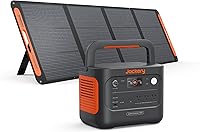
Jackery Explorer 300 Portable Power Station
9.6/10 our score
See it on Amazon -
2
 Best for fridges and larger rooms
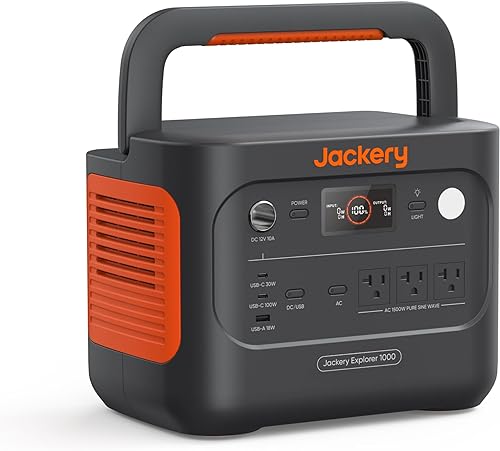
Jackery Explorer 1000 v2 Portable Power Station
9.5/10 our score
See it on Amazon -
3
 Best for fast recharge at home
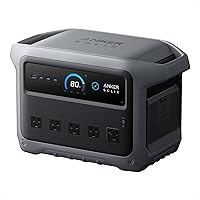
Anker SOLIX C1000 Portable Power Station
9.5/10 our score
See it on Amazon
- 4
 Check it
BLUETTI Elite 30 V2 Portable Power Station
Best for router and CPAP backup - 5
 Check it
ALLWEI Portable Power Station 300W
Best for light night-time use - 6
 Check it
Anker SOLIX C300 DC Portable Power Station
Best for DC devices by the sofa - 7
 Check it
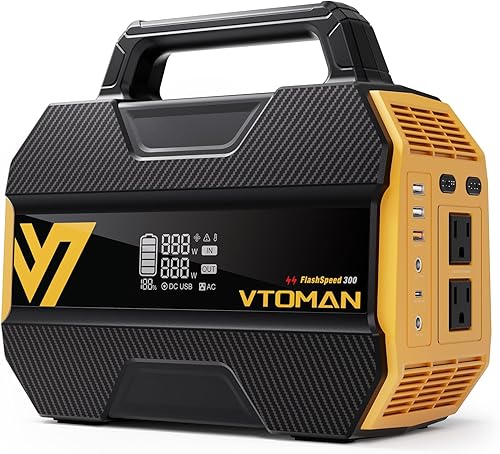
VTOMAN FlashSpeed 300 Portable Power Station
Best for many small devices at once - 8
 Check it
Westinghouse iGen400s 400 Watt
Best for apartments and small rooms - 9
 Check it
MARBERO Portable Power Station 88Wh
Best for phones and small essentials
Our top portable power stations for indoor use
The picks below cover small desks and bedrooms, mid-size living rooms and larger home backup needs. Choose by the devices you plan to plug in first, then by capacity and weight.
Jackery Explorer 300 Portable Power Station: Best for everyday indoor backup
- 292Wh capacity
- 300W rated output, 600W peak surge
- 2 AC outlets, 100W USB-C PD, 2 USB-A, 120W car port
- LiFePO4 chemistry, over 4,000 charge cycles
A light, compact indoor station for laptops, phones, lights and small devices. Its two AC outlets and fast USB-C port suit a desk or bedside table.
Pros
- Light at 7.5 lb with integrated handle
- Two AC outlets plus 100W USB-C PD
- LiFePO4 battery with over 4,000 charge cycles
Cons
- 300W output limits larger kitchen appliances
- Solar panel not included
Jackery Explorer 300 suits a desk, bedside table or living room shelf where you charge a laptop, phone and lights during an outage. Its 292Wh capacity and 300W rated output give steady power for devices under 300W in total.
You get 2 AC outlets, a 100W USB-C PD port, 2 USB-A ports and a 120W car port. That mix covers a laptop by USB-C, phones by USB-A and a small household device by AC at the same time.
At 7.5 lb with an integrated handle, it moves between rooms without much effort. Jackery says the LiFePO4 battery gives over 4,000 charge cycles before reaching 70% capacity.
The trade-off is power. A 300W output will not run a kettle, heater or large kitchen appliance.
For those loads, move up to a 1000Wh model on this list.
Jackery Explorer 1000 v2 Portable Power Station: Best for fridges and larger rooms
- 1070Wh capacity
- 1500W AC output, 3000W surge peak
- 3 AC ports, 2 USB-C, 1 USB-A, 1 DC car port
- 30 dB quiet overnight charging mode in Jackery App
A larger indoor station for fridges, TVs and several appliances at once. The app includes a 30 dB quiet overnight charging mode.
Pros
- 1500W output for multiple appliances
- 1070Wh capacity for longer outages
- 30 dB quiet overnight charging mode
Cons
- 23.8 lb is harder to move between rooms
- Solar panel not included
Jackery Explorer 1000 v2 suits a living room or kitchen where you need to run a fridge, TV and several chargers during a longer outage. Its 1070Wh capacity and 1500W AC output give far more headroom than 300W models.
You get 3 AC ports, 2 USB-C ports, 1 USB-A port and 1 DC car port, plus LED lights. That layout suits a TV, fridge, router and phones plugged in together.
Jackery lists a 30 dB quiet overnight charging mode in the app, which matters if the station charges in a bedroom or quiet office. The default full charge takes 1.7 hours, with a 1-hour emergency mode in the app.
At 23.8 lb, it is not a unit you will carry up stairs often. Choose it for a fixed indoor spot, not for frequent moves between rooms.
Anker SOLIX C1000 Portable Power Station: Best for fast recharge at home
- 1056Wh capacity
- 1800W output, SurgePad 2400W
- 11 versatile ports
- LiFePO4 battery, 3000 cycles over 10-year lifespan
A large indoor station that can recharge to 80% in 43 minutes in UltraFast mode. Its 11 ports suit a living room with many devices.
Pros
- Full charge in under an hour by AC
- 11 ports for many devices
- LiFePO4 battery for long service life
Cons
- 27.6 lb is the heaviest pick here
- UltraFast mode needs AC input and the Anker app
Anker SOLIX C1000 suits a home where outages are frequent and fast recharge matters. It can reach 80% capacity in 43 minutes in UltraFast mode and a full charge in under an hour by AC input.
Its 1056Wh capacity, 1800W output and SurgePad 2400W give strong headroom for a fridge, TV, lights and chargers. Anker lists 11 versatile ports, so many devices can stay plugged in at once.
The LiFePO4 battery gives 3,000 cycles over a 10-year lifespan, Anker says. That long service life suits a station you keep indoors as daily backup.
At 27.6 lb, it is the heaviest pick here. UltraFast mode also needs AC input, a smartphone and the Anker app.
If weight matters more than recharge speed, the Jackery 1000 v2 is lighter.
BLUETTI Elite 30 V2 Portable Power Station: Best for router and CPAP backup
- 288Wh capacity
- 600W continuous, 1500W surge with Power Lifting Mode
- 10ms UPS switchover
- 9 total outlets
A small indoor station with a 10ms UPS function for routers, laptops and CPAP machines. Its 600W output gives more headroom than other small picks.
Pros
- 10ms UPS switchover for critical devices
- 600W output from a 288Wh unit
- 9.4 lb and compact at 9.8 x 7 x 6.6 in
Cons
- 288Wh runs out faster than 1000Wh models
- Power Lifting Mode is for short bursts, not steady loads
BLUETTI Elite 30 V2 suits a bedroom or home office where a router, laptop or CPAP machine must keep going when power cuts. Its 10ms UPS switchover protects those devices during a sudden outage.
You get 600W continuous output from a 288Wh unit, which is twice the continuous output of other small picks here. Power Lifting Mode raises output to 1500W for short bursts.
At 9.4 lb and 9.8 x 7 x 6.6 in, it fits on a desk or in a closet. BLUETTI lists 9 total outlets, so phones and lights can share the unit.
The trade-off is capacity. At 288Wh, it will run out sooner than 1000Wh models during a long outage.
Choose it for critical small devices, not for a fridge all night.
ALLWEI Portable Power Station 300W: Best for light night-time use
- 256Wh capacity
- 300W continuous, 600W peak surge, pure sine wave
- 6 output ports including USB-C PD 60W
- 3-level LED light with SOS mode
The lightest 300W pick here, with a built-in LED light for outages. It suits a hallway, bedroom or desk where you want power and light in one unit.
Pros
- Only 6.4 lb and 9.25 x 5 x 6.81 in
- 6 ports can charge up to 6 devices
- Built-in 3-level LED light with SOS mode
Cons
- Only one AC outlet
- 256Wh capacity is small for long outages
ALLWEI 300W suits a bedroom, hallway or desk where you want backup power plus a light. It weighs only 6.4 lb and measures 9.25 x 5 x 6.81 in, so it stores in a drawer or closet.
Its 256Wh capacity and 300W continuous output cover laptops, phones, lights and small devices. The pure sine wave AC outlet suits sensitive electronics.
You get 6 output ports, including a USB-C PD 60W port and a USB-A fast charge port. ALLWEI also gives a 3-level LED light with SOS mode, which helps during a night-time outage.
The trade-off is one AC outlet and 256Wh capacity. If you need two AC devices at once, the Jackery Explorer 300 or VTOMAN FlashSpeed 300 gives more AC options.
Anker SOLIX C300 DC Portable Power Station: Best for DC devices by the sofa
- 288Wh capacity
- 300W output
- 7 DC charging ports, two 140W USB-C
- LiFePO4 battery, 3-year guarantee
A DC-only indoor station for laptops, phones and tablets. It has no AC outlet, so choose it for USB-C devices, not for a TV or fridge.
Pros
- Two 140W USB-C ports for laptops
- 7 DC ports for phones and tablets
- Compact at 4.89 x 7.87 x 4.72 in
Cons
- No AC outlet for household appliances
- Shoulder strap sold separately
Anker SOLIX C300 DC suits a sofa, desk or study where your devices charge by USB-C. It delivers 300W and 288Wh through DC ports only, with two 140W two-way USB-C ports.
You get 7 DC charging ports in total, including 1 car socket, 2 USB-C 140W, 1 USB-C 100W, 1 USB-C 15W and 2 USB-A ports. That suits laptops, phones and tablets side by side.
At 4.89 x 7.87 x 4.72 in, it is compact enough for a bookshelf. Anker uses a LiFePO4 battery and gives a 3-year guarantee.
The key limit is clear: it has no AC outlet. It cannot power a TV, fridge or fan that needs AC.
Choose it for DC tech only, or pick an AC model for household appliances.
VTOMAN FlashSpeed 300 Portable Power Station: Best for many small devices at once
- 230Wh capacity
- 300W output
- 7 outlets: 2 AC, 1 100W USB-C, 3 USB-A, 1 DC
- Built-in LED light with 3 modes
A small indoor station with 7 outlets for phones, cameras, lights and a CPAP machine. It can recharge to 80% in about 2 hours by 100W PD input.
Pros
- 7 outlets charge 7 devices at once
- Two AC outlets for small household devices
- Built-in LED light with SOS mode
Cons
- 230Wh is the second smallest capacity here
- 300W output limits larger appliances
VTOMAN FlashSpeed 300 suits a family room where many small devices need power at once. It has 7 outlets: 2 AC, 1 100W USB-C, 3 USB-A and 1 DC port.
Its 230Wh capacity and 300W output cover phones, cameras, speakers, lights and a CPAP machine. VTOMAN says it can recharge to 80% in about 2 hours by the 100W PD input.
At 7.4 lb, it moves easily between rooms. A built-in LED light with 3 modes, including SOS, adds night-time use during an outage.
The trade-off is capacity. At 230Wh, it is smaller than the Jackery 300 and ALLWEI models.
Choose it for many ports, not for the longest runtime in this group.
Westinghouse iGen400s 400 Watt: Best for apartments and small rooms
- 183Wh capacity
- 200W running, 400W peak
- 9 outlets including 2 AC, USB-C 100W, 12V DC
- Quiet, fume-free, no fuel
A 5 lb indoor station made for apartments and hard-to-reach outlets. It is quiet and fume-free, with an LED display for battery level and charge time.
Pros
- Only 5 lb with top handle
- Quiet and fume-free for indoor use
- LED display shows battery level and watts out
Cons
- 183Wh capacity is small
- No AC power adapter included for fastest charge
Westinghouse iGen400s suits an apartment or small room where you want quiet, fume-free power. It weighs only 5 lb and has a top handle for quick moves between rooms.
Its 183Wh capacity, 200W running output and 400W peak cover phones, laptops and small electronics. Westinghouse describes it as quiet, fume-free and made for indoor and outdoor use.
You get 9 outlets, including 2 AC outlets, a USB-C 100W port, 3 USB-C 30W ports, 2 USB-A ports and a 12V DC port. An LED display shows battery level, charge time and watts out.
The trade-off is capacity and charging. At 183Wh it runs a short time, and no AC power adapter is included for the fastest charge.
Choose it for convenience and portability, not long outages.
MARBERO Portable Power Station 88Wh: Best for phones and small essentials
- 88Wh capacity, 24000mAh
- 120W surge, 80W AC output
- 8 output ports
- 3-level LED light with SOS mode
A very small indoor station for phones, tablets and a small TV. Its 8 ports and LED light suit a drawer, desk or bedside table.
Pros
- Only 3.2 lb and 6.5 x 4.6 x 3.1 in
- 8 output ports at once
- LED light with SOS mode
Cons
- 88Wh capacity is the smallest here
- 80W AC output suits only small devices
MARBERO 88Wh suits a desk, drawer or bedside table where you charge phones and tablets. It weighs only 3.2 lb and measures 6.5 x 4.6 x 3.1 in, about the size of a basic DSLR camera.
Its 88Wh capacity and 80W AC output cover phones, tablets, small TVs and game consoles. It has 8 output ports that can be used at the same time.
A 3-level LED light with SOS mode helps during a power cut. The first level can light a small room for 68 hours, MARBERO says.
The trade-off is runtime. At 88Wh, it is the smallest capacity here and will not power a fridge or larger appliance.
Choose it for small essentials and portability, not for home backup.
How the best portable power station for indoor use compares
The Jackery Explorer 300 gives the best balance of weight, AC outlets and capacity for everyday indoor use. The two 1000Wh models give the most runtime and headroom for fridges and TVs.
The small models give portability and quiet indoor convenience, but with shorter runtime.
| Product | Capacity | Output | Weight | Indoor strength |
|---|---|---|---|---|
| Jackery Explorer 300 | 292Wh | 300W | 7.5 lb | Everyday desk and bedroom backup |
| Jackery Explorer 1000 v2 | 1070Wh | 1500W | 23.8 lb | Fridge, TV and overnight charging |
| Anker SOLIX C1000 | 1056Wh | 1800W | 27.6 lb | Fast AC recharge and 11 ports |
| BLUETTI Elite 30 V2 | 288Wh | 600W | 9.4 lb | 10ms UPS for router and CPAP |
| ALLWEI 300W | 256Wh | 300W | 6.4 lb | Light plus built-in LED light |
| Anker SOLIX C300 DC | 288Wh | 300W | 6.2 lb | DC-only USB-C charging |
| VTOMAN FlashSpeed 300 | 230Wh | 300W | 7.4 lb | 7 outlets for small devices |
| Westinghouse iGen400s | 183Wh | 200W running | 5 lb | Apartment and small-room use |
| MARBERO 88Wh | 88Wh | 80W AC | 3.2 lb | Phones, tablets and small TV |
| Product | Best for | Capacity | Output | Weight | Our score |
|---|---|---|---|---|---|
| Jackery Explorer 300 Portable Power Station | everyday indoor backup | 292Wh | 300W, 600W peak | 7.5 lb | 9.6 |
| Jackery Explorer 1000 v2 Portable Power Station | fridges and larger rooms | 1070Wh | 1500W, 3000W surge | 23.8 lb | 9.5 |
| Anker SOLIX C1000 Portable Power Station | fast recharge at home | 1056Wh | 1800W, 2400W SurgePad | 27.6 lb | 9.5 |
| BLUETTI Elite 30 V2 Portable Power Station | router and CPAP backup | 288Wh | 600W, 1500W lifting | 9.4 lb | 9.3 |
| ALLWEI Portable Power Station 300W | light night-time use | 256Wh | 300W, 600W peak | 6.4 lb | 9.2 |
| Anker SOLIX C300 DC Portable Power Station | DC devices by the sofa | 288Wh | 300W | 6.2 lb | 9.2 |
| VTOMAN FlashSpeed 300 Portable Power Station | many small devices at once | 230Wh | 300W | 7.4 lb | 9.0 |
| Westinghouse iGen400s 400 Watt | apartments and small rooms | 183Wh | 200W running, 400W peak | 5 lb | 9.0 |
| MARBERO Portable Power Station 88Wh | phones and small essentials | 88Wh | 80W AC, 120W surge | 3.2 lb | 8.9 |
How we compared these indoor power stations
We compared capacity, output, weight, port mix and indoor features across all nine models. We also checked which units state a quiet charging mode or fume-free indoor use, since fan noise matters in bedrooms and offices.
We weighted AC outlets heavily for indoor use. A DC-only unit can be useful, but it cannot run a TV, fridge or AC fan.
That is why the Anker SOLIX C300 DC ranks below AC models for most homes.
We also weighed battery chemistry and cycle life. Most picks here use LiFePO4 batteries, which give longer service life than older chemistries.
Jackery lists over 4,000 cycles for the Explorer 300, and Anker lists 3,000 cycles for the SOLIX C1000.
Read our portable power station for home guide for larger home backup needs. Our What Is a Portable UPS? guide explains UPS switchover in more detail.
For brand-specific options, see oupes power station reviews and best portable power station with ac outlet.
Can you safely use a portable power station indoors?
Yes, a battery portable power station can be used indoors because it uses no fuel and produces no fumes. Westinghouse describes the iGen400s as quiet and fume-free for indoor use.
That makes these units different from fuel generators, which should never run indoors.
How should you place it in a room?
Place the station on a stable, flat surface with vents clear. Keep it away from heat sources, water and bedding.
Leave space around the unit so the fan can move air without strain.
How should you store it between outages?
Store it indoors at a moderate temperature and charge it before storage. Check the manual for the exact storage charge and room temperature range.
A stored unit that sits empty for months may not be ready when you need it.
What should you avoid indoors?
Do not block the vents or run the unit inside a closed cabinet. Do not overload the output beyond its rated watts.
Do not use a damaged cable, and stop use if the unit smells hot or damaged.
How loud is a portable power station in a bedroom?
Fan noise depends on load, charging speed and room size. The Jackery Explorer 1000 v2 includes a 30 dB quiet overnight charging mode in the app.
That mode is the clearest noise option on this list for night-time charging.
Which models are quietest for indoor use?
Westinghouse describes the iGen400s as quiet and fume-free. Jackery's 30 dB mode is aimed at overnight use.
Other models do not state a decibel level in the data we checked, so treat their fan noise as unknown until you run them.
How can you reduce fan noise at home?
Charge at a slower speed when you can, and place the unit a few feet from your bed or desk. Keep vents clear so the fan does not work harder.
Avoid charging while also running a heavy load, since that can raise fan speed.
Does fast charging make more noise?
Fast charging usually needs more fan cooling than slow charging. Anker's UltraFast mode and Jackery's 1-hour emergency mode are built for speed, not quiet.
Use normal or overnight modes when noise matters more than speed.
What devices can a portable indoor power station run?
A portable indoor power station can run phones, laptops, tablets, lights, routers, TVs and small appliances within its watt limit. The limit is the rated output, not the capacity.
A 300W station can run devices that add up to 300W at one time.
Which station suits a TV and lights?
A 300Wh class station suits a TV plus lights and chargers for a few hours. Check the TV's watts and multiply by hours to estimate runtime.
Our best portable power station for tv guide covers TV sizing in more detail.
Which station suits a fridge?
A fridge needs more headroom because its compressor draws extra power at start. The Jackery Explorer 1000 v2 gives 1500W with a 3000W surge.
The Anker SOLIX C1000 gives 1800W with SurgePad 2400W. Both suit a fridge better than 300W models.
Which station suits a CPAP machine?
The BLUETTI Elite 30 V2 lists CPAP machines among its critical devices and gives a 10ms UPS switchover. ALLWEI and VTOMAN also list CPAP machines among devices they can power.
Check your CPAP manual for its watts and battery use before you buy.
Which station suits an apartment?
The Westinghouse iGen400s was made for indoor and outdoor convenience, including hard-to-reach outlets. It weighs 5 lb and runs quietly with no fuel.
Our best portable generator for apartments guide covers more apartment-specific picks.
How much capacity do you need indoors?
Capacity, in watt-hours, controls how long you can run devices. Output, in watts, controls how large a device you can start.
You need both numbers to match your load.
How do you estimate runtime at home?
Use this estimate: capacity times 0.85, divided by device watts. For example, 300Wh times 0.85 divided by 60W gives about 4.3 hours.
Actual runtime varies with load, temperature and other devices plugged in.
When is 300Wh enough indoors?
A 288Wh to 292Wh station suits phones, laptops, lights and a TV for a short outage. It suits a desk or bedroom where you can recharge from a wall outlet when power returns.
It will not run a fridge all night.
When should you choose 1000Wh indoors?
Choose 1000Wh or more for a fridge, several household devices or an outage that lasts through the night. The Jackery Explorer 1000 v2 and Anker SOLIX C1000 both give about 1050Wh to 1070Wh.
That capacity gives you more time before you must recharge.
What ports do you need for household devices indoors?
Ports decide which devices you can plug in at once. AC outlets run household devices.
USB-C ports charge laptops and phones fast. DC ports suit car devices and some lights.
How many AC outlets do you need?
Two AC outlets are the minimum for most living rooms. They let a TV and a lamp run together, or a fridge and a router run together.
The ALLWEI model has one AC outlet, so plan your loads carefully with that unit.
Do you need USB-C PD ports indoors?
USB-C PD ports charge laptops faster than standard USB-A ports. The Jackery Explorer 300 gives a 100W USB-C PD port.
The Anker SOLIX C300 DC gives two 140W USB-C ports for DC-only charging.
Can a DC-only station work indoors?
Yes, if your devices charge by USB. The Anker SOLIX C300 DC has 7 DC ports and no AC outlet.
It suits laptops, phones and tablets, but it cannot run a TV or fridge. Choose AC models for household appliances.
How should you set up and care for an indoor station?
Set up the station where you will use it, charge it fully, then test your key devices before an outage. Label the unit with its charge date so you know when to top it up.
Keep the manual and cables in the same spot.
How often should you recharge it indoors?
Charge it on a regular schedule, even when power is stable. A station stored empty may not run your devices when you need it.
Check the manual for the storage charge level and interval.
How should you clean and check it?
Keep vents free of dust and check cables for damage. Store the unit in a dry, moderate-temperature room.
If a cable is frayed or a port is damaged, stop use and contact the brand.
When should you replace the battery?
LiFePO4 batteries in these models are built for long service. Jackery lists over 4,000 cycles for the Explorer 300.
Anker lists 3,000 cycles over 10 years for the SOLIX C1000. Replace the unit when capacity drops so far that it no longer meets your needs.
Our verdict: which portable power station for indoor use should you buy?
Pick the Jackery Explorer 300 Portable Power Station if you want the best all-round indoor station for a desk, bedroom or living room. Its 292Wh capacity, 300W output, two AC outlets and 7.5 lb weight cover most small-device outages.
Pick the Jackery Explorer 1000 v2 if you need a fridge, TV and overnight charging in a quiet room. Its 1070Wh capacity, 1500W output and 30 dB quiet overnight mode suit longer outages.
Pick the Anker SOLIX C1000 if fast recharge matters most at home. It can recharge to 80% in 43 minutes in UltraFast mode and gives 11 ports for many devices.
Pick the BLUETTI Elite 30 V2 if a router, laptop or CPAP machine must keep going during a sudden cut. Its 10ms UPS switchover and 600W output suit critical small devices.
Pick the Westinghouse iGen400s for an apartment or small room where weight and quiet matter most. At 5 lb, it is easy to move and store.
Pick the MARBERO 88Wh only for phones, tablets and a small TV. Its 88Wh capacity is too small for a fridge or long home backup.
No single station fits every room, so match capacity and ports to your load first. If you need a fridge, choose a 1000Wh model.
If you need only phones and laptops, a 288Wh to 292Wh model will serve you well.
Our top 3 picks at a glance
-
1
Best for everyday indoor backup
Jackery Explorer 300 Portable Power Station
9.6/10 our score
See it on Amazon -
2
Best for fridges and larger rooms
Jackery Explorer 1000 v2 Portable Power Station
9.5/10 our score
See it on Amazon -
3
Best for fast recharge at home
Anker SOLIX C1000 Portable Power Station
9.5/10 our score
See it on Amazon
Frequently asked questions
Can a portable power station run indoors?
Yes. These stations use battery power with no fuel, so they produce no fumes for indoor use.
Place the unit on a stable surface with its vents clear and keep it away from heat sources.
Check the manual for the room temperature range before you store it in a closed cabinet.
How loud is a portable power station indoors?
Fan noise depends on load and charging speed. Jackery lists a 30 dB quiet overnight charging mode for the Explorer 1000 v2.
Westinghouse describes the iGen400s as quiet and fume-free.
In a bedroom, slower charging usually means less fan noise than fast charging.
Which indoor station can power a fridge?
Choose a 1000Wh class model such as the Jackery Explorer 1000 v2 or Anker SOLIX C1000 for a fridge. Their 1500W to 1800W outputs give more headroom for compressor starts.
Check our guide to the best portable power station for refrigerator for fridge-specific sizing.
How long will a 300Wh station power a TV?
Runtime depends on the TV's watts. Use capacity times 0.85, divided by the TV's operating watts.
A 300Wh station powering a 60W TV gives about 4.3 hours by that estimate.
Actual use varies with brightness and other devices plugged in at the same time.
Can I charge a power station and a device at the same time?
Some models here support pass-through charging. Jackery says the Explorer 300 can charge devices while it recharges.
ALLWEI also lists pass-through charging.
Check your model's manual, since not every station on this list states that function in the same way.