9 Best Portable Power Stations with AC Outlets (November 2026)
The best portable power station with AC outlet include the Jackery Explorer 300 Portable Power Station for light travel use, the Jackery Explorer 1000 v2 Portable Power Station for larger appliances, and the BLUETTI Portable Power Station AC180 for fast home backup.
On this page (8 sections)
- Portable power station AC outlet picks by use
- How we compared these AC outlet stations
- What AC output do you actually need?
- How much capacity do you need for AC backup?
- How do AC outlet stations recharge?
- Which station fits your use case?
- How should you set up and care for your station?
- Verdict: pick by load, then by weight
The best portable power station with AC outlet for most buyers is the Jackery Explorer 300, because it gives you 292Wh of capacity and 300W continuous output in a 7.5 lb unit that is easy to carry outdoors. If you need to run bigger appliances at home, step up to the 1000Wh-class or 2kWh models below.
An AC outlet matters because it lets you plug in ordinary household devices away from a wall. That includes laptops, fridges, fans, CPAP machines and small kitchen appliances.
The right station depends on your total watts and how long you need to run them.
Our score weighs specs, features and buyer feedback against what you are shopping for. We compared capacity, continuous and peak output, weight, charging speed and port layout across these 9 models.
If you are new to this category, our best portable power station guide explains the basics first. When solar charging is part of your plan, our guide on what size solar generator helps you match panel size to battery size.
Our picks at a glance
-
1
 Best for light travel use
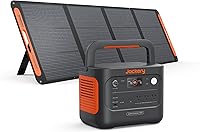
Jackery Explorer 300 Portable Power Station
9.6/10 our score
See it on Amazon -
2
 Best for larger appliances
Jackery Explorer 1000 v2 Portable Power Station
9.5/10 our score
See it on Amazon -
3

- 4
 Check it
BLUETTI Elite 30 V2 Portable Power Station
Best for storm backup - 5
 Check it
ALLWEI Portable Power Station 300W
Best for budget camping - 6
 Check it
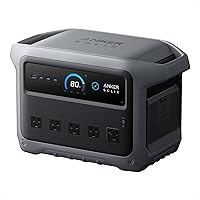
Anker SOLIX S2000 Portable Power Station
Best for fridge backup - 7
 Check it
Anker SOLIX C2000 Gen 2 Portable Power
Best for RV air conditioning - 8
 Check it
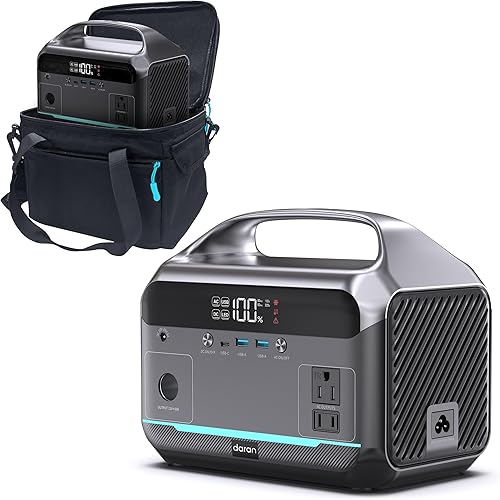
DaranEner DARAN Portable Power Station
Best for multi-device families - 9
 Check it
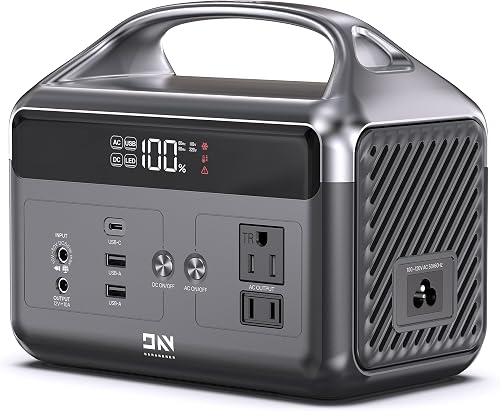
DaranEner Portable Power Station
Best for smallest loads
Portable power station AC outlet picks by use
The Jackery Explorer 300 leads for light travel use, while the Anker 2kWh models lead for home backup and RV cooling. The middle picks split the difference on weight, charging speed and UPS features.
Jackery Explorer 300 Portable Power Station: Best for light travel use
- 292Wh LiFePO4 capacity
- 300W continuous, 600W peak output
- 2 AC outlets, 100W USB-C PD, 2 USB-A, 120W car port
- 7.5 lb with integrated handle
A light unit that runs laptops, drones, cameras and a CPAP on AC power without adding much bulk to a camping load.
Pros
- Lightweight for hiking and camping
- LiFePO4 battery with long cycle life
- Multiple port types for mixed devices
Cons
- 300W limit rules out high-draw kitchen appliances
- Solar panel not included
The Jackery Explorer 300 suits campers and hikers who want AC power without carrying a heavy battery. At 7.5 lb with 292Wh capacity, it is made for laptops, drones and cameras rather than space heaters.
Its 300W continuous output and 600W peak surge cover everyday electronics. You get 2 AC outlets, a 100W USB-C PD port, 2 USB-A ports and a 120W car port, so several devices can charge at once.
Jackery says its LiFePO4 battery lasts over 4,000 charge cycles to 70% capacity. That long cycle life matters if you use the station weekly through the year.
Solar charging is optional. Jackery says a 100W panel reaches about 80% in 2.8 hours, while a 40W panel needs about 7.5 hours for the same level.
The trade-off is clear against larger picks here. It will not run high-draw kitchen appliances, and owners who need a fridge through a long outage should look at the 1000Wh or 2kWh models.
Jackery Explorer 1000 v2 Portable Power Station: Best for larger appliances
- 1070Wh LFP capacity
- 1500W AC output, 3000W surge peak
- 3 AC ports, 2 USB-C, 1 USB-A, DC car port
- 23.8 lb with foldable handle
A compact 1kWh-class station that can run an AC unit, fridge or electric pot on its AC outlets for road trips and emergencies.
Pros
- High output for multiple appliances
- Fast charging options via app modes
- App control and quiet charging mode
Cons
- Solar panel not included
- Solar charging is limited to Jackery panels
The Jackery Explorer 1000 v2 suits buyers who want one station for camping, road trips and home emergencies. Its 1070Wh capacity and 1500W output step up well beyond 300W-class units.
Jackery says it can power AC units, fridges and electric pots on its 3 AC ports. That makes it a practical choice for a road trip where your loads change from day to day.
Charging speed is a key strength. An emergency mode in the Jackery App charges from 0% to 100% in 1 hour, while the default 1.7-hour mode is meant to protect battery health.
The LFP battery is rated for over 4,000 cycles with more than 70% capacity left. At 23.8 lb, it is heavier than travel units but still manageable by hand.
The main limit is solar compatibility. This model works only with Jackery solar panels for solar charging, so check that rule before you buy a third-party panel.
BLUETTI Portable Power Station AC180: Best for fast home backup
- 1152Wh LiFePO4 battery
- 1800W output, 2700W boost peak
- 8 outlets
- 20 ms UPS mode
A strong mid-size backup unit that charges in 1 hour on AC input and switches to emergency power in 20 ms.
Pros
- Fast AC charging
- UPS mode for home essentials
- 500W solar input
Cons
- Heavier than the smaller picks
- Boost output needs app activation
The BLUETTI AC180 suits buyers who want fast home backup in a mid-size unit. Its 1152Wh LiFePO4 battery and 1800W output cover most home essentials without moving to a 2kWh station.
AC charging takes 1 hour at 1440W input, which is useful when a storm forecast gives you little lead time. Solar charging at up to 500W takes about 2.8 to 3.3 hours by itself.
The UPS function switches to emergency power in 20 ms. That makes it more suitable than a plain camping station for a fridge, router or work computer during an outage.
With 8 outlets, you can spread loads across the house instead of running extension cords to one point. A tap in the BLUETTI App raises output to 2700W for higher needs.
The trade-off is weight at 37.4 lb. It is a station you place once at home, not one you carry on a hike, so compare it with the lighter BLUETTI Elite 30 V2 if portability matters more.
BLUETTI Elite 30 V2 Portable Power Station: Best for storm backup
- 288Wh capacity
- 600W continuous, 1500W Power Lifting surge
- 10 ms UPS switch
- 0-80% in 45 mins on AC charge
A compact unit with 600W output, a 10 ms UPS switch and fast wall charging for CPAPs, laptops and routers.
Pros
- 600W output is strong for its size
- Fast UPS switch for critical devices
- Multiple charging modes
Cons
- 288Wh limits long runtimes
- Solar charging cable may be separate for some panels
The BLUETTI Elite 30 V2 suits storm backup for a CPAP, laptop or router. Its 288Wh capacity and 600W continuous output are strong for a 9.4 lb unit.
Power Lifting Mode raises surge output to 1500W for brief needs. BLUETTI says that mode can run a small kettle or toaster, though runtime will still be short on a 288Wh battery.
The 10 ms UPS switch is the standout feature here. It protects critical devices when power cuts suddenly, which is a different job from charging phones at a campsite.
Charging is flexible across 8 modes. Wall charging reaches 80% in 45 mins and 100% in 70 mins on a battery-safe setting, and solar, car and combined input are also supported.
The limit is capacity. A 288Wh battery will not carry a fridge through a long outage, so treat this as a bridge for essentials rather than whole-home backup.
ALLWEI Portable Power Station 300W: Best for budget camping
- 256Wh LiFePO4 capacity
- 300W continuous, 600W peak pure sine wave
- 1 AC outlet plus 5 other ports
- 6.4 lb compact body
A light, low-cost station for laptops, a mini fridge and CPAP use, with pass-through charging and an LED light.
Pros
- Very light for carrying
- Pass-through charging
- 3-level LED light with SOS mode
Cons
- Single AC outlet
- Solar panel sold separately
The ALLWEI 300W station suits budget camping and light home backup. At 6.4 lb with 256Wh capacity, it is easy to stow in a car trunk or backpack.
Its 300W continuous output and 600W peak surge use pure sine wave power. That makes it suitable for laptops, a mini fridge, a CPAP machine and a drone, as ALLWEI describes.
You get 6 output ports, including 1 AC outlet, 2 DC ports, a car port, a USB-A fast-charge port and a 60W USB-C PD port. Pass-through charging lets you charge the station and your devices at the same time.
Recharging options include AC wall charging in 3.5 to 4 hours, car charging in a similar window, and solar charging in 4 to 5 hours with a 100W panel. Dual AC plus solar charging cuts that to 2 to 2.5 hours.
The trade-off is a single AC outlet and 256Wh capacity. If two people need AC power at once, the DaranEner models with 2 AC outlets may fit better.
Anker SOLIX S2000 Portable Power Station: Best for fridge backup
- 2010Wh LiFePO4 capacity
- 1500W continuous, 3000W peak
- 8 outlets front and rear
- Up to 400W solar input
A 2kWh station built for long fridge runtime, with low idle draw and a <10 ms switchover for a home office.
Pros
- Large capacity for outage use
- Low idle power draw
- Six ways to recharge
Cons
- No 12V DC port
- App needed for full settings and firmware updates
The Anker SOLIX S2000 suits home backup where fridge runtime is the priority. Its 2010Wh capacity and 1500W continuous output put it in a different class from the 300W picks.
Anker says the station can keep a fridge powered for up to 35 hours. That estimate came from lab testing with a 700 L fridge, so your runtime will vary with fridge size and room temperature.
Low idle draw at 6W helps those long runtimes. Anker also says the battery uses LFP cells rated for 10,000 cycles and a 15-year lifespan.
Eight outlets split between front and rear help keep always-on appliances separate from everyday plugs. The switchover time is under 10 ms, which suits a home office setup.
The trade-off is size and the lack of a 12V DC port. At 35.7 lb it is a place-and-leave unit, and app connection is needed for full settings and firmware updates.
Anker SOLIX C2000 Gen 2 Portable Power: Best for RV air conditioning
- 2048Wh LiFePO4 capacity
- 2400W rated, 4000W peak output
- Expandable to 4kWh
- Full charge in 58 mins with AC and solar
A high-output 2kWh unit that can run most window and RV air conditioners and recharge in under an hour.
Pros
- Highest rated output in this group
- Expandable capacity
- Very fast recharge
Cons
- Heaviest pick in this group
- Large size for small vehicles
The Anker SOLIX C2000 Gen 2 suits RV and home use where air conditioning is the load. For other options in this output class, see the best 2000-watt solar generators.
Its 2048Wh capacity and 2400W rated output are the highest in this group.
With 4000W peak power, Anker says it can run multiple appliances at once, including most window and RV air conditioners. That peak headroom matters for compressor start-up.
Recharging is fast. AC plus solar charging reaches 100% in 58 mins, and an 800W alternator charger can charge it fully in about 3 hours from a vehicle.
Capacity can grow to 4kWh with an expansion battery. Anker says that setup can run a dual-door fridge for up to 64 hours, which is useful for multi-day outages.
The trade-off is weight at 41.7 lb and a large footprint. If you do not need 2400W output, the smaller Jackery or BLUETTI models are easier to move and store.
DaranEner DARAN Portable Power Station: Best for multi-device families
- 288Wh LiFePO4 battery
- 350W rated, 600W surge AC output
- 2 AC outlets, 60W PD USB-C, 2 USB-A, DC I/O
- 8.2 lb compact body
A compact station that charges several family devices at once and supports a 30W CPAP for about 8 hours by maker estimate.
Pros
- Two AC outlets for groups
- LCD shows real-time power
- Rear LED with strobe and SOS modes
Cons
- Devices must stay at or under 350W
- Solar panel and car cable sold separately
The DaranEner DARAN station suits families who charge several devices at once outdoors. Its 288Wh capacity and 350W rated output sit close to the 300W class, with 2 AC outlets as a practical advantage.
You can run phones, tablets, a mini fridge and a projector together without swapping plugs. The port set includes 2 AC outlets, a 60W PD USB-C port, 2 USB-A ports and a DC I/O port.
DaranEner estimates about 8.16 hours for a 30W CPAP and about 2.44 hours for a 100W stew pot using its 0.85 conversion rate. Use those figures as rough guides, since real loads vary.
The unit weighs 8.2 lb and measures 10.0 x 6.6 x 8.2 inches, so it fits in camping gear or a home emergency kit. An LCD shows real-time power, and a rear LED offers steady, strobe and SOS modes.
The limit is the 350W ceiling. Devices must stay at or under that rating, and solar panels and car charging cables are sold separately.
DaranEner Portable Power Station: Best for smallest loads
- 192Wh LiFePO4 capacity
- 300W pure sine wave, 600W surge
- 2 AC outlets, 60W USB-C PD, 2 USB-A, 12V DC
- 5.73 lb compact body
The smallest pick here for phones, tablets, fans and cameras under 300W, with a built-in LED flashlight.
Pros
- Lightest and most compact
- Pure sine wave for sensitive electronics
- LED flashlight with SOS mode
Cons
- 192Wh may not sustain CPAP use all night
- Not suited to high-power appliances
The DaranEner 192Wh station suits the smallest loads, such as phones, tablets, fans and cameras. At 5.73 lb, it is the lightest pick here and smaller than a toaster, as DaranEner describes it.
Its 300W pure sine wave output and 600W surge cover devices under 300W. The note matters: it is not suited to rice cookers, hair dryers or mini fridges that exceed 300W or have high start-up surges.
Six devices can charge at once across 2 AC outlets, a 60W USB-C PD port, 2 USB-A ports and a 12V DC output. Pure sine wave power helps protect sensitive electronics.
The LiFePO4 battery is rated for more than 3,500 cycles, and a smart BMS guards against overcharging, overheating and short circuits. An integrated LED flashlight adds 4 brightness modes including SOS.
The clear limit is capacity. DaranEner says 192Wh may not sustain CPAP use all night, so choose a 288Wh or larger station for overnight medical-device backup.
How we compared these AC outlet stations
We compared specs first, then fit for the keyword. Capacity sets runtime, continuous watts set what you can plug in, and peak watts set start-up headroom.
Weight and size set where a station can go. A 5 lb unit fits a hiking pack, while a 40 lb unit stays in one place at home or in an RV.
Charging speed matters before an outage. A station that recharges in 1 hour from a wall outlet is easier to keep ready than one that needs all day.
UPS switch time matters for home backup. Models with 10 ms to 20 ms switch times protect computers and medical devices better than stations without a UPS mode.
We also checked port layout. Two AC outlets help families and RVers, while a single AC outlet is fine for one laptop or one fridge.
Our score reflects how well each model fits a search for a portable power station with AC outlet. Light travel models score well for portability, while larger models score well for home backup and appliances.
What AC output do you actually need?
Start with the watts on your device labels. Add the running watts of every device you will plug in at the same time, and keep that total under the continuous AC rating.
Motors and compressors need extra start-up power. A fridge, air conditioner or fan may draw a brief surge above its running watts, which is why peak ratings exist.
A 300W station suits laptops, phones, cameras, fans and a CPAP. It will not run a space heater, hair dryer or full-size kitchen appliance for long, if at all.
A 600W station with Power Lifting, such as the BLUETTI Elite 30 V2, adds headroom for brief surges. That helps with a small kettle or toaster, but capacity still limits how long they run.
A 1500W station, such as the Jackery Explorer 1000 v2 or Anker SOLIX S2000, suits fridges, electric pots and multiple appliances. A 2400W station, such as the Anker SOLIX C2000 Gen 2, suits RV air conditioners.
If your loads are mostly in the 1000W range, our best 1000w portable power station picks narrow that field. For very large loads, our best portable power station 3000w guide covers the next step up.
How much capacity do you need for AC backup?
Capacity in watt-hours tells you how much energy you have to spend. A simple estimate is capacity times 0.85, divided by your total watts.
For example, a 288Wh station at 100W of load gives roughly 2.4 hours by that estimate. A 2kWh station at the same load gives roughly 17 hours, before real-world losses.
Fridges cycle on and off, so runtime estimates vary. Anker's 35-hour fridge claim for the S2000 came from lab testing, and your fridge will differ.
For overnight CPAP use, look for at least 288Wh in this group. The smallest 192Wh DaranEner model is not recommended for all-night CPAP use by its maker.
For a home outage, a UPS mode matters as much as capacity. Our [What Is a Portable UPS?
The Complete Guide](/what-is-a-portable-ups/) explains the difference between backup and portable power.
How do AC outlet stations recharge?
Wall charging is the fastest and most reliable option for most buyers. The BLUETTI AC180 charges in 1 hour on AC input, and the Anker SOLIX C2000 Gen 2 charges in 58 mins with AC plus solar.
Car charging suits road trips. Several models here charge from a 12V car port in about 3.5 to 4 hours, which works while you drive.
Solar charging suits off-grid camping. A 100W panel charges the Jackery Explorer 300 to about 80% in 2.8 hours, while the BLUETTI AC180 accepts up to 500W of solar input.
Check solar compatibility before you buy a panel. The Jackery Explorer 1000 v2 works only with Jackery solar panels, while the BLUETTI AC180 accepts other panels within stated voltage and watt limits.
Charge the station before you need it, not after an outage starts. Keeping it near full charge also helps it act as instant backup in UPS mode.
Which station fits your use case?
Camping and hiking favor light units under 10 lb with a few AC outlets. The Jackery Explorer 300 and ALLWEI 300W fit that profile well.
Home backup favors capacity and UPS switch time. The BLUETTI AC180, BLUETTI Elite 30 V2 and Anker SOLIX S2000 cover that use case at different sizes.
RV travel favors high peak output for air conditioners. The Anker SOLIX C2000 Gen 2 has the strongest peak rating here at 4000W.
Work sites and daily hauling favor rugged, mid-size units that run tools and charge batteries. For that use case, our best industrial portable power station guide gives more detail.
Store a station that you will actually carry. A lighter unit that you bring along beats a larger unit that stays in a closet.
How should you set up and care for your station?
Place the station on a flat, dry surface with space around its vents. Keep it away from direct rain unless the maker states otherwise.
Plug in your highest-draw device first to check that it runs. Then add smaller devices one by one, watching total watts against the continuous rating.
Charge it fully after you receive it, and top it up every 1 to 2 months during storage. Two DaranEner models ask for 2 full charge and discharge cycles at first use.
Use the app where one is offered, since settings such as fast charging and quiet modes often live there. The Jackery Explorer 1000 v2 needs its app emergency mode turned on for 1-hour charging.
Keep the manual and charging cables together. Knowing which cable is for wall, car and solar charging saves time when you need to recharge away from home.
Verdict: pick by load, then by weight
Pick the Jackery Explorer 300 if you want light AC power for camping and travel. Pick the Jackery Explorer 1000 v2 if you need 1500W output for fridges and larger appliances.
Pick the BLUETTI AC180 for fast home backup with a 20 ms UPS switch. Pick the BLUETTI Elite 30 V2 for storm backup of a CPAP, laptop or router in a compact unit.
Pick the Anker SOLIX S2000 for long fridge runtime at home. Pick the Anker SOLIX C2000 Gen 2 if you need 2400W output for an RV air conditioner.
Pick the ALLWEI 300W for light, budget camping power. Pick the DaranEner DARAN model for multi-device family charging, and the smaller DaranEner model for phones, fans and cameras.
Start with your AC loads, then choose the smallest station that covers them with headroom. That rule keeps you from paying for capacity you will not use, or buying a station that shuts off under your normal loads.
Our top 3 picks at a glance
-
1
Best for light travel use
Jackery Explorer 300 Portable Power Station
9.6/10 our score
See it on Amazon -
2
Best for larger appliances
Jackery Explorer 1000 v2 Portable Power Station
9.5/10 our score
See it on Amazon -
3
Frequently asked questions
How do I size a portable power station with an AC outlet?
Add the watts of every device you plan to plug in at once, then check that the total stays under the station's continuous AC output. Capacity in watt-hours then sets how long the station can run those loads before it needs a recharge or solar input.
Can a portable power station with an AC outlet run a fridge?
Yes, if the fridge's running watts and start-up surge fit within the station's continuous and peak output. Larger stations in this guide, such as the 2kWh Anker models, give longer fridge runtime than 300W-class units.
Do I need a solar panel with my power station?
No. Every station here can recharge from a wall outlet, and several also charge from a car port.
A solar panel only matters if you want to recharge away from wall power, and most stations in this guide do not include a panel.
What is the difference between continuous watts and peak watts?
Continuous watts are what the AC outlet can supply in steady use. Peak or surge watts cover brief start-up spikes from motors and compressors.
Size your loads against the continuous rating and use peak as headroom for start-up.