What Size Solar Generator Do You Need?
Choose a solar generator by both power and capacity: match its running and surge watt limits to your appliances, then choose enough watt-hours for the time you need. A 292Wh model suits small electronics, while 1,070Wh to 1,152Wh units cover larger daily loads.
On this page (13 sections)
- What size solar generator do you need?
- How do you calculate solar generator size?
- How many watt-hours should your solar generator have?
- Which solar generator size fits small electronics?
- Which solar generator size fits camping and daily backup?
- Which solar generator size fits heavier backup loads?
- What size solar generator is best for a refrigerator?
- Can a solar generator run a heater or electric pot?
- How much solar input do you need?
- What other features affect your choice?
- How should you choose between these three sizes?
- More guides on this topic
- What is the final solar generator sizing rule?
The solar generator size you need depends on appliance startup watts, running watts and daily energy use. Match the inverter's continuous and surge output to your devices, then choose enough watt-hours to cover the hours you need them running.
A small unit can keep phones, lights, cameras and a laptop charged. Larger units are better for refrigerators, electric pots, air conditioners or several appliances, but the right choice still depends on each device's actual demand.
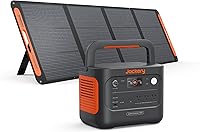
The products below show three useful size points. The Jackery Explorer 300 has 292Wh and 300W output, the Jackery Solar Generator 1000 v2 has 1,070Wh and 1,500W AC output, and the BLUETTI AC180 has 1,152Wh and 1,800W output.
For a wider look at battery capacity, outlets and recharge options, read our best portable power station guide.
What size solar generator do you need?
Start with the largest appliance you need to start, then calculate how much energy all devices will use during the outage or trip. The generator needs enough output for the highest combined running load and enough surge capacity for motors or compressors that draw more power at startup.
Use these 3 questions:
- What is the highest starting watt demand?
- What is the total running watt demand when devices operate together?
- How many watt-hours will those devices use before you can recharge?
The first two questions determine inverter size. The third determines battery capacity.
A 300W solar generator may be enough for a laptop, camera batteries and lights. It is not a good match for a high-draw kitchen appliance.
A 1,500W or 1,800W model gives you more room for appliances, but it can still run out of battery if the load stays high for many hours.
How do you calculate solar generator size?
Calculate solar generator size with watts for power and watt-hours for runtime. Add the running watts of devices used at the same time, check the highest startup surge, then multiply each device's watts by its expected hours of use.
Use this basic formula:
Daily energy use = device watts × hours used
For example, a 60W device used for 5 hours needs about 300Wh before conversion losses. Several devices must be calculated separately and then added together.
A practical sizing process looks like this:
- Write down every appliance or device you want to run.
- Record its running watts from the label or manual.
- Find the startup or surge watts for motors, compressors and heating appliances.
- Add the running watts for devices that will operate together.
- Choose an inverter with a continuous rating above that total.
- Choose surge capacity above the highest startup demand.
- Add the watt-hours for the planned runtime.
- Leave extra battery room for conversion losses and changing loads.
The watt rating and watt-hour rating answer different questions. Watts tell you whether the generator can power a device at that moment.
Watt-hours tell you how long the battery can keep supplying energy.
If your appliance list includes a 240V device, check the available outlet and voltage before choosing. Our guide to the best solar generators with 240V outlets covers that use case.
What is the difference between running watts and startup watts?
Running watts are the power an appliance uses during normal operation. Startup watts are the short surge needed to start equipment with a motor or compressor.
Refrigerators, freezers, pumps and some air conditioners may need more power at startup than while running. A generator with enough running watts can still shut down if its surge rating is too low.
Heating devices often draw a steady, high load rather than a short startup surge. That makes their total watt demand and planned runtime especially important.
Check each appliance separately. Do not assume that two devices with the same running watt label have the same startup demand.
How many watt-hours should your solar generator have?
Choose capacity by your largest planned energy load, not just the inverter watt number. A high-output generator with a small battery can run a powerful appliance briefly, while a lower-output unit with more watt-hours may run smaller devices for longer.
Use this rough planning table:
| Use case | Starting point | What to check |
|---|---|---|
| Phone, camera and small USB devices | 100Wh to 300Wh | Total charging sessions |
| Laptop, lights and small electronics | About 300Wh | Hours of simultaneous use |
| Communications and emergency devices | 300Wh to 1,000Wh | Overnight and multi-day reserve |
| Refrigerator and selected essentials | 1,000Wh or more | Startup watts and duty cycle |
| Several household appliances | 1,000Wh or more | Combined running watts |
| High-draw appliances | 1,500W to 1,800W output class or higher | Surge rating and runtime |
These are starting points, not guarantees. A refrigerator may cycle on and off, while a heater may draw power continuously.
Your actual runtime depends on the appliance, battery condition, conversion losses and how often the generator can recharge.
A useful estimate is:
Estimated runtime = usable watt-hours ÷ device watts
For example, a 292Wh battery connected to a 60W device will not provide exactly 4.9 hours because the inverter uses some energy. Treat the result as a planning estimate and leave a buffer.
Which solar generator size fits small electronics?
A compact solar generator suits phones, cameras, laptops, lights and other low-watt devices. The Jackery Explorer 300 has a 292Wh capacity, 300W rated output and 600W peak surge, so it fits lighter loads that stay below its output limit.
The Explorer 300 has 2 AC outlets, a 100W USB-C PD port, 2 USB-A ports and a 120W car port. Its 7.1 lb weight and integrated handle make it easier to carry than the larger options in this guide.
Jackery says the Explorer 300 can power devices under 300W total and shuts off if overloaded. High-draw kitchen appliances need a larger model, so check every device's power label before connecting it.
This size works well for a short trip, a small communications kit or a basic blackout setup. It may not suit a refrigerator, heater or other appliance with a high startup or continuous demand.
For similar output options, compare our guide to the best 1000W portable power stations only if your planned devices need more than a compact unit. If you want more battery capacity at this size, see the best 1000Wh power stations guide.
Which solar generator size fits camping and daily backup?
A 1,000Wh-class solar generator fits larger daily loads and longer outdoor use. The Jackery Solar Generator 1000 v2 combines a 1,070Wh battery with 1,500W AC output and a 3,000W surge peak.
Its title includes a 200W solar panel, so this package is aimed at buyers who want generation and storage together. The panel can reach 80% charge in 6 hours under the stated conditions, while the power station can charge from 0% to 100% in 1 hour when emergency charging is enabled in the Jackery App.
The system has 3 pure sine wave AC ports, 2 USB-C ports, 1 USB-A port and 1 DC car port. It also includes LED lights, and its 23.8 lb weight with a foldable handle gives it a different balance of capacity and portability than the Explorer 300.
Jackery describes this model as suitable for AC units, refrigerators and electric pots, but the actual appliance still needs to stay within the generator's output and surge limits. A high-watt appliance can use the battery quickly even when the inverter can start it.
Choose this size when you need more than device charging but do not want the weight of a larger home backup unit. Compare models in our best 2000 watt solar generator guide if your appliance list needs more output or reserve.
Which solar generator size fits heavier backup loads?
An 1,800W-class solar generator suits larger appliances and essential backup loads when you need more output than a compact unit offers. The BLUETTI AC180 has a 1,152Wh LiFePO4 battery, 1,800W output and 2,700W peak power.
The AC180 has 8 outlets and can be set to a 2,700W output level through the BLUETTI App for higher needs. BLUETTI describes it as a home battery backup that can provide emergency power to essentials in 20 ms.
Its solar input is 500W, with a stated solar charging time of 2.8 to 3.3 hours under the listed conditions. The unit weighs 37.4 lb and has a metal frame and housing with plastic and rubber electrical components.
BLUETTI gives an estimated runtime formula of 1152Wh × 0.85 ÷ operating power. Actual runtime varies with the device and operating conditions, so use the result as a guide rather than a promise.
Choose the AC180 when your list includes more demanding appliances, several outlets or a home backup role. Skip this size if you only need phones and a laptop because its extra output and weight may not add value for your use.
For more capacity, see the best 4000 watt solar generator guide. For larger portable systems, compare the best portable power station 3000W options.
What size solar generator is best for a refrigerator?
A refrigerator needs a generator with enough surge power to start its compressor and enough watt-hours to cover its planned cycling. The correct size varies by refrigerator, so use the appliance label or manual rather than a general watt estimate.
Measure or find these numbers:
- Running watts while the compressor operates
- Startup or surge watts
- Expected hours of backup
- Other devices that will run at the same time
Add the refrigerator's running watts to the running watts of lights, communications devices or other essentials. The inverter's continuous output must cover that combined load.
The battery calculation needs more care because a refrigerator does not usually run continuously. Estimate the compressor's operating time across the day, then leave extra room for warm conditions, door openings and other loads.
The Jackery Solar Generator 1000 v2 and BLUETTI AC180 both offer more output and capacity than the Explorer 300. That does not guarantee a specific refrigerator runtime, so confirm the refrigerator's startup demand before choosing.
Can a solar generator run a heater or electric pot?
A solar generator can run a heater or electric pot only when its continuous output meets the appliance's steady watt demand. These appliances may drain a battery quickly because they often use high power for as long as they are switched on.
Check the appliance label first. A unit rated below the generator's output may still use much of the battery's available energy in a short period.
The Jackery Solar Generator 1000 v2 is rated at 1,500W AC output, while the BLUETTI AC180 is rated at 1,800W output. Those ratings describe the maximum output class, not guaranteed runtime.
Do not use the Explorer 300 for an appliance that exceeds its 300W total output rating. If your appliance needs more than the generator can supply, it may overload or shut down.
How much solar input do you need?
Choose solar input based on how quickly you need to refill the battery. A larger panel input can shorten recharge time under suitable sunlight, but it does not increase the generator's AC output rating or battery capacity.
The three examples have different recharge setups:
- The Jackery Explorer 300 can reach 80% in about 2.8 hours with a 100W solar panel. Its solar panel is optional.
- The Jackery Solar Generator 1000 v2 includes a 200W solar panel and can reach 80% in 6 hours under the stated conditions.
- The BLUETTI AC180 accepts up to 500W of solar input and has a stated solar charging time of 2.8 to 3.3 hours.
Shade, cloud cover, panel angle and temperature affect solar charging. Plan for slower charging if the generator must support overnight use or several days away from the grid.
If you want a package that includes panels, compare the best 2000 watt solar generators with panels. For smaller battery systems, see the best 1000Wh power station with solar panel options.
What other features affect your choice?
Output and capacity come first, but port layout, weight, recharge methods and movement affect daily use. A generator that fits the numbers may still be awkward if you cannot place or move it where the load is located.
Consider these questions:
- Do you need AC outlets, USB-C, USB-A or a DC car port?
- Will you carry the unit often, or keep it near a backup circuit?
- Do you need a foldable handle or wheels?
- Will you recharge from AC power, a car or solar panels?
- Do you need quiet overnight charging?
- Does the unit support the voltage your appliance requires?
The Jackery Explorer 300 is the lightest of these examples at 7.1 lb. The Jackery Solar Generator 1000 v2 weighs 23.8 lb, and the BLUETTI AC180 weighs 37.4 lb.
For easier movement, read our guide to the best portable power stations on wheels. If AC outlets are your main concern, compare the best portable power stations with AC outlets.
How should you choose between these three sizes?
Choose the Jackery Explorer 300 for small electronics and light portable use. Its 292Wh battery and 300W output fit devices that stay under its total power limit.
Choose the Jackery Solar Generator 1000 v2 for a balance of capacity, AC output and solar readiness. Its 1,070Wh battery, 1,500W AC output and included 200W solar panel suit camping, road trips and selected emergency appliances.
Choose the BLUETTI AC180 when you need more output, 8 outlets and a home backup role. Its 1,152Wh battery and 1,800W output give more room for heavier loads, but the 37.4 lb weight makes it less convenient to carry.
For longer runtimes, compare the best power station 2000Wh models. If your use involves demanding equipment or job-site loads, the best industrial portable power stations may be a better starting point.
More guides on this topic
- Best 2000W Portable Power Stations
- Best High Capacity Portable Power Stations
What is the final solar generator sizing rule?
The right solar generator is the smallest model that passes your highest startup demand, supports your combined running watts and stores enough watt-hours for the planned runtime. Add capacity when the load is uncertain, the outage may last longer or recharging conditions may be poor.
Pick the Explorer 300 for compact device charging. Pick the Jackery Solar Generator 1000 v2 for a 1,000Wh-class camping and emergency setup with a 200W panel.
Pick the BLUETTI AC180 for heavier loads and more outlet capacity.
Measure appliance watts before you order, then compare the result with both the continuous and surge ratings. A correct size starts with your appliances, not the generator's headline number.
Frequently asked questions
What size solar generator do I need for a refrigerator?
Choose a solar generator whose continuous output covers the refrigerator's running watts and whose surge rating covers its startup demand. Then compare watt-hours with the refrigerator's expected runtime.
Check the appliance label or manual because refrigerator startup power varies by model.
Is a 1,000W solar generator enough for a house?
A 1,000W-class solar generator can run selected small appliances and electronics, but it cannot power every household circuit at once. Add the running watts of the devices you need together, check their startup demand, and choose capacity based on how long they must operate.
How many watt-hours do I need in a solar generator?
Estimate watt-hours by multiplying each device's watts by the hours you expect to use it, then add the results. Leave room for conversion losses and changing loads.
A 292Wh unit fits light electronics, while 1,070Wh and 1,152Wh options provide more reserve for larger daily needs.
Can a solar generator run a space heater?
A space heater often draws substantial continuous power, so check its watt rating before choosing a solar generator. The generator must support that running load for the full operating period, and its battery may drain quickly.
A larger output rating does not automatically mean long runtime.
Do solar panels determine the size of a solar generator?
Solar panels affect how quickly you can recharge a solar generator, not the generator's AC output limit. Choose the battery and inverter for your appliances first, then choose compatible solar input for your recharge schedule.
Weather, shade and panel position affect real charging time.