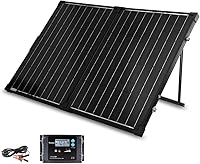
Which EcoFlow 100W Solar Panel Should You Choose?
Choose a rigid EcoFlow 100W panel for a fixed, flat setup, or a flexible panel when a curved surface and lower profile matter more. Check the panel’s mounting guidance and your power station’s input limits before choosing.
On this page (8 sections)
- Which EcoFlow 100 watt solar panel type fits your setup?
- What changes between flexible and rigid panels?
- How do you check compatibility with an EcoFlow power station?
- Which panels help with a larger solar setup?
- How do you compare panel size and portability?
- What should you check before installing a panel?
- How do you choose between EcoFlow flexible and rigid panels?
- What should you know about EcoFlow 100W solar panels?
Choose a rigid EcoFlow 100W solar panel for a fixed, flat mounting area, or a flexible EcoFlow 100W panel when a curved surface or lower profile matters more. First check the panel’s installation guidance and your power station’s solar input limits.
The choice depends on where the panel will sit and how often you’ll move it. A roof or other permanent location has different needs from a panel you set out beside a portable power station.
If you’re new to solar, our portable solar panel buying guide explains the basic parts and decisions. This comparison focuses on choosing between rigid and flexible EcoFlow panels.
Which EcoFlow 100 watt solar panel type fits your setup?
A rigid panel is usually the better fit for a stable, flat mounting surface, while a flexible panel can fit a curved surface more closely. Choose based on the mounting location and installation requirements, rather than assuming one type always produces more power.
| Your setup | Type to consider | What to check |
|---|---|---|
| Fixed, flat surface | Rigid | Mounting space, tilt and cable route |
| Curved surface | Flexible | Approved bend, attachment method and airflow |
| Frequent repositioning | Portable panel | Folded size, carry weight and setup method |
| Permanent outdoor location | Either, if approved | Weather limits, mounting instructions and access |
| Power station charging | Either, if compatible | Voltage, current, connector and input limits |
These are general selection points, not a guarantee that every panel in a type can be mounted in every location. Follow EcoFlow’s instructions for the exact model you’re considering.
A 100W rating also doesn’t tell you how much energy you’ll collect in a day. Sun angle, shade, temperature and the power station’s input limits all affect real output.
What changes between flexible and rigid panels?
Flexible panels can conform more closely to a curved surface, while rigid panels hold a fixed shape. That physical difference affects mounting and placement, but it doesn’t by itself establish which option is more efficient or durable.
A rigid panel may be simpler to position at an angle on a flat surface. It still needs secure support and a suitable mounting method, so confirm the model’s instructions before installation.
A flexible panel can be easier to fit where a rigid frame won’t sit flush. Check its permitted bend and attachment method; don’t fold or curve it beyond the manufacturer’s guidance.
Portability depends on the specific panel design, not just its category. Compare the packed dimensions, weight and setup steps if you’ll carry it or move it between locations.
For a deeper look at EcoFlow’s panel options, see our EcoFlow flexible solar panel guide. You can also read our EcoFlow solar panel specs guide to understand the electrical ratings you’ll need to compare.
Is an EcoFlow 100W flexible solar panel right for a curved roof?
It may be a good fit if the panel is approved for your surface and mounting method. Confirm the instructions for the exact panel before attaching it, since a curved shape alone doesn’t mean every flexible panel can be bent or mounted there.
Plan how air will move around the panel, how rainwater will drain, and where the cable will enter the vehicle or structure. Avoid a setup that traps heat or puts strain on connectors.
When is an EcoFlow 100W rigid solar panel the better choice?
A rigid panel is worth considering when you have a flat mounting area and want the panel to keep its shape. Check how you’ll secure and angle it, and whether the chosen location leaves room to clean and inspect it.
If you need a panel you can set up temporarily rather than mount, compare portable models. Our EcoFlow 400W portable solar panel review covers a larger foldable option and its use as a portable panel.
How do you check compatibility with an EcoFlow power station?
Match the panel’s voltage, current and connector to the power station’s solar input specifications. A panel’s wattage alone doesn’t confirm that it is electrically compatible.
Check both manuals for:
- The power station’s allowed solar input range.
- The panel’s voltage and current ratings.
- The required connector and any approved adapter.
- Cable length and placement needs.
- Limits for connecting more than one panel.
Don’t assume that panels with the same wattage use the same connector or electrical range. If a value is unclear, confirm it with EcoFlow before connecting the panel.
The best solar panels for the EcoFlow DELTA 2 guide can help if that’s your power station. If you’re assembling a separate battery setup, our 100 watt solar panel kit with inverter guide covers the other components to consider.
What does a 100W rating tell you?
The 100W label is a rated power figure, not a promise that the panel will deliver 100W continuously. Expect output to vary with sunlight, angle, shade, temperature, wiring and the receiving power station.
That makes the rating most useful for comparing panels under the same stated conditions. To estimate whether it suits your needs, check the power station’s input limits and consider when and where you can place the panel in sunlight.
Which panels help with a larger solar setup?
A larger panel can make more sense when your power station accepts its output and you have room to place it. Choose by the whole system’s limits and your available space, rather than buying the highest wattage that fits your budget.
The EcoFlow DELTA Pro bundle includes a 400W portable panel, a DELTA Pro power station and a solar charge cable. EcoFlow describes the panel as foldable with an adjustable carry case; the package is delivered in separate parcels.
The Mytions 200W panel is a foldable option for buyers who need more than a 100W panel. Its included controller offers several solar output connector formats, but you still need to verify the match with your station.
Renogy’s 400W portable panel folds into a suitcase format and includes a carry case. It has MC4 output cables, so check connector requirements and whether a separate adapter is needed for your power station.
How do you compare panel size and portability?
Compare weight, folded dimensions and setup steps if you’ll carry or reposition the panel. A larger wattage may require more space, and a panel that is easy to move can be easier to aim toward the sun.
Before you buy, note where the panel will be stored and how far you’ll carry it. Check whether the panel folds, includes a case or needs a stand or mounting hardware for your intended use.
A fixed installation shifts the priority toward secure mounting and a clear cable path. A portable setup needs a stable place to rest the panel and enough room to reposition it as sunlight changes.
Our guide on how to use an EcoFlow solar panel walks through basic setup and connection considerations. Use the instructions for your exact panel and power station when putting a system together.
What should you check before installing a panel?
Read the panel’s mounting instructions and inspect the surface before installing it. The surface, attachment method and cable route must all suit the panel and the location where it will operate.
Use this checklist:
- Measure the available mounting area and compare it with the panel’s dimensions.
- Confirm the surface and attachment method are approved for the panel.
- Plan for airflow, drainage and access for inspection.
- Route cables so they won’t be pinched, pulled or exposed to avoidable damage.
- Confirm the power station’s input limits and connector match.
- Follow the manuals for setup, use and care.
For a vehicle roof, consider how mounting affects roof access and maintenance. For a portable setup, choose a stable spot where the panel can face sunlight without creating a trip hazard or placing the power station in direct sun.
How do you choose between EcoFlow flexible and rigid panels?
Choose a rigid EcoFlow 100W panel if your mounting area is flat and you want a panel that keeps its shape. Choose an EcoFlow 100W flexible panel if the approved installation needs a lower profile or closer fit to a curved surface.
Then confirm the exact model’s mounting instructions, electrical ratings and connector against your power station. If you’re deciding for a DELTA 2, compare compatible options in our best solar panel for EcoFlow DELTA 2 guide.
What should you know about EcoFlow 100W solar panels?
An EcoFlow 100 watt solar panel is best chosen by mounting surface, installation method and power station compatibility. A flexible panel may fit a curved location, while a rigid panel may suit a flat, fixed setup.
There isn’t one right type for every installation. Match the panel to the surface and input limits, then follow the instructions for that model before mounting or connecting it.
Frequently asked questions
Is an EcoFlow 100W flexible solar panel better than a rigid one?
A flexible EcoFlow panel can suit a curved or weight-sensitive mounting surface, while a rigid panel is often easier to place at an angle on a flat surface. Compare the mounting instructions, surface shape, airflow needs and power station limits before deciding.
The right type depends on how you will install and use it.
Can I connect a 100W EcoFlow panel to any EcoFlow power station?
No single panel fits every power station setup. Check the station’s solar input voltage and current limits, connector type and the panel’s electrical output before connecting it.
Stay within the limits in both manuals, and use only a compatible cable or adapter.
Can I mount a flexible solar panel flat on a van roof?
A flexible panel may fit a curved roof more easily than a rigid panel, but the mounting method and ventilation requirements still matter. Follow the panel’s installation instructions, allow for heat management, and check the roof material and cable route before attaching anything.
Does a 100W solar panel produce 100W all day?
No. A panel’s rated output is measured under defined conditions, and actual power changes with sun angle, shade, temperature, cloud cover, cable length and the power station’s input limits.
Treat 100W as a rating for comparison, not a promise of constant output.
What should I check before buying an EcoFlow 100W panel?
Check whether you need a fixed or portable setup, whether the mounting surface is flat or curved, and whether the panel’s voltage, current and connector match your power station. Also confirm the installation instructions and cable reach so the panel can face useful sunlight without stressing the connection.