EcoFlow DELTA vs DELTA 2: Which Should You Choose? (November 2026)
Choose the original EcoFlow DELTA if you want proven capacity for the lowest entry point, and choose DELTA 2 if you want faster charging, lighter carry and room to expand. In this EcoFlow Delta vs Delta 2 comparison, charging speed and expansion usually matter more than a small capacity gap.
On this page (12 sections)
- EcoFlow DELTA vs DELTA 2 side by side
- Charging speed: EcoFlow Delta vs Delta 2
- Capacity and runtime: which size do you need?
- Output power: can it run your appliances?
- Portability and weight: who carries it?
- Expansion and battery life: buy for the next 10 years?
- Home backup: which Delta fits an outage?
- Camping and RV use: which Delta travels better?
- Noise and indoor use: can you run it inside?
- Who should buy the original EcoFlow DELTA?
- Who should buy EcoFlow DELTA 2?
- EcoFlow Delta vs Delta 2: the verdict
Choose DELTA 2 for most buyers, and choose the original DELTA only when its price and capacity fit your list better. Our score weighs specs, features and buyer feedback against what you are shopping for in this EcoFlow Delta vs Delta 2 choice.
The EcoFlow Delta vs Delta 2 decision is not about which name sounds newer. It is about how fast you recharge, how much you want to carry, and whether you plan to add batteries later.
We compared the specs available for the current EcoFlow range to show where each generation fits. The products below help you see the step up from older Delta thinking to newer Delta platforms.
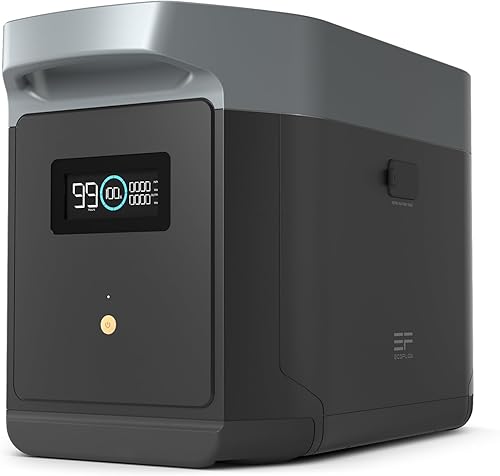
 Best for compact home backup
EF ECOFLOW Delta 3 Portable Power Station
Our best portable power station guide explains how to size any station, and our best EcoFlow power station roundup puts the current models in one place.
EcoFlow DELTA vs DELTA 2 side by side
DELTA 2 wins on charging speed and portability, while the original DELTA wins only on simple value when you find it at a clear discount. Compare charging time first, because that shapes how you use a station during an outage.
The original DELTA built the category for home backup and camping. DELTA 2 kept that role and added a more portable feel for daily use.
| Point | Original DELTA | DELTA 2 |
|---|---|---|
| Best use | Backup and camping at entry level | Backup, camping and daily carry |
| Charging | Slower than newer EcoFlow models | Faster full charge for the class |
| Expansion | Limited by older platform | Extra battery options on related models |
| Carry | Heavier for its capacity | Easier to move between rooms and vehicles |
| Buyer fit | Budget first | Speed and portability first |
Our guide to using an EcoFlow DELTA 2 walks through setup, charging and app use step by step.
Charging speed: EcoFlow Delta vs Delta 2
DELTA 2 is the pick if you need a station ready again in about an hour. Fast AC charging matters when the power blinks back on for a short window.
The current Delta 3 shows where the line has moved: EcoFlow lists a full charge in 56 minutes for a 1024Wh station. {{product B0DCBYMC9D | A 1024Wh station with 1800W output and expansion to 5kWh for essentials backup.}} That speed sets a new expectation for the class.
The original DELTA does not match that pace. If you only need power during a planned trip, slower charging may be fine.
If you need backup for medical devices or a home office, fast charging is worth more.
Detail matters here because the Delta 3 combines 500W solar input and 1500W max AC input to reach that 56 minute full charge. An 80 percent charge takes just 30 minutes.
The Delta 3 Classic follows a similar pattern with 0 to 80 percent in 45 minutes on AC charging. The DELTA 3 Max reaches 0 to 80 percent in 1.13 hours with its larger 2048Wh pack.
Solar charging follows the same logic. A bundled kit like {{product B0FRMQPZF6 | A 1024Wh station bundled with a 220W solar panel for off grid charging.}} helps when wall power is not an option.
Capacity and runtime: which size do you need?
Pick capacity from your essentials list, not from the headline number. A fridge, lights, phones and a laptop use power at very different rates.
Add up the watts for the items you must run. Then ask how many hours you need them to run.
That math gives you a real Wh target.
The DELTA 2 Max Extra Battery adds 2048Wh and can take a system to 6144Wh with two packs. {{product B0CPP81GNL | A 2048Wh LiFePO4 extra battery that triples DELTA 2 Max capacity.}} That path suits long outages and RV use.
The DELTA 3 Max takes a different path with 2048Wh built in and 2400W output. {{product B0FQV6LMVX | A 2048Wh station with 3400W X-Boost for fridges and power tools.}} You get capacity without a separate battery purchase.
For the original DELTA vs DELTA 2 choice, buy the smaller unit if your list is short. Buy expansion only when you know you will use it.
Runtime math also shows why two ways to get 2048Wh lead to different ownership costs. A built in pack keeps one unit to track and carry.
A separate extra battery lets you start smaller and add the same capacity later.
Output power: can it run your appliances?
Choose output based on your highest load appliance, not your average load. A fridge startup draw can exceed its running watts.
Look at the running watts and the startup or surge draw for each appliance. Add the items you plan to run at the same time.
Keep a margin for the items that cycle on and off.
The Delta 3 Classic lists 1800W output with 3600W surge and X-Boost to 2600W. That covers a fridge, microwave, laptops and more in the same session.
The DELTA 3 Max lists 3400W in X-Boost mode. That extra headroom helps with power tools and larger kitchen loads.
For DELTA 2, check the output for the exact model you plan to buy. Do not assume every Delta model shares the same output.
The Delta 3 also lists power for 13 appliances at once and 100W USB-C output. That port mix helps in an outage when phones, laptops and lights need power together.
Our EcoFlow DELTA 2 Max vs DELTA 3 Max comparison helps when you are weighing the larger current models.
Portability and weight: who carries it?
DELTA 2 is easier to carry between a home, an RV and a campsite. Weight matters when you move a station often.
The original DELTA is a familiar heavy unit. You can carry it, but you will feel it on stairs and long walks to a campsite.
Newer models split the choice. The Delta 3 measures 15.7 x 8 x 11.2 inches and weighs 12.5 kg.
That size fits a closet or a vehicle storage bin more easily.
The DELTA 3 Max measures 9.4 x 12 x 19.44 inches. It carries more power, but it takes more room in a vehicle.
Extra batteries add weight fast. One DELTA 2 Max Extra Battery weighs 42 lb.
Two packs add bulk that can outweigh the benefit for short trips.
Ports and handles shape daily carry as much as the headline weight. A compact case with clear dimensions, such as the Delta 3 Classic at 7.9 x 11.1 x 15.7 inches, stores in spaces where a taller tower case will not fit.
Check the box contents before you plan a trip. The Delta 3 includes the station, AC charging cable and a manual.
The DELTA 3 Max includes an AC charging cable, the station and manuals and warranty card.
Expansion and battery life: buy for the next 10 years?
Buy DELTA 2 if you want room to grow, and buy the battery chemistry that lasts. LiFePO4 batteries are now standard in this range.
EcoFlow lists 3000+ cycles to 80% for the DELTA 2 Max Extra Battery. That supports about 10 years of daily use under that cycle rating.
The Delta 3 lists 4000 cycles to 80% on LiFePO4 cells. The Delta 3 Classic lists 10+ years of daily use on LiFePO4 cells.
Expansion is the other half of the choice. The Delta 3 can expand to 5kWh with compatible EcoFlow battery packs.
The DELTA 2 Max can reach 6144Wh with two extra batteries.
If you think you will add capacity later, choose the platform that shares batteries with other models you may buy.
How expansion packs share across models
The Delta 3 expansion path reaches up to 5kWh with DELTA 3, DELTA Pro 3 and DELTA 2 Max battery packs. The DELTA 3 Extra Battery is listed as one third smaller and lighter than the DELTA 2 Extra Battery.
The DELTA 2 Max Extra Battery is compatible with DELTA 2 and DELTA Max 2000 and DELTA 2 Max models. That shared use can matter if you already own a station in the family.
Check the exact pack name and model number before you order. The extra battery is listed as model EFD350 and measures 11 x 9 x 18 inches in Black/Grey.
Our guide to using an EcoFlow DELTA 3 covers charging, expansion and daily care for that newer platform.
Home backup: which Delta fits an outage?
Choose DELTA 2 if you want UPS style backup with fast recovery. Transfer time matters for computers and medical devices.
The Delta 3 Classic switches in under 10ms. The DELTA 3 Max also lists under 10ms transfer time.
That speed helps keep sensitive electronics running.
For home backup, list your must run items first. A fridge, a few lights, phones and a laptop are a common core set.
Then add the items you want but do not need. A microwave or a space heater can drain a small station fast.
App control changes how you manage that list during an outage. The DELTA 3 Max connects with the EcoFlow app to monitor energy use in real time and set smart priorities.
The Delta 3 adds another layer with an IP65 battery pack for splash proof, dust proof and oil proof protection. That rating suits a garage or workshop storage spot better than a pack built only for indoor use.
Our EcoFlow DELTA 3 Ultra Plus review covers a larger option for whole home backup plans.
Camping and RV use: which Delta travels better?
Choose DELTA 2 for camping if you value fast top ups at a campsite outlet. Solar charging adds freedom but takes time.
A 1024Wh station can run lights, a fan and charge phones for a weekend. A 2048Wh station adds margin for a fridge or a power tool.
The Delta 3 Classic bundle includes a 220W solar panel. EcoFlow lists about 5.8 hours to recharge with that panel.
That works for off grid days with good sun.
Our EcoFlow DELTA 3 Classic review breaks down that bundle for campers and RV owners.
If you camp in shade or in winter, plan on AC charging. Solar is a backup plan, not your only plan.
The included panel in the Classic bundle is bifacial and uses N-Type solar cells with up to 25 percent energy conversion. That design aims to capture light from both sides when connected to an EcoFlow station.
Note the delivery detail for that bundle. The station and panel ship separately and may arrive at different times.
Noise and indoor use: can you run it inside?
Solar generators run quiet enough for indoor backup, unlike gas generators. EcoFlow lists about 30 dB at 20 inches for a DELTA 2 Max at about 500W.
That noise level is close to a quiet room. Gas generators can run at an average of 70 dB even from a distance.
Solar generators also produce no fumes. You can use them inside during an outage without carbon monoxide risk.
That safety point matters for apartments and small homes. A gas generator must stay outdoors and away from windows.
Keep vents clear and follow the manual for room temperature limits. Heat and dust still affect battery life over time.
The Delta 3 lists a similar quiet profile with under 30 dB at 600W and under 40 dB at 1200W. That helps when a station runs near a bedroom or a home office during the night.
No fuel, oil checks or filters also change indoor ownership. There are no moving engine parts to break in the same way as a gas unit.
Who should buy the original EcoFlow DELTA?
Buy the original DELTA if you find a reliable unit at a clear discount and your loads are modest. It still covers backup and camping basics.
This pick suits a buyer who needs lights, phones and a small fridge during short outages. It also suits a first time buyer who wants to learn the category.
Skip it if you need fast charging or extra battery expansion. Newer platforms give you more room to grow.
Skip it if you will carry the unit often. Weight adds up on stairs and at campsites.
Our Honda EU2200i vs EU2200i Companion comparison is a useful read if you are weighing gas against solar power.
Who should buy EcoFlow DELTA 2?
Buy DELTA 2 if you want faster charging, easier carry and a path to add capacity. It is the safer pick for most buyers today.
This pick suits home backup, RV use and regular camping. It also suits a buyer who wants one station for many roles.
Choose a larger current model if you need 2048Wh built in. The DELTA 3 Max gives you 2400W output and 3400W X-Boost.
Choose a solar bundle if you camp off grid. The Delta 3 Classic includes a 220W panel and 1800W output.
Choose the compact Delta 3 if portability and speed top your list. Its 1024Wh pack, 1800W output and 56 minute charge suit essentials backup in a smaller case.
EcoFlow Delta vs Delta 2: the verdict
Pick DELTA 2 for speed, portability and expansion, and pick the original DELTA only for a clear value discount. That rule covers most buyers in this EcoFlow Delta vs Delta 2 choice.
DELTA 2 fits the buyer who wants a station ready fast and easy to move. The original DELTA fits the buyer who wants basic backup at the lowest cost.
If you already own a DELTA 2 Max, add the 2048Wh extra battery before you buy a second station. If you need a new station today, compare the 1024Wh and 2048Wh current models on output and size.
Start with your essentials list and your longest outage. Then pick the smallest station that covers both with margin.
Frequently asked questions
Is the EcoFlow DELTA 2 better than the original DELTA?
DELTA 2 is usually the better buy for charging speed, lighter weight and expansion options, while the original DELTA can still make sense at a lower entry point. Compare the exact capacity and output of the units you are considering, then weigh how fast you need to recharge before an outage or trip.
Can you expand an EcoFlow DELTA 2 with an extra battery?
Yes, DELTA 2 Max systems can add extra batteries to reach higher capacity, and the DELTA 2 Max Extra Battery adds 2048Wh per pack. Two extra packs can take a DELTA 2 Max system to 6144Wh.
Check compatibility for your exact station before you order an extra battery.
Which EcoFlow station should I pick for home backup?
Pick capacity based on your essentials list, not on the largest number available. A 1024Wh station can cover lights, phones, laptops and a fridge for short periods, while a 2048Wh station gives more margin.
Add expansion only if you expect longer outages or high load appliances.
Do I need a solar panel with an EcoFlow power station?
You do not need a panel for AC charging, but a panel helps when you are away from a wall outlet. A bundled solar generator can be simpler for camping or off grid use.
If you mainly need home backup, AC charging and a UPS style transfer time may matter more.


