9 Best EcoFlow Portable Power Stations (November 2026)
The best best EcoFlow power stations include the EF ECOFLOW Delta 3 Portable Power Station for everyday home backup, the Anker SOLIX C1000 Gen 2 Portable Power for fast compact backup, and the Jackery Explorer 300 Portable Power Station for lightweight camping.
On this page (8 sections)
- Which EcoFlow power station is best for everyday backup?
- Which power station is best for large appliances?
- How do EcoFlow DELTA models compare?
- What are the best alternatives to EcoFlow?
- How much power station capacity do you need?
- How should you compare output ratings?
- What should you check before using a portable power station?
- Which best EcoFlow power station should you choose?
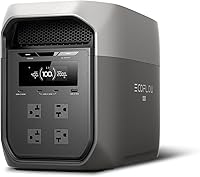
The best EcoFlow power station for most buyers is the EF ECOFLOW DELTA 3. It gives you 1,024Wh of capacity and 1,800W of AC output in one unit for home backup, camping and RV use.
That mix matters because capacity decides how long you can run devices, while output decides which devices you can run at all. A smaller station may handle lights and phones, but it will struggle with a fridge, a laptop charger and a router used together.
Fast charging is the other reason this model fits so many buyers. When an outage is possible, you do not want to wait hours for the battery to be ready, and a quicker recharge makes it easier to keep the station topped up between uses.
The DELTA 3 Max is the better EcoFlow choice if your loads are larger or you need longer runtime. It has 2,048Wh of capacity, so it suits people who want to run more appliances or keep essential devices going for a longer period.
The RIVER 2 240 is easier to carry when you mainly need power for small devices. Its 243Wh capacity and 300W output make sense for lights, phones, cameras and laptops, but not for larger home backup loads.
This roundup compares EcoFlow families and capacities with similar Anker, Jackery and BLUETTI options. That wider view helps you see whether expansion, lower weight or a higher output is the better match for your plans.
For a wider explanation of battery size, output and recharge methods, start with our best portable power station guide.
Read the guide before you choose, because the right station depends on your devices and how you plan to use it. A station that is too small will leave you short, and a station that is too large will be harder to move and store.
Our picks at a glance
-
1
 Best for everyday home backup
EF ECOFLOW Delta 3 Portable Power Station
9.7/10 our score
See it on Amazon -
2
 Best for fast compact backup
Anker SOLIX C1000 Gen 2 Portable Power
9.7/10 our score
See it on Amazon -
3
 Best for lightweight camping
Jackery Explorer 300 Portable Power Station
9.6/10 our score
See it on Amazon
- 4
 Check it
Jackery Explorer 1000 v2 Portable Power Station
Best for portable 1kWh-style power - 5
 Check it
Anker SOLIX C1000 Portable Power Station
Best for expandable-style 1kWh backup - 6
 Check it
EF ECOFLOW DELTA 3 Max Portable Power
Best for high-demand appliances - 7
 Check it
BLUETTI Elite 30 V2 Portable Power Station
Best for compact 600W backup - 8
 Check it
BLUETTI Elite 10 Mini Portable Power Station
Best for travel and small devices - 9
 Check it
EF ECOFLOW RIVER 2 240 Portable Power
Best for simple lightweight EcoFlow power
Which EcoFlow power station is best for everyday backup?
The DELTA 3 is the best all-around EcoFlow power station in this group. It provides 1,024Wh, 1,800W AC output and a 56-minute full charge, giving you a useful balance for essential home devices and outdoor use.
EcoFlow states that the DELTA 3 can expand up to 5kWh with DELTA 3, DELTA Pro 3 and DELTA 2 Max battery packs. Its LiFePO4 battery is rated for 4,000 cycles to 80% capacity, and the battery pack has IP65 protection.
The DELTA 3 also supports 13 appliances at once and includes 500W solar input. X-Boost supports resistive appliances with power demands over 2,600W continuously, but you should still compare your device's running and startup demand before use.
EF ECOFLOW Delta 3 Portable Power Station: Best for everyday home backup
- 1,024Wh capacity
- 1,800W output
- 56-minute full charge
- LiFePO4 battery
The DELTA 3 balances useful capacity, fast charging and expandable storage. It suits home backup, camping and RV use when 1,800W output is enough.
Pros
- Fast AC charging
- Expandable up to 5kWh
- LiFePO4 battery
Cons
- Heavier than compact power stations
- Expansion requires compatible EcoFlow battery packs
The DELTA 3 is the strongest match for buyers who want one station for blackout preparation, camping and RV trips. Its 12.5 kg weight makes it less convenient than compact models, but the higher output and expandable capacity give you more room to grow.
That trade-off suits households who want a main backup unit rather than a small unit for only one or two devices. You can keep it in a cupboard, bring it to the vehicle when needed, and use it for a wider range of loads when you are away from home.
Expansion is the feature that makes the size and weight easier to accept in daily use. You start with 1,024Wh, and you can add capacity later if your needs change, instead of replacing the whole station when you want more runtime.
In practice, that means you should think about what you will run first and how long you need it to run. If a fridge, lights and charging devices are the priority, the DELTA 3 gives you a sensible starting point without moving up to a much larger unit.
Care is simple but important. Keep the station charged before an expected outage, store it in a dry place, and check its charge level from time to time so it is ready when you need it.
Use the EcoFlow DELTA 2 Max review when comparing older DELTA families, and read how to use an EcoFlow DELTA 2 if you already own that model.
Those guides help you place the DELTA 3 in the wider EcoFlow range. They also make it easier to decide whether you need the extra capacity of a larger model or the lighter design of a smaller one.
Which power station is best for large appliances?
The EcoFlow DELTA 3 Max is the best pick for high-demand appliances. Its 2,048Wh LFP battery, 2,400W output and 3,400W X-Boost give it more capacity and output than the smaller stations in this group.
That extra headroom matters when you want to run a fridge, a microwave or power tools, or when you want several devices to run at the same time. A smaller station may work for a short period, but it will run out of capacity much sooner.
EcoFlow states that it can recharge from 0% to 80% in 1.13 hours. That speed is useful before a trip or when you want to prepare for a possible outage, because you spend less time waiting for usable power.
A transfer time under 10ms suits home backup for computers and medical devices. When the mains supply fails, a fast switch helps keep connected equipment running, although you should still check what each device needs during a power cut.
App controls let you monitor energy use and set charging and discharging schedules. That can help you plan how the battery is used, especially if you want to keep a certain amount of charge in reserve for essential devices.
Its larger body measures 19.44 in long, 12 in wide and 9.4 in high. Plan the storage space before choosing it, especially if you need to move the station between a home, vehicle and campsite.
Weight and size should be part of the decision, not an afterthought. A station that is hard to lift or does not fit in your vehicle may stay at home more often, even if it has the right capacity for your devices.
Set-up is straightforward in principle, but you should still read the manual for your exact model. Check the output limits, use the correct charging method, and keep the station in a dry and ventilated place during use.
Runtime will still depend on what you connect. A low-wattage device will run for much longer than a heating appliance, so it is worth listing your main loads and estimating how long each one should run before you rely on the station for a full outage.
EF ECOFLOW DELTA 3 Max Portable Power: Best for high-demand appliances
- 2,048Wh LFP battery
- 2,400W output
- 3,400W X-Boost
- 10ms transfer time
The DELTA 3 Max is the EcoFlow choice for larger loads and longer runtime. Its 2,048Wh battery fits residential backup and RV use better than compact models.
Pros
- Large capacity
- High X-Boost output
- 0–80% charging in 1.13 hours
Cons
- Larger than 1kWh stations
- Higher capacity may be unnecessary for small devices
Choose the DELTA 3 Max when runtime and appliance capacity matter more than minimum weight. That makes it a sensible pick for home backup, RV use and campsite power where you want to run larger appliances or several devices at once.
It is less suited to buyers who want the lightest station possible for short trips. If you will carry the station over long distances or store it in a small space, a more compact model may fit your routine better.
For a smaller EcoFlow station, compare the EcoFlow DELTA 3 review and the EcoFlow DELTA 3 Max review.
Those reviews help you weigh the trade-off between capacity, output and portability. The DELTA 3 is easier to manage in everyday use, while the DELTA 3 Max gives you more power for demanding loads.
Before you choose, check your storage space and how you plan to move the unit. A larger station is only useful if you can place it safely, reach it quickly in an outage, and transport it without strain.
How do EcoFlow DELTA models compare?
The DELTA 3 is the practical middle choice, while the DELTA 3 Max is for higher loads and the RIVER 2 240 is for lighter use. Choose by how you plan to use the station each day, not by battery size alone.
The DELTA 3 suits home backup, camping and RV trips with 1,024Wh capacity and 1,800W output. Its expandable design also lets you add capacity later.
The DELTA 3 Max suits larger appliances, longer outages and running several devices together. It provides 2,048Wh capacity and 2,400W output.
The RIVER 2 240 suits light portable use with 243Wh capacity and 300W output. It fits camping, travel and short backup for small devices.
The older DELTA 2 Max sits in the same general capacity class as the DELTA 3 Max, so output, expansion and charging features should guide your choice.
The EcoFlow DELTA vs DELTA 2 comparison explains how the range has changed. It helps you compare an older model with a newer one.
If you are choosing among newer models, compare the EcoFlow DELTA 3 Max vs DELTA 2 Max, the DELTA 3 Max Plus review and the DELTA 3 Plus review.
Those comparisons focus on output, charging speed and expansion. They can stop you choosing too much capacity for small devices or too little for larger loads.
For setup, our how to use an EcoFlow DELTA 3 guide covers the basic steps before you connect devices. Correct charging and storage help the battery last longer.
List the devices you need to run and add up their power needs. Then choose the model that covers both output and runtime.
What are the best alternatives to EcoFlow?
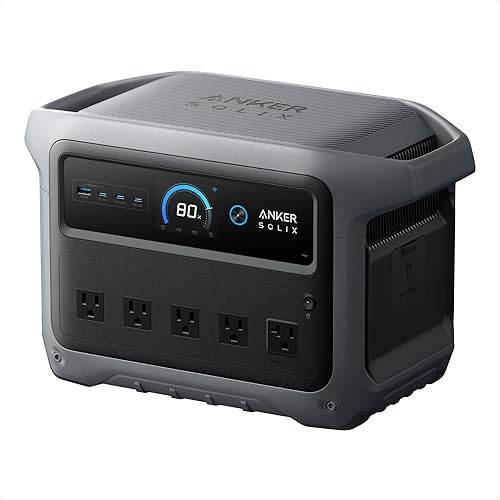
The Anker SOLIX C1000 Gen 2 is the closest alternative for a fast 1kWh station. It has 1,024Wh capacity, 2,000W output, 10 ports and a 49-minute full recharge when UltraFast charging is enabled.
Its 10ms UPS suits laptops and CPAP machines during outages. The station is 11.3 kg, but its capacity cannot be expanded, so it is best for buyers who want a complete compact unit rather than a system that grows later.
Anker SOLIX C1000 Gen 2 Portable Power: Best for fast compact backup
- 1,024Wh capacity
- 2,000W output
- 49-minute full recharge
- 10ms UPS
The C1000 Gen 2 offers slightly more output than the DELTA 3 in a compact 1,024Wh format. It is a strong fit for emergency backup, remote work and camping.
Pros
- Very fast recharge
- 10ms UPS backup
- Lighter than the DELTA 3
Cons
- Capacity cannot be expanded
- UltraFast mode depends on battery temperature
The Jackery Explorer 300 is the best lightweight alternative for small loads. Its 292Wh capacity, 300W rated output and 7.1 lb weight fit camping gear, cameras, drones and laptops.
It has 2 AC outlets, a 100W USB-C PD port, 2 USB-A ports and a 120W car port. The solar panel is not included, so plan for the separate panel if you want off-grid charging.
Jackery Explorer 300 Portable Power Station: Best for lightweight camping
- 292Wh capacity
- 300W output
- 7.1 lb weight
- 6-device charging
The Explorer 300 is easy to carry and fits small-device charging better than large home-backup stations. It suits laptops, cameras, drones and compact camping loads.
Pros
- Lightweight design
- USB-C PD port
- LiFePO4 battery
Cons
- Lower capacity than 1kWh models
- Solar panel is not included
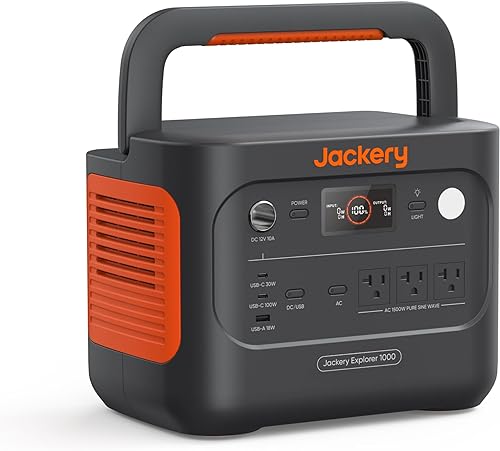
The Jackery Explorer 1000 v2 is a good choice for 1,070Wh capacity with a foldable handle. Its 1,500W output and 3,000W surge peak fit larger camping and emergency loads, while the Jackery app provides a one-hour emergency charging mode.
The Anker SOLIX C1000 is another 1kWh option, with 1,056Wh capacity, 1,800W output, 11 ports and a car charging cable included. It weighs 27.6 lb, making it heavier than the C1000 Gen 2.
Jackery Explorer 1000 v2 Portable Power Station: Best for portable 1kWh-style power
- 1,070Wh capacity
- 1,500W output
- 3,000W surge peak
- 23.8 lb weight
The Explorer 1000 v2 gives you 1,070Wh capacity with a foldable handle and 1,500W output. It fits camping, road trips and emergency use when portability matters.
Pros
- One-hour emergency charging mode
- Three AC ports
- LFP battery
Cons
- Solar charging is limited to Jackery panels
- Solar panel is not included
Anker SOLIX C1000 Portable Power Station: Best for expandable-style 1kWh backup
- 1,056Wh capacity
- 1,800W output
- 600W solar input
- 11 ports
The original C1000 combines 1,056Wh capacity, 1,800W output and 11 ports. It suits RV and emergency use when car charging and app controls are useful.
Pros
- Car charging cable included
- Fast solar charging
- App-based charging control
Cons
- Heavier than the Gen 2
- AC and DC inputs cannot be used at the same time
The BLUETTI Elite 30 V2 is the best compact 600W option. Its 288Wh battery and 9.5 lb weight suit laptops, routers, CPAP machines and small camping appliances, while its 10ms UPS helps keep connected devices running through brief power cuts.
For background on where BLUETTI power stations are made, see our brand guide.
The BLUETTI Elite 10 Mini is the smallest station here. Its 128Wh capacity, 200W output and 4 lb weight make it useful for travel and small devices, but its single power outlet and limited capacity rule out larger appliances.
BLUETTI Elite 30 V2 Portable Power Station: Best for compact 600W backup
- 288Wh capacity
- 600W output
- 1,500W lifting power
- 10ms UPS
The Elite 30 V2 provides 600W continuous output in a 9.5 lb package. It suits CPAP machines, laptops, routers and small camping appliances.
Pros
- Compact size
- Multiple charging methods
- 10ms UPS
Cons
- Lower capacity than 1kWh stations
- Power Lifting mode does not replace higher battery capacity
BLUETTI Elite 10 Mini Portable Power Station: Best for travel and small devices
- 128Wh capacity
- 200W output
- 4 lb weight
- 10ms UPS
The Elite 10 Mini bridges the gap between a power bank and a larger power station. Its small size fits travel, laptops, cameras and short emergency backup.
Pros
- Airline-friendly capacity with approval
- Bluetooth app control
- Built-in lighting
Cons
- Limited 128Wh capacity
- Only one power outlet
The EcoFlow RIVER 2 240 is the simplest lightweight EcoFlow choice. It weighs 7.7 lb, provides 243Wh capacity and recharges from an AC outlet in 1 hour.
Its 300W output can support small appliances, lights and electronics within the stated limit. EcoFlow gives a 600W maximum output, but you should check the device's continuous demand before connecting it.
EF ECOFLOW RIVER 2 240 Portable Power: Best for simple lightweight EcoFlow power
- 243Wh capacity
- 300W output
- 600W maximum output
- 7.7 lb weight
The RIVER 2 240 is the lightest EcoFlow option here for small loads. It suits lights, laptops, mini fridges and camping equipment that stay within its output range.
Pros
- One-hour AC recharge
- LiFePO4 battery
- Easy to carry
Cons
- Lower capacity than DELTA models
- Solar charging cable is separate
| Product | Best for | Capacity | Output | Weight | Our score |
|---|---|---|---|---|---|
| EF ECOFLOW Delta 3 Portable Power Station | everyday home backup | 1,024Wh | 1,800W | 12.5 kg | 9.7 |
| Anker SOLIX C1000 Gen 2 Portable Power | fast compact backup | 1,024Wh | 2,000W | 11.3 kg | 9.7 |
| Jackery Explorer 300 Portable Power Station | lightweight camping | 292Wh | 300W | 7.1 lb | 9.6 |
| Jackery Explorer 1000 v2 Portable Power Station | portable 1kWh-style power | 1,070Wh | 1,500W | 23.8 lb | 9.5 |
| Anker SOLIX C1000 Portable Power Station | expandable-style 1kWh backup | 1,056Wh | 1,800W | 27.6 lb | 9.5 |
| EF ECOFLOW DELTA 3 Max Portable Power | high-demand appliances | 2,048Wh | 2,400W | 9.4 | |
| BLUETTI Elite 30 V2 Portable Power Station | compact 600W backup | 288Wh | 600W | 9.5 lb | 9.3 |
| BLUETTI Elite 10 Mini Portable Power Station | travel and small devices | 128Wh | 200W | 4 lb | 8.8 |
| EF ECOFLOW RIVER 2 240 Portable Power | simple lightweight EcoFlow power | 243Wh | 300W | 7.7 lb | 8.0 |
How much power station capacity do you need?
The right capacity depends on the devices you need to run and the required runtime. Capacity is measured in watt-hours, while output is measured in watts, so check both before you choose.
Capacity tells you how much energy the battery can store. Output tells you how much power it can supply at one time.
A station with high output but low capacity may start a large appliance, yet it will not run it for long. Runtime falls quickly as you add more devices.
A 128Wh to 300Wh station fits phones, lights, cameras, laptops and other small devices. The Elite 10 Mini, RIVER 2 240, Explorer 300 and Elite 30 V2 sit in this range.
Those smaller stations are easy to carry and store for camping, travel and short outages. They suit a few low-power devices rather than a fridge or larger appliance.
A 1,000Wh class station gives more time for several devices or longer outages. The DELTA 3, C1000 Gen 2, Explorer 1000 v2 and original C1000 are the strongest matches here.
That class is often the sweet spot for home backup. It covers essential devices for longer while remaining more manageable than a very large station.
The DELTA 3 Max has 2,048Wh capacity for buyers who need more runtime. Check its dimensions and weight against your storage and transport plans.
More capacity is not always better. A large station adds weight if you only need to charge phones and run lights, while extra capacity may be essential for a fridge through an outage.
Write down each device, note its power use and estimate how many hours you need it to run. That gives a clearer target than guessing and helps you avoid a station that is too small.
Also consider recharging. Check solar input limits if you plan to use solar, or fast AC charging if you will mainly use a wall outlet.
How should you compare output ratings?
The continuous output rating should meet the device's normal power demand, while the surge rating should cover startup demand. Add the running wattage of devices you plan to use at the same time, because the station has to supply the total load.
Running watts describe the power a device needs while it is working. Surge watts describe the short extra demand when some appliances start.
A station may handle a brief surge, but it still needs enough continuous output to keep the device running.
The Explorer 300 is rated for 300W with a 600W peak. That makes it suitable for small devices such as laptops, cameras and drones, but it is not the right choice for larger appliances that need more continuous power.
The Elite 30 V2 provides 600W continuous output and 1,500W lifting power, while the DELTA 3 Max provides 2,400W output and 3,400W X-Boost. Those higher ratings give you more choice of appliances, but they do not remove the need to check each device.
Do not choose by surge power alone. A short peak rating does not mean the station can run that load continuously, and using a load that is too high may cause the station to shut down.
X-Boost and similar modes are designed for certain resistive appliances, but they should not be treated as a general increase in capacity. The battery will still drain at a rate based on the actual load, so runtime can fall quickly.
A simple check is to list every device you want to use together. Add their running wattage, compare the total with the station's continuous output, and leave some margin if you can.
Also check the device labels for startup demand. Motors and compressors can need extra power at the start, so a device that looks safe on running watts alone may still exceed the station's limit when it switches on.
If you plan to run a fridge, a microwave or power tools, choose a station with higher continuous output. If you only need small electronics, a lower output station may be lighter, easier to store and better suited to your needs.
What should you check before using a portable power station?
The first check is total load. Write down the running and startup demands of each device, then keep the combined load within the station's continuous output.
That check should come before you connect anything. It is much easier to remove or delay one device at the planning stage than to deal with an overloaded station during an outage or a trip.
Next, charge the station before an expected outage or trip. Use the supported AC, solar or car charging method, and keep cables arranged so they are not pinched or exposed to water.
Fast charging can help in a hurry, but it does not replace good preparation. A station that is kept at a sensible charge level will be ready when you need it, without last-minute waiting.
Store the station in a dry, suitable place and follow the model's charging and temperature guidance. Avoid leaving it in damp conditions, and give it enough space for ventilation during use.
For solar charging, confirm panel voltage, input wattage and connector requirements before connecting equipment. The wrong panel or cable can cause poor charging or damage, so the manual for your exact model should be your guide.
Battery runtime changes with device load and inverter use. A low-wattage light may run much longer than a heating appliance, even when both are connected to the same power station.
That is why it helps to test your main setup before you rely on it. Run the devices you care about most, note how long they last, and adjust your plan if the runtime is shorter than you expected.
Keep the station clean and check its charge from time to time during storage. A quick check every few weeks is a simple habit, and it can stop you from finding a flat battery when an outage arrives.
When you move the station, use a stable surface and avoid dropping it. Secure it in the vehicle if you are transporting it, and keep it away from heat and moisture while it is in transit.
Which best EcoFlow power station should you choose?
Choose the EF ECOFLOW DELTA 3 if you want the best balance of capacity, output, fast charging and expansion. It is the safest all-round pick for home backup, camping and RV use in this group.
Choose the DELTA 3 Max for higher loads and longer runtime. Its 2,048Wh capacity and 2,400W output suit larger appliances and longer outages, but it is bigger to store and move.
Choose the RIVER 2 240 for light portable power. Its 243Wh capacity and 300W output fit small devices and camping, where low weight matters more than long runtime.
Choose the Anker SOLIX C1000 Gen 2 if compact 1kWh backup and a 49-minute recharge matter most. It has 1,024Wh capacity and 2,000W output, but its capacity cannot be expanded.
Choose the Jackery Explorer 300 or BLUETTI Elite 10 Mini when low weight matters more than runtime. Both suit small devices and short trips rather than larger home appliances.
If you want a portable 1kWh-style station with a foldable handle, consider the Jackery Explorer 1000 v2. It has 1,070Wh capacity, 1,500W output and three AC ports for several devices at once.
If you need a compact 600W option, the BLUETTI Elite 30 V2 offers 288Wh capacity and a 10ms UPS. That suits laptops, routers, CPAP machines and small camping appliances.
For a closer look at EcoFlow's 1,500Wh-class option, read our EcoFlow DELTA 3 1500 review. It helps you judge whether that class fits your needs better than the 1,024Wh DELTA 3.
Buyers comparing older and newer designs can also use our EcoFlow DELTA 3 Classic review before a final choice. That comparison helps you decide whether newer features are worth paying for.
In the end, choose the station that matches your devices, storage space and how you plan to move it. List your main loads first, check capacity and output, then pick the model that covers them with room to spare.
Our top 3 picks at a glance
-
1
Best for everyday home backup
EF ECOFLOW Delta 3 Portable Power Station
9.7/10 our score
See it on Amazon -
2
Best for fast compact backup
Anker SOLIX C1000 Gen 2 Portable Power
9.7/10 our score
See it on Amazon -
3
Best for lightweight camping
Jackery Explorer 300 Portable Power Station
9.6/10 our score
See it on Amazon
Frequently asked questions
What is the best EcoFlow power station for most people?
The EF ECOFLOW DELTA 3 is the best EcoFlow power station for most people because it combines 1,024Wh capacity, 1,800W output, fast charging and expansion up to 5kWh. It fits home backup, camping and RV use without the larger size of the DELTA 3 Max.
Is the EcoFlow DELTA 3 better than the RIVER 2 240?
The DELTA 3 is better for home backup and higher loads because it has 1,024Wh capacity and 1,800W output. The RIVER 2 240 is better for light portable use because it weighs 7.7 lb and has 243Wh capacity.
Choose by load size and carry distance.
How much capacity do you need in a portable power station?
Choose about 128Wh to 300Wh for phones, lights, cameras and laptops. A 1,000Wh class station suits longer outages, RV use and several devices.
Choose about 2,000Wh when you need more runtime or plan to run larger appliances.
Can EcoFlow power stations be charged with solar panels?
Yes, the EcoFlow models here support solar charging. The DELTA 3 accepts up to 500W solar input, while the RIVER 2 240 supports up to 110W solar input.
Use the charging limits and connector requirements for your exact model.
What is the difference between running watts and surge watts?
Running watts describe the power a device needs while operating. Surge watts describe the short startup demand of some appliances.
Match both numbers to the power station, because a station may support a brief surge without continuously running that load.