EcoFlow DELTA 3 Max Review: Worth It? (November 2026)
The EcoFlow DELTA 3 Max is a 2048Wh portable power station with 2400W output and 3400W X-Boost for home backup, RV trips, and camping. It charges from 0 to 80 percent in 1.13 hours, and the solar panel bundle adds off-grid recharging.
On this page (11 sections)
- EcoFlow DELTA 3 Max at a glance
- Who the DELTA 3 Max suits best
- The specs that matter in daily use
- How the DELTA 3 Max compares on output
- Charging options and solar use
- Setup for home backup
- Setup for RV and camping use
- Care and long-term use
- Trade-offs to know before you buy
- EcoFlow DELTA 3 Max alternatives here
- EcoFlow DELTA 3 Max review verdict
The EcoFlow DELTA 3 Max review picture is simple: this is a high-output 2048Wh station built for home backup and RV use.
It pairs 2400W output with 3400W X-Boost, so it can run demanding appliances that smaller stations struggle with.
We checked the specs and compared the three models below.
Our score weighs specs, features and buyer feedback against what you are shopping for.
The bundle with a solar panel scores highest for camping, while the standalone station suits home use.
EcoFlow DELTA 3 Max at a glance
The DELTA 3 Max gives you 2048Wh of LFP storage with 2400W continuous output.
That size sits in the middle of the portable power station market, with enough energy for a fridge, lights, and phones through a short outage.
EF ECOFLOW DELTA 3 Max Portable Power: Best for home backup

- 2048Wh LFP battery
- 2400W output
- 3400W X-Boost mode
- 0-80% charge in 1.13 hours
- Under 10ms transfer time
A high-output 2048Wh station for keeping essential appliances running during outages and at camp.
Pros
- Fast AC charging
- High X-Boost output for demanding appliances
- Quiet operation for indoor use
- App control for monitoring and scheduling
Cons
- Solar panel is optional and sold separately
- Large size needs storage space
EcoFlow says the LFP battery is built for 10 years of daily use.
You also get an extended 5-year service.
The unit measures 9.4 by 12 by 19.44 inches, with aluminum and plastic construction.
It ships with an AC charging cable, the station, and manuals and warranty card.
The solar panel is optional on this version, so plan to buy one separately if you want solar charging.
Who the DELTA 3 Max suits best
This station suits homeowners who need backup for essential appliances during outages.
A 2048Wh capacity and 2400W output cover a fridge, microwave, and power tools in rotation, rather than all at once.
It also suits RV and camping use.
EcoFlow positions it for camping and residential use, and the quiet operation helps at night.
You can carry it from a closet to an RV without fuel or fumes.
Our best portable power station guide helps you compare this size against smaller and larger options.
If you only need to charge phones and run lights, a smaller station may be easier to store.
The specs that matter in daily use
The headline numbers are 2048Wh capacity, 2400W output, and 3400W X-Boost mode.
X-Boost is EcoFlow's mode for running appliances that need more power than the standard output, and EcoFlow says it powers 99 percent of appliances.
That matters when you plug in a fridge or microwave.
Those appliances draw a lot of power when they start, so X-Boost gives you headroom.
You still need to manage total energy, since 2048Wh is the total stored energy.
Charging speed is a practical strength.
EcoFlow says X-Stream brings the station from 0 to 80 percent in 1.13 hours.
That means less waiting before a trip or after an outage.
The transfer time is under 10ms for home backup use.
EcoFlow says that speed helps protect sensitive electronics like computers and medical devices when power cuts out.
The ultra-quiet operation also helps if you use it indoors.
How the DELTA 3 Max compares on output
On output, the DELTA 3 Max sits below the Max Plus but above many mid-size stations.
Its 2400W output and 3400W X-Boost cover high-demand appliances like fridges, microwaves, and power tools.
The DELTA 3 Max Plus below offers 3000W output and 3800W X-Boost.
That extra headroom helps if you run several large appliances close together or use a heater, which draws steady power.
Capacity is the same at 2048Wh on both models.
That means runtime depends on what you plug in, not just the output number.
A small load will run far longer than a large load.
EcoFlow says X-Boost powers 99 percent of appliances on the standard Max.
Treat that as a guide, not a guarantee for every appliance.
Check the wattage of your own devices before you rely on it during an outage.
Charging options and solar use
You can charge the DELTA 3 Max from an AC wall outlet with X-Stream fast charging.
EcoFlow says that reaches 80 percent in just over an hour, which is fast for a station this size.
Solar charging is optional on the standalone model.
EcoFlow lists it as a solar generator with the solar panel optional.
If you want solar from the start, the bundle below includes a 220W panel.
Solar helps when you are off-grid or when the power is out for a long time.
It will not recharge the station as fast as wall power, and output depends on sun and placement.
Plan solar as a top-up method, not a quick refill.
The app helps you manage this.
EcoFlow says you can monitor energy use in real time, set smart priorities, and set charging and discharging schedules.
That helps you save on electricity costs while keeping essentials powered.
Setup for home backup
Set the station in a dry spot near the appliances you want to protect.
Keep it where you can reach the controls and cables during an outage, not buried in a garage corner.
Start by charging it fully with the AC cable before you need it.
EcoFlow says fast charging reaches 80 percent in 1.13 hours, so a full charge before storm season is a smart habit.
Plug in essential devices and test the transfer.
With under 10ms transfer time, EcoFlow says sensitive electronics stay safe when the power cuts.
Test this in daylight so you know what turns on and what does not.
For app setup, connect the station to the EcoFlow app.
You can monitor battery levels and set output priorities for your most important appliances.
That helps you decide what to run first when capacity is limited.
Our guide on how to use EcoFlow DELTA 2 covers similar app and charging habits.
The steps transfer well, since the controls are in the same family.
Setup for RV and camping use
For RV use, the DELTA 3 Max works as a portable power source you can move between home and camp.
Its lighter, durable design helps you carry it to an RV or campsite without giving up output.
Charge it at home before you leave, then top it up with solar at camp if you have a panel.
EcoFlow says solar panel is optional on the standalone model, so pack a panel if you plan multi-day trips.
Use the app to track energy use while you travel.
You can see how much power you have left and adjust what you run.
That is easier than guessing from a percentage alone.
Keep cables organized and the vents clear during use.
A station in a tent or RV should sit on a firm, dry surface with space around it.
That helps with cooling and keeps it safe from spills.
Care and long-term use
The LFP battery is built for long daily use, with EcoFlow citing 10 years of daily use.
LFP chemistry is known for stability, and EcoFlow pairs it with a durable build for home, RV, and camping use.
Store the station at a moderate charge level when you do not use it for weeks.
EcoFlow does not need a full charge for storage, and a partial charge reduces strain on the battery.
Top it up before your next trip or storm.
Keep the unit dry and clean.
Wipe the exterior with a dry cloth and keep vents free of dust.
Check cables for damage before each season of use.
EcoFlow provides an extended 5-year service on this model.
Keep your manuals and warranty card with the receipt and model number.
The model number is EF-DL-H02-3M, and the manufacturer part number is Delta 3 Max.
Trade-offs to know before you buy
The main trade-off is size versus capacity for home backup.
At 9.4 by 12 by 19.44 inches, this station takes real storage space.
It is portable, but it is not a small power bank you toss in a bag.
The second trade-off is runtime.
With 2048Wh, you get solid backup for essentials, but not all-night power for several large appliances.
A fridge and lights will last far longer than a heater and microwave together.
The third trade-off is solar.
The standalone model does not include a panel, so solar charging needs a separate purchase.
If you want solar right away, the bundle below includes a 220W panel in the box.
Price tier also matters.
This is a premium mid-range option, not a budget station.
You pay for fast charging, X-Boost output, and app control, so compare those features against your actual needs.
EcoFlow DELTA 3 Max alternatives here
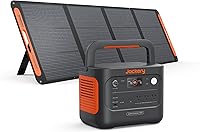
EF ECOFLOW DELTA 3 MAX Portable Power
This bundle suits campers who want solar charging without a separate purchase.
It includes the DELTA 3 MAX station, a 220W solar panel, and an AC charging cable.
You get the same 2400W output and 3400W X-Boost.
The panel is a bifacial solar panel, according to EcoFlow.
That design can capture light from both sides when placed correctly.
It adds bulk to transport, so pack space matters on a trip.
EF ECOFLOW Portable Power Station DELTA
This Max Plus model suits buyers who want higher output and room to expand.
It offers 3000W output and 3800W X-Boost, with 2048Wh to start.
You can expand capacity up to 10kWh with extra batteries.
It also offers five ways to charge, including AC, solar, car, Smart Generator, and PV plus car charging.
EcoFlow says it reaches 80 percent in 43 minutes.
At 49 pounds, it is heavier than the standard Max.
Our best EcoFlow power station guide compares these models across the full EcoFlow range.
That guide helps if you are torn between Max and Max Plus.
EcoFlow DELTA 3 Max review verdict
Pick the DELTA 3 Max for home backup, the solar bundle for camping, and the Max Plus for expansion.
Each model shares the 2048Wh starting point, so your choice comes down to output, solar, and future growth.
If you want to compare the Max against the previous generation, read our EcoFlow DELTA 2 Max vs DELTA 3 Max comparison.
That post breaks down the differences in output, charging, and design.
For a broader look at the standard DELTA 3, see our EcoFlow DELTA 3 guide.
That covers the smaller model for readers who need less capacity.
In this EcoFlow DELTA 3 Max review, the verdict is clear.
It is a strong choice for essential backup and RV power, with fast charging and high X-Boost output.
Choose the bundle if solar matters, or the Max Plus if you want to expand to 10kWh later.
Frequently asked questions
How long does the EcoFlow DELTA 3 Max take to charge?
EcoFlow says the DELTA 3 Max charges from 0 to 80 percent in 1.13 hours with X-Stream technology. That fast AC charging helps before a trip or after an outage.
Solar charging takes longer and depends on sun, panel size, and placement.
Can the DELTA 3 Max run a fridge and microwave?
Yes, EcoFlow says 3400W X-Boost mode powers high-demand appliances like fridges and microwaves. Run one large appliance at a time to protect runtime.
With 2048Wh total, your runtime depends on each appliance's wattage.
Does the DELTA 3 Max come with a solar panel?
The standalone model lists the solar panel as optional. The bundle model includes a 220W solar panel, AC charging cable, and the station.
Choose the bundle if you want solar charging for camping without a separate purchase.
What is the difference between DELTA 3 Max and Max Plus?
The Max Plus offers 3000W output and 3800W X-Boost, compared with 2400W and 3400W on the standard Max. Both start at 2048Wh, but the Max Plus expands to 10kWh.
The Max Plus is heavier at 49 pounds.