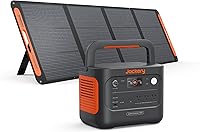
9 Best Portable Power Stations for Camping (November 2026)
The best portable power stations for camping include the Anker SOLIX C1000 Gen 2 Portable Power for full campsite power, the EF ECOFLOW Portable Power Station Delta for heavy campsite loads, and the Jackery Explorer 300 Portable Power Station for lightweight camping.
On this page (6 sections)
The best portable power station for camping is the Anker SOLIX C1000 Gen 2 for its 1,024Wh capacity, 2,000W output and fast recharge options. It sits at the top of this list because it covers both the small electronics most campers carry and the larger appliances some sites need.
Choose Jackery for lighter loads, or BLUETTI and EcoFlow for larger campsite appliances. The right pick depends less on the badge and more on what you plan to plug in and how far you need to carry it.
We compared capacity, output, recharge options, portability, port selection and camping-specific trade-offs. Capacity in watt-hours tells you how much energy is stored, while output in watts tells you what you can run at once.
A solar generator for camping can keep phones, lights, cameras, laptops and selected appliances running, but the right size depends on your actual watt load. A compact 300W station suits personal gear well, yet it will not run a microwave or a full sized fridge for long.
For a broader look at how these units work, read our guide to the best portable power station. That guide explains the basic terms in more detail before you narrow the choice by size.
If your campsite includes an RV, see the best portable power station for RV guide before choosing a battery size. RV loads, cable runs and storage space often push you toward a different capacity than a tent site needs.
Most campers should start with a simple list of devices and their running watts. Add up the items you will use together, check any startup demand, then match that total to a station with comfortable headroom.
Weight matters just as much as power on a real trip. A 1kWh station can feel easy in a car boot and tiring on a long walk from the car park to a pitch.
Think about recharge before you travel too. AC charging is fastest at home, solar helps off grid, and car charging can top up between sites when time allows.
Finally, plan where the station will live at camp. Keep it dry, ventilated and upright where required, and switch off outputs you are not using to save stored energy.
Our picks at a glance
-
1
 Best for full campsite power
Anker SOLIX C1000 Gen 2 Portable Power
9.7/10 our score
See it on Amazon -
2
 Best for heavy campsite loads
EF ECOFLOW Portable Power Station Delta
9.7/10 our score
See it on Amazon -
3
 Best for lightweight camping
Jackery Explorer 300 Portable Power Station
9.6/10 our score
See it on Amazon
- 4
 Check it
BLUETTI Elite 100 V2 Portable Power Station
Best for quiet overnight camping - 5
 Check it
Jackery Explorer 1000 v2 Portable Power Station
Best for road-trip appliances - 6
 Check it
BLUETTI Portable Power Station AC180
Best for expandable camp backup - 7
 Check it
ALLWEI Portable Power Station 300W
Best for budget-size campsite gear - 8
 Check it
Anker SOLIX C300 Portable Power Station
Best for compact USB-C charging - 9
 Check it
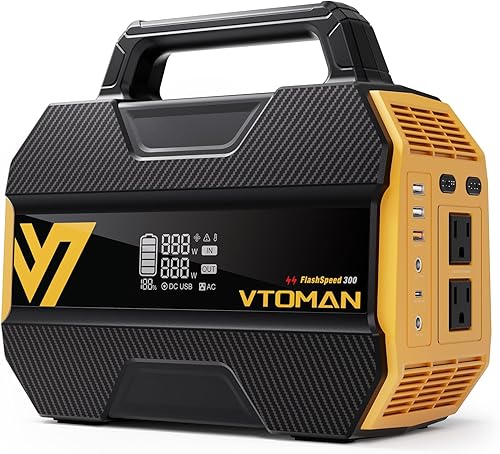
VTOMAN FlashSpeed 300 Portable Power Station
Best for multi-device camp kits
The best portable power stations for camping
The best portable power station for camping depends on your load. For broader outdoor use, compare portable power stations for outdoor use.
Large 1,000Wh models fit refrigerators and cooking equipment better, while compact 230Wh to 292Wh stations are easier to carry for personal electronics.
Our score weighs specs, features and buyer feedback against what you're shopping for.
| Product | Best for | Capacity | Output | Solar input | Our score |
|---|---|---|---|---|---|
| Anker SOLIX C1000 Gen 2 Portable Power | full campsite power | 1,024Wh | 2,000W, 3,000W peak | 600W, 60V maximum | 9.7 |
| EF ECOFLOW Portable Power Station Delta | heavy campsite loads | 1,024Wh | 1,800W, 3,600W surge | 9.7 | |
| Jackery Explorer 300 Portable Power Station | lightweight camping | 292Wh | 300W, 600W peak | 9.6 | |
| BLUETTI Elite 100 V2 Portable Power Station | quiet overnight camping | 1,024Wh | 1,800W, 2,700W Power Lifting | 9.5 | |
| Jackery Explorer 1000 v2 Portable Power Station | road-trip appliances | 1,070Wh | 1,500W, 3,000W surge | 9.5 | |
| BLUETTI Portable Power Station AC180 | expandable camp backup | 1,152Wh | 1,800W, 2,700W peak | 9.4 | |
| ALLWEI Portable Power Station 300W | budget-size campsite gear | 256Wh | 300W, 600W peak | 9.2 | |
| Anker SOLIX C300 Portable Power Station | compact USB-C charging | 288Wh | 300W, 600W surge | 9.1 | |
| VTOMAN FlashSpeed 300 Portable Power Station | multi-device camp kits | 230Wh | 300W | 9.0 |
Anker SOLIX C1000 Gen 2 Portable Power: Best for full campsite power
- 1,024Wh LiFePO4 battery
- 2,000W output
- 3,000W peak
- 49-minute full recharge
The C1000 Gen 2 balances high output, useful capacity and portable dimensions for campers who need more than phone and laptop charging.
Pros
- Fast AC recharge
- 10 ms UPS
- 600W solar input
Cons
- No expansion feature
- 11.3 kg
The Anker SOLIX C1000 Gen 2 is the strongest all-around choice for a campsite that needs more than small electronics. Its 1,024Wh capacity and 2,000W output give you more room for refrigerators, laptops, lights and other equipment than compact 300W stations.
The 3,000W peak rating helps with short startup demands, but you still need to check each appliance's running and starting watts. Ten ports let you power up to 10 devices, and the station includes a 10 ms UPS function for sensitive equipment.
AC charging can reach a full charge in 49 minutes when HyperFlash is enabled in the Anker app and the battery temperature supports that speed. Solar input reaches 600W, with a stated 1.8-hour full recharge using suitable solar input.
At 11.3 kg, it is heavier than the small picks but still designed for transport to a room, RV, beach or park. The main trade-off is that this Gen 2 version removes the expansion feature to reduce size and weight.
EF ECOFLOW Portable Power Station Delta: Best for heavy campsite loads
- 1,024Wh capacity
- 1,800W output
- 3,600W surge
- 500W solar recharge
The DELTA 3 Classic suits campsites where refrigerators, microwaves and other heavier loads matter.
Pros
- 45-minute 0–80% AC charge
- Under-10 ms UPS
- App control
Cons
- 26.7 lb
- Not compatible with specified DELTA extra batteries
The EF ECOFLOW DELTA 3 Classic suits campers who need 1,800W of continuous output for equipment such as refrigerators, microwaves and laptops. Its 3,600W surge rating gives more startup headroom for compatible loads.
The 1,024Wh battery matches the C1000 Gen 2 in stated capacity. That pairing of capacity and output makes it a car camping choice rather than a backpacking one, since you carry the energy for appliances instead of just phones.
EcoFlow says X-Stream AC charging reaches 80% in 45 minutes, while a 500W solar panel can recharge it in about 2.5 hours. In practice, solar time will depend on sun, panel angle and how much of the battery you used during the day.
The under-10 ms UPS function can help protect PCs, servers and medical devices from interruptions. That matters most for work gear or sensitive electronics, not for a simple light or fan.
App control adds charging schedules and backup modes, which may be useful when campsite power changes during the day. You can plan a top up before you leave a site instead of relying on memory.
At 26.7 lb, it is better suited to car camping than long carries. Keep it close to the vehicle, move it on a flat surface where you can, and avoid regular lifting over rough ground.
Note the stated compatibility limit with DELTA 2 Smart Extra Battery and Delta 3 Series Smart Extra Battery. Check compatibility before you plan to add storage later, as added capacity is not a given here.
Jackery Explorer 300 Portable Power Station: Best for lightweight camping
- 292Wh capacity
- 300W output
- 600W peak surge
- 7.5 lb weight
The Explorer 300 is easy to carry and fits low-draw campsite gear such as laptops, cameras and lights.
Pros
- 7.5 lb weight
- 6-device charging
- Car and solar recharge options
Cons
- Solar panel not included
- Not suited to loads above 300W
The Jackery Explorer 300 is the best lightweight option for campers carrying their power station farther from the vehicle. It weighs 7.5 lb and provides 292Wh with 300W rated output and 600W peak surge.
Two AC outlets, a 100W USB-C PD port, 2 USB-A ports and a 120W car port cover common personal electronics. That mix suits a laptop, a phone, a camera battery and a small light without needing splitters or extra adapters.
It can handle laptops, cameras and drones within its output limit, but high-draw kitchen appliances need a larger station. Treat the 300W figure as a shared budget for everything plugged in at once.
Jackery includes an AC adapter, car charger cable and user guide. The solar panel is optional, and a 100W panel can bring it to 80% in about 2.8 hours under suitable sun.
Charge it at home before you leave, then use solar or car power to maintain it on longer trips. A smaller panel suits day to day top ups, while a larger panel helps when you use more power each night.
Choose the Explorer 300 for personal gear, not for long appliance runtimes. Its small size also makes it a practical best small power station for camping option.
BLUETTI Elite 100 V2 Portable Power Station: Best for quiet overnight camping
- 1,024Wh capacity
- 1,800W output
- 30dB silent mode
- 45-minute 0–80% charge
The Elite 100 V2 combines a 1kWh battery with a compact 25 lb design and a quiet mode for overnight use.
Pros
- 30dB silent mode
- 10 ms UPS
- Wi-Fi and Bluetooth app control
Cons
- Keep it upright
- Solar panels not included
The BLUETTI Elite 100 V2 is a strong choice for quiet overnight camping. Its silent mode runs at 30dB, while the 1,024Wh battery and 1,800W output provide enough capacity for larger campsite loads.
The station reaches 80% charge in about 45 minutes through 1,200W AC charging. That fast top up is useful before a trip, since a half charged battery will not give you the runtime you planned for the first night.
It also supports up to 1,000W solar charging when the panel voltage and connector meet the stated requirements. Check those limits before you buy panels, as wattage alone does not guarantee a safe match.
At 25 lb, it is lighter than the AC180 and still offers 11 ports. The compact 17L design helps it fit in a car boot beside food, bedding and other camp gear.
Wi-Fi and Bluetooth app control let you monitor power use and manage updates. Monitoring is helpful at camp because it shows how fast a fridge or other load is drawing down the battery.
Keep the Elite 100 V2 upright during transport and storage. That simple care step protects internal parts and keeps vents and ports in their intended position.
Jackery Explorer 1000 v2 Portable Power Station: Best for road-trip appliances
- 1,070Wh capacity
- 1,500W output
- 3,000W surge peak
- 23.8 lb weight
The Explorer 1000 v2 offers strong capacity for camping refrigerators, electric pots and other road-trip equipment.
Pros
- Foldable handle
- 100W USB-C
- App-controlled charging modes
Cons
- Solar panels not included
- Solar charging is limited to Jackery panels
The Jackery Explorer 1000 v2 gives you a useful mix of capacity and transport weight. Its 1,070Wh battery, 1,500W output and 3,000W surge peak fit camping refrigerators, electric pots, AC units and several smaller devices.
The foldable handle and 23.8 lb weight make it easier to move than many 1kWh stations. It still suits short carries from car to pitch best, so plan your site layout around where it will sit.
Three AC ports, 2 USB-C ports, USB-A and a car port let you charge several device types together. That spread helps a family group run lights, phones and a fridge without unplugging gear in turns.
Jackery's app can enable a 1-hour emergency charge from 0% to 100%. The normal 1.7-hour mode is intended to support battery health, so use the faster mode when time matters most.
The station also has a 30dB quiet overnight charging mode. That helps if you need to recharge after lights out without adding much noise to the tent area.
The main limitation is solar compatibility. The Explorer 1000 v2 is compatible only with Jackery solar panels for solar charging, and the solar panel is not included.
BLUETTI Portable Power Station AC180: Best for expandable camp backup
- 1,152Wh LiFePO4 battery
- 1,800W output
- 2,700W peak
- 500W solar input
The AC180 gives you the largest stated battery here and supports expansion with compatible BLUETTI batteries.
Pros
- 1-hour AC charge
- 8 outlets
- 20 ms UPS
Cons
- 37.4 lb
- Larger than compact picks
The BLUETTI AC180 is the best pick when you want the largest stated battery in this group and the option to add compatible expansion batteries. It carries 1,152Wh, delivers 1,800W and can reach 2,700W through its higher-power mode.
Eight outlets cover a broad campsite setup. That helps when a fridge, lights, laptops and phones are all connected, though you still need to keep the combined load within the output limit.
BLUETTI states that AC charging can reach a full charge in 1 hour, while 500W solar charging takes about 2.8 to 3.3 hours. Solar time will vary with sun strength, so treat that range as a guide for planning.
The 20 ms UPS function is useful for backup equipment, and the included cables cover AC, car and solar charging. Having the cables in the box saves extra purchases before your first trip.
The 37.4 lb weight is the clearest trade-off, so plan to move it short distances. Set it up where it will stay, rather than carrying it between tent and car each day.
For a campsite with an RV, compare this model with our best solar generator for RV guide. The AC180 can also use compatible BLUETTI B80, B230 or B300 expansion batteries in Power Bank mode.
ALLWEI Portable Power Station 300W: Best for budget-size campsite gear
- 256Wh LiFePO4 battery
- 300W output
- 600W peak
- 6.4 lb weight
The ALLWEI 300W is a small option for phones, laptops, lights and other low-wattage camping devices.
Pros
- 6.4 lb weight
- Pass-through charging
- 100W solar charging
Cons
- 256Wh capacity
- Solar panel sold separately
The ALLWEI 300W is a compact solar generator for camping when your main loads are phones, lights, laptops and other small electronics. Its 256Wh capacity and 300W continuous output keep it in the same light-duty class as the Jackery Explorer 300.
It has 1 AC outlet, 2 DC5521 ports, a car port, an 18W USB-A port and a 60W USB-C PD port. The unit can charge up to 6 devices at once, and pass-through charging lets it recharge while powering connected devices.
AC or car charging takes about 3.5 to 4 hours. A 100W solar panel takes about 4 to 5 hours, while dual AC and solar charging can reduce that to about 2 to 2.5 hours.
At 6.4 lb, it is easy to keep in a car or carry around camp. The 300W limit means it is not the right choice for microwaves, heaters or other high-draw equipment.
Anker SOLIX C300 Portable Power Station: Best for compact USB-C charging
- 288Wh capacity
- 300W output
- 600W surge
- 140W two-way USB-C
The C300 is a compact choice when USB-C charging, low weight and quiet campsite use matter most.
Pros
- 140W USB-C
- 25dB operation
- 80% wall charge in 50 minutes
Cons
- Solar input has strict limits
- Shoulder strap sold separately
The Anker SOLIX C300 is best for campers who carry USB-C laptops, phones, cameras and drones. Its 288Wh battery, 300W output and 140W two-way USB-C ports focus on compact device charging.
The C300 has 8 ports: 3 AC outlets, a 120W car socket, 2 USB-C ports rated at 140W each, another USB-C port and USB-A. Its 25dB operating noise is suitable for a quiet campsite.
Wall charging reaches 80% in 50 minutes. Solar charging works with suitable 60W or 100W Anker panels, but the stated solar input limits rule out several other Anker panel models.
At 4.13 kg, it is one of the easiest units here to move. The shoulder strap is sold separately, and the box includes the station, AC charging cable, safety manual and warranty information.
If you need campsite vehicle charging advice, our guide to portable power station for EV charging explains why vehicle charging demands careful power planning.
VTOMAN FlashSpeed 300 Portable Power Station: Best for multi-device camp kits
- 230Wh LiFePO4 battery
- 300W output
- 7 outlets
- Built-in 3-mode LED light
The FlashSpeed 300 fits a compact camp kit with several phones, lights, cameras and small electronics.
Pros
- 7 outlets
- 100W USB-C input
- 12V and 24V vehicle charging
Cons
- 230Wh capacity
- Loads above 300W trigger overload protection
The VTOMAN FlashSpeed 300 suits a shared campsite kit with several small devices. It provides 300W output, 230Wh capacity and 7 outlets, including 2 AC outputs, a 100W USB-C port, 3 USB-A ports and a DC port.
The 100W USB-C input can recharge the station to 80% in about 2 hours. Other options include a wall socket, solar panel and a 12V or 24V vehicle outlet.
That range of recharge methods suits different trips. Wall charging is simple at home, vehicle charging helps on the road, and solar can maintain charge on longer stays.
A built-in LED light has steady, strobe and SOS modes. The steady mode is handy around a pitch, while the other modes add a safety option for night time use.
Pass-through charging is supported, so the station can recharge while powering compatible equipment. Keep an eye on total load in that setup, since both jobs draw from the same system.
The 7.4 lb weight keeps it portable, but the 230Wh battery is smaller than the other compact picks here. Loads above 300W can trigger overload protection, so check the power requirements before connecting a device.
How much power do you need at a campsite?
A phone or camera needs far less power than a refrigerator, kettle or microwave. Start by listing the devices you will actually use at camp, then note the running watts for each one.
Add the running watts of the devices you expect to use at the same time, then check startup watts for equipment with motors or compressors. A fridge may need extra power to start, even if it settles to a lower draw once running.
For a simple estimate, divide watt-hours by device watts and allow for conversion loss. For example, a 100Wh station running a 10W load gives a rough ten hour guide before losses are considered.
A 1,024Wh station will not provide 1,024 hours to a 1W device because the inverter and battery system use some energy. The lower the load, the more those fixed losses can affect your estimate, so leave a safety margin.
Think about time of day as well as total watts. Lights and phones may run in the evening, while a fridge cycles through the night, and both draw from the same stored energy.
Choose a 230Wh to 300Wh model for personal electronics, lights and short trips. These stations are easier to carry and suit phones, cameras, laptops and small fans.
Move to about 1,000Wh when you want longer runtimes, several devices or selected appliances. That size gives more room for a camping fridge, electric cooking gear or a full evening of mixed loads.
Do not size up on power alone without checking weight and recharge. A larger battery takes longer to refill by solar and is harder to move around camp.
A good plan is to test your main loads at home first. Run them for an hour, check the battery drop, then adjust your kit before you rely on it at a remote site.
How do solar generators work for camping?
A solar generator for camping combines a rechargeable battery station with compatible solar panels. The panel sends power into the station, which stores it for later use through AC, USB or DC outputs.
In a typical day, the panel charges while you are out walking or cooking, then the stored energy runs lights and device charging after dark. That rhythm works well when sun hours match your power needs.
Panel wattage is only one part of the match. Check the station's voltage range, maximum solar input, connector and any brand-specific limits before buying a solar kit.
A panel that is too large or outside the voltage range may not charge safely or at all. Read the station limits first, then choose panels that fit inside them.
Placement matters too. Angle the panel toward the sun, keep it clear of shade, and adjust it as the sun moves during the day.
Cables and storage also affect daily use. Keep connections dry, avoid long tangles across walkways, and store panels flat or folded when not in use.
For off-grid planning, compare the best off-grid solar generator options. Those models may suit longer stays where solar is your main source of power.
If you already own an Anker unit, our Anker SOLIX outdoor use guide covers placement and campsite use considerations. It can help you set up the station safely before you leave home.
What should you check before buying?
Check these points before choosing a portable power station for camping:
- Running and starting watts: Your station must handle the normal load and any startup surge.
- Capacity: More watt-hours usually means longer runtime, but it also adds weight.
- Recharge method: AC, car and solar options matter when you are away from a wall outlet.
- Port layout: Count AC, USB-C, USB-A, car and DC ports for your actual gear.
- Weight and handles: A large station may work well in a vehicle but be awkward on a trail.
- Solar compatibility: Follow the stated voltage, wattage and connector limits.
- Dry placement: Keep the station and charging connections protected from rain and standing water.
- Battery care: Store it upright when required, keep vents clear and shut down unused outputs to reduce standby drain.
Also check what is included in the box. Some stations need a separate solar panel, strap or cable, and those extras affect both cost and setup time.
For vehicle-based travel, compare the best portable power station for car guide. Van campers may also benefit from the different capacity and portability priorities in our best portable power station for van life guide.
More guides on this topic
- Best Portable Power Stations with Jump Starters
That guide is useful if you want one unit for camp gear and vehicle starting support. It helps you weigh added features against battery size and port choice.
Which portable power station is best for camping?
The Anker SOLIX C1000 Gen 2 is the best portable power station for camping when you want high output, a 1,024Wh battery and fast AC or solar recharge. It suits campers who run more than phones and lights, including a fridge and several devices at once.
Choose the EcoFlow DELTA 3 Classic for heavy loads, Jackery Explorer 300 for light carry weight and BLUETTI Elite 100 V2 for quiet overnight use. Each of those picks trades capacity, weight or noise in a different way.
For smaller kits, the ALLWEI 300W, Anker SOLIX C300 and VTOMAN FlashSpeed 300 focus on phones, cameras and laptops. They are easier to carry, but their 230Wh to 288Wh batteries will not match a 1kWh station for long appliance use.
Before you decide, add up your likely loads and check startup watts. Then match the total to a station with headroom, and plan how you will recharge it during the trip.
For a portable station that also supports emergency home equipment, see What Is a Portable UPS? The Complete Guide.
That guide explains switchover times and which devices benefit most from backup power.
If you need a specific RV electrical setup, compare the best solar generator for 30 amp RV guide before choosing your solar kit. RV systems often need different panel limits and cable planning than a tent site.
Once you have shortlisted two models, compare weight, port layout and recharge time side by side. The best choice is the one you can carry, charge and use safely for the way you camp.
Our top 3 picks at a glance
-
1
Best for full campsite power
Anker SOLIX C1000 Gen 2 Portable Power
9.7/10 our score
See it on Amazon -
2
Best for heavy campsite loads
EF ECOFLOW Portable Power Station Delta
9.7/10 our score
See it on Amazon -
3
Best for lightweight camping
Jackery Explorer 300 Portable Power Station
9.6/10 our score
See it on Amazon
Frequently asked questions
What is the best portable power station for camping?
The Anker SOLIX C1000 Gen 2 is the best portable power station for camping in this comparison because it combines a 1,024Wh battery, 2,000W output, 3,000W peak power and 600W solar input. Choose a smaller 300W model for phones, cameras and lights.
What size portable power station do I need for camping?
A 230Wh to 300Wh station can suit phones, cameras, lights and laptops. Choose about 1,000Wh when you need longer runtimes or want to run refrigerators and other higher-draw equipment.
Check both running watts and starting watts before connecting a load.
Can a portable power station run a camping refrigerator?
Yes, a suitable portable power station can run a camping refrigerator if its running and starting power stay within the station's limits. The Anker C1000 Gen 2, EcoFlow DELTA 3 Classic and Jackery Explorer 1000 v2 offer more headroom than the 230Wh and 256Wh models.
Are portable power stations the same as solar generators?
A solar generator usually means a portable power station used with solar panels. The battery station stores energy, while the panels recharge it.
Check panel voltage, wattage and connector limits because those details differ between models.
Can I use a portable power station while camping in rain?
Keep the power station and its charging connections dry unless the manufacturer specifically approves outdoor exposure. Place it under a dry, ventilated shelter, protect cables from standing water and follow the model's safety instructions.