9 Best Solar Generators for RVs (November 2026)
The best solar generators for RVs include the EF ECOFLOW Solar Generator Delta 3 Classic for balanced RV power, the Jackery Solar Generator 1000 v2 and 200W for lighter RV trips, and the PECRON Portable Power Station F3000LFP for extended boondocking.
On this page (8 sections)
- How we chose the best solar generator for an RV
- The best solar generators for RVs
- How much battery capacity does an RV need?
- What output should a solar generator have for RV appliances?
- How do you recharge an RV solar generator?
- Can a solar generator replace an RV generator?
- Which solar generator is best for RV boondocking?
- Final choice: which is the best solar generator for an RV?
The best solar generator for an RV is the EF ECOFLOW DELTA 3 Classic for its 1,024Wh battery, 1,800W output and included 220W solar panel. Choose the PECRON F3000LFP or EF ECOFLOW DELTA 3 Ultra for extended boondocking, or the Jackery Solar Generator 300 for small electronics and low weight.
RV solar generators are portable power stations paired with solar panels. They store energy for use after sunset, during travel stops or away from campground hookups.
For other outdoor setups, see portable power stations for outdoor use.
Our portable power station buying guide explains the basic terms. If your trips are mostly tent camping, compare these picks with the best portable power stations for camping.
Our picks at a glance
-
1
 Best for balanced RV power
EF ECOFLOW Solar Generator Delta 3 Classic
9.7/10 our score
See it on Amazon -
2
 Best for lighter RV trips
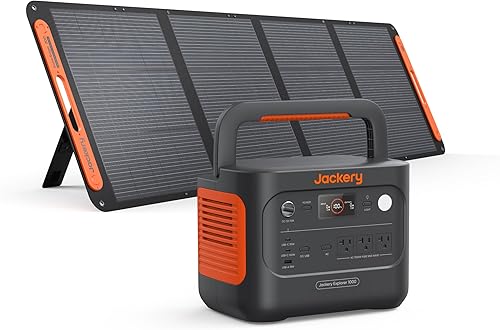
Jackery Solar Generator 1000 v2 and 200W
9.6/10 our score
See it on Amazon -
3
 Best for extended boondocking
PECRON Portable Power Station F3000LFP
9.5/10 our score
See it on Amazon
- 4
 Check it
EF ECOFLOW Delta 3 Ultra 3072Wh Solar
Best for high-demand RV loads - 5
 Check it
BLUETTI Solar Generator Elite 300 & 2x200W
Best for a 30A RV connection - 6
 Check it
DaranEner Solar Generator with Panels Included
Best for lightweight essentials - 7
 Check it
BLUETTI Solar Generator Elite 300 with 350W
Best single-panel 3kWh kit - 8
 Check it
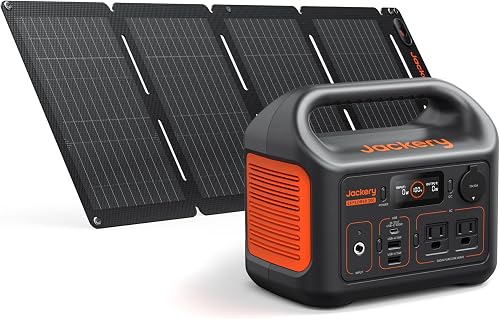
Jackery Solar Generator 300 and 40W Solar
Best for compact campsite charging - 9
 Check it
GROWATT INFINITY 2000 Pro Portable Power Station
Best for expandable RV backup
How we chose the best solar generator for an RV
The best solar generator for RV use needs enough stored energy for your daily loads, enough output for the largest appliance and a practical way to recharge. We compared capacity, continuous output, surge output, panel size, RV connections, weight and included equipment.
Battery capacity is measured in watt-hours. A 1,024Wh unit can store more energy than a 292Wh unit, but actual runtime depends on the watts your devices draw and conversion losses.
Output wattage is a separate question. A generator may have enough capacity for a long day but still fail to start an appliance if its output and surge rating are too low.
We also looked at how each kit fits a different RV pattern. A lightweight 576Wh or 292Wh unit works for electronics, while a 3,000Wh-class system makes more sense when you want longer time away from hookups.
Our score weighs specs, features and buyer feedback against what you're shopping for.
| Product | Best for | Capacity | Output | Solar panel | Our score |
|---|---|---|---|---|---|
| EF ECOFLOW Solar Generator Delta 3 Classic | balanced RV power | 1,024Wh | 1,800W, 3,600W surge | 220W bifacial panel | 9.7 |
| Jackery Solar Generator 1000 v2 and 200W | lighter RV trips | 1,070Wh | 1,500W AC, 3,000W surge | 9.6 | |
| PECRON Portable Power Station F3000LFP | extended boondocking | 3,072Wh | 3,600W | 9.5 | |
| EF ECOFLOW Delta 3 Ultra 3072Wh Solar | high-demand RV loads | 3,072Wh | 3,600W, 7,200W surge | 400W | 9.3 |
| BLUETTI Solar Generator Elite 300 & 2x200W | a 30A RV connection | 3,014.4Wh | 2,400W, 4,800W surge | 9.2 | |
| DaranEner Solar Generator with Panels Included | lightweight essentials | 576Wh | 600W, 1,200W peak | 9.0 | |
| BLUETTI Solar Generator Elite 300 with 350W | single-panel 3kWh kit | 3,014.4Wh | 2,400W, 4,800W surge | 350W | 8.7 |
| Jackery Solar Generator 300 and 40W Solar | compact campsite charging | 292Wh | 300W, 600W peak | 40W | 8.3 |
| GROWATT INFINITY 2000 Pro Portable Power Station | expandable RV backup | 2,048Wh | 2,400W | 8.2 |
The best solar generators for RVs
The EF ECOFLOW DELTA 3 Classic is the strongest all-around choice, while the other models focus on lighter travel, larger battery storage, direct RV connections or expandable capacity.
EF ECOFLOW Solar Generator Delta 3 Classic: Best for balanced RV power
- 1,024Wh capacity
- 1,800W output and 3,600W surge
- 220W solar panel
- Under-10ms UPS
The DELTA 3 Classic balances useful RV output with a manageable 1,024Wh battery and included 220W solar panel.
Pros
- Strong output for its capacity
- Fast AC charging
- Under-10ms UPS
Cons
- Power station and panel arrive separately
- Larger loads reduce runtime quickly
The EF ECOFLOW Solar Generator Delta 3 Classic combines a 1,024Wh battery with 1,800W output and 3,600W surge output. That balance makes it a good fit for RV owners who need more than phone charging but don't want a 3,000Wh-class unit.
The kit includes a 220W bifacial solar panel. The panel uses N-Type solar cells and has an energy conversion rate of up to 25%, while the generator can recharge in about 5.8 hours with that panel.
EF ECOFLOW says AC charging can take the DELTA 3 Classic from 0% to 80% in 45 minutes. Its under-10ms UPS also suits sensitive electronics such as PCs, servers and medical devices, although an RV setup should still follow the equipment manufacturer's instructions.
At 7.9 x 11.1 x 15.7 in, the power station has a compact footprint for its output. The solar generator and panel arrive separately, so plan for two packages.
Choose it if you want a balanced best solar generator for RV with useful output, a moderate battery and a panel in the same kit. For a 30 amp connection, compare the dedicated RV-port options below with our guide to the best solar generator for 30 amp RV.
Jackery Solar Generator 1000 v2 and 200W: Best for lighter RV trips
- 1,070Wh capacity
- 1,500W AC output
- 23.8 lb power station
- 200W solar panel
Jackery gives RV campers a strong middle ground with 1,070Wh, 1,500W AC output and a lighter 23.8 lb power station.
Pros
- Lightest large-capacity pick here
- Multiple charging options
- Three pure sine wave AC ports
Cons
- 200W solar panel reaches 80% in about 6 hours
- Generator and panel ship separately
The Jackery Solar Generator 1000 v2 and 200W Solar Panel suits RV campers who want around 1,000Wh of storage without carrying a heavy power station. The Explorer 1000 v2 has 1,070Wh, 1,500W AC output and 3,000W surge output.
The power station weighs 23.8 lb and measures 12.87 x 8.82 x 9.72 in. Its foldable handle helps when you move it between the RV, campsite and vehicle.
The 200W solar panel can charge the unit to 80% in about 6 hours. Jackery also lists AC, car and app-controlled charging options, including a default 1.7-hour mode and an emergency one-hour charging mode.
Two USB-C ports, one USB-A port, a DC car port and three pure sine wave AC ports let you spread smaller loads across several connections. The 100W USB-C output is useful for compatible laptops and devices.
Pick it as the best solar generator for lighter RV trips when 1,070Wh is enough for your routine. The generator and 200W panel ship separately.
PECRON Portable Power Station F3000LFP: Best for extended boondocking
- 3,072Wh capacity
- 3,600W output
- 13 output ports
- Up to 10,752Wh expandable capacity
The F3000LFP is built for longer off-grid stays, with 3,072Wh and 3,600W output for larger RV loads.
Pros
- Large battery
- 13 ports
- AC, solar and car charging
Cons
- Heavy at 63.3 lb
- 120V input and output, not 240V
The PECRON Portable Power Station F3000LFP is the strongest fit for extended boondocking in this group. Its 3,072Wh LiFePO4 battery and 3,600W pure sine wave output give you more room for larger loads and longer periods away from hookups.
PECRON lists 13 ports, including 6 AC outlets, 2 USB-C ports with 100W PD, 2 USB-A ports, a car port and 2 DC 5525 outputs. The station can power 13 devices simultaneously, subject to the total output limit.
AC input can reach 1,800W, with a stated 0% to 100% charge time of 2 hours. Solar input supports up to 1,600W across a 25V to 120V range.
Check your panel's working voltage before connecting it.
This is a large unit at 19.3 x 11.6 x 11.1 in and 63.3 lb. It is a 120V system, not a 240V system, and the extra EP3800-48V battery requires a special XT120-M cascade cable sold separately.
Choose it when battery capacity and high output matter more than easy lifting. Its size and weight make it better for a planned RV power setup than frequent carrying.
EF ECOFLOW Delta 3 Ultra 3072Wh Solar: Best for high-demand RV loads
- 3,072Wh capacity
- 3,600W continuous output
- 400W solar panel
- 25dB under load
DELTA 3 Ultra gives high-output RV users 3,072Wh, 3,600W continuous output and a 400W solar panel.
Pros
- High continuous output
- Quiet operation claim
- Four charging methods
Cons
- Large 24.6 x 12.9 x 15.6 in body
- Power station and panel arrive separately
The EF ECOFLOW Delta 3 Ultra 3072Wh Solar Generator is made for RV users with higher power demands. It combines a 3,072Wh battery with 3,600W continuous output and 7,200W surge output.
The package includes a 400W solar panel. DELTA 3 Ultra also supports wall, car and EF ECOFLOW Smart Generator charging, giving you more recharge paths when sunlight is limited.
EF ECOFLOW states that the unit runs at 25dB under load. That makes it a reasonable choice for overnight RV use when fan noise matters, though actual sound depends on the load and surroundings.
The under-10ms UPS is designed to keep devices such as PCs, Wi-Fi routers and medical equipment running during a power change. The listed dimensions are 24.6 x 12.9 x 15.6 in, so measure the storage bay before choosing it.
This is the best solar generator for high-demand RV loads among these picks. Its larger body and separate panel package are the main planning points.
BLUETTI Solar Generator Elite 300 & 2x200W: Best for a 30A RV connection
- 3,014.4Wh capacity
- 2,400W output
- Dedicated TT-30 outlet
- Two 200W solar panels
This Elite 300 kit stands out for RV owners who want a dedicated TT-30 outlet and a 3kWh-class battery.
Pros
- RV-ready ports
- Two 200W panels included
- Full pass-through charging
Cons
- 58 lb power station
- Solar panels ship separately
The BLUETTI Solar Generator Elite 300 with 2x200W Solar Panels stands out for a direct RV connection. It includes a dedicated TT-30 outlet and a 12V/30A DC port, which can reduce the need for extra connection equipment in a compatible setup.
The Elite 300 has a 3,014.4Wh LiFePO4 battery, 2,400W output and 4,800W surge output. BLUETTI lists it for RV, home backup and off-grid use.
Two 200W solar panels are included. BLUETTI estimates a 0% to 100% recharge time of about 7 to 15 hours, depending on conditions.
The power station measures 14.4 x 12 x 11.7 in and weighs 58 lb. Its full pass-through charging feature allows it to charge while powering devices, and the BLUETTI app supports remote control, settings and scheduling.
Choose it as the best solar generator for a 30 amp RV connection when the TT-30 outlet and 3kWh-class storage match your setup. The solar panels ship separately.
DaranEner Solar Generator with Panels Included: Best for lightweight essentials
- 576Wh capacity
- 600W output and 1,200W peak
- 13.7 lb weight
- 100W solar panel
DaranEner is easy to carry and suits RV campers powering phones, laptops, cameras, CPAP machines and other modest loads.
Pros
- Lightest complete kit here
- 7 ports
- Pass-through charging
Cons
- Smaller battery
- 100W solar input limits recharge speed
The DaranEner Solar Generator with Panels Included is the lightest complete kit here. It weighs 13.7 lb, stores 576Wh and provides 600W continuous output with a 1,200W peak.
Its 100W solar panel, AC charging cable and power station are included. DaranEner also lists 130W wall charging, 120W car charging and pass-through charging.
The unit has 7 ports: 3 110V AC outlets, a 100W USB-C PD port, 2 USB-A ports and a 120W car socket. That layout fits phones, cameras, laptops, CPAP machines and other smaller RV loads, provided their total draw stays within the output limit.
The power station measures 11.1 x 7.83 x 7.52 in. Its 576Wh capacity is much smaller than the 3,000Wh options, so it is better for short stays and electronics than for running large appliances for long periods.
Pick it as the best solar generator for lightweight RV essentials. It is easy to move, but its lower capacity limits extended off-grid use.
BLUETTI Solar Generator Elite 300 with 350W: Best single-panel 3kWh kit
- 3,014.4Wh capacity
- 2,400W output
- TT-30 RV outlet
- 350W solar panel
This Elite 300 bundle offers the same large battery and RV-ready ports as the dual-panel kit with one 350W panel.
Pros
- Dedicated TT-30 outlet
- 3kWh-class capacity
- 350W panel included
Cons
- 58 lb power station
- Solar recharge is estimated at 8 to 17 hours
The BLUETTI Solar Generator Elite 300 with 350W Solar Panel uses the same 3,014.4Wh Elite 300 platform as the dual-panel kit but includes one 350W panel. It also has a dedicated TT-30 outlet and a 12V/30A DC port for compatible RV setups.
The unit supplies 2,400W continuously and up to 4,800W for starting loads. BLUETTI lists a 0% to 100% solar recharge time of about 8 to 17 hours with the included 350W panel.
The power station measures 14.4 x 12 x 11.7 in and weighs 58 lb. Its LiFePO4 battery, pass-through charging and app control make it useful for both RV travel and home backup.
This kit may suit buyers who want a single larger panel rather than two 200W panels. It remains a heavy power station, so plan where it will sit before moving it.
Choose it as the best single-panel 3kWh RV kit when the TT-30 connection matters and one 350W panel fits your storage and setup plan.
Jackery Solar Generator 300 and 40W Solar: Best for compact campsite charging
- 292Wh capacity
- 300W output and 600W peak
- 7.5 lb stated weight
- 40W solar panel
The Jackery Solar Generator 300 is a compact choice for small electronics, cameras and laptops when you value low carrying weight.
Pros
- Small battery for short trips
- 40W panel included
- 100W USB-C PD port
Cons
- Not suited to high-draw appliances
- Lower capacity than the other picks
The Jackery Solar Generator 300 and 40W Solar Panel is the compact pick for basic RV electronics. It has 292Wh capacity, 300W output and a 600W peak, so it fits phones, cameras, laptops and similar loads rather than high-draw appliances.
The package includes the Explorer 300 New, SolarSage 40W Air panel, AC adapter, car charger cable and user guide. Jackery lists a 40W panel recharge time to 80% of about 7.5 hours.
The station has 2 AC outlets, a 100W USB-C PD port, 2 USB-A ports and a 120W car port. Jackery states that it can power devices while charging, but the total load must remain within the 300W rating.
The power station's listed dimensions are 15.43 x 9.92 x 11.89 in. The product data also gives a 7.5 lb weight in its feature description and 12.9 lb in the specifications, so verify the shipping or operating weight before planning a tight loadout.
Pick it as the best solar generator for compact campsite charging when low capacity is acceptable. For larger RV appliances, choose a higher-output model.
GROWATT INFINITY 2000 Pro Portable Power Station: Best for expandable RV backup
- 2,048Wh capacity
- 2,400W output
- Expandable to 6,144Wh
- NEMA TT-30 and Anderson outlets
The INFINITY 2000 PRO suits RV owners who want 2,048Wh now and the option to expand capacity later.
Pros
- Expandable battery system
- RV-oriented outlets
- Cold Start technology
Cons
- The listed unit is a power station, not a complete panel kit
- Expansion batteries need the main unit to charge
The GROWATT INFINITY 2000 Pro Portable Power Station gives RV owners 2,048Wh of storage and 2,400W output, with room to expand to 6,144Wh using 2 expansion batteries.
It includes an AC charging cable, DC 5521 output cable, solar and car charging cables, the power station, user documents and a warranty card. The unit supports solar and battery power, but this product data does not identify an included solar panel.
GROWATT lists NEMA TT-30 and Anderson outlets for RV users and overlanders. Cold Start technology is listed for operation in conditions as low as -22°F, while the 15ms EPS switchover is intended to keep connected equipment running during an outage.
The unit measures 9.72 x 12.2 x 17.99 in and weighs 26 lb. Expansion batteries cannot charge independently and need to connect to the INFINITY 2000 PRO through a dedicated cable.
Choose it as the best solar generator for expandable RV backup if you want to start with 2,048Wh and add capacity later. Confirm the complete panel and expansion setup before planning a long boondocking trip.
How much battery capacity does an RV need?
Most RV campers should start with their daily watt-hour use, then choose extra capacity for cloudy weather and charging losses. A 292Wh unit suits small electronics, while 2,000Wh to 3,000Wh systems are better for several days of larger loads.
Make a simple list of what you need to run. Multiply each device's watts by the hours you expect to use it, then add the daily totals.
For example, a 60W device used for 5 hours needs about 300Wh before conversion losses. A refrigerator, fan or air conditioner may cycle rather than run continuously, so its actual daily use can differ from its rated watts.
Leave room between your estimated use and the battery's full capacity. Solar input also changes with shade, angle, clouds and panel placement.
If your main goal is a direct RV hookup, compare battery size with the ports. The largest battery is not automatically the easiest system to use if it lacks the connection you need.
What output should a solar generator have for RV appliances?
Choose output by the appliance with the highest running and starting demand. The 300W Jackery is for smaller electronics, while the 1,500W to 3,600W models support a wider range of RV loads.
Running watts describe the power an appliance needs while operating. Starting or surge watts describe the temporary demand from some motors and compressors.
Don't assume that a high watt-hour rating solves an output problem. A 3,014Wh battery still needs enough inverter output to start the device you connect.
Add the running watts of devices you may use at the same time. Then compare that total with the generator's continuous output, while checking the highest starting demand separately.
For a more specific 30 amp setup, see the best portable power station for RV guide and confirm the RV's connection, breaker and appliance limits.
How do you recharge an RV solar generator?
Place the solar panel in direct sunlight, connect it using the supplied charging method and watch the input display if the unit has one. Keep the power station ventilated and avoid placing panels where shadows from the RV cut across the cells.
Panel wattage gives a maximum under suitable conditions, not a guaranteed daily energy total. A 400W panel may produce less when the sun is low, clouds pass over or the panel angle is poor.
AC charging is useful before departure or during bad weather. Car charging can help while driving, but the unit and vehicle must support that charging method.
Keep cables dry and inspect connectors before use. Do not connect a panel unless its voltage and current fit the power station's input limits.
If you want to use one of these systems around the campsite, read how to use an Anker SOLIX power station outdoors for general outdoor placement and handling ideas.
Can a solar generator replace an RV generator?
A solar generator can replace a fuel generator for many quiet, indoor-safe power needs, but it does not provide unlimited energy. Its usable time depends on battery capacity, appliance draw, solar conditions and recharge access.
Solar generators produce stored battery power without fuel fumes during use. That makes them useful for campsites where noise, exhaust or fuel storage are concerns.
They still have limits. Large heating appliances, air conditioners and other high-draw loads can drain a battery quickly, even when the inverter can run them.
A fuel generator may offer longer operation when fuel is available, while a solar generator offers silent stored power and solar recharging. Compare the appliances you actually use, not just the headline wattage.
Never use a battery power station or any generator in a way that conflicts with the RV or equipment instructions. Keep the setup dry, allow ventilation and use only compatible cables.
Which solar generator is best for RV boondocking?
The PECRON F3000LFP is the best fit for extended boondocking when you want 3,072Wh, 3,600W output and up to 1,600W solar input. That combination suits RV campers who plan to run larger loads and stay away from hookups for several days.
The EF ECOFLOW DELTA 3 Ultra is another strong choice when quiet operation and a 400W panel matter. Its 3,072Wh battery and 3,600W continuous output also support high-demand use, while EF ECOFLOW states 25dB under load for overnight comfort.
Choose the BLUETTI Elite 300 kits when a dedicated TT-30 outlet is central to your setup. Both kits pair a 3,014.4Wh battery with 2,400W output, a 12V/30A DC port and RV-ready connections for compatible equipment.
Choose the Jackery 1000 v2 when you want a lighter station with around 1,000Wh. The Explorer 1000 v2 offers 1,070Wh, 1,500W AC output and only 23.8 lb for the power station, which eases moving it between the RV and campsite.
For short trips with phones, cameras and laptops, the DaranEner and Jackery 300 are easier to carry. The DaranEner stores 576Wh with 600W output, while the Jackery 300 stores 292Wh with 300W output for smaller electronics.
Their smaller batteries are also easier to exhaust, so they are not the best match for long stays with refrigerators or heating appliances. A fridge that cycles through the day can draw far more energy than a phone or camera.
Daily solar charging also matters when you boondock for longer. The PECRON lists up to 1,600W solar input, the DELTA 3 Ultra includes a 400W panel, and the Jackery 1000 v2 includes a 200W panel that reaches 80% in about 6 hours.
Set the panel where it gets steady sun and keep the station ventilated while it charges. Shade from the RV, a poor angle or cloudy weather can all reduce the energy you collect before sunset.
For extended stays, plan storage for the station and panels as carefully as runtime. The PECRON is 63.3 lb, the BLUETTI Elite 300 is 58 lb and the DELTA 3 Ultra has a large 24.6 x 12.9 x 15.6 in body.
The right choice depends on the daily load, RV connection and space available for the station and panels. Match those limits first, then compare capacity, output and charging options for the trips you actually take.
Final choice: which is the best solar generator for an RV?
The EF ECOFLOW DELTA 3 Classic is the best solar generator for most RV owners because it combines 1,024Wh, 1,800W output and a 220W panel in a moderate-size kit. At 7.9 x 11.1 x 15.7 in, it fits more easily than the 3,000Wh-class models while still handling loads beyond basic electronics.
Its 3,600W surge output helps with starting demands, and EF ECOFLOW says AC charging can take it from 0% to 80% in 45 minutes. The included 220W bifacial panel can recharge it in about 5.8 hours under suitable sun, which suits RV campers who want a balanced daily routine.
The under-10ms UPS is another reason it stands out for mixed RV use. It is designed for sensitive electronics such as PCs, servers and medical devices, though you should still follow the connected equipment instructions in your RV setup.
Pick the PECRON F3000LFP or DELTA 3 Ultra for extended boondocking and larger loads. Both offer 3,072Wh, but the PECRON lists 13 ports and up to 1,600W solar input, while the DELTA 3 Ultra lists 3,600W continuous output, 7,200W surge and 25dB under load.
Pick a BLUETTI Elite 300 kit for a direct TT-30 connection. The 3,014.4Wh battery, 2,400W output and 12V/30A DC port make the two kits a better match when RV connections matter more than a single panel size.
Pick the Jackery 1000 v2 for lighter travel with around 1,000Wh. Its 23.8 lb power station, foldable handle and 1,500W AC output ease campsite moves, while the 200W panel reaches 80% in about 6 hours.
Pick the DaranEner or Jackery 300 for basic electronics and short trips. The DaranEner gives 576Wh, 600W output and 13.7 lb weight, while the Jackery 300 gives 292Wh and 300W output for phones, cameras and laptops.
Before you buy, check your appliance watts, RV connection and storage space. A generator that matches those three limits will serve you better than one selected only by its largest capacity number, especially once heating or fridge loads enter the daily total.
Plan for set up and care as well, including panel placement in direct sun and a ventilated spot for the station. Keep connectors clean and dry, confirm panel voltage fits the input limits, and charge from AC before departure when the forecast looks poor.
That final check keeps the choice practical. You get enough stored energy for the night, enough output for the largest appliance and a recharge plan that fits the way you travel.
Our top 3 picks at a glance
-
1
Best for balanced RV power
EF ECOFLOW Solar Generator Delta 3 Classic
9.7/10 our score
See it on Amazon -
2
Best for lighter RV trips
Jackery Solar Generator 1000 v2 and 200W
9.6/10 our score
See it on Amazon -
3
Best for extended boondocking
PECRON Portable Power Station F3000LFP
9.5/10 our score
See it on Amazon
Frequently asked questions
What is the best solar generator for an RV?
The EF ECOFLOW DELTA 3 Classic is the best solar generator for an RV for balanced capacity, output and portability. It has a 1,024Wh battery, 1,800W output, a 220W solar panel and an under-10ms UPS.
Choose a 3,000Wh-class model for longer boondocking stays.
How many watts should a solar generator have for an RV?
Choose the output by the largest appliance you plan to run. A 300W unit suits electronics, while 1,500W to 2,400W models cover more RV equipment.
High-demand loads may need 3,600W output.
Check each appliance's running and starting watts before connecting it.
Can a solar generator run an RV air conditioner?
It may, if the generator's continuous and surge output match the air conditioner's requirements. The PECRON F3000LFP and EF ECOFLOW DELTA 3 Ultra list 3,600W output, while the BLUETTI Elite 300 lists 2,400W.
Confirm your RV air conditioner's actual draw first.
What size solar generator is best for RV boondocking?
A 2,000Wh to 3,000Wh solar generator is a better starting point for extended RV boondocking because it stores more energy between solar charging periods. The PECRON F3000LFP, EF ECOFLOW DELTA 3 Ultra and BLUETTI Elite 300 kits are the largest-capacity options here.
Can a solar generator power a 30 amp RV?
A solar generator can power a 30 amp RV when it has a suitable TT-30 outlet or the correct connection method, plus enough output for your appliances. The BLUETTI Elite 300 kits include a dedicated TT-30 outlet and 12V/30A DC port.
Check the RV load before plugging in.